

When Feeling Invisible in Your Relationship Kills Desire
Share
You're not broken. When you feel like a piece of furniture, seen but not felt, desire doesn't have a fighting chance.
That phrase, piece of furniture, keeps showing up when women describe what it feels like to be in a relationship where their partner is physically present but emotionally absent. You are in the room. You are accounted for. And you are completely invisible. You go through the motions of a shared life, meals, errands, conversations about logistics, while dying of loneliness inside a home that looks perfect from the outside.
Some people describe it as suffocating in a life that looks perfect. Others say it feels like living with a roommate who used to know them. The sex still happens sometimes, but it means nothing, and eventually it stops feeling worth the effort. Desire doesn't leave all at once. It erodes. Until one day you realize you feel nothing, and that numbness scares you more than the disconnection did.
If that sounds familiar, this article is for you. Not to tell you what to do about your relationship, that's beyond what any article can offer, but to explain exactly what is happening in your body when you feel unseen, and why desire can't survive in that state no matter how much you want it to.
Why "just communicate" isn't wrong, but it's not enough
Communication advice is well-meaning. Express your needs. Tell your partner how you feel. Have the conversation. And it's not bad advice, emotional repair does begin with words.
The problem is that people assume a productive conversation resets the physiological state. It doesn't. You can have a real, genuine, meaningful talk with your partner on a Tuesday night, reach each other, feel understood, go to bed with some hope. And your body on Wednesday morning is still running the same hormonal program it was running on Monday. Cortisol doesn't drop because the conversation went well. The HPA axis doesn't get the memo that things are better now. Physiological states have their own resolution timeline, and that timeline is measured in days to weeks, not hours.
This is why couples can "fix" a fight and still feel sexually disconnected for days afterward. It's not stubbornness. It's not emotional withholding. It's biology finishing what the stress started.
The mechanism: why your body reads emotional invisibility as a threat
Your nervous system does not distinguish between a tiger and a partner who makes you feel like you don't exist. Both register as threat. And the body's response to sustained threat is the same regardless of the source: elevate cortisol, suppress everything non-essential to survival.
Sex drive is non-essential to survival. The body knows this. When the threat signal is chronic, when you've been feeling unseen for months or years, the HPA (hypothalamic-pituitary-adrenal) axis stays activated. Cortisol stays elevated. And elevated cortisol creates a downstream cascade that hits desire directly.
Here's the chain:
- Emotional invisibility activates the threat response. The nervous system reads chronic emotional disconnection as a safety threat, not metaphorically, but in the same neurological terms as any other stressor. Vigilance increases. The body stays on alert.
- Sustained threat elevates cortisol. The adrenal glands release cortisol to support the threat response. In acute stress this resolves quickly. In chronic stress, the kind that comes from months of feeling like roommates, cortisol stays elevated. Research on stress and female sexual arousal confirms that chronic stress conditions consistently suppress arousal response. PMID 23841462
- Elevated cortisol suppresses oxytocin. Cortisol and oxytocin are physiological antagonists. When cortisol is high, oxytocin output drops. This matters because oxytocin is the bonding hormone. It is a prerequisite for felt safety, connection, and the desire response in women. Studies on the role of oxytocin in female sexual arousal show that oxytocin is directly involved in the arousal pathway. PMID 9949283 Without oxytocin, there is no hormonal substrate for wanting to connect sexually.
- HPA dysregulation suppresses the HPG axis. The HPG (hypothalamic-pituitary-gonadal) axis governs sex hormone production. Glucocorticoids like cortisol suppress reproductive function at multiple points in this axis, reducing GnRH pulsatility, blunting LH response, and suppressing gonadal steroid output. PMID 24064362
- Reduced sex hormones mean reduced desire. Testosterone and estrogen are not just "sex hormones" in the colloquial sense. They are the direct biochemical drivers of libido. Acute stress has been shown to reduce circulating sex steroids. PMID 22407091 When cortisol suppresses the HPG axis chronically, the result is a sustained reduction in the hormones that make desire physiologically possible.
This is not metaphorical. It is a documented pathway from emotional state to hormonal output. The woman who feels like a piece of furniture in her relationship and has lost all desire for sex is not broken, not withholding, and not failing her partner. She is running exactly the biology she was designed to run.
The cortisol-oxytocin relationship: why "make yourself available" backfires
Common advice, usually from well-meaning sources who don't understand the physiology, tells women to "just try." Be available. Initiate. Fake it until you feel it. This advice fails because it ignores what oxytocin actually does and when it gets released.
Oxytocin release is triggered by felt safety and genuine connection. It is not triggered by going through the motions. In states of emotional threat or chronic disconnection, oxytocin is suppressed and cortisol is dominant. Without oxytocin, the bonding and desire response has no hormonal foundation. You can put yourself physically in position for sex and your body will not generate the response it would generate in a state of felt safety and genuine connection. The substrate isn't there.
Forcing contact in this state often makes things worse. It adds a layer of disconnection from your own body on top of the disconnection from your partner. The body learns to associate sexual contact with the absence of feeling, which makes recovery harder once the emotional conditions actually improve.
Research on relationship equity and female desire confirms this: relationship factors, specifically feeling valued and seen, are significant predictors of dyadic (partner-related) sexual desire in women. PMID 35622971 This is not about feeling romantic. It is about the physiological substrate that emotional safety provides.
What the emotional layer requires, and what it doesn't
The emotional layer is a relationship dynamic. No supplement, protocol, or self-improvement practice changes whether your partner sees you. That work belongs to the relationship, the conversations, the repair, the choice both of you make about whether to close the distance.
If that work is happening, or if you're doing it on your own through therapy or honest self-examination, the physiological timeline still applies. The body takes time to feel safe after a prolonged threat state. That's not weakness. That's accurate threat assessment that takes time to recalibrate.
The responsive desire model is relevant here: desire in women often doesn't appear spontaneously. It responds to conditions. See responsive desire for a full explanation. The conditions for desire include emotional safety, but also the physiological substrate that emotional safety helps create. When the emotional conditions improve and the physiological substrate is also present, desire returns. When the conditions improve but the physiological substrate is depleted, desire returns more slowly.
What botanical support can actually do
Nothing is wrong with you. And there is something you can do about the physiological layer while you work on the rest.
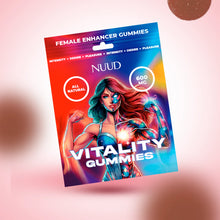
Tribulus Terrestris and Muira Puama, two of the botanicals in NUUD Libido Gummies for Her, support the desire pathway that cortisol suppresses. Tribulus supports LH activity and sex hormone production at the gonadal level. Muira Puama has documented central nervous system effects on desire, particularly in women with low libido linked to stress and fatigue.
These are not a fix for emotional disconnection. They do not make you feel seen. They do not repair the relationship dynamic that created the problem. What they do: support the physiological conditions that desire needs, so that when the emotional conditions improve, your body is ready.*
The distinction matters. If you take a libido supplement expecting it to override emotional emptiness, you will be disappointed. If you take it as part of a broader effort, relationship repair, nervous system recovery, physiological support in parallel, you give yourself a better chance of desire returning when the conditions are actually right for it.
The state comparison
| State | Cortisol Level | Oxytocin Level | Desire Effect | What Helps |
|---|---|---|---|---|
| Feeling seen and valued | Low / baseline | Elevated | Desire accessible; responsive to context | Maintain emotional safety; botanical support optional |
| Emotional disconnection (invisible) | Elevated / sustained | Suppressed | Desire suppressed; substrate depleted | Relationship repair + physiological support in parallel |
| Active conflict | Acutely high | Minimal | Desire absent; body in defensive state | Resolution first; physiological reset takes days |
| Chronic emotional disconnection | Chronically elevated | Chronically suppressed | Desire erosion over time; numbness | Long-term relationship work + nervous system recovery + botanical substrate support |
FAQs
Why does feeling unseen by my partner kill my sex drive?
Emotional invisibility is processed by the nervous system as a threat. That threat state triggers cortisol elevation, which suppresses oxytocin (the bonding hormone) and downstream sex hormone production via the HPA-HPG axis. The result is a documented physiological suppression of desire, not a mindset problem, not a choice, and not a failure of will. Your body is responding correctly to an unsafe emotional environment.
Is it normal to lose desire when I feel emotionally disconnected?
It is physiologically expected. Women's desire is particularly context-dependent, the emotional and relational environment directly shapes the hormonal substrate for desire. Feeling like roommates, going through the motions, suffocating in a life that looks perfect on the outside. These are not unusual descriptions. They are common experiences with a common biological mechanism. You are not abnormal for responding this way.
Can emotional problems cause physical sexual dysfunction?
Yes. The physiological pathway is real and documented. Chronic emotional stress elevates cortisol, which suppresses GnRH pulsatility, LH response, and gonadal steroid production. The result is reduced testosterone and estrogen, the hormones that drive physical arousal and desire. Emotional disconnection doesn't just affect how you feel about sex. It changes the hormonal environment your body needs to generate physical desire.
Why doesn't communicating better automatically fix my desire?
Because the physiological state has its own resolution timeline. A productive conversation can start emotional repair. It does not immediately lower cortisol, restore oxytocin, or reset the HPG axis. Those processes take days to weeks depending on how long the stress state has been sustained. This is why couples can resolve a conflict and still feel sexually disconnected afterward, the biology finishes on its own schedule, not on the conversation's schedule.
What actually helps desire when I feel invisible in my relationship?
Two parallel tracks. First, the emotional environment has to change, felt safety and genuine connection are prerequisites for the hormonal substrate desire needs. That work belongs to the relationship. Second, physiological support: botanical ingredients like Tribulus Terrestris and Muira Puama support the desire pathway at the hormonal level, so that when the emotional conditions improve, your body is ready to respond. Neither track replaces the other. Both together give you the best chance of desire returning when the conditions are actually right.
NUUD's sex gummies for couples pair Tribulus Terrestris and Muira Puama so both partners feel something again.
Sources
- PMID 23841462, Brotto LA (2014). Chronic stress and female sexual arousal.
- PMID 22407091, Wolfram M et al. (2011). Acute stress reduces sex steroids in humans.
- PMID 24064362, Whirledge S, Cidlowski JA. Glucocorticoids, stress, and fertility.
- PMID 9949283, Bancroft J et al. (1999). The role of oxytocin in relation to female sexual arousal.
- PMID 35622971, Fairer Sex: The Role of Relationship Equity in Female Sexual Desire (2022).
*These statements have not been evaluated by the Food and Drug Administration. This product is not intended to diagnose, treat, cure, or prevent any disease.
