


Mismatched Libido in a Relationship: How Couples Reignite It
Share
Updated April 2026
The short answer
- Mismatched libido in a relationship is normal — up to 80% of long-term couples report a desire gap at some point.
- The single biggest predictor of staying happy through it is how you talk about it, not how often you have sex.
- Stress, sleep debt, hormones, and relationship resentment are the four most common drivers — address them in that order.
- Partnered strategies (scheduled intimacy, shared rituals, supplements taken together) outperform solo strategies for both sexual and relationship satisfaction.
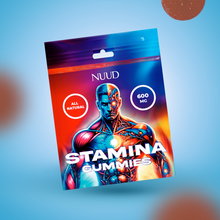
- Natural libido supplements like NUUD Libido Gummies for Women and NUUD Libido Gummies for Men are a low-pressure way to rebuild the ritual together.
Is low sex drive in a relationship normal?
Yes — mismatched libido is one of the most common reasons couples seek therapy, and it is not a verdict on the relationship. Research on long-term couples consistently finds that around 1 in 3 women and 1 in 6 men experience a meaningful drop in sexual desire at some point, and most couples cycle through desire gaps multiple times across the life of the relationship.
What matters is not whether the gap exists, but how you navigate it. A 2020 study in Archives of Sexual Behavior identified 17 distinct strategies couples use when desire is mismatched, grouped into five categories. The finding was clear: partnered strategies — talking it through, planning shared sensual time, trying something new together — were linked to higher sexual and relationship satisfaction than solo or disengagement strategies.
What causes mismatched libido in couples?
Low sex drive rarely has a single cause. In most long-term relationships, the desire gap is a stack of smaller inputs that compound over months. The most common drivers are:
- Stress and sleep debt. A pilot study of 171 women published in the Journal of Sexual Medicine found that longer sleep duration predicted greater next-day sexual desire. Short nights suppress libido before any hormonal or emotional factor gets a chance.
- Hormonal shifts. Testosterone declines with age in both sexes. Perimenopause, postpartum recovery, and thyroid imbalances all affect desire.
- Medications. SSRIs, hormonal birth control, some blood pressure drugs, and opioids are well-documented libido suppressants.
- Relationship resentment. Unspoken conflict is the quietest libido killer. Desire recedes when emotional safety recedes.
- Habit and novelty loss. The Coolidge effect — the well-documented drop in sexual interest with a familiar partner and surge with a novel one — explains part of why long-term couples plateau. The fix is building novelty inside the relationship.
How do you fix a mismatched libido without blame?
Start with the environment, not the partner. Before any conversation about desire itself, couples who successfully rebuild intimacy almost always fix the basics first: sleep, stress, and stacked resentment. A 2019 study in the Journal of Sex & Marital Therapy of 346 men found that the difference between a problematic desire discrepancy and a non-problematic one came down to framing — couples who didn't treat the gap as a threat reported significantly higher relationship and sexual satisfaction, even when the gap itself was identical in size.
Practical sequence that works:
- Get sleep and stress under control for 2–3 weeks first. Do not try to solve desire during a rough quarter at work.
- Schedule a non-sexual intimacy ritual. A weekly walk, a weekly bath, a weekly phones-down dinner. Desire follows reconnection; it almost never leads.
- Introduce a shared ritual with a low-pressure trigger. Many couples find that a glass of wine, a shared supplement, or a sensual massage routine creates a natural "on-ramp" that takes the spotlight off performance.
- Talk about desire only after the first three are in place. The conversation lands very differently when both partners feel rested, connected, and non-pressured.
Do natural libido supplements actually help couples?
Natural libido supplements won't fix a relationship on their own, but they can lower the activation energy for the ritual you're trying to rebuild. A few ingredient categories have real evidence behind them:
- Maca root — studied for its effects on desire and energy without acting on sex hormones directly. A frequent component of women's libido blends.
- Ashwagandha — an adaptogen with evidence for stress reduction and modest testosterone support in men.
- Shilajit — a 2016 randomized, placebo-controlled trial in Andrologia found that 250 mg of purified Shilajit twice daily for 90 days significantly raised total testosterone, free testosterone, and DHEAS in healthy middle-aged men.
- Tribulus terrestris, damiana, and L-arginine — traditional libido herbs with supporting mechanistic evidence for blood flow and arousal.
NUUD's formulas stack these traditional libido ingredients with a proprietary NUUD Mushroom Complex™ (functional mushroom blend) for a steadier, gentler lift than stimulant-style blends. The gummies are the easiest entry point for couples because you can each take your own and turn it into the ritual: one for her, one for him, ten minutes, conversation, no pressure.
Choosing a format that fits your ritual
| Format | Onset | Duration | Best for |
|---|---|---|---|
| Gummies | 30–60 min | Up to 3 days | Weekend rituals, slow build |
| Capsules | 45–90 min | Up to 6 days | Daily support, long-haul couples |
| Sex Bites | 15–30 min | 4–6 hours | Planned date nights |
| Intimacy drink | 15–30 min | 2–3 hours | Replacing the "drink before the drink" |
How do you rebuild emotional intimacy?
Emotional intimacy is the precondition for sexual intimacy in most long-term relationships, especially for partners whose desire is responsive rather than spontaneous (this is most women and a large share of men after age 40). Rebuilding it is simpler than it sounds — it's almost always about frequency of small moments of attention, not grand gestures.
- Ten minutes of undistracted conversation per day, phones down.
- A daily ritual of touch that doesn't lead to sex — hand-holding, a six-second kiss, a hug when you come home.
- One weekly activity together that neither partner does alone.
- Explicit verbal appreciation. Once a day, out loud.
For couples who have drifted for a long time, a few sessions with a licensed sex therapist or couples counselor accelerate the work. It is not a sign of failure; it is the most evidence-backed intervention on the list.
When to see a clinician
Most mismatched libido resolves with stress, sleep, conversation, and ritual. Book a visit with a clinician if you notice any of these:
- Sudden drop in desire with no clear life-stress trigger.
- Pain during sex, or a persistent change in arousal response.
- Low mood, fatigue, or weight changes alongside the libido drop (possible thyroid or depression).
- Erectile difficulty that persists across multiple contexts (possible cardiovascular signal).
- Painful periods, hot flashes, or cycle changes alongside libido drop (possible perimenopause).
Frequently asked questions
Is it normal for one partner to want sex more than the other?
Yes. Research suggests 60–80% of long-term couples have a meaningful desire gap. What predicts relationship health is how the couple frames and talks about the gap, not the size of the gap itself.
Can low sex drive ruin a relationship?
Unaddressed, over years, it can. Addressed early with honest conversation and shared strategies, it almost never does — and couples who work through it often report stronger intimacy on the other side.
How long does it take to rebuild desire after a dry spell?
Most couples who work on it deliberately notice a shift within 4–8 weeks. Expect it to move in waves, not a straight line. The partnered approach (ritual, supplements, shared activity) tends to work faster than solo effort.
Do libido gummies work for couples?
They work best when used as a ritual rather than a quick fix. Taking them together 30–60 minutes before a planned intimate evening builds anticipation and lowers performance pressure, which is often the larger obstacle than the physiology itself.
Should we try therapy or supplements first?
They aren't mutually exclusive. If communication is the bigger problem, start with therapy. If ritual and connection are intact but energy and desire have faded, start with sleep, stress, and a natural libido support routine. Most couples benefit from doing both in parallel.
References
- Vowels LM, Mark KP. Strategies for Mitigating Sexual Desire Discrepancy in Relationships. Archives of Sexual Behavior. 2020;49(3):1017–1028.
- Pereira TJ, Machado PPP, Peixoto MM. Sexual and Relationship Satisfaction: The Role of Perceived (Non)problematic Sexual Desire Discrepancy in Gay and Heterosexual Men. Journal of Sex & Marital Therapy. 2019;45(2):103–113.
- Kalmbach DA, Arnedt JT, Pillai V, Ciesla JA. The impact of sleep on female sexual response and behavior: a pilot study. Journal of Sexual Medicine. 2015;12(5):1221–1232.
- Pandit S, Biswas S, Jana U, et al. Clinical evaluation of purified Shilajit on testosterone levels in healthy volunteers. Andrologia. 2016;48(5):570–575.
A simple first step many couples try is NUUD's sex drive gummies, taken about an hour before.
For couples whose drives no longer line up, NUUD offers libido support for both partners in matched formats for her and for him.
Keep Reading
For the clinical side of low desire, see low libido in women and low libido in men. For the novelty-loss angle in long-term couples, read the Coolidge effect and how to counter it.
Shop NUUD for Couples
- NUUD Libido Gummies for Women — shared ritual, 30–60 min onset
- NUUD Libido Gummies for Men — matching formula for him
- Watermelon Lime Intimacy Drink — the drink before the drink
