

Aphrodisiacs That Actually Work: A Scientific Review
Share
Estimated read: 13 minutes • Last updated April 2026 • Reviewed for NUUD Pleasures
The word "aphrodisiac" has been applied to everything from oysters to rhino horn to chocolate. Most of what's been called an aphrodisiac throughout history doesn't have meaningful evidence supporting the claim. Some of it actually does. This guide separates the two.
The goal here isn't to tell you every herb that's ever been called an aphrodisiac. It's to review the short list of botanicals, nutrients, and supplements for which there's real human clinical research supporting effects on libido, arousal, or sexual function — and to be clear about which evidence is strong, which is moderate, and which is weak.
If you've been searching for aphrodisiacs that actually work, scientifically proven aphrodisiacs, or a real aphrodisiac with legitimate research behind it, this is the evidence-graded answer.
How to Grade an Aphrodisiac Claim
Before the list, a quick framework. Not all "evidence" is equal.
- Strong evidence: Multiple randomized, placebo-controlled human trials showing effects on sexual function, with consistent results and reasonable sample sizes.
- Moderate evidence: At least one well-designed human trial, or multiple smaller human trials with consistent findings.
- Weak / preliminary evidence: Preclinical (animal) data, single small studies, or traditional-use claims without rigorous human research.
- Folklore only: No meaningful human evidence beyond cultural use.
Most of what gets sold as an "effective aphrodisiac" lives in the folklore or weak-evidence tier. The list below focuses on the moderate and strong tiers, with the weaker candidates noted where they're culturally significant.
Strong Evidence: Aphrodisiacs With the Most Clinical Support
1. Maca (Lepidium meyenii)
Maca is the aphrodisiac botanical with the most consistent human research supporting effects on sexual desire. A 2002 placebo-controlled trial in Andrologia reported significant increases in sexual desire in men after eight weeks of Maca supplementation, independent of changes in testosterone or mood. A 2008 study in CNS Neuroscience & Therapeutics found Maca effective for SSRI-induced sexual dysfunction — one of the best-documented negative effects of common antidepressants. Subsequent research has replicated these findings in both men and women, with Maca appearing to work primarily through non-hormonal mechanisms.
What makes Maca interesting is that it's a true aphrodisiac in the specific sense that it appears to increase desire, not just arousal or performance. Most sexual-function research measures erectile function or orgasmic capacity. Maca research measures the more elusive outcome: wanting to have sex.
Evidence grade: Strong for sexual desire, especially SSRI-related dysfunction.
2. Ashwagandha (Withania somnifera)
Ashwagandha — particularly the standardized extract KSM-66 — has strong evidence for supporting sexual function, mainly through its adaptogenic effect on stress and cortisol. A 2015 study in BioMed Research International by Dongre et al. found Ashwagandha significantly improved multiple dimensions of female sexual function after eight weeks. Separate research in men has shown effects on serum testosterone, sperm quality, and subjective sexual satisfaction.
The mechanism matters here: Ashwagandha is not a direct arousal agent. It's an adaptogen that regulates the HPA axis and supports healthy cortisol patterns. Because chronic stress is one of the most reliable suppressors of sexual desire, an effective stress-regulator functions as a de facto aphrodisiac in stress-depleted people — which is most adults in 2026.
Evidence grade: Strong for stress-mediated sexual dysfunction in both sexes.
3. Korean Red Ginseng (Panax ginseng)
Ginseng is one of the oldest aphrodisiacs in documented use, and it's one of the few where traditional use lines up with modern research. A 2010 meta-analysis in the British Journal of Clinical Pharmacology by Shin et al. reviewed seven randomized trials and concluded that Korean red ginseng had effects on erectile function beyond placebo. A 2002 trial in The Journal of Urology by de Andrade found Korean red ginseng improved erectile function and sexual satisfaction in men with mild-to-moderate ED.
The proposed mechanism involves nitric oxide pathway support and endothelial function — the same pathways targeted by prescription ED medications, but through adaptogenic action. Ginseng also has effects on fatigue and energy that indirectly support sexual function.
Evidence grade: Strong for male erectile function; moderate for female libido.
Moderate Evidence: Aphrodisiacs With Real but Less Robust Research
4. Damiana (Turnera diffusa)
Damiana has a long traditional-use history in Mexican folk medicine as a female aphrodisiac, and the modern research base is smaller but supportive. Combination formulas containing Damiana have shown positive effects in human trials on female sexual arousal disorder, though the isolated effect of Damiana alone is harder to tease out because it's usually studied in blends. Animal research supports effects on sexual behavior.
Damiana also contains apigenin and arbutin, compounds with mild phytoestrogenic and vasodilatory activity. It's a reasonable component of a female-libido stack even where the isolated-herb evidence isn't definitive.
Evidence grade: Moderate for female sexual arousal, especially in combination formulations.
5. Tribulus Terrestris
Tribulus is one of the more heavily-marketed aphrodisiacs, and the research is mixed. Early studies in male subjects showed minimal effects on testosterone or sexual function. More recent studies in women have been more promising — a 2014 trial in DARU Journal of Pharmaceutical Sciences reported improvements in female sexual desire and satisfaction after supplementation. A 2017 meta-analysis in Phytotherapy Research found moderate evidence for effects in women with hypoactive sexual desire disorder.
The pattern: Tribulus appears more useful for female sexual desire than for male testosterone or erectile function, which inverts how it's been marketed for years.
Evidence grade: Moderate for female sexual desire; weak for male testosterone/ED.
6. Fenugreek (Trigonella foenum-graecum) — Libifem
Standardized Fenugreek extract (sold as Libifem) has been studied in several human trials for female libido. A 2015 study in Phytotherapy Research by Rao et al. found significant improvements in female sexual function after eight weeks. The mechanism appears to involve mild support for free testosterone, which contributes to female desire biology.
Evidence grade: Moderate for female libido.
7. L-Citrulline / L-Arginine
L-citrulline converts to L-arginine, which is a precursor to nitric oxide — a key molecule in vasodilation and erectile function. A 2011 study in Urology by Cormio et al. reported modest improvements in mild ED after L-citrulline supplementation. It's not as potent as prescription ED medications, but it has a legitimate mechanism and some human evidence.
Evidence grade: Moderate for mild erectile dysfunction.
8. Saffron (Crocus sativus)
Several small human trials have reported effects of Saffron on sexual function, particularly in the context of SSRI-induced sexual dysfunction. A 2013 study in Human Psychopharmacology reported improvements in sexual function in men on fluoxetine after Saffron supplementation. A separate study in women showed similar effects.
Evidence grade: Moderate for SSRI-related sexual dysfunction.
Weak / Preliminary Evidence
9. Horny Goat Weed (Epimedium)
Horny Goat Weed contains icariin, a compound with PDE5-inhibitory activity in vitro — the same mechanism as Viagra. Animal research supports effects on erectile function. Direct human clinical research is limited, though icariin has been investigated as a pharmaceutical lead compound.
The claims around Horny Goat Weed have always been louder than the evidence. It's plausible based on mechanism but under-researched in humans. It's most defensibly used as a component of a broader stack rather than as a standalone "scientifically proven aphrodisiac."
Evidence grade: Weak to preliminary in humans, though mechanistic rationale is strong.
10. Cordyceps
Covered in depth in our guide to mushrooms for libido. Cordyceps has moderate evidence for supporting libido, particularly in men, through testosterone biosynthesis and circulation support.
Evidence grade: Moderate for male libido and energy-mediated sexual function.
11. Muira Puama (Ptychopetalum olacoides)
"Potency wood" from the Amazon has traditional-use claims as a male aphrodisiac. A 1994 observational study in Progress in Clinical and Biological Research by Waynberg reported improvements in male sexual function. The research is older and less rigorous than what exists for the stronger-evidence aphrodisiacs on this list.
Evidence grade: Weak — traditional use with limited human research.
Folklore Only: Popular Aphrodisiacs Without Real Evidence
A few commonly-cited aphrodisiacs that don't hold up under scrutiny:
- Oysters. The zinc content is real, and zinc deficiency can affect testosterone. But a typical serving of oysters doesn't deliver enough zinc to meaningfully shift testosterone in non-deficient people, and human trials of oysters as aphrodisiacs don't exist in any meaningful form.
- Chocolate. Phenylethylamine is real; its effects in chocolate-sized doses on sexual arousal are not demonstrated in humans. Cacao has mood benefits; chocolate as an aphrodisiac is cultural rather than biological.
- Chili peppers / capsaicin. The "heat" sensation is real; the aphrodisiac effect is mostly associative. Not meaningfully supported in human trials.
- Yohimbine. There IS real evidence for yohimbine on erectile function. It's also in a different category because it has significant cardiovascular side effects, potential for anxiety induction, and interactions with medications. It's a pharmacologically active compound rather than a mild botanical. Included here because the evidence is real but the safety profile argues against casual use.
What the Best Aphrodisiac Stacks Have in Common
One pattern emerges from the research: combinations outperform single ingredients in most head-to-head comparisons. A libido formula that includes Maca, Ashwagandha, Damiana, Horny Goat Weed, and Tribulus generally performs better in human trials than any of those ingredients alone at the same total dose. The proposed reason: different ingredients address different pathways (stress, circulation, hormones, mood), and sexual function requires all of them working together.
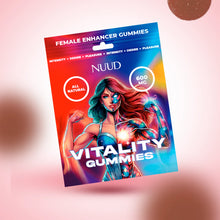
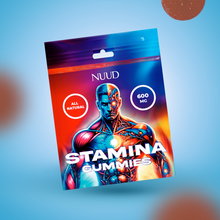
This is why NUUD products are formulated as multi-ingredient stacks rather than single-herb products. Both the NUUD Libido Gummies for Women and the NUUD Libido Gummies for Men share the same core formula: Tribulus Terrestris, Muira Puama, Boiled Rehmannia Root, and Piper Nigrum with the NUUD Mushroom Complex™ (a proprietary functional-mushroom blend). For the most potent format — up to 6 days of duration per dose — the Vitality Libido Support Capsules for Women and Stamina Libido Support Capsules for Men carry the same formula. One ingredient NUUD deliberately leaves out is horny goat weed, which is banned in the European Union.
Where Can I Buy Aphrodisiacs That Actually Work?
The challenge with aphrodisiac shopping is that most of what's on the market is either under-dosed, poorly extracted, single-ingredient when the research supports stacks, or sold on folklore rather than formulation. Practical criteria:
- Standardized extracts, not raw powder. Ashwagandha KSM-66, Fenugreek Libifem, standardized ginseng extracts — these are what the research uses. "Ashwagandha root powder" is not equivalent.
- Clinically meaningful doses. Check the supplement facts panel. If the ingredient is present at under 100mg when research uses 300–600mg, that's a signal.
- Multi-ingredient formulations. For libido specifically, stacks tend to outperform single ingredients.
- Transparency about sourcing and testing. Third-party testing matters.
NUUD formulates on these principles. Every NUUD libido product uses the NUUD Mushroom Complex at clinically meaningful doses, combines multiple research-supported botanicals, and is third-party tested. Explore the full line:
- Women's Libido Gummies — fast-acting, up to 3 days duration
- Men's Libido Gummies — fast-acting stamina gummies
- Vitality Capsule for Women — most potent, up to 6 days duration
- Stamina Capsule for Men — most potent, up to 6 days duration
- Intimacy Drink for Women — fast-absorbing powder
- Performance Drink for Men — fast-absorbing powder
- Lovers Pleasure Bundle — aphrodisiac kit for couples
The Bottom Line on Aphrodisiacs That Actually Work
Most aphrodisiacs don't work. A small number do. The ones with the most robust evidence are Maca, Ashwagandha, and Korean Red Ginseng, followed by moderate-evidence supporting-cast ingredients — Damiana, Tribulus, Fenugreek, L-Citrulline, Saffron, Cordyceps. Horny Goat Weed is plausible on mechanism but underdelivered on human trials. Most folklore aphrodisiacs — oysters, chocolate — have cultural weight but not clinical evidence.
The best-designed libido formulations combine multiple research-supported botanicals at clinically meaningful doses in delivery formats matched to how the body absorbs them. That's what makes an aphrodisiac that works in practice — not a single "magic" herb, but a formulation that addresses the multiple systems sexual function depends on.
For related reading, see our guide to mushrooms for libido, the natural aphrodisiacs overview, and our piece on the Coolidge Effect in long-term relationships.
Frequently Asked Questions
What are aphrodisiacs that actually work?
The aphrodisiacs with the strongest human clinical evidence are Maca (sexual desire), Ashwagandha (stress-mediated sexual dysfunction), and Korean Red Ginseng (erectile function). Moderate-evidence ingredients include Damiana, Tribulus Terrestris, Fenugreek, L-Citrulline, Saffron, and Cordyceps. Most "aphrodisiacs" in popular culture don't have meaningful clinical evidence behind them.
What is a scientifically proven aphrodisiac?
A scientifically proven aphrodisiac is one supported by randomized, placebo-controlled human trials showing effects on libido, arousal, or sexual function. By that standard, Maca, Ashwagandha, and Korean Red Ginseng are the most robustly supported. A few others have moderate supporting evidence but less robust replication.
What's the best natural aphrodisiac?
For male sexual function, Korean Red Ginseng and Cordyceps have the most direct evidence. For female libido, Maca and Ashwagandha lead the evidence. For stress-driven sexual dysfunction in either sex, Ashwagandha is the strongest single tool. Most effective real-world aphrodisiacs are multi-ingredient blends rather than single herbs.
Do aphrodisiacs really work?
Some do, some don't. The ones with real clinical evidence (Maca, Ashwagandha, Korean Red Ginseng, and a handful of others) have measurable effects on libido, arousal, or sexual function in well-designed human trials. Most folklore aphrodisiacs (oysters, chocolate, etc.) don't have meaningful evidence and work primarily through cultural association and mood.
Where can I buy aphrodisiacs that actually work?
Look for standardized extracts at clinically meaningful doses in multi-ingredient formulations. Avoid raw-powder blends without dose transparency. NUUD products are formulated on these principles with the NUUD Mushroom Complex™ combining multiple research-supported botanicals. Explore the NUUD libido gummies, capsules, and drinks.
What are legal aphrodisiacs?
All the ingredients discussed in this article are legal in the United States as dietary supplements. Maca, Ashwagandha, Ginseng, Damiana, Tribulus, Fenugreek, L-Citrulline, Saffron, Horny Goat Weed, Cordyceps, and Muira Puama are all legal to purchase and sell as supplements. Some have age restrictions (21+) when sold alongside hemp products.
How long do aphrodisiacs take to work?
It depends on the mechanism. Adaptogens like Ashwagandha and Maca typically require 4–8 weeks of consistent use to show effects. Ingredients targeting circulation (L-Citrulline, Horny Goat Weed) can show effects within hours to days. Formulated blends that combine fast-acting and cumulative ingredients deliver both. NUUD's fast-acting gummy formats show effects in 30–60 minutes and last up to 3 days per dose.
Are aphrodisiac supplements safe?
The research-supported botanical aphrodisiacs covered here are generally well-tolerated at typical supplement doses. Key cautions: Horny Goat Weed can interact with blood pressure medications; yohimbine has significant cardiovascular side effects and shouldn't be used casually; Reishi has mild blood-thinning effects. Check with a healthcare provider if you're on prescription medications or have hormone-sensitive conditions.
These statements have not been evaluated by the Food and Drug Administration. Products mentioned are not intended to diagnose, treat, cure, or prevent any disease. Must be 21+ to purchase NUUD products.
For the gummy version of this list, NUUD's arousal gummies cover both the botanical and the Delta 9 side.
For the gummy route, NUUD's aphrodisiac gummies for her use tribulus and muira puama at the doses the studies above describe.
