


How to Increase Libido After Menopause Naturally
Share
TL;DR
Menopause-related low libido has three primary drivers: estrogen decline, testosterone drop, and elevated cortisol. Natural approaches that work address at least one of these directly. Lifestyle interventions — sleep, exercise, stress reduction — set the foundation. Botanical supplements (Tribulus Terrestris, Muira Puama, functional mushrooms) target the hormonal and neural pathways that manage desire. Most women see meaningful improvement at 4–8 weeks of consistent support.
Low libido after menopause is one of the most common complaints women bring to their doctors — and one of the most undertreated. The instinct to dismiss it as an unavoidable side effect of aging is understandable but wrong. How to increase libido after menopause naturally is a real question with real, research-backed answers — and you don't necessarily need a prescription to make meaningful progress.
Why Libido Drops After Menopause
Three hormonal shifts drive the majority of post-menopause desire loss:
- Estrogen decline. Estrogen supports vaginal lubrication, tissue sensitivity, and the dopamine pathways that drive sexual anticipation. Its decline creates both physical discomfort and neural signal dampening.
- Testosterone drop. Women produce testosterone in the ovaries and adrenal glands — both sources decline significantly at menopause. Testosterone is a primary driver of spontaneous sexual desire in women, not just men.
- Cortisol elevation. Many women in perimenopause and post-menopause carry elevated basal cortisol — from life load, poor sleep, or reduced stress resilience as estrogen (which has protective effects on the HPA axis) declines. Elevated cortisol suppresses GnRH, which further depresses the sex hormone cascade (PMID 24064362).
Natural Approaches: Evidence Comparison
| Approach | Mechanism | Time to Effect | Evidence Level |
|---|---|---|---|
| Tribulus Terrestris | LH signaling + SHBG reduction — more free testosterone | 4–12 weeks | Multiple RCTs (PMID 40219032) |
| Muira Puama | Nerve-ending sensitivity + desire signal amplification | Days–6 weeks | Clinical trials (PMID 11186145) |
| NUUD Mushroom Complex | Cortisol modulation + sexual performance support | 4–8 weeks | Cordyceps studies (PMID 27041868) |
| Regular aerobic exercise | Testosterone support + cortisol reduction + mood | 4–6 weeks | Strong (lifestyle intervention) |
| Sleep optimization (7–8 hrs) | Cortisol reset + DHEA production window | 1–2 weeks | Strong (lifestyle intervention) |
| Maca root (standalone) | HPA axis modulation | 6–8 weeks | Moderate, mixed results |
5 Evidence-Based Strategies for Increasing Libido After Menopause
- Address sleep first. Menopausal sleep disruption — from night sweats, cortisol dysregulation, or simply lighter sleep architecture — is the most common hidden driver of post-menopause desire loss. Deep sleep is when DHEA synthesis peaks. Poor sleep means low DHEA, which means reduced hormonal raw material for estrogen and testosterone production. Before adding anything else, protect 7–8 hours of sleep with consistent timing.
- Build an exercise baseline. Consistent aerobic activity (3–4 times per week, 30–45 minutes) significantly reduces cortisol, improves mood, and correlates with better sexual function in menopausal women. Resistance training adds a testosterone-support benefit via muscle mass maintenance.
- Use botanical supplements targeting the hormonal cascade. Tribulus Terrestris is the most studied botanical for post-menopause desire support. A 2014 RCT (Akhtari et al.) found significant improvements in FSFI scores — specifically desire, arousal, and lubrication — in women after 4 weeks; post-menopause research shows similar trajectory (PMID 40219032). The Waynberg 1990 Muira Puama study found 65% of women reported improved desire within 28 days (PMID 11186145). NUUD's formula combines both.
- Reduce cortisol load systematically. Identify and address your specific cortisol inputs — relationship stress, work intensity, caregiver burden, inflammatory diet, alcohol. Functional mushrooms of the type in NUUD's proprietary Mushroom Complex have demonstrated cortisol-modulating and sexual-function-supporting effects in clinical research (PMID 27041868).
- Know when to see a doctor. Moderate post-menopause libido loss responds well to lifestyle and botanical approaches. Severe HSDD, significant vaginal atrophy, or symptoms that don't respond to 8–12 weeks of natural intervention should be evaluated by a prescriber. Low-dose topical testosterone is available by prescription in some clinical contexts and is among the most evidence-supported interventions at that tier.
What Doesn't Work (And Why)
Phytoestrogens (soy isoflavones, red clover) are often marketed for menopause support but have weak and inconsistent evidence for libido specifically. They address some hot flash symptoms but don't meaningfully address the testosterone-pathway or cortisol-pathway drivers of desire loss.
Single-ingredient ashwagandha is frequently recommended but primarily addresses cortisol — not the desire signal directly. A multi-botanical approach addresses both layers simultaneously.
NUUD for Post-Menopause Libido Support
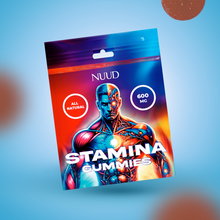
NUUD's libido gummies use the full five-botanical formula — Tribulus Terrestris + Muira Puama + Boiled Rehmannia Root + Piper Nigrum + NUUD Mushroom Complex — designed for the hormonal and neural pathways that post-menopause desire depends on.
- Libido Gummies for Women
- See full women's libido collection
- Read our menopause intimacy guide for couples
Frequently Asked Questions
Is it normal to have no sex drive after menopause?
Common, yes. Unavoidable, no. The physiological drivers are real but addressable. Most women who implement consistent lifestyle and botanical support see meaningful improvement. Accepting permanent desire loss as inevitable is not the only option.
What vitamins help with libido after menopause?
Vitamin D deficiency correlates with low testosterone and poor sexual function — correcting a deficiency can help. Zinc supports testosterone production. Neither is a libido solution on its own. Botanical supplements (Tribulus, Muira Puama) address the hormonal signaling pathways more directly than vitamins alone.
How long does it take to increase libido after menopause naturally?
Most women see initial improvement at 4–6 weeks with consistent botanical support and lifestyle changes. Full effect typically appears at 8–12 weeks. The cortisol layer often resolves in the first 2–4 weeks; the desire signal itself follows as the hormonal environment improves.
Does testosterone therapy help with libido after menopause?
Yes — low-dose topical testosterone is among the most evidence-supported interventions for post-menopause libido loss, but requires a prescriber. Tribulus Terrestris supports an adjacent pathway (LH-mediated testosterone availability) and is the best-studied botanical alternative for those who prefer non-prescription support first.
Can stress make post-menopause low libido worse?
Significantly. Elevated cortisol suppresses GnRH, which cascades into lower sex hormone production. Post-menopause women have less estrogen buffering the HPA axis, making cortisol management foundational to any libido protocol — not optional.
NUUD's libido supplements for women over 40 pair Tribulus Terrestris and Muira Puama in a hormone-free formula.
*These statements have not been evaluated by the Food and Drug Administration. This product is not intended to diagnose, treat, cure, or prevent any disease.
