

Natural Aphrodisiacs: From Ancient Remedies to Modern Wellness
Share
By the NUUD team
People have been looking for a natural aphrodisiac for about as long as people have been writing anything down. The search shows up in Ayurvedic texts from roughly 3,000 years ago, in Chinese materia medica from the Han dynasty, in Greek and Roman medical writing, in Amazonian plant lore, in Andean folk medicine, in medieval European herbals. Every culture that has thought carefully about the body has produced a list of plants, foods, and preparations believed to bring desire back. If you're reading this because you've noticed your own has gone quieter than it used to be, the first thing worth saying is that you are in a very long line of people who have asked the same question. There is nothing modern, and nothing shameful, about the asking.
This post is an honest survey. What the word actually means, what the traditions used, what modern research has and hasn't confirmed, and how to think about the category if you're considering trying something. We'll be transparent at the end about the fact that we make plant-based products in this space ourselves.
What "aphrodisiac" actually means
The word comes from Aphrodite, the Greek goddess of love and desire. In plain use, an aphrodisiac is any substance believed to stimulate sexual desire, arousal, or pleasure. That's the cultural definition. The regulatory definition is more specific, and shorter: there isn't one. The U.S. Food and Drug Administration does not formally recognize any over-the-counter aphrodisiac, and in 1989 the agency stated that no over-the-counter product has been proven safe and effective for this purpose under its standards.
That doesn't mean nothing works. It means "aphrodisiac" is a traditional and colloquial term, not a medical one, and that anyone selling you one has to be careful about the claims they make. Throughout this post we'll use it in its traditional sense — substances historically and culturally associated with desire — while being clear about which ones have modern human research behind them and which ones rest mostly on reputation.
Ancient traditions, honestly handled
Most of what gets sold today as a "natural aphrodisiac" traces back to one of a handful of older medical traditions. A quick tour, with the caveat that folk reputation is not the same thing as clinical evidence.
Ayurveda (India)
The Ayurvedic tradition has a specific category for desire-supporting herbs — vajikarana, literally "that which makes one like a stallion." The most prominent members are ashwagandha (Withania somnifera), a root traditionally used for stress, stamina, and vitality; shatavari (Asparagus racemosus), traditionally associated with female reproductive wellness; and gokshura (Tribulus terrestris), used for male vigor. These herbs have been used in that context for roughly 3,000 years.
Traditional Chinese Medicine
TCM has a long record of ginseng (Panax ginseng) as a qi tonic associated with vitality and, specifically, male vigor. Cordyceps, a fungus, has a similar reputation and has been used for stamina and sexual vigor in classical Chinese texts. Historical TCM also used animal-derived preparations — deer antler velvet, seahorse — that we won't recommend here for both ethical and evidence reasons.
Amazonian and Andean
From the Amazon, muira puama (Ptychopetalum olacoides), sometimes called "potency wood," has a folk reputation for both male and female desire. Catuaba, another Brazilian bark, shows up in the same lists. From the Peruvian Andes, maca (Lepidium meyenii) has been cultivated at altitude for roughly 2,000 years and used by Indigenous Quechua populations for fertility and stamina.
Mediterranean and Middle Eastern
The Greeks and Romans wrote about fennel, figs, oysters, and wine. Persian medicine valued saffron (Crocus sativus) — the dried stigmas of the crocus flower — for mood, digestion, and what we would now call sexual wellness. Saffron is one of the rare ancient aphrodisiacs that has since drawn meaningful clinical attention.
The honest framing: most of these traditions observed real effects in real people across many generations. That's worth respecting. It's also not the same thing as a randomized controlled trial. Some of these plants have since been studied seriously and the old observations have held up. Others haven't been studied much, and still others have been studied and the evidence hasn't supported the reputation. Below, we sort what's known.
Modern evidence, tiered honestly
Here's how we'd stack the evidence right now. We'll name the strongest studies. Nothing below is "clinically proven" — research on natural products is usually smaller and messier than pharmaceutical research — but some ingredients have real human data and some don't.
Tier 1 — Randomized controlled trial evidence in humans
Ashwagandha. A 2015 randomized, double-blind, placebo-controlled study by Dongre and colleagues, published in BioMed Research International, looked at a standardized ashwagandha root extract (KSM-66) in women reporting low sexual desire and found improvements across desire, arousal, lubrication, orgasm, and satisfaction scores compared with placebo over eight weeks. You can read the study on PubMed (PMID: 26504795). Ashwagandha has separate human evidence for stress and stamina, which may be part of the mechanism — chronic stress is one of the most consistent suppressors of desire.
Maca. A 2002 study by Gonzales and colleagues in the journal Andrologia found that gelatinized maca improved self-reported sexual desire in healthy men over a twelve-week period, independent of changes in testosterone — read the original on PubMed (PMID: 12472620). A 2008 double-blind study by Dording and colleagues in CNS Neuroscience & Therapeutics tested maca specifically in people experiencing SSRI-induced sexual dysfunction and found benefit at the higher (3 g/day) dose — PubMed (PMID: 18801111). A 2010 systematic review by Shin and colleagues in BMC Complementary and Alternative Medicine concluded that the trials were small but suggestive of benefit, while calling for larger and more rigorous studies — PubMed (PMID: 20414545).
Saffron. Several small randomized trials have looked at saffron (Crocus sativus) for sexual function, particularly in the context of antidepressant-induced sexual dysfunction. The results across the small body of work have been mildly to moderately positive — saffron appeared to support aspects of arousal and satisfaction compared with placebo. The evidence is promising but the trials are small; larger studies would help.
Tier 2 — Emerging human data
Fenugreek. A handful of studies on standardized fenugreek extracts have reported improvements in free testosterone, sexual arousal, and desire in both men and women. The studies are small and industry-sponsored more often than not, which doesn't invalidate them but does warrant a conservative read.
Tongkat ali (Eurycoma longifolia). Small trials have reported improvements in hormonal markers and self-reported vigor in men, with some studies extending to stress and mood. The data is real but limited. Consistency of extract quality between products is a known issue.
Ginseng. Panax ginseng has a reasonable body of small-trial evidence for male sexual function, particularly erectile function. Korean red ginseng is the most-studied form. The size and quality of the trials vary.
Tier 3 — Mostly preclinical or mechanism-only
Horny goat weed (Epimedium) contains icariin, a compound that acts as a PDE5 inhibitor in laboratory settings — the same enzyme target as prescription medications for erectile function. Almost all of the evidence is from animal studies. Human trials are sparse.
Tribulus terrestris. Despite its folk reputation, well-designed trials in men have mostly failed to show meaningful testosterone or sexual-function changes. Some trials in women have been more positive. The evidence is mixed at best.
Muira puama and catuaba. Animal data and small uncontrolled human observations exist. Rigorous human trials are mostly absent.
Tier 4 — Folk reputation, limited modern research
This is where most of the ancient list lives. Figs, fennel, oysters, chocolate, asparagus, pomegranate — culturally associated with desire, sometimes with a plausible mechanism (zinc in oysters, flavonoids in chocolate), rarely with a trial that isolates the sexual-function effect. None of this means they don't "work" for some people. It means the evidence is cultural, not clinical.
A note on yohimbine
You'll see yohimbine (from the bark of Pausinystalia yohimbe) in older aphrodisiac literature and in some current supplements. It does have measurable activity on circulation and arousal. It also has well-documented cardiovascular risks — elevated heart rate, elevated blood pressure, anxiety, and interactions with a wide range of medications. We don't recommend it for casual use. If you're considering it, that's a conversation for your healthcare provider, not a blog post.
The modern entry: cannabinoids
The most recent addition to the "things humans use to support intimacy" list is the cannabinoid category — THC, CBD, and newer hemp-derived cannabinoids including HHC. Cannabis itself isn't new; humans have tied cannabis to sex for thousands of years. What's new is the regulated hemp framework that made non-THC and low-THC cannabinoids accessible to mainstream consumers over the past decade.
A 2019 study by Wiebe and Just in the Journal of Sexual Medicine surveyed people who used cannabis with sex and found that most reported improvements in sexual desire (58.9%) and satisfaction (73.8%), while response is dose-dependent and individual - read it on PubMed (PMID: 31447385). The response is highly individual.
If this part of the picture is what brought you here, we've written two companion posts: What Is HHC? covers the basics of the cannabinoid itself, and HHC for Sex: Does It Actually Work? covers how people actually use it for intimacy. NUUD carries hemp diffusers — the passion-fruit for women and watermelon-mint for men — and aphrodisiac gummies (NUUD Sex Bites) in women's and men's flavors, for customers who prefer an edible format.
What actually matters, if you're trying to choose
A few things we've learned reading the evidence and talking to customers.
Combining mechanisms tends to beat stacking doses
The plants that work do so through different routes — stress reduction (ashwagandha), HPG-axis support (maca), mood and satisfaction (saffron), circulation (ginseng), endocannabinoid activation (cannabinoids). A formula that brings two or three of these together is generally better than a mega-dose of one. More of the same ingredient is not more of the same effect.
Timelines are honest, not instant
Most of the daily-use botanicals — ashwagandha, maca, fenugreek — show effects over four to twelve weeks in the trials that found benefit. A one-dose-one-night framing doesn't match the evidence. There are faster-acting options in the category (some cannabinoids, saffron for acute mood, some formulations designed for same-day use), but if you're starting with a daily herb, plan for weeks, not hours.
If medication is in the picture, loop in your provider
SSRIs, hormonal birth control, certain blood pressure medications, and some antihistamines are well-documented causes of lowered libido. Natural aphrodisiacs can be part of the picture, but they aren't a workaround for a medication-side-effect issue. If something changed when you started a new prescription, the most productive first conversation is with the prescriber.
"Natural" isn't automatically safe
Grapefruit is natural. Yohimbine is natural. Plenty of natural compounds interact with medications or aren't appropriate for pregnancy, breastfeeding, certain cardiac conditions, or hormone-sensitive conditions. Read the label. Ask your healthcare provider. "Plant-based" is a reason to take something seriously, not a reason to skip due diligence.
Where NUUD fits (transparent disclosure)
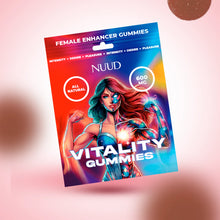
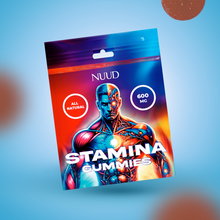
We make plant-based products in this space. Our non-hemp lineup draws directly from the tradition this post just walked through — Tribulus Terrestris, Muira Puama, Boiled Rehmannia Root, Piper Nigrum, and a proprietary NUUD Mushroom Complex are the active core. We offer the formula in two equivalent formats, a gummy and a capsule, priced the same, so customers can pick the format they prefer. If you're curious what we've built with these ingredients, the landing pages for NUUD for her, NUUD for him, and NUUD for both walk through the formulas, and the full lineup lives at /pages/shop.
We'll be honest about what the evidence supports and what it doesn't. We use plants with real human data (ashwagandha, maca) alongside plants with promising traditional use (cordyceps, our mushroom complex). We don't claim any of our products are FDA-approved aphrodisiacs — no supplement is. We do claim they're designed thoughtfully, with ingredients that have been used for this purpose for a very long time, in doses chosen against the existing research. Many of our customers tell us they feel the difference. Some don't. Bodies vary.
If you've tried daily libido supplements before and felt nothing, that experience is real and we take it seriously. It's often an ingredient-quality issue, a dose issue, or a wrong-fit-for-the-cause issue. We built the line to be transparent about all three.
"I love these things. After a few hits the tingling starts and then the fun can begin. I am in my mid 50s and have the best sex life now — more so than when I was younger."
— Kristi A., verified NUUD customer (★★★★★)
Frequently asked questions
What is the most effective natural aphrodisiac?
There's no single "most effective" answer because the evidence varies by ingredient and by person. Among botanicals with randomized controlled trial evidence in humans, ashwagandha (Dongre 2015) and maca (Gonzales 2002; Dording 2008) have the cleanest track record for supporting sexual desire. Saffron has smaller but consistent evidence for sexual function, particularly in the context of antidepressant-related effects. Response is individual.
Do natural aphrodisiacs actually work?
Some do, according to human research — ashwagandha, maca, and saffron in particular have randomized trial data supporting their use for aspects of sexual function. Others rest mostly on traditional reputation without modern confirmation. The category is real, but quality, dose, and fit for the underlying cause matter more than brand claims.
How long do natural aphrodisiacs take to work?
Most daily-use botanicals (ashwagandha, maca, fenugreek, ginseng) show effects over roughly four to twelve weeks in the trials that found benefit. Some options — specific saffron formulations, certain cannabinoids — are intended for same-day use. A good rule is to follow the product's specific directions rather than assuming faster is better.
Are natural aphrodisiacs safe?
Most of the well-studied options (ashwagandha, maca, saffron at typical doses) have a reasonable safety record in healthy adults, but "natural" isn't a guarantee. Yohimbine in particular carries cardiovascular risk. Anyone who is pregnant, nursing, on medications, or managing a medical condition should talk to a healthcare provider before starting a supplement.
Is there a natural alternative to prescription libido medication?
We can't make that comparison, and we wouldn't. Prescription medications are regulated and evaluated against a clinical standard that supplements aren't. What we can say is that some people find meaningful support from plant-based options, either on their own or alongside other care. If you're considering stopping or replacing a prescription, that's a conversation to have with the prescriber, not a decision to make based on a blog post.
Can natural aphrodisiacs help with low libido from SSRIs or birth control?
The strongest evidence here is for maca in SSRI-induced sexual dysfunction — a 2008 double-blind trial by Dording and colleagues found benefit at 3 g/day. Some customers find similar support from ashwagandha (via stress reduction) or saffron (via mood). None of these replace a conversation with the prescriber about the medication itself.
Disclosure: NUUD Pleasures sells plant-based supplements, including products formulated with tribulus terrestris, muira puama, boiled rehmannia root, and a proprietary mushroom complex. This post reflects our perspective as a brand in the category.
Hemp disclaimer: Products referenced in the cannabinoid section are derived from hemp and contain less than 0.3% delta-9 THC by dry weight. Must be 21+ to purchase.
FDA disclaimer: These statements have not been evaluated by the Food and Drug Administration. These products are not intended to diagnose, treat, cure, or prevent any disease. Consult your healthcare provider before starting any supplement, especially if you are pregnant, nursing, taking medication, or managing a medical condition.
Keep Reading
For the deeper evidence-graded review, see aphrodisiacs that actually work. For the mushroom research specifically — Cordyceps, Reishi, Lion's Mane, Chaga — read mushrooms for libido and sex drive. For couples navigating long-term familiarity, the Coolidge Effect explains why desire fades and what the research supports doing about it.
Shop the NUUD Line
- NUUD Libido Gummies for Women — fast-acting natural female libido enhancer
- NUUD Libido Gummies for Men — stamina gummies, lasts up to 3 days
- Vitality Capsules for Women — most potent, up to 6 days
- Stamina Capsules for Men — most potent, up to 6 days
- NUUD Lovers Pleasure Bundle — aphrodisiac kit for couples
