


Rehmannia Root for Libido: The Ancient Chinese Herb for Sexual Vitality
Share
Rehmannia glutinosa (Boiled Rehmannia, Shu Di Huang) is the primary herb in Liu Wei Di Huang Wan — traditional Chinese medicine's most prescribed vitality formula, used continuously for over 900 years. Its proposed mechanism for libido: HPA axis modulation, adrenal support, and cortisol normalization. Chronic stress elevates cortisol, which suppresses the sex hormone cascade at the source. Rehmannia addresses that upstream suppression. Direct human RCTs for libido specifically are limited; the evidence base is traditional use, preclinical research, and combination formula studies.
Most people searching for rehmannia root libido benefits have never heard of the herb before — and most Western supplement brands skip it entirely. That's the gap. Rehmannia glutinosa (Boiled Rehmannia Root, Shu Di Huang) is arguably the most important herb in traditional Chinese medicine for sexual and reproductive vitality, and it's been hiding in plain sight behind flashier botanicals like ashwagandha and maca.
What Is Rehmannia Root?
Rehmannia glutinosa is a flowering plant native to China, with roots that have been used medicinally for over two thousand years. In traditional Chinese medicine (TCM) it is classified as a Kidney Yin tonic — the foundational reservoir of sexual, reproductive, and longevity energy. When TCM practitioners diagnose Kidney Yin deficiency — a pattern associated with low libido, fatigue, night sweats, dryness, and reduced vitality — Rehmannia is almost always the primary herb in the prescription.
The active compounds include iridoid glycosides (catalpol, aucubin), stachyose oligosaccharides, rehmaglutin polysaccharides, and catechin. A comprehensive 2008 ethnopharmacology review by Zhang et al. documents Rehmannia's pharmacological range: neuroprotective, anti-inflammatory, adrenal-trophic, and endocrine-modulating effects across multiple organ systems.
The Stress-Libido Connection: Why Rehmannia Matters
To understand why Rehmannia belongs in a libido formula, start with one fact: cortisol is desire's enemy.
When the hypothalamic-pituitary-adrenal (HPA) axis is chronically activated — by work pressure, poor sleep, relationship conflict, or any sustained stressor — the body deprioritizes reproduction. Elevated cortisol suppresses gonadotropin-releasing hormone (GnRH) pulse frequency, which reduces LH and FSH output, which in turn lowers testosterone and estrogen. The result: desire drops at the hormonal source, before any psychological layer is even involved.
Research on chronic stress and female sexual function consistently finds HPA dysregulation as one of the strongest predictors of reduced desire — independent of relationship satisfaction and mental health measures. The same pattern holds in men: chronic psychological stress suppresses morning testosterone and reduces sexual motivation on a physiological level.
Rehmannia's proposed role in this pathway:
- Adrenal cortex trophic support — preclinical research suggests Rehmannia extracts may help normalize cortisol output after chronic stress exposure, preventing the adrenal depletion pattern that follows sustained HPA activation
- Catalpol's neuroendocrine effects — the primary iridoid glycoside in Rehmannia has been studied in animal models for neuroprotection and neuroendocrine normalization
- Kidney Yin restoration — in TCM, this corresponds to a cluster of clinical signs (night sweats, dryness, heat, fatigue, low desire) that maps broadly onto HPA dysregulation and estrogen-deficiency states
Liu Wei Di Huang Wan: The Clinical Formula
The most compelling evidence for Rehmannia's role in sexual vitality comes from the world's most prescribed TCM formula: Liu Wei Di Huang Wan (Six-Flavor Rehmannia Pill), in which Rehmannia is the primary ingredient at roughly 32% of the total formula by weight.
This formula has been used continuously for over 900 years and is the subject of hundreds of clinical investigations in Chinese and international medical literature. Its indications include Kidney Yin deficiency — the pattern most consistently associated with age-related decline in libido, lubrication, and sexual vitality in both men and women. Its use in menopausal women for hot flashes, night sweats, and declining desire is among the most documented applications in TCM clinical research.
Standalone Rehmannia RCTs for libido specifically are limited in the English-language literature — this is a genuine gap. What exists is robust preclinical data, two millennia of traditional clinical documentation, and combination formula trials. This is a different evidence posture than Tribulus terrestris (strong human RCT evidence) or Muira Puama (human clinical studies). Supplement brands that include Rehmannia are betting on formula wisdom rather than a single-ingredient endpoint — a defensible position given its uninterrupted clinical history.
How Rehmannia Fits a Modern Libido Stack
| Herb | Primary Mechanism | Evidence Tier | Best For |
|---|---|---|---|
| Rehmannia Root | HPA axis / adrenal support, cortisol normalization | Traditional + preclinical + combination formula | Stress-suppressed libido, menopausal dryness, fatigue-pattern low desire |
| Tribulus Terrestris | Androgen receptor sensitivity, CNS arousal threshold | Human RCTs (women + men) | Low baseline desire, premenopausal women, mild ED in men |
| Muira Puama | Dopaminergic + cholinergic CNS activation | Human clinical studies (pre/postmenopausal women) | Desire initiation, fantasy frequency, menopausal women |
| Ashwagandha | Cortisol reduction (stress pathway) | Human RCTs (women) | Stress-related low libido, anxiety component |
5 Ways Chronic Stress Suppresses Libido — and Why Rehmannia Addresses the Root
- Cortisol competes with sex hormones at synthesis. Both cortisol and sex hormones share pregnenolone as a precursor. Under chronic stress, the body routes pregnenolone preferentially toward cortisol production — leaving less available for testosterone and estrogen synthesis.
- Elevated cortisol blunts GnRH pulse frequency. GnRH drives the entire downstream sex hormone cascade. Cortisol-mediated inhibition of GnRH reduces LH and FSH, suppressing gonadal hormone output at the source rather than the endpoint.
- The sympathetic nervous system is arousal's opposite. Sexual desire requires parasympathetic dominance. Chronic stress keeps sympathetic tone elevated, making the neurological transition into desire states harder — regardless of motivation or relationship quality.
- Sleep disruption compounds hormonal suppression. Poor sleep — stress's most common downstream effect — independently reduces testosterone and depletes the physical and cognitive energy that desire requires to surface.
- Cortisol reduces genital blood flow. Research using vaginal plethysmography shows measurable reductions in genital blood flow under stress conditions, even in women with no reported desire complaints at baseline.
How NUUD Uses Rehmannia Root
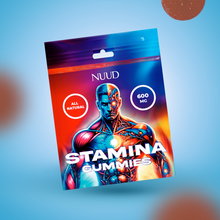
In NUUD's non-hemp formula, Boiled Rehmannia Root (Rehmannia glutinosa) plays the adrenal-support role: addressing the upstream stress-pathway suppression of desire while Tribulus terrestris handles the receptor-sensitivity pathway and Muira Puama activates the dopaminergic desire system. Piper Nigrum (black pepper extract, standardized to piperine) enhances absorption of the full formula.
- Vitality Libido Gummies for Her
- Stamina Libido Gummies for Him
- Vitality Capsule for Her
- Stamina Capsule for Him
- Watermelon Lime Intimacy Drink
- Berry Bliss Performance Drink for Him
Frequently Asked Questions
What does rehmannia root do for the body?
Rehmannia glutinosa is used primarily as a Kidney Yin tonic in traditional Chinese medicine. Modern research points to HPA axis modulation (adrenal support and cortisol normalization), neuroprotective effects via the iridoid glycoside catalpol, and anti-inflammatory activity. It is the primary herb in Liu Wei Di Huang Wan, the most prescribed TCM formula for vitality and reproductive health.
How does rehmannia root support libido?
The proposed pathway is cortisol regulation. Chronic stress elevates cortisol, which suppresses GnRH pulse frequency, reduces sex hormone output, and keeps the sympathetic nervous system elevated — making arousal neurologically harder. Rehmannia's adrenal-trophic properties may help normalize this HPA stress response, restoring the physiological conditions in which desire can function. Direct human RCTs for libido specifically are limited; the evidence is primarily traditional use and mechanistic.
What is rehmannia root used for in Chinese medicine?
Rehmannia is the prototypical Kidney Yin tonic — prescribed for the cluster of symptoms TCM associates with yin deficiency: fatigue, night sweats, dryness, low libido, and reduced vitality. Boiled Rehmannia (Shu Di Huang) is used specifically for tonifying purposes; raw Rehmannia (Sheng Di Huang) is used for cooling and clearing.
Is rehmannia root safe?
Rehmannia is generally considered safe in traditional doses. Some people experience digestive sensitivity (bloating, loose stools) at higher doses — which is why TCM formulas typically include digestive herbs alongside it. As with all botanicals, consult a healthcare provider if pregnant, breastfeeding, or managing a chronic condition.
How long does rehmannia take to work?
TCM practitioners assess tonic herbs over a minimum of 4–8 weeks. Unlike fast-acting herbs, Rehmannia's mechanism is restorative — it works by normalizing a dysregulated system, not by triggering an acute response. Allow 6–12 weeks for a fair evaluation of any tonic herb formula.
*These statements have not been evaluated by the Food and Drug Administration. This product is not intended to diagnose, treat, cure, or prevent any disease.
