

Stress Is Killing Your Sex Drive (Here's the Exact Mechanism)
Share
If your sex drive has gone quiet during a difficult stretch at work, after a major life upheaval, or during a prolonged period of anxiety, you're not imagining it. There's a direct, documented mechanism connecting psychological stress to low libido — and it has nothing to do with willpower or attraction.
The Hormonal Mechanism: How Stress Kills Libido
Sexual desire depends on a finely tuned hormonal cascade called the hypothalamic-pituitary-gonadal (HPG) axis. The hypothalamus releases gonadotropin-releasing hormone (GnRH), which signals the pituitary to release LH and FSH, which signal the gonads to produce testosterone and estrogen. Testosterone — even in small amounts — is the primary driver of desire in both men and women.
Stress activates a competing cascade: the hypothalamic-pituitary-adrenal (HPA) axis. The HPA releases cortisol and other glucocorticoids — your body's emergency response hormones. Cortisol directly suppresses GnRH at the hypothalamus, LH at the pituitary, and testosterone and estrogen production at the gonads. Stress doesn't just distract you from sex. It shuts down the biological machinery that generates desire.
A 2013 study by Whirledge and Cidlowski (PMID 24064362) confirmed this mechanism: glucocorticoids impair reproduction by blocking the HPG axis at every level — hypothalamus, pituitary, and gonadal tissue simultaneously. An earlier review from the same researchers (PMID 20595939) established that chronic glucocorticoid exposure consistently inhibits sex hormone production.
What Happens in Women Under Chronic Stress
The clinical evidence is specific. A 2019 study (PMID 30909007) found that women diagnosed with hypoactive sexual desire disorder (HSDD — persistent low libido) showed measurably dysregulated HPA axis markers, including lower DHEA-S and altered cortisol patterns, compared to controls with normal desire. This HPA dysregulation correlated directly with reduced desire scores.
A controlled lab study (PMID 23841462) divided women into high-chronic-stress and average-stress groups, then measured physiological arousal. High-stress women had significantly lower genital arousal and higher cortisol. The study identified two overlapping mechanisms: the hormonal (elevated cortisol suppressing desire) and the cognitive (stress creates mental noise that competes with sexual attention — and both pathways must clear for desire to return).
What Happens in Men Under Chronic Stress
In men, cortisol directly suppresses Leydig cell testosterone production in the testes. Acute stress can briefly spike testosterone (PMID 22407091), but sustained HPA activation consistently lowers it. Chronic stress also elevates prolactin, which has an additional inhibitory effect on libido and performance.
Comparison: Stress-Driven vs. Baseline Low Libido
| Factor | Stress-Driven Low Libido | Baseline Low Libido |
|---|---|---|
| Primary cause | Cortisol suppressing HPG axis | Low hormone baseline, age, relationship factors |
| Onset | Tied to a specific stressful period | Gradual, not event-linked |
| Reversibility | Often resolves when stress reduces | Requires more sustained intervention |
| Mental noise during sex | High — intrusive thoughts interfere | Lower — more absence of desire than interference |
| Supplement role | Supportive — helps restore desire as cortisol normalizes | Primary driver — directly activates libido pathways |
5 Things to Know About Stress and Sex Drive
- The suppression is biological, not psychological. Cortisol physically blocks hormone production at three levels simultaneously. Low libido during a stressful period isn't about attraction or motivation — it's a measurable hormonal effect with a documented mechanism.
- Chronic stress is more damaging than acute stress. Brief, intense stress can temporarily spike testosterone. Sustained stress — weeks to months — consistently suppresses it. Duration matters far more than peak intensity.
- Mental noise is a second, overlapping mechanism. Even when hormones partially recover, cognitive distraction from stress competes with sexual attention. Both pathways need to clear for desire to return fully.
- Your body prioritizes survival over reproduction under threat. The HPA and HPG axes are in direct competition for hypothalamic resources. Under chronic stress, your biology has classified intimacy as non-essential. This is evolutionarily logical — and reversible.
- Supplements work best as a complement, not a fix. Botanicals like Tribulus Terrestris and Muira Puama support the libido pathways that remain active. They're most effective when stress is acute or resolving — not when the HPA axis is in full cortisol override.
Where NUUD Fits In
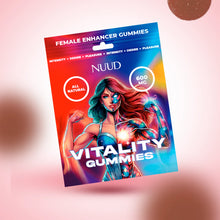
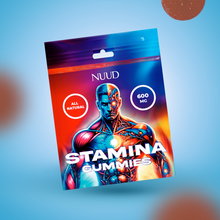
NUUD libido supplements contain Tribulus Terrestris, Muira Puama, Boiled Rehmannia Root, Piper Nigrum, and NUUD Mushroom Complex™. These botanicals work through desire and libido pathways — supporting testosterone precursor activity, neural sensitization, and hormonal balance. They're most effective when stress is situational or resolving: helping restore desire faster as the cortisol load normalizes. If chronic stress is your primary driver, addressing the cortisol source is the essential first step. NUUD works best alongside that — not instead of it.
→ Women's libido gummies · Libido gummies for men · Full NUUD supplement line
Research Citations
- Whirledge S, Cidlowski JA. A role for glucocorticoids in stress-impaired reproduction: beyond the hypothalamus and pituitary. Endocrinology. 2013. PMID: 24064362
- Whirledge S, Cidlowski JA. Glucocorticoids, stress, and fertility. Minerva Endocrinol. 2010. PMID: 20595939
- Blumenthal H, et al. Dehydroepiandrosterone and cortisol as markers of HPA axis dysregulation in women with low sexual desire. J Sex Med. 2019. PMID: 30909007
- Hamilton LD, Meston CM. Chronic stress and sexual function in women. J Sex Med. 2013;10(10):2443–2454. PMID: 23841462
- Chichinadze K, et al. Sex steroid levels temporarily increase in response to acute psychosocial stress in healthy men and women. Psychoneuroendocrinology. 2012. PMID: 22407091
Frequently Asked Questions
Can stress actually cause low libido?
Yes. Chronic stress elevates cortisol, which suppresses GnRH, LH, and sex hormone production at every level of the HPG axis. Clinical studies confirm that women under high chronic stress have measurably lower sexual arousal and higher cortisol than controls. This is a biological mechanism with a documented pathway — not a psychological one.
How long does stress-related low libido last?
The suppression is largely reversible. Once the stressor resolves and cortisol levels normalize, the HPG axis typically recovers. Acute stress effects can resolve in days to weeks. Chronic stress that has persisted for months may take longer — the axis needs time to recalibrate after sustained cortisol suppression.
Does stress affect sex drive differently in men vs. women?
The underlying mechanism is the same (cortisol suppresses the HPG axis) but the expression differs. Women are more susceptible to mental noise interference — stress creates cognitive distraction that reduces arousal even when hormones partially recover. Men experience more direct testosterone suppression via Leydig cell inhibition. Both sexes show reduced desire under sustained stress.
Will libido supplements help with stress-related low sex drive?
They can help support desire pathways that remain active, particularly when stress is acute or resolving. Botanicals like Tribulus Terrestris and Muira Puama work through libido and desire mechanisms. They're most effective when cortisol isn't in full override mode — working best alongside stress reduction, not instead of it.
What's the fastest way to restore sex drive after a stressful period?
Reduce the cortisol source first — sleep, exercise, and stress management are the primary levers. Once the HPA load drops, libido often begins recovering naturally. NUUD libido supplements can support and accelerate this recovery by activating desire pathways as cortisol normalizes, but they complement stress reduction rather than replace it.
*These statements have not been evaluated by the Food and Drug Administration. This product is not intended to diagnose, treat, cure, or prevent any disease.
