

Does Birth Control Kill Your Libido? Why Desire and Sensation Drop on the Pill
Share
Does birth control kill your libido? For some women, yes. Combined hormonal birth control can lower desire, arousal, and lubrication, but this happens to a minority, not everyone. The honest answer is that the effect is real, variable, and very individual.
Birth control and libido have a complicated relationship. One large review of 8,422 pill users found about 14.7% reported lower desire, while roughly 21.7% reported more and 63.6% reported no change at all (Pastor et al., Eur J Contracept Reprod Health Care, 2013; PMID 23320933). So most women notice nothing, or feel better. A smaller group does feel a drop.
If you are in that smaller group, the change is not in your head, and you are not imagining it. This article explains the biology, who tends to be affected, and the practical next steps to discuss with a doctor.
- Roughly 15% of combined pill users report lower libido; about 85% report no change or an increase (Pastor et al., 2013; PMID 23320933).
- The main mechanism is higher SHBG, which binds free testosterone; long-term pill users averaged about 4 times more SHBG than never-users (Panzer et al., 2006; PMID 16409223).
- A randomized trial showed lower desire, arousal, and pleasure on the pill versus placebo, even when overall sexual function looked similar (Zethraeus et al., 2016; PMID 27525531).
- The pill is linked to vestibular pain and tenderness in some users, not all (Bouchard et al., 2002; PMID 12142260).
- Evidence across studies is inconsistent and depends on the type of contraception, so any switch is a doctor conversation (Saadedine and Faubion, 2024; PMID 38777490).
How does birth control affect testosterone and desire?
The clearest mechanism runs through a blood protein called sex hormone-binding globulin, or SHBG. Continued oral contraceptive users had SHBG levels roughly 4 times higher than women who never used the pill, about 157 versus 41 nmol/L (Panzer et al., J Sex Med, 2006; PMID 16409223). More SHBG means less free testosterone.
Here is why that matters for desire. Testosterone is one of the hormones tied to sexual interest in women. SHBG acts like a sponge in the bloodstream, soaking up testosterone so less of it stays free and active. The synthetic estrogen in combined pills tells the liver to make more SHBG, so the sponge gets bigger.
The Panzer team also found something many women are not told. SHBG stayed significantly elevated even more than 120 days after stopping the pill (Panzer et al., 2006; PMID 16409223). For most women the numbers do drift back over time, but the rebound is not always instant.
Does lower free testosterone always translate to lower desire? No, and that is the catch. Desire is built from hormones, mood, stress, relationship context, and sleep. Hormones are one input among many, which is part of why the research stays messy. If you want the fuller picture of female desire, see our guide to low libido in women.
The mechanism is well documented: combined oral contraceptives raise SHBG roughly fourfold and lower free testosterone, a hormone tied to sexual interest, with one study showing SHBG still elevated more than 120 days after stopping (Panzer et al., J Sex Med, 2006; PMID 16409223).
Who actually notices a libido drop on the pill?
Most pill users do not report a problem. In a systematic review of 36 studies covering 8,422 combined oral contraceptive users, about 63.6% reported no change in libido, 21.7% reported an increase, and 14.7% reported a decrease (Pastor et al., Eur J Contracept Reprod Health Care, 2013; PMID 23320933). That is roughly one in seven feeling a dip.
So why does the topic feel so loud online? Because the women who feel a drop are the ones searching for answers, while the majority who feel fine never post about it. Both experiences are valid. The data simply says a decrease is the minority outcome, not the default.
The strongest evidence for a real pill effect comes from a randomized, double-blind, placebo-controlled trial, the gold standard for cause and effect. Among 332 women who completed it, the pill group scored lower than placebo on desire by 4.4 points, arousal by 5.1 points, and pleasure by 5.1 points, all statistically significant (Zethraeus et al., J Clin Endocrinol Metab, 2016; PMID 27525531).
Notice the nuance. In that same trial, the overall sexual function score looked similar between groups. The pill nudged the specific dimensions of desire, arousal, and pleasure down, while other parts of the experience held steady. That is why a woman can feel "off" in a way that is hard to name.
A randomized placebo-controlled trial of 332 women found the combined pill significantly lowered desire, arousal, and pleasure versus placebo, even though overall sexual function scores were similar, showing the pill can affect specific dimensions of sexuality rather than function as a whole (Zethraeus et al., J Clin Endocrinol Metab, 2016; PMID 27525531).
Can the pill change sensation, lubrication, or cause pain?
For some women, hormonal contraception is linked to genital pain and tenderness, though this is far from universal. A case-control study found that ever-use of oral contraceptives was associated with vulvar vestibulitis, a painful condition of the vaginal opening, with a relative risk of 6.6 (95% CI 2.5 to 17.4), and the risk was higher when use began before age 16 (Bouchard et al., Am J Epidemiol, 2002; PMID 12142260).
What might be happening in the tissue? One study measured pain thresholds directly. Oral contraceptive users had a lower mechanical pain threshold in the vestibular mucosa than non-users, about 72 versus 161 mN (Bohm-Starke et al., J Reprod Med, 2004; PMID 15603099). In plain terms, the tissue at the opening became more pain-sensitive.
This does not mean the pill universally causes dryness or pain. It means that in some users, lower androgen activity at the vaginal tissue may reduce comfort and natural lubrication, which can show up as discomfort during sex. If sex has started to hurt, that is a clear reason to talk to a clinician rather than push through.
Reduced sensation and arousal can also feel like lower desire even when the wanting is still there. If you are not sure whether you are dealing with a desire issue or an arousal and response issue, our explainer on responsive versus spontaneous desire can help you tell them apart.
Is it the dose, the type, or just you?
People often ask whether a lower-dose or different pill would fix things. The data does not give a clean answer. In a study of 2,612 women, the female sexual function score did not differ significantly by ethinylestradiol dose or by the type of progestin used (Wallwiener et al., Arch Gynecol Obstet, 2015; PMID 25905601). The response looks more individual than dose-driven.
It is also not only an oral-pill issue. In that same study, women using non-oral hormonal methods, such as the ring or patch, also reported sexual dysfunction at a meaningful rate of about 31.3% (Wallwiener et al., 2015; PMID 25905601). So switching from a pill to another hormonal method is not a guaranteed fix.
The most honest summary comes from a 2024 review. The correlation between hormonal contraception and sexual function lacks consistency across studies and varies by the type of contraception used (Saadedine and Faubion, Obstet Gynecol Clin North Am, 2024; PMID 38777490). Translation: there is no single rule that predicts how your body will respond.
| Contraception type | Reported effect on sexual function | What the evidence says |
|---|---|---|
| Combined oral pill | About 15% report lower libido; about 85% no change or higher | Raises SHBG, lowers free testosterone; randomized data show lower desire, arousal, pleasure (Pastor 2013; Zethraeus 2016) |
| Non-oral hormonal (ring, patch) | Dysfunction reported by about 31.3% of users | Switching method is not a guaranteed fix (Wallwiener 2015) |
| Lower-dose vs higher-dose pill | No clear difference by estrogen dose or progestin type | Response is individual, not a simple dose effect (Wallwiener 2015) |
| Overall picture | Inconsistent across studies, varies by person and method | No single rule predicts your result (Saadedine and Faubion 2024) |
Evidence does not support a simple dose fix: female sexual function scores did not differ significantly by estrogen dose or progestin type across 2,612 women, and non-oral hormonal methods also carried dysfunction risk near 31.3%, meaning the response is individual rather than dose-driven (Wallwiener et al., Arch Gynecol Obstet, 2015; PMID 25905601).
What can you actually do about low libido on the pill?
Start by separating the variables, because contraception is rarely the only thing affecting desire. Stress, sleep, relationship dynamics, and mood all pull on libido at the same time. In one review, about 85% of pill users reported no decline in desire, which means the pill is often not the main driver even when it is the easiest thing to blame (Pastor et al., 2013; PMID 23320933).
Cortisol from chronic stress is a common hidden factor here. If your life has been demanding, read our piece on stress, cortisol, and sex drive before you assume the pill is the culprit. Here is a practical sequence to bring to your clinician.
- Track the timeline. Note when you started the pill and when desire or comfort changed, so the pattern is clear.
- Rule out the obvious. Sleep, stress, new medications, and relationship strain can all lower libido on their own.
- Talk to your doctor about your options, which may include switching method, adjusting formulation, or pausing to observe.
- If pain is present, say so directly, since vestibular tenderness needs a clinical exam, not guesswork.
- Give any change a fair trial window, because hormones and tissue take weeks to settle, not days.
Never stop or switch contraception on your own based on a blog. The pill prevents pregnancy and treats real conditions, so any change is a shared decision with a clinician who knows your history.
Where does a botanical desire support fit in?
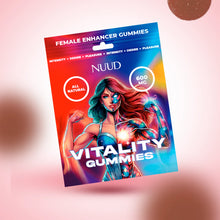
If you and your doctor have addressed the pill and desire still feels low, or if your low desire was never really about contraception, the missing piece may be the underlying desire capacity itself. This is a support layer, not a fix for anything birth control is doing, and it does not offset, counteract, or restore what the pill changes.
We are honest about the evidence here. NUUD Vitality Gummies use Tribulus Terrestris, Muira Puama, Boiled Rehmannia Root, Piper Nigrum, and the NUUD Mushroom Complex. For Tribulus, one randomized trial in women reported improved desire scores versus placebo (Akhtari et al., DARU, 2014; PMID 24773615, p less than 0.001). That is one trial, not a settled case, and we will not pretend otherwise.
You can browse the full range of libido gummies for women if you want to compare options. Whatever you choose, contraception decisions stay with your doctor, and a gummy is never a substitute for that conversation.
When should you see a doctor?
See a clinician when low desire bothers you, when sex becomes painful, or when symptoms persist after you have addressed sleep and stress. Because the evidence on contraception and sexual function is inconsistent and varies by person, a professional who knows your history is far better placed than any article to weigh your options (Saadedine and Faubion, Obstet Gynecol Clin North Am, 2024; PMID 38777490).
Bring specifics to the visit. Mention pain with sex, the timeline of changes, and any other symptoms, since these help your clinician decide whether a method change, a tissue exam, or a different workup makes sense. Painful sex in particular deserves a real evaluation rather than waiting it out.
Frequently asked questions
Does birth control lower your sex drive?
It can, for a minority. Across 8,422 combined pill users, about 14.7% reported lower desire while roughly 85% reported no change or an increase (Pastor et al., Eur J Contracept Reprod Health Care, 2013; PMID 23320933). So a drop is real but not the typical outcome.
Will my libido come back after stopping the pill?
Often it improves, though not always instantly. One study found SHBG, the protein that binds testosterone, stayed elevated more than 120 days after stopping (Panzer et al., J Sex Med, 2006; PMID 16409223). Give your body time, and discuss persistent changes with a doctor.
Which birth control is least likely to affect libido?
There is no clear winner. Sexual function scores did not differ significantly by estrogen dose or progestin type, and non-oral methods also carried dysfunction risk near 31.3% (Wallwiener et al., Arch Gynecol Obstet, 2015; PMID 25905601). The best match is individual, so ask your clinician.
Can the pill cause vaginal dryness or pain?
In some users, yes. Oral contraceptive users showed a lower vestibular pain threshold than non-users, about 72 versus 161 mN, meaning more pain-sensitive tissue (Bohm-Starke et al., J Reprod Med, 2004; PMID 15603099). If sex hurts, see a clinician.
Is low libido on birth control all in my head?
No. A randomized placebo-controlled trial found the pill significantly lowered desire, arousal, and pleasure versus placebo (Zethraeus et al., J Clin Endocrinol Metab, 2016; PMID 27525531). The effect is biological for some women, not imagined, even if it does not affect everyone.
*These statements have not been evaluated by the Food and Drug Administration. This product is not intended to diagnose, treat, cure, or prevent any disease.
