
Natural Testosterone Support After 40: What to Try Before TRT
Share
TL;DR: If your testosterone sits in the low-normal range (roughly 300 to 500 ng/dL) with symptoms, a few months of lifestyle work plus evidence-backed botanicals like Tribulus is a reasonable first step before TRT. Below 300 ng/dL with significant symptoms, TRT has the stronger evidence base and a doctor visit is the right move. NUUD's men's formula is a hormone-free botanical option for the low-normal group: Tribulus Terrestris, Muira Puama, Boiled Rehmannia Root, Piper Nigrum, and the NUUD Mushroom Complex. It does not contain Tongkat Ali or Cordyceps.
The "natural first" approach is not denial
The r/Testosterone community has been running this experiment for years. Men in their 30s and 40s with sub-optimal energy, drive, and libido trying Tongkat Ali, Shilajit, Boron, and fish oil before committing to testosterone replacement. Some improve significantly. Some plateau. Some eventually move to TRT anyway.
Men researching natural options before TRT are sometimes dismissed as being in denial. This misses the point. TRT is effective — and it's also a long-term commitment: suppression of natural testosterone production (sometimes permanent), potential fertility impact, and weekly injections or daily topical application for life. These are reasonable things to weigh before committing, especially for men who are not in acute deficiency.
A 6-month trial of lifestyle optimization combined with evidence-backed botanical support is a legitimate first step. It costs less, has fewer side effects, and gives you a real data point on what your body is capable of producing on its own.
Who this is for
Natural testosterone support works best for men in a specific window: testosterone in the low-normal range (roughly 300-500 ng/dL) with quality-of-life symptoms. This is the group where lifestyle and botanical interventions have documented effect.
For men with testosterone clearly below range (below 300 ng/dL with significant symptoms affecting daily function), TRT has a stronger evidence base and natural interventions are unlikely to close the gap meaningfully. If you're in this group, see a urologist or endocrinologist. Get a full panel — total T, free T, SHBG, LH, FSH — before making any decisions.
This post is for the low-normal group. The men whose labs come back "normal" but who don't feel normal. This group is larger than most people realize, and it's where lifestyle and botanical interventions can make a meaningful difference.
What the research actually says
Tongkat Ali (Eurycoma longifolia)
The most studied natural testosterone support compound. Ismail et al. 2012 (Phytotherapy Research) conducted a randomized controlled trial in 76 men: the Tongkat Ali group showed significant improvements in testosterone levels, erectile function, and libido scores compared to placebo over 12 weeks. The mechanism appears to involve LH stimulation and SHBG reduction — freeing up bound testosterone rather than creating production from scratch.
Henkel et al. 2014 (Asian Pacific Journal of Tropical Medicine) found that Tongkat Ali reduces cortisol while improving testosterone — a stress-hormone rebalance that may explain its dual effect on both energy and libido.
Cordyceps
A medicinal adaptogenic fungus with a documented body of stamina and energy research. The proposed mechanisms include improved ATP production and oxygen utilization. Zhou et al. 2004 (Journal of Alternative and Complementary Medicine) showed significant improvements in exercise capacity in older adults over 12 weeks. Cordyceps addresses the fatigue and drive components that sit alongside low-normal testosterone, even when direct T levels aren't the primary mechanism.
Tribulus Terrestris
Mixed evidence for testosterone itself, stronger evidence for sexual function. Kamenov et al. 2017 (Maturitas) found improvements in sexual desire and satisfaction in men with mild sexual dysfunction over 90 days. Worth including for the libido and drive layer even when direct testosterone changes are modest.
Boron
Some evidence for increasing free testosterone by reducing SHBG. Pizzorno 2015 (Integrative Medicine) notes that 6mg daily boron supplementation showed increased free testosterone in a small study. Effect size is modest; the intervention is low-risk.
On Shilajit and fenugreek: popular on r/Testosterone, but the evidence is limited — small studies with methodological limitations. Zinc is worth addressing only if you're deficient; supplementing above sufficient levels doesn't raise T further.
The natural-first sequence before TRT
- Get a full blood panel: total T, free T, SHBG, LH, and FSH.
- Fix sleep first. Aim for 7 or more hours; short sleep alone can drop testosterone 10 to 15 percent.
- Add heavy resistance training two to four times a week.
- Reduce visceral body fat to cut testosterone-to-estrogen conversion.
- Layer evidence-backed botanicals such as Tribulus and Muira Puama for the desire and drive component.
The lifestyle foundation — this comes first
Supplements are a layer, not the foundation. For men in the low-normal range, these lifestyle factors carry stronger evidence than any supplement:
Sleep. Leproult and Van Cauter 2011 (JAMA) showed that restricting sleep to 5 hours per night for one week reduced testosterone by 10-15% in young men. Fixing sleep is non-negotiable.
Resistance training. Heavy compound lifting acutely raises testosterone. Consistent training over months maintains this effect.
Body fat reduction. Adipose tissue converts testosterone to estrogen via aromatase. Reducing visceral fat reduces this conversion and frees up more active testosterone.
Stress management. Chronic cortisol and testosterone are inversely related. Sustained stress reduces LH production and directly impairs testicular function.
A man sleeping 5 hours, carrying excess body fat, and not lifting won't see meaningful results from any supplement stack. Fix the foundation first.
| Compound | Best evidence for | In NUUD's formula? |
|---|---|---|
| Tribulus Terrestris | Male desire and sexual function (Kamenov 2017) | Yes |
| Muira Puama | Traditional drive and vitality | Yes |
| Boiled Rehmannia Root | Adrenal and hormonal foundation | Yes |
| Tongkat Ali (Eurycoma) | Testosterone and LH (Ismail 2012) | No |
| Cordyceps | Stamina and ATP (Zhou 2004) | No |
| Boron | Free testosterone via SHBG | No |
NUUD's men's botanical deck
NUUD's men's products do not contain Tongkat Ali or Cordyceps. They are built on five plant-based botanicals, with Tribulus as the testosterone-adjacent layer:
- Tribulus Terrestris the testosterone-adjacent botanical in the formula, studied for male desire and sexual function (Kamenov 2017)
- Muira Puama traditional Brazilian support for drive and vitality
- Boiled Rehmannia Root a classical tonic used for adrenal and hormonal foundation
- Piper Nigrum black pepper extract for absorption
- NUUD Mushroom Complex™ proprietary adaptogenic support without cortisol-axis suppression
This is not a TRT replacement. It's the evidence-supported botanical layer for men in the low-normal range who want to optimize before making a long-term commitment.
NUUD Men's Wellness Gummies | NUUD Men's Wellness Capsules | Low Libido in Men: Causes and Evidence-Based Support
When to see a doctor instead of trying supplements
If you have total testosterone below 300 ng/dL with symptoms, symptoms significantly affecting quality of life or mood, or a history of hypogonadism or pituitary issues — see a urologist or endocrinologist. Get a full panel. The natural-first approach is rational in the low-normal range; it's not appropriate as a workaround for clinical testosterone deficiency.
Consult your healthcare provider before starting any supplement regimen, especially if you have existing health conditions or are currently taking medications.
Frequently asked questions
What supplements can raise testosterone naturally before considering TRT?
Tongkat Ali has the strongest RCT evidence for testosterone and sexual function improvements (Ismail 2012). Cordyceps supports stamina and energy. Tribulus Terrestris supports sexual desire (Kamenov 2017). Boron may reduce SHBG. Lifestyle factors — sleep, resistance training, body fat reduction — have even stronger combined evidence.
When should I consider TRT instead of natural support?
If your testosterone is below 300 ng/dL with symptoms significantly affecting daily function, see a urologist or endocrinologist. Natural interventions work best in the low-normal range (300-500 ng/dL). Below clinical threshold, TRT has a stronger evidence base.
How long does natural testosterone support take?
Meaningful results typically require 8-12 weeks of consistent supplementation alongside lifestyle changes. The Ismail 2012 Tongkat Ali study ran 12 weeks. Don't assess based on 2-3 weeks of use.
Does Tongkat Ali actually work for testosterone?
The Ismail et al. 2012 RCT found significant improvements in testosterone and sexual function versus placebo over 12 weeks in men with late-onset hypogonadism. It's the most-studied natural testosterone support compound, though results vary by individual baseline.
Is it safe to try natural testosterone support before TRT?
For men in the low-normal range without severe deficiency, yes — a trial of lifestyle optimization and evidence-backed botanicals is reasonable before committing to TRT. Consult your healthcare provider to confirm you're a candidate and to rule out clinical deficiency first.
Most men's testosterone-support products lean on a single hero compound. NUUD pairs Tribulus with Muira Puama, Boiled Rehmannia Root, Piper Nigrum, and the proprietary NUUD Mushroom Complex, the same stack across the gummy, capsule, and drink. No Tongkat Ali, no Horny Goat Weed, nothing the label will not name.
These statements have not been evaluated by the Food and Drug Administration. This product is not intended to diagnose, treat, cure, or prevent any disease. Testosterone health is a medical topic. Consult your healthcare provider before starting any supplement regimen, especially if you are considering or currently on hormone therapy.
By NUUD Team
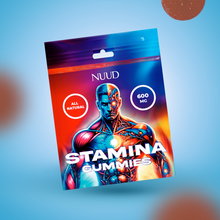
Before the doctor's office, some men try NUUD's men's stamina gummies, a hormone-free botanical option.
