


Low Libido in Men: What Causes It and How to Fix It
Share
By the NUUD team
Most men don't go looking for the phrase low libido male until it's been a problem for a while. By the time you're searching for it, you've probably already blamed work, age, the kids, the wine, the weekend you didn't get enough sleep, and a half-dozen other things that sounded right at the time. What you haven't done — because most men in this situation don't — is say it out loud to anyone.
This guide is for the part of the conversation you haven't had yet. We'll cover what low libido in men actually means (it's narrower than most articles treat it), why it's happening, what works, what doesn't, and where a supplement fits into the picture. We make non-prescription libido supplements for men at NUUD, so we'll be clear when we're pointing at one of our own products.
The short answer
- Low libido affects a meaningful share of men at every adult age — testosterone declines roughly 1–2% per year after 30, and rates of low desire climb noticeably from the 40s onward.
- Top causes are chronic short sleep, elevated cortisol from stress, SSRIs and other medications, alcohol above ~7 drinks/week, and age- or fat-related testosterone decline — usually stacked, not standalone.
- Get a hormone panel (total + free testosterone, LH/FSH, prolactin, thyroid) if the drop was sudden, came with fatigue or muscle loss, or hasn't moved after 2–3 months of baseline work; otherwise lifestyle changes are the right first move.
- Ingredients with real human evidence in men: KSM-66 ashwagandha, maca, fenugreek (Testofen), tongkat ali, L-citrulline, and cordyceps as a complementary mushroom.
- For a same-night, plant-based option, see NUUD Libido Gummies for Men — one gummy 30–60 minutes before, no daily build-up.
What low libido in men actually means
Here's the distinction most articles skip: low libido isn't the same thing as erectile dysfunction. Libido is desire — the wanting. Erection is function — the body responding to the wanting. A man can have perfect erections and no desire. Another man can have desire and inconsistent erections. The fixes are related but not identical, and the conversation at the pharmacy tends to treat them as one problem because the most famous category of drugs solves the second one.
When men describe low libido, they usually say something like:
- "I just don't think about sex the way I used to."
- "She wants it more than I do now, and I feel weird about that."
- "Everything works, I just don't care that much."
- "I can go weeks without it and not really notice."
- "I'm not who I was."
That last one is the one that actually gets men to do something about it. Not the data point. The identity shift underneath.
Why it happens
Male libido is a function of testosterone, dopamine, sleep, cortisol, blood flow, relationship context, and habit loops — roughly in that order. When desire disappears, at least one of these has shifted, and usually several at once.
Testosterone (and what actually lowers it)
Total testosterone declines roughly 1–2% per year after age 30. That's average. It's also not destiny — a lot of the decline seen in aging male populations is explained by lifestyle factors, not biology. The things that reliably lower testosterone in men who'd otherwise have healthy levels:
- Chronic short sleep. A 2011 study in JAMA found that restricting sleep to 5 hours per night for one week reduced testosterone by 10–15% in healthy young men (Leproult & Van Cauter, PMID: 21632481). A full night's sleep produced the highest testosterone; each hour lost subtracted from the peak.
- Excess body fat. Adipose tissue contains aromatase, the enzyme that converts testosterone to estrogen. Higher body fat means more conversion, which means lower circulating testosterone.
- Chronic stress. Cortisol and testosterone have an inverse relationship. Long-term elevated cortisol — from work, family, an anxious nervous system, or all of the above — suppresses testosterone production at the hypothalamic level.
- Alcohol. Acute lowering with any heavy intake; chronic lowering with habitual drinking above 7 drinks per week.
- Micronutrient deficiency. Specifically zinc, vitamin D, and magnesium. Zinc deficiency reliably lowers testosterone, and supplementation restores it in deficient men (Prasad et al., Nutrition).
If testosterone is clinically low (under 300 ng/dL, confirmed on two morning blood tests), that's a doctor conversation. If it's in the lower end of normal and desire is lagging, the interventions below tend to move the needle without medical intervention. If you had a vasectomy and wonder whether it lowered your testosterone, the hormone studies found no lasting change, and vasectomy and sex drive walks through them.
SSRIs and other medications
SSRI antidepressants cause sexual side effects — including low desire — in 40–70% of users depending on the specific drug (Clayton et al., Journal of Clinical Psychiatry, 2014). Beta-blockers, finasteride (especially long-term), and some anti-anxiety medications sit on the same list. If you started a new medication in the months before the desire shift, that's the first place to look.
Porn as a modifier
This is an honest topic, not a moral one. High-frequency use of pornography — especially the kind that trains the brain toward novelty that real-world partners can't match — is associated in some studies with reduced desire for partnered sex and flatter dopamine response overall. The evidence is mixed and the individual variation is huge, but enough men report a real shift when they reduce or pause that it's worth naming. Three to six weeks of reduced use is usually enough to tell whether it's a factor for you. For what 21 studies of 138,192 people found, see porn and sex drive.
Sleep and the cortisol stack
Repeating this because it's the biggest lever: chronic short sleep lowers testosterone, raises cortisol, dulls dopamine response, and suppresses morning erections all at once. If you're sleeping under seven hours and you want to know what your baseline actually is, fix that for two weeks and see what's left to solve.
Relationship context
Desire in long-term relationships is not static. A lot of men interpret the normal taper of novelty-driven desire as a broken libido, when what's actually happening is that the spontaneous desire of early relationship is giving way to the responsive desire of an established one — which needs slightly different inputs to show up. This doesn't mean the solution is lingerie or a weekend away. It means the desire machinery is fine; the conditions around it have changed, and the inputs need to update.
The prescription path vs. the supplement path
The prescription options men most commonly hear about — PDE5 inhibitors for erection, testosterone replacement for clinically low T — are designed for specific clinical targets. They don't directly address desire in a man with normal-range testosterone and normal erection quality. This is why a lot of men who got the prescription found it didn't solve the thing they actually came in about. Erections weren't the problem; wanting was.
The supplement path works on the desire side rather than the mechanics side — supporting testosterone, lowering cortisol, improving blood flow, and influencing the dopamine pathways involved in anticipation and motivation. It's slower than a PDE5 inhibitor at producing a single-night result, but it's broader in what it addresses, and it doesn't require a prescription or a conversation.
The two paths are also compatible. Men with diagnosed low T, used to replacement, often still benefit from plant support on the desire side, because desire and hormone level are related but not identical variables.
What actually helps
Sleep (again, first for a reason)
Seven hours minimum, eight preferred. Consistent wake time on weekends. Phone out of the bedroom. If you don't sleep well, address that before anything else — it's the cheapest, fastest lever in the whole stack.
Strength training
Resistance training 2–3 times per week is one of the most reliable non-pharmaceutical testosterone supporters in the literature. The effect is proportional to intensity and continuity. Start where you are. Don't chase programs designed for young athletes; the goal is adaptation, not destruction.
Lower alcohol
More than any single food change, this moves the needle. Not to zero, unless you want it to be. Down to 3–5 drinks per week is enough to see a meaningful shift in most men within 2–4 weeks.
The ingredients with actual human research
Most "men's libido supplements" on the market are underdosed stacks of unrelated ingredients. The ones worth caring about:
- KSM-66 ashwagandha. A 2019 placebo-controlled trial of 57 men found 600 mg/day over 8 weeks significantly increased testosterone and DHEA-S vs. placebo (Lopresti et al., American Journal of Men's Health, PMID: 30854916). A separate 2013 RCT in men with stress-related fertility issues found improvements in testosterone, sperm parameters, and subjective stress (Ambiye et al., Evidence-Based Complementary and Alternative Medicine). Ashwagandha works both the testosterone side and the cortisol side at once, which is why it's the backbone of most honest formulas.
- Fenugreek (Testofen extract). A 2011 trial of 60 men found 600 mg/day of Testofen significantly increased self-reported libido and satisfaction over 6 weeks (Steels et al., Phytotherapy Research). Later trials replicated the libido effect; testosterone effect is mixed across studies.
- Tongkat ali. A 2013 trial in 63 stressed adults found 200 mg/day of a standardized tongkat ali extract significantly reduced cortisol and improved mood and vigor (Talbott et al., PMID: 23705671). Multiple smaller trials show testosterone support in men with lower baseline levels.
- Maca. A 2002 trial in men found 1.5–3 g/day of maca significantly improved sexual desire over 8 weeks — without affecting testosterone, suggesting it works on the desire side rather than the hormone side (Gonzales et al., Andrologia, PMID: 12472620).
- L-citrulline. Amino acid that supports nitric oxide and blood flow. A 2011 trial in men with mild erection issues found 1.5 g/day improved erection quality vs. placebo (Cormio et al., Urology, PMID: 21195829).
- Zinc and vitamin D. Not glamorous, reliably helpful if you're low, probably neutral if you're not. Both are cheap to test via bloodwork.
- Functional mushrooms (cordyceps in particular). Smaller research base than the above, with promising preclinical data on testosterone support and traditional use in performance contexts. Worth including as a complementary variable for men who've already tried the big-name herbs without enough effect.
The pattern we see in our own customer base: men who've previously tried maca alone, or ashwagandha alone, at low doses, and didn't feel much. Combining several well-studied ingredients in a single formula at meaningful doses is what most often produces a response worth noticing.
Where NUUD fits
We made our libido gummies for men for the situation this article describes: a healthy man with decent baseline health whose desire isn't where it used to be, who wants something plant-based, non-prescription, and fast enough to matter on the night he's trying to have it. One gummy, 30 to 60 minutes before. No daily routine, no 14-day build-up. Designed for the night you mean to have, not the routine you're trying to build.
Our formula combines Tribulus Terrestris, Muira Puama, Boiled Rehmannia Root, and the NUUD Mushroom Complex — the categories of ingredient with the most real-world response from our customers. Couples who want to bring something home that works for both partners can start with the couples bundle, which pairs the women's and men's formulas.
If supplements aren't the right fit, the sleep-stress-strength-alcohol stack above is the right place to start with or without NUUD in the picture.
"First thing I've tried in years that actually did what it said."
— Verified NUUD customer review
When to see a doctor
See a doctor — preferably a urologist or endocrinologist, not just a GP — if:
- The drop was sudden and came with other symptoms: fatigue, muscle loss, mood crash, weight gain, night sweats
- You have morning erections less than once a week for more than a month
- You have pain with sex, or erection changes unrelated to desire
- Desire hasn't moved after 2–3 months of consistent baseline work plus well-dosed supplementation
Low T is a specific diagnosis with a specific workup (two morning blood tests, free and total testosterone, LH/FSH, prolactin, thyroid panel). Don't let a supplement substitute for real labs if the picture warrants them.
What to try first
- Get a hormone panel (testosterone, thyroid, prolactin) — clinician first.
- Audit sleep, stress, and alcohol — most common modifiable causes.
- Cut or reduce porn use if it's high-frequency — common dopamine-numbing factor.
- Train resistance + cardio 3+ times/week — strongest lifestyle libido lever in men.
- Trial an evidence-backed supplement (ashwagandha, maca, cordyceps, or NUUD's stacked formulas) for 4–8 weeks.
Which NUUD format fits your routine?
| Format | Onset | Duration | Best for |
|---|---|---|---|
| Gummies | 30–60 min | Up to 3 days | Weekend rituals, slow build |
| Capsules | 45–90 min | Up to 6 days | Daily support |
| Sex Bites | 15–30 min | 4–6 hours | Planned date nights |
| Intimacy drink | 15–30 min | 2–3 hours | The "drink before the drink" |
FAQ
What causes low libido in men?
The most common causes are chronic short sleep, chronic stress (elevated cortisol), excess alcohol, age-related testosterone decline, SSRIs and other medications, excess body fat, and the normal shift from novelty-driven to responsive desire in long-term relationships. Most men have more than one of these stacked at once.
How can I naturally increase my libido as a man?
Start with sleep, strength training, alcohol reduction, and cortisol management. Then add plant ingredients with real human research: KSM-66 ashwagandha, fenugreek (Testofen), tongkat ali, and maca. For same-day effect, a well-formulated libido supplement combining several of these typically works within 30 to 60 minutes.
Is low libido the same as erectile dysfunction?
No. Libido is desire — the wanting. Erectile function is the body responding. A man can have either without the other. PDE5 inhibitor medications address erection mechanics, not desire itself, which is why they don't solve low libido in a man whose erections already work.
What supplements work for men's libido?
The ingredients with the strongest human research for men are KSM-66 ashwagandha (testosterone and cortisol), fenugreek Testofen extract (libido), tongkat ali (cortisol and testosterone in lower-baseline men), maca (desire directly), and L-citrulline (blood flow). Formulas combining several at meaningful doses outperform single-ingredient products.
Can low testosterone cause low libido?
Yes, but not always. Clinically low testosterone (below 300 ng/dL on two morning blood tests) is a recognized cause of low desire. Many men with normal-range testosterone also have low libido from stress, sleep, medication, or relationship factors — meaning a testosterone test alone won't tell the whole story.
Does masturbation or porn lower libido?
For most men at typical frequencies, no. For a subset of men with high-frequency novelty-driven porn use, evidence suggests it can reduce desire for partnered sex and flatten dopamine response. A 3 to 6 week pause is usually enough to tell whether it's a factor for you.
How long does it take to increase male libido naturally?
Sleep and alcohol changes can shift things within 2 to 4 weeks. Strength training and daily supplementation typically show clear results in 4 to 8 weeks. Fast-acting libido formulas produce same-day effects but don't replace the baseline work.
Disclosure: NUUD Pleasures sells libido supplements for men. This post reflects our perspective as a brand in the category.
FDA disclaimer: These statements have not been evaluated by the Food and Drug Administration. This product is not intended to diagnose, treat, cure, or prevent any disease. Consult your healthcare provider before starting any supplement, especially if you take medication or manage a medical condition.
Many men start with NUUD's supplements for harder erections and drive, which support desire and circulation without a prescription.
For a no-pill option, NUUD makes a Berry Bliss libido drink for men on the same botanical formula as the capsule.
For the physical side, NUUD makes supplements for better erections that support drive and circulation without a prescription.
Keep Reading
For the full evidence review of what supports male sexual function, see our guide to aphrodisiacs that actually work. For the mushroom research specifically — including Cordyceps and the best mushroom for erectile dysfunction — read mushrooms for libido and sex drive. If the issue touches on long-term relationships, the Coolidge Effect is worth understanding. For men exploring natural testosterone support, see Natural Testosterone Support After 40: What to Try Before TRT.
Shop NUUD for Men
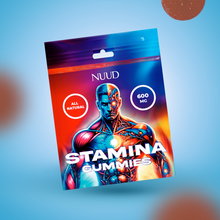
- NUUD Libido Gummies for Men — stamina gummies for men, lasts up to 3 days per dose
- Stamina Libido Support Capsules for Men — our most potent format, up to 6 days of duration
- NUUD Berry Bliss Libido Drink for Men — fast-absorbing powder
