


Why "The Talk" Fixes Your Sex Life for Two Weeks (and What the Relapse Means)
Share
"The talk" fixed our sex life on a Tuesday night, and by the end of the month it had quietly faded back to nothing. You probably know the scene. Someone finally says the thing out loud: "We never touch anymore." There are tears, there is honesty, maybe an apology that has been waiting six months to arrive. And then, for about two weeks, you have the best sex you have had in years.
Here is the honest answer in one sentence: a raw conversation creates a real but temporary spike in desire driven by relief, novelty, and reassurance, while everyday desire in a long relationship is built on stable conditions that the talk did not actually change. The sex was real. The fade is not a failure of love. It is what happens when a one-time emotional event runs out of fuel.
This piece explains what is actually happening in your nervous system and your relationship during those two weeks, why people online call it "hysterical bonding" (and why that label is not a clinical thing), and what would need to shift for the change to last.
- The post-talk sex burst is real, driven by relief, novelty, and feeling chosen again.
- "Hysterical bonding" is a forum and pop-psychology term, not a medical diagnosis.
- The roughly two-week timeline is a pattern people describe, not a measured research finding.
- Desire in long relationships is responsive: it follows your daily conditions, not a single conversation.
- Lasting gains come from sustained structured effort (Roddy et al., J Consult Clin Psychol, 2020; PMID 32551734).
What actually happens during the two-week burst?
During the burst, your brain registers a sudden drop in relationship threat, and desire follows. Feeling that your partner sees you, wants you, and is not leaving removes a quiet background alarm. Perceiving a partner as newly responsive sharply raises sexual interest in the moment (Birnbaum & Reis, Pers Soc Psychol Bull, 2012; PMID 22517110). The talk manufactures exactly that signal.
Three things stack at once. First, relief: the dread of "is this over?" lifts, and the body relaxes into wanting again. Second, novelty: you are doing something new together, being vulnerable, which carries its own charge. Brief shared novel and arousing experiences temporarily lift how good a relationship feels (Aron et al., J Pers Soc Psychol, 2000; PMID 10707334). Third, reassurance: being chosen out loud is its own aphrodisiac.
Notice what none of these are. None of them are the steady, boring, load-bearing conditions of daily life: rest, low resentment, time, a body that is not running on empty. The talk did not change those. It changed the emotional weather for a couple of weeks, and the weather always shifts back.
So why does it feel so intense? Some of the heat is borrowed. When the nervous system is already activated by a charged, emotional, slightly scary conversation, that arousal can get read as desire. In the classic suspension-bridge study, people experiencing fear-driven physiological arousal misattributed it as sexual attraction (Dutton & Aron, J Pers Soc Psychol, 1974; PMID 4455773). A relationship-defining talk is exactly that kind of activated state.
Is "hysterical bonding" a real psychological thing?
"Hysterical bonding" is a popular forum term, not a clinical diagnosis, and you will not find it in any diagnostic manual. People use it to describe the surge of sex and closeness that follows a relationship crisis, often after an affair, a breakup scare, or a confrontation about a dead bedroom. The experience is real. The official-sounding label is not medicine.
This matters because the internet wraps the term in fake precision. You will see confident claims that "hysterical bonding affects 45% of couples" or "lasts exactly two weeks." Those numbers have no study behind them. We have looked, and they trace back to forum posts and repackaged blog content, not to any measured research finding. Treat them as folklore.
The honest version is gentler and more useful. After a threat to the bond, many people describe a temporary intensification of desire and clinginess. The two-week figure is an observed pattern that people report, not something a lab has clocked. Calling it a "diagnosis" gives a lived experience a costume it did not earn, and it sets you up to feel broken when the spike fades on its own.
What research can speak to is the mechanism underneath. Desire that flares under relationship threat and then settles is consistent with how responsive desire works: it answers your current conditions. When the threat is loud, desire can spike. When the threat quiets and ordinary life resumes, desire returns to whatever your baseline conditions actually support. For more on that baseline, see our breakdown of responsive versus spontaneous desire.
Why does desire fade back to baseline after the talk?
Desire fades because long-term desire is fragile and context-dependent, sustained by your relationship conditions rather than by a single emotional event. Long-term desire has been described as a "fragile spell" that depends on ongoing relational context to stay alive (Birnbaum, Pers Soc Psychol Rev, 2018; PMID 28645226). The talk lit the spell. It did not build the conditions that keep it lit.
The deeper model here is responsive desire. In many long relationships, especially for women, desire does not arrive first as a spontaneous urge; it emerges in response to intimacy, context, and the right conditions (Basson, J Sex Marital Ther, 2000; PMID 10693116). If desire is responsive, then it tracks your daily inputs. Change the inputs for two weeks and desire rises. Let the inputs revert and desire reverts with them.
There is also an attachment layer. A longitudinal study found that attachment anxiety predicted whether desire held steady or eroded over time, which means desire tracks felt emotional security, not a one-time reassurance (Mizrahi, Reis, Maniaci & Birnbaum, Eur J Soc Psychol, 2019; DOI 10.1002/ejsp.2567). The talk delivers a single dose of security. Security has to be renewed, not announced once.
And the novelty expires on schedule. The lift from a shared novel, exciting experience is real but fades as the novelty wears off (Aron et al., J Pers Soc Psychol, 2000; PMID 10707334). Two weeks is roughly how long it takes for a profound conversation to stop feeling new. After that, you are back to your actual conditions, and your actual conditions did not get a talk.
How much of this is stress and a depleted baseline?
A large part of the baseline problem is that chronic stress quietly dysregulates the systems that support desire and arousal, so the body has less to work with. This is not the cartoon version where "stress spikes cortisol and kills your sex drive." The picture is messier and more honest, and it explains why a great talk cannot override an exhausted body.
For acute arousal, stress clearly interferes. Women with high chronic stress showed lower genital arousal and higher cortisol during sexual stimuli, and distraction was the strongest predictor of reduced arousal (Hamilton & Meston, J Sex Med, 2013; PMID 23841462). A stressed, mentally elsewhere body does not respond the way a rested one does, no matter how moving last night's conversation was.
For the longer-term picture, chronic stress appears to dysregulate the HPA axis rather than simply elevate stress hormones around the clock. Women with low sexual desire showed flatter, lower diurnal cortisol patterns consistent with HPA-axis dysregulation, not constant high cortisol (Basson et al., Psychoneuroendocrinology, 2019; PMID 30909007). The takeaway is not "relax and it returns." It is that a worn-down stress system is part of a low-desire baseline.
This is the layer the talk never touches. A conversation can lift the emotional threat for a fortnight. It cannot give you sleep, undo months of depletion, or reset a dysregulated stress response. If the burst fades and you feel ambushed, this is usually why: the relationship signal improved, the physical capacity for desire did not. If your situation looks more like one partner slowly going quiet, our piece on when a partner stops asking for sex covers that pattern.
What is the difference between the spike and durable change?
The difference is structural: a spike is one emotional event with no maintenance, while durable change is a sustained set of conditions you keep rebuilding. The evidence on what actually moves relationships long-term points to repeated, structured effort, not a single breakthrough night. A meta-analysis of couple therapy across roughly 2,092 couples found durable relationship gains from sustained structured intervention (Roddy et al., J Consult Clin Psychol, 2020; PMID 32551734).
No study proves "one talk equals a two-week relapse." That clean timeline is lived pattern, not measured fact, and we want to be straight about that. But the contrast the research does support is clear: the things that hold are the things you repeat. The table below lays out why the same couple can get two very different outcomes from the same conversation.
| Factor | The two-week spike | Durable change |
|---|---|---|
| What triggers it | A single charged conversation | Repeated small actions over months |
| Main fuel | Relief, novelty, reassurance | Stable security and daily conditions |
| Typical timeline | Roughly two weeks (reported pattern) | Ongoing, maintained deliberately |
| What it ignores | Stress, rest, resentment, capacity | Addresses the baseline directly |
| Why it ends or holds | Novelty expires, threat returns | Conditions keep being renewed |
One more honest note. Desire mismatch is extremely common, and a fading spike does not mean your relationship is uniquely broken. If you keep landing on different pages about wanting sex, our explainer on how common libido mismatch really is may take some pressure off.
How do you make the change actually last?
You make it last by converting the one-time emotional event into repeated conditions, because desire follows conditions you maintain rather than promises you make once. Since long-term desire is responsive and fragile, the work is unglamorous: protect the inputs that desire answers to, week after week, instead of waiting for the next crisis to manufacture another spike.
Here is a practical sequence that respects the science above.
- Name the real baseline, not the symptom. Decide out loud whether the problem is the relationship signal, the physical capacity (stress, sleep, depletion), or both. Most couples have both.
- Renew security on a schedule, not just in emergencies. Brief, regular check-ins keep felt safety topped up, since desire tracks ongoing emotional security rather than a single reassurance.
- Build small, recurring novelty. You do not need grand gestures, just a steady trickle of shared new experiences, because novelty fades and has to be refreshed.
- Protect the body's conditions. Treat sleep, stress load, and recovery as part of your sex life, not separate from it, because arousal drops when the body is depleted and distracted.
- Drop the duty framing. Scheduled obligation tends to erode desire rather than rebuild it, which we cover in the obligation cycle piece.
None of this is as cinematic as the talk. That is the point. The conversation gives you a window; the maintenance keeps the window open. Sustained, structured effort is what the strongest evidence backs, even if it never trends on a forum.
Where does a supplement honestly fit (and where it does not)?
A supplement fits at the capacity layer, not the relationship layer, and it cannot stop the relapse or fix the connection. The talk addresses the emotional signal. It does nothing for a depleted, stressed, exhausted desire baseline. That physical capacity is the one place a botanical can play a small supporting role, and we want to be exact about the boundary.
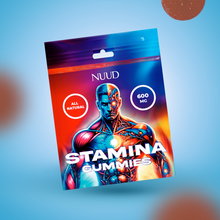
If a worn-down baseline is part of your picture, our NUUD Vitality Gummies are built around that capacity layer. The real formula is Tribulus Terrestris, Muira Puama, Boiled Rehmannia Root, Piper Nigrum, and a NUUD Mushroom Complex. They are a supplement, not couples therapy, and they will not change a relationship signal or hold off the two-week fade.
On the evidence, we will stay a voice of reason. One randomized placebo-controlled trial found Tribulus Terrestris improved women's desire-domain scores (Akhtari et al., DARU, 2014; PMID 24773615, p less than 0.001). That is one trial, not settled science, and a single positive study is a reason for cautious interest, not a promise. If you want to browse the category honestly, our libido gummies for women collection lays out the options.
Frequently asked questions
Is "hysterical bonding" a real diagnosis?
No. "Hysterical bonding" is a forum and pop-psychology term, not a clinical diagnosis, and it does not appear in any diagnostic manual. The experience it describes, a surge of sex and closeness after a relationship crisis, is real. But viral claims that it affects a set percentage of couples or lasts an exact number of days have no research behind them.
Why did the best sex in years just stop after two weeks?
It stopped because the burst ran on relief, novelty, and reassurance, none of which last. Long-term desire is fragile and depends on ongoing conditions, not a single talk (Birnbaum, Pers Soc Psychol Rev, 2018; PMID 28645226). Once the novelty wore off and ordinary life resumed, desire returned to whatever your baseline conditions actually support.
Does the two-week timeline mean something is wrong with us?
No, the two-week pattern is normal and is not a sign of a broken relationship. That timeline is an observed pattern people describe, not a measured research finding. A spike that fades simply means a one-time emotional event ran out of fuel. Desire mismatch and post-talk fade are common, not personal failures.
Can one honest conversation fix a dead bedroom for good?
Rarely, because durable change comes from sustained effort, not a single breakthrough. A meta-analysis across roughly 2,092 couples found lasting gains from sustained structured intervention (Roddy et al., J Consult Clin Psychol, 2020; PMID 32551734). The talk opens a window. Repeated, ordinary maintenance is what keeps it open.
How does stress fit into all of this?
Stress lowers the body's capacity for arousal and desire, which a talk cannot fix. High chronic stress was linked to lower genital arousal and higher cortisol in women (Hamilton & Meston, J Sex Med, 2013; PMID 23841462), and low-desire women showed signs of HPA-axis dysregulation (Basson et al., Psychoneuroendocrinology, 2019; PMID 30909007).
*These statements have not been evaluated by the Food and Drug Administration. This product is not intended to diagnose, treat, cure, or prevent any disease.
