


When Your Partner Stops Asking for Sex: What It Means and What You Can Do Before It's Too Late
Share
Something shifted recently. The pressure has stopped. No more hints, no more turning toward you in the dark, no more that particular kind of tension when another week passes without it. Part of you noticed the quiet and, honestly, felt something close to relief.
This article is going to examine that relief.
The shift from asking to silence is not your partner finding peace with things as they are. It's not a sign that they've grown out of needing closeness. In the research on couples navigating sustained desire differences, that silence has a name, a mechanism, and a predictable trajectory. None of it is reassuring. And the lower-libido partner is almost always the last one to know it's happening.
This is not a couples therapy article, and it's not a guide for managing your partner. It's a private piece of writing for one person: you, reading alone, trying to understand what's changed and whether you want to do something about it. For yourself.
- The silence is not peace. When a higher-libido partner stops initiating, research identifies it as avoidance withdrawal, not acceptance.
- Desire gaps compound over time. A 12-month study found distress increases, not stabilizes (PMID 34426897).
- About 15% of married men and 6.5% of married women report a fully sexless past year. You are not in an unusual situation.
- Low desire in the lower-libido partner has identifiable biochemical causes: cortisol, hormonal shifts, HPA axis disruption.
- Addressing your own desire is a private decision that belongs to you, separate from managing the relationship.
What's actually happening when they stop asking
The higher-libido partner did not stop wanting closeness. What they stopped doing is paying the emotional cost of asking for it. Research on sexual motivation identifies a specific pattern here. Muise et al. (Journal of Sex Research, 2017; PMID 27074142) found that partners who initiate sex to pursue intimacy, what researchers call approach motivation, experience higher desire over time. Partners motivated primarily by avoiding a partner's disappointment, avoidance motivation, show suppressed desire. After enough rejections, approach motivation collapses into avoidance.
The mechanism is straightforward. Initiating requires vulnerability. Repeated rejection makes that vulnerability feel pointless. The higher-libido partner does not stop wanting connection. They stop believing that initiating will get them there. The behavior changes; the underlying need doesn't.
This is why the quiet you're experiencing is not your partner being fine. It is your partner protecting themselves from a rejection pattern they have concluded will not change. The emotional withdrawal is almost always already underway before the initiation stops. By the time the asking stops, the distance has usually been building for months.
What the research shows about couples at this point
Desire discrepancy is one of the most studied predictors of relationship outcomes, and the findings are consistent. Jodouin et al. (Archives of Sexual Behavior, 2021; PMID 34426897) tracked day-to-day desire mismatches across 12 months and found they compound into measurable sexual distress over time. The gap is self-reinforcing. The longer it continues without being addressed, the harder it becomes to reverse.
Willoughby et al. (Archives of Sexual Behavior, 2014; PMID 24045904) studied 1,054 married couples and found that higher desire discrepancy correlated with lower satisfaction, lower relationship stability, more conflict, and worse communication across the sample. The effects were especially pronounced when it was the husband experiencing the gap. This is not a relationship style that stabilizes on its own. It's a trajectory.
McNulty et al. (Archives of Sexual Behavior, 2019; PMID 31471791) found that declines in women's sexual desire predict reduced marital satisfaction for both partners, not just the one wanting more sex. The lower-libido partner's desire is not a neutral variable in this system. It has consequences for both people, regardless of whether either of them frames it that way.
| What the HL partner is experiencing | What the LL partner may think is happening |
|---|---|
| Emotional withdrawal and resignation | Relief from pressure; things have calmed down |
| Avoidance motivation replacing approach motivation (PMID 27074142) | Partner has settled into a new normal |
| Lower desire developing from rejection fatigue; the HL becoming an acquired LL | Partner is fine with less; no longer a source of conflict |
| Compounding sexual distress, day over day (PMID 34426897) | Conflict has reduced; relationship is more peaceful |
| Growing risk of dissatisfaction for both partners (PMID 24045904) | Status quo is stable; nothing needs to change |
5 signs it has already shifted
These signs are listed in order of how they typically appear. You don't need all five to be true. If you recognize two or three of them, the pattern is already in motion.
- They used to initiate; now they don't, and haven't for weeks or months. Not a lull. Not a stressful work period followed by return. A sustained, complete stop. The absence has become the baseline.
- Non-sexual physical affection has also pulled back. This one matters. Spontaneous touch, the hand on your back, leaning in to say something, proximity on the couch: when these decrease alongside initiation, it's not about sex anymore. It's about emotional closeness pulling back at the same time.
- On the surface they seem fine, but something is distant. They're present, they're functional, they engage. But the quality of attention has changed. There's a kept quality to the interactions. Something is being managed rather than felt.
- They've stopped expressing frustration about frequency. This is often misread as acceptance. It is almost never acceptance. It is the end of a belief that expressing frustration will change anything. Jang et al. (Journal of Sex and Marital Therapy, 2025; PMID 40955642) found that how the lower-desire partner rejects or deflects is as consequential as the rejection itself. After enough deflecting or dismissal, the HL partner stops bringing it up at all. That silence is not peace.
- When you do have sex, they seem emotionally present but less enthusiastic than before. Not checked out. Not absent. But the hunger is different. They're there, but it feels like they arrived by a different route. This is often the earliest sign of approach motivation transitioning to avoidance motivation, the very pattern Muise et al. Identified (PMID 27074142).
What the desire gap data actually shows
About 15.2% of married men and 6.5% of married women reported a fully sexless past year in a study of 17,744 individuals (Kim et al., Archives of Sexual Behavior, 2017; PMC5889124). Among couples together 20 or more years, estimates approach 1 in 4. The sexless marriage is not rare. The silence around it is far more unusual than the situation itself.
What the data shows more specifically is that desire discrepancy is not a static problem that couples adapt to. Jodouin et al. (PMID 34426897) tracked couples across an entire year and found that mismatches compound. The gap creates distress, and the distress widens the gap. Left alone, it doesn't reach equilibrium. It accelerates.
Willoughby et al.'s 1,054-couple study (PMID 24045904) found that higher desire discrepancy predicted worse outcomes across every measured dimension: satisfaction, stability, conflict, and communication quality. These are not independent effects. They interact. Lower satisfaction produces more conflict. More conflict degrades communication. Worse communication makes the desire gap harder to address. The feedback loop runs in exactly the wrong direction.
McNulty et al. (PMID 31471791) added a finding that most people in this situation haven't heard: declines in the lower-libido partner's desire predict lower marital satisfaction for both partners. Not just for the one wanting more. For both. The LL partner's desire has consequences in the relationship that aren't visible from inside the experience of having low desire.
This is not about managing your partner. It's about you.
You found this article. That already tells you something. You noticed the shift, and some part of you knows it isn't neutral. The question this article is going to leave you with isn't "how do I fix the relationship." It's a simpler and more private one: why has my own desire been low, and what can I actually do about it, for myself?
Low desire in the lower-libido partner is not usually a character flaw or a reflection of how much they love their partner. It has identifiable biochemical causes: cortisol, hormonal changes, HPA axis disruption from chronic stress, perimenopause, postpartum recovery, or any number of sustained physiological loads. These are real, measurable states. They suppress desire independently of relationship quality, independently of how much you care, independently of your intentions.
This is not an excuse and it's not a pass. It's a diagnosis of the actual problem. And the actual problem has actual interventions. Addressing your own desire capacity is a private decision that belongs entirely to you. You're not doing it to manage your partner. You're doing it because desire that's there is different from desire that isn't, and you deserve to know the difference from the inside.
The framing that matters: this is for you first. What happens to the relationship if your desire improves is a separate question, and a good one. But it's not the first one.
What actually addresses low desire at the source
Stress and cortisol are among the most common biochemical suppressors of sexual desire in both men and women. Chronic HPA axis elevation, the hormonal stress-response system, directly suppresses the hormonal substrate that desire requires. Testosterone, DHEA, and the neurological circuitry that produces responsive desire all run on a system that cortisol actively works against. This is the first target. Not communication. Not date nights. The underlying chemistry.
Hormonal shifts are a second category. Women in perimenopause, postpartum recovery, or under sustained stress experience measurable changes in estrogen, testosterone, and DHEA that directly affect desire. Men under chronic stress or in their 40s and beyond experience testosterone shifts that have the same effect. These are not relationship problems wearing a chemistry costume. They are chemistry states that happen to affect relationships.
Botanical support for the desire pathway is documented in controlled research. Tribulus Terrestris was studied in a double-blind, placebo-controlled RCT in women with low desire. Akhtari et al. (Daru, 2014; PMID 24773615) found that 7.5 mg per day for four weeks produced statistically significant improvement in the FSFI desire domain compared to placebo (p < 0.001). Muira Puama has a documented traditional use record as a desire-supportive botanical, with clinical research from Waynberg's work showing functional improvements in desire in women.
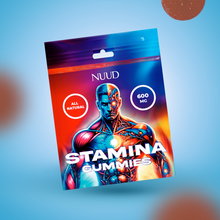
NUUD Vitality Gummies (for women) and NUUD Stamina Gummies (for men) include Tribulus Terrestris, Muira Puama, Boiled Rehmannia Root, Piper Nigrum, and the NUUD Mushroom Complex, formulated specifically for the biochemical desire pathway. Not a confidence supplement. Not a relationship tool. A formula for addressing what's happening in your own body. For yourself. Because desire that's there is different from desire that isn't, and you already know it.
Frequently asked questions
Is it a bad sign if my partner has stopped initiating sex?
It depends on how long it has been and what else has changed alongside it. A temporary lull is normal. But when initiation stops entirely and stays stopped, especially when accompanied by a reduction in non-sexual physical affection, it typically indicates emotional withdrawal rather than resolution. Research on couples with sustained desire discrepancy shows distress compounding over time, not stabilizing (Jodouin et al., Archives of Sexual Behavior, 2021; PMID 34426897). The silence is not neutral.
Why did my partner stop trying after years of wanting more sex?
The most documented cause is what researchers call avoidance sexual motivation. The higher-libido partner stops initiating to avoid the emotional cost of rejection. After enough rejections, the vulnerability required to initiate stops feeling worth it. This is not the same as losing interest in sex or in you. It is a protective withdrawal from a pattern the HL partner has concluded will not change. Muise et al. (Journal of Sex Research, 2017; PMID 27074142) documented this mechanism directly.
What should I do if I want to rebuild intimacy but my own desire is also low?
Address your own desire first, privately. Low libido has identifiable biochemical causes, including cortisol elevation, hormonal shifts, and HPA axis disruption, that exist independently of your feelings about your partner. Botanical support for the desire pathway, particularly Tribulus Terrestris, has clinical evidence behind it: a controlled trial found statistically significant desire improvement in four weeks (Akhtari et al., Daru, 2014; PMID 24773615). Start with the internal chemistry. The relationship conversation becomes different when your desire is actually present.
How do I talk to my partner about this?
This article isn't going to hand you a script, because a script isn't what makes that conversation land. What matters is going into it having already taken your own desire seriously, from the inside out. Addressing the biochemical capacity for desire before the conversation changes what's available in it. How the lower-desire partner engages with this issue, in rejection and in reconnection, is as consequential as the rejection itself (Jang et al., Journal of Sex and Marital Therapy, 2025; PMID 40955642). The internal work comes first.
How common is a sexless marriage?
More common than most people assume. About 15.2% of married men and 6.5% of married women report a fully sexless past year, based on a study of 17,744 individuals (Kim et al., Archives of Sexual Behavior, 2017; PMC5889124). Among couples together 20 or more years, some estimates approach 1 in 4. The situation itself is not unusual. The silence around it is the unusual part.
*These statements have not been evaluated by the Food and Drug Administration. This product is not intended to diagnose, treat, cure, or prevent any disease.
When the asking stops on both sides, NUUD makes plant-based libido supplements for couples in a gummy, capsule and drink for two.
