

Endometriosis and Low Sex Drive: What the Research Actually Blames
Share
Endometriosis and low sex drive show up together, and when researchers went looking for the reason, the strongest signal they found was pain and what years of living with it do to mood. Type endometriosis sex drive into a search bar and a confident hormonal answer comes back. Three meta-analyses say something quieter. Women with endometriosis carry clearly more depression and anxiety than women without it. Set them beside other women living with chronic pelvic pain and that gap disappears completely. The direct evidence on desire itself is real and thin. One review found more than double the odds of scoring in the dysfunction range while its own total score showed no significant difference, and another reported a desire result that scraped past the significance threshold with no effect size attached to it.
- Across 17 pooled studies, women with endometriosis reported more depression (SMD 0.71, 95% CI 0.36 to 1.06) and more anxiety (SMD 0.60, 95% CI 0.35 to 0.84) than healthy controls.
- Set beside other women living with chronic pelvic pain, that difference vanished: depression SMD -0.01 (95% CI -0.17 to 0.15), anxiety SMD -0.02 (95% CI -0.22 to 0.18). The mood burden tracks the pain.
- In four studies of untreated women, the odds of scoring in the sexual dysfunction range were 2.38 (95% CI 1.12 to 5.04), while the mean total score showed no significant difference at -2.15 (95% CI -4.96 to 0.67).
- A separate review of six publications found desire significant at P = 0.045 and published no effect sizes. Period pain missed significance in both reviews. Nobody has demonstrated a hormonal route from endometriosis to desire.
Figures from van Barneveld et al. 2022 (PMID 34077695) and Perez-Lopez et al. 2020 (PMID 32880200).
"Is it the endometriosis or is it me?"
Endometriosis is a diagnosable condition, and only a clinician can make that call. If your desire flattened somewhere along the way and you have been quietly wondering which half of the problem you are, the internet answers that badly. The usual answer is a confident yes, endometriosis wrecked your libido, and here is the protocol that fixes it. The research does not support that yes.
The narrower version is more useful anyway. Women with endometriosis carry a heavier load of depression, anxiety, and pain, and every one of those suppresses desire in its own right. Compared against other women who live with chronic pelvic pain, the mood gap closed to nothing. The burden looks like what pain does to a person, and endometriosis causes the pain.
This is the fourth time we have walked into this shape of question, after the thyroid and low libido connection, PCOS and low sex drive, and autoimmune disease and low sex drive. A diagnosis arrives, it explains a real part of what you are feeling, and then it gets stretched to explain everything. The stretch is comforting, because a single cause you cannot change is easier to hold than several smaller ones you can. It is also where the harm sits: once the diagnosis owns the whole experience, you stop looking at the parts that respond to attention. Our wider guide on why your libido is so low lays out those other parts.
What the three meta-analyses actually found
Three systematic reviews cover this ground, run by different teams on overlapping but separate pools of studies. They agree about pain and mood, and they disagree about the headline question.
Perez-Lopez and colleagues restricted their analysis to untreated women, which matters, because treatment is a confounder nobody can strip out afterwards. Across four studies, women with endometriosis had higher odds of falling below the questionnaire cutoff for sexual dysfunction, at 2.38 (95% CI 1.12 to 5.04). The same review then compared mean total scores and found a difference of -2.15 on an interval from -4.96 to 0.67. That interval crosses zero, so the total score did not reach significance, even though every individual section of the questionnaire came out lower. On visual analogue scales in two studies, painful sex scored 1.88 higher (95% CI 0.38 to 3.37) and chronic pelvic pain 2.92 higher (95% CI 1.26 to 4.58). Period pain showed no significant difference.
Shi and colleagues pooled six publications and reported the opposite headline. Their total score was significant at P less than 0.001 and their desire result came in at P = 0.045. Painful sex reached P = 0.008 and chronic pelvic pain P less than 0.001, while period pain again missed significance at P = 0.118. There is one large problem with using this paper for a desire claim: the published abstract reports P values and nothing else. No effect sizes, no confidence intervals, no way to see how large any of it is.
So the two reviews that measured a total score disagree, and the one direct desire result in the literature sits a hair inside the threshold with no size published. That is where the direct evidence actually sits, and the confident version online is built on less.
| What was measured | The number, with its interval | Well supported, or disputed |
|---|---|---|
| Depression and anxiety against healthy controls | SMD 0.71 (95% CI 0.36 to 1.06) and 0.60 (95% CI 0.35 to 0.84) | Well supported. 17 pooled studies, all self-reported |
| Depression and anxiety against other women with chronic pelvic pain | SMD -0.01 (95% CI -0.17 to 0.15) and -0.02 (95% CI -0.22 to 0.18) | Well supported, and it is a null. Tight intervals on zero |
| Painful sex and chronic pelvic pain severity | Visual analogue differences of 1.88 (95% CI 0.38 to 3.37) and 2.92 (95% CI 1.26 to 4.58); P = 0.008 and P less than 0.001 in the second review | Well supported. Two independent reviews, same direction |
| Period pain severity | No significant difference in either review, P = 0.118 in the one that published it | A null both reviews agree on, and one very few articles mention |
| Odds of scoring in the sexual dysfunction range | Odds ratio 2.38 (95% CI 1.12 to 5.04), untreated women, four studies | Supported, on a small pool. The interval holds a modest effect and a large one |
| Total sexual function score | -2.15 (95% CI -4.96 to 0.67) in one review; P less than 0.001 in the other | Disputed. The two reviews that measured it landed on opposite verdicts |
| Desire specifically | P = 0.045 across six publications, with no effect size published | Thin. A hint at the edge of the threshold, no magnitude to read off it |
| A direct hormonal route from endometriosis to desire | No pooled estimate exists in any of these reviews | Not established. Anyone selling you one is past the evidence |
The comparison that gives the whole thing away
The most useful paper in this literature is about mood. Van Barneveld and colleagues screened 1,837 records, reviewed 47 articles, and pooled 17 for meta-analysis, asking a simple question: how much depression and anxiety do women with endometriosis carry?
Against healthy controls the answer was a lot. Depression came in at a standardized mean difference of 0.71 with a 95% confidence interval from 0.36 to 1.06, and anxiety at 0.60 from 0.35 to 0.84. Both intervals sit well clear of zero.
The authors ran a second comparison. They set women with endometriosis beside other women living with chronic pelvic pain, and the difference disappeared. Depression came out at -0.01 with an interval from -0.17 to 0.15, anxiety at -0.02 with an interval from -0.22 to 0.18. Two results as close to zero as a meta-analysis produces, with intervals tight enough to be confident about it.
The same two questions, asked against two different comparison groups
Standardized mean differences from van Barneveld et al. 2022. Dots are the pooled estimate, bars the 95% confidence interval. A bar crossing the zero line means the result did not reach statistical significance.
Source: van Barneveld E et al., Journal of Women's Health 2022 (PMID 34077695). 47 articles reviewed, 17 pooled. The authors conclude these symptoms are related to chronic pain.
Read the two pairs of bars together. The mood burden in endometriosis is the mood burden of chronic pelvic pain. It is heavy and measurable, and it belongs to the pain more than to the diagnosis printed on your notes. On this measure women with endometriosis look like other people living with pain that does not go away, the same pattern we traced in chronic pain and sex drive. The authors put it plainly: the depression and anxiety they found are related to chronic pain.
That is a better place to stand than a hormonal verdict you can do nothing about, because pain and mood both have people who work on them. We cover the mood half on its own terms in depression and low libido, and depression is one of the most reliably documented suppressors of desire there is.
"Sex hurts and now I don't even want it"
This sentence contains its own explanation, and it needs no hormone to work. Both reviews found painful sex measurably worse in women with endometriosis. Perez-Lopez put the visual analogue difference at 1.88 (95% CI 0.38 to 3.37), and Shi reached the same conclusion at P = 0.008 in a separate pool. Painful sex, recorded in these papers as dyspareunia, is one of the findings the two reviews agree on most clearly.
Now put that next to a study with nothing to do with endometriosis. Worsley and colleagues surveyed a nationally representative community sample of 2,020 Australian women aged 40 to 65 using validated instruments. Low desire turned up in 69.3%, sexually related personal distress in 40.5%, and both together in 32.2%. In their adjusted model, pain during or after sex carried odds of 1.63 for meeting criteria for hypoactive sexual desire dysfunction, on an interval from 1.27 to 2.09. Moderate to severe depressive symptoms carried odds of 2.69, interval 1.99 to 3.64.
That is the pathway the evidence points to, visible in a general population with no endometriosis selection at all. Pain during sex tracks with lower desire in that model. Depression tracks with it more strongly. Endometriosis reliably delivers both, and it needs no separate hormonal channel to reach the same place. If the last several times hurt, wanting the next time is asking a lot of a nervous system that has been paying attention.
"It took years to get diagnosed"
Maulenkul and colleagues reviewed 15 systematic reviews of what endometriosis does to women's lives, eight of which included a meta-analysis. Pain came out as the hallmark of the condition, and depression, anxiety, and stress as significant contributors to a lowered quality of life.
Women in these reviews had frustrating relationships with the healthcare system, and the reviewers list three things driving it: a complex and long diagnostic process, treatment that does not deliver, and symptoms that persist anyway. Those three together contribute to the emotional challenges the same reviews measured.
Their last finding matters most for desire. Negative cognitive patterns that develop under emotional distress, which they name as catastrophizing and fear-avoidance behaviours, amplify the experience of pain itself. So the years of being disbelieved feed back into how much the pain hurts.
Their caveat travels with their conclusion. Most of the studies they reviewed were cross-sectional, which means each one photographed a moment and cannot show what caused what. The direction is consistent. The mechanism is inferred.
If you spent years being told your pain was normal, that experience has been measured. A person dismissed that long learns to brace, which is the opposite of the state desire needs.
"I dread it before it starts"
Long before anything physical happens, the evening has been scored: how bad will it be, will I have to stop, will I have to explain again.
None of the three reviews measured dread directly, so this is inference from what they did measure, and it should be labelled that way. What they measured was pain during sex, higher anxiety, and a cognitive pattern in which fear-avoidance amplifies pain. Dread is what that combination feels like from the inside.
It is also a conversation problem. A partner who has watched several evenings go wrong and does not know what to say tends to stop initiating, and the person in pain reads that as rejection on top of everything else. Our guide on how to talk to your partner about low libido covers that conversation without turning it into a negotiation.
The other half of dread is what it does to how you see yourself. Feeling unreliable in your own body bleeds into feeling unattractive, and that is a state, which means it moves with how you are treated and what you say to yourself. We wrote about it in body confidence as the internal barrier to libido.
What an endometriosis diagnosis does and does not explain
One diagnosis, two very different columns
- A heavier load of depression and anxiety, at 0.71 and 0.60 across 17 pooled studies
- More painful sex and more severe chronic pelvic pain, agreed on by two reviews
- Higher odds of scoring in the sexual dysfunction range, at 2.38 among untreated women
- A lowered quality of life, with pain, depression, anxiety, and stress named as drivers
- A long diagnostic process, treatment that did not deliver, and the emotional cost of both
- A hormonal switch that lowers desire. No review here produced a pooled estimate
- Your mood on its own terms. Against other chronic pelvic pain the gap was -0.01 and -0.02
- Your total sexual function score. Two reviews landed on opposite verdicts
- How big any desire effect is. The one direct result sits at P = 0.045, no size published
- Everything else that flattens desire: medication, sleep debt, exhaustion, stress
Left column from PMID 34077695, 32880200, 35275272, and 39300399. Right column is what those same papers report as absent, non-significant, or unmeasured. Most underlying studies are cross-sectional and self-reported.
What to take to your doctor
A research summary is a poor substitute for being examined by somebody who knows your history. It can still give you better questions. If you have pain that sounds like this and no diagnosis yet, talk to your doctor about getting evaluated.
- Bring the pain map, in detail. When it hurts, where, how long it lasts afterwards, and whether it tracks your cycle. Those are the findings this literature agrees on most strongly.
- Ask about mood in the same visit. Depression and anxiety are the largest measured effects here, and both are treatable on their own terms. If the last few months have been heavy, say so out loud.
- Say how long it took. If you spent years being told this was normal, put that on the record. A clinician who knows the delay is typical reads your history differently.
- Bring your full medication list, including anything for mood and anything hormonal. Several common medicines lower desire, and that is easy to miss when a diagnosis is already on the table.
- Name the dread if it is there. Anticipating pain, bracing, avoiding the whole subject. Fear-avoidance is documented here as something that amplifies pain, so it is worth raising.
If your bloodwork has already come back unremarkable and you were left with nothing to work with, that experience has its own guide in normal labs, low libido.
The everyday levers, and where a botanical fits
Separate from anything clinical, a few ordinary things move desire in most people, and the free ones do more work than the internet admits.
- Care for your mood, taken seriously. Therapy, medication where a doctor thinks it fits, and the ordinary supports of a life that is not permanently braced.
- Sleep, in quantity and quality. Pain wrecks sleep, and short sleep lowers the threshold for everything else.
- Time and safety with a partner, or on your own, with no expectation attached to it.
- Movement you enjoy. Our guide on pelvic floor exercises and sex drive covers one physical avenue in the general case, and whether any of it suits your situation is a question for your own clinician.
- A botanical supplement, if you want one, as the smallest lever on the list.
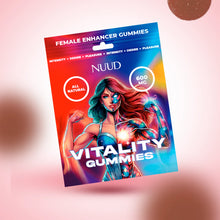
NUUD is a botanical supplement built around desire in general. It has nothing to do with endometriosis, does nothing for pain, and has no role in managing a medical condition of any kind. The formula is anchored by the NUUD Mushroom Complex™, with Muira Puama, Boiled Rehmannia Root, Tribulus Terrestris, and Piper Nigrum for absorption, on a timeline of roughly 30 to 60 minutes. If the pain is being looked after, your mood has somewhere to go, and you want one more small thing on the desire side, that is what our women's libido gummies are for. If the pain is running the show, that comes first.
"Nothing is wrong with you"
You have probably been handed two unhelpful answers already. One is a shrug from an appointment that ran eight minutes. The other is a confident internet voice with a protocol to sell, telling you endometriosis destroyed your libido and here is the fix.
The research supports neither. Women with endometriosis carry more depression, more anxiety, more pain during sex, and a lower quality of life. Set beside other women living with chronic pelvic pain, the mood difference is gone. The direct desire evidence comes down to one borderline P value with no size attached to it, and a hormonal route from the diagnosis to your desire has never been demonstrated.
Every item on the supported list has a real name, and most of them are things somebody can actually treat. You have a diagnosis and a body that has been in pain a long time. Your desire has a context, and the relationship between the two is looser and more workable than anyone selling you something wants to admit.
Keep reading
- PCOS and low sex drive
- Could your low libido be a thyroid problem?
- Depression and low libido
- Normal labs, low libido
- Body confidence and the internal barrier to libido
Frequently asked questions
Does endometriosis cause low sex drive?
No study has demonstrated that it does directly. One review of untreated women found the odds of scoring in the sexual dysfunction range at 2.38 (95% CI 1.12 to 5.04), while the mean total score in that same analysis showed no significant difference at -2.15 (95% CI -4.96 to 0.67). A second review of six publications reported a desire result at P = 0.045 and published no effect sizes at all. What the evidence does support is that endometriosis brings more pain during sex, more chronic pelvic pain, more depression and more anxiety, and each of those lowers desire on its own. Talk to your doctor about getting evaluated if this sounds like your situation.
Is it the endometriosis or is it me?
It is most likely the pain, and what living with pain for years does to mood. Van Barneveld and colleagues pooled 17 studies and found depression at a standardized mean difference of 0.71 (95% CI 0.36 to 1.06) and anxiety at 0.60 (95% CI 0.35 to 0.84) against healthy controls. Set against other women living with chronic pelvic pain, the difference disappeared, at -0.01 (95% CI -0.17 to 0.15) and -0.02 (95% CI -0.22 to 0.18). The authors conclude these symptoms are related to chronic pain. Nothing is wrong with you for having landed here.
Sex hurts and now I don't even want it. Is that normal?
Yes, and it is measurable outside endometriosis too. In a community sample of 2,020 Australian women aged 40 to 65, pain during or after sex carried odds of 1.63 (95% CI 1.27 to 2.09) for meeting criteria for hypoactive sexual desire dysfunction, and moderate to severe depressive symptoms odds of 2.69 (95% CI 1.99 to 3.64). That study had no endometriosis selection at all. Painful sex lowers desire in the general population, so a body that has learned to expect pain is behaving predictably.
Will treating the pain bring my sex drive back?
Nobody can promise that, because the studies have not been done. The three reviews measured pain, mood, and questionnaire scores at a point in time, and most of the underlying studies were cross-sectional, which means they cannot show what causes what. What is documented is that pain during sex and depression are both independently associated with low desire, and both have clinicians who work on them. Any decision about how your pain is managed belongs with your doctor.
I just want to feel normal again. Where do I start?
Start with the pain and with mood, the two findings this literature supports most strongly. Talk to your doctor about getting evaluated if you do not have a diagnosis yet, and bring a detailed pain map if you do. Ask for depression and anxiety to be looked at in the same visit, since those carried the largest measured effects here at 0.71 and 0.60. Review your medication list, since several common medicines lower desire. Then give the ordinary levers room: rest, time that is not rushed, and being in your body without judging it.
References
- van Barneveld E, Manders J, van Osch FHM, et al. Depression, Anxiety, and Correlating Factors in Endometriosis: A Systematic Review and Meta-Analysis. Journal of Women's Health (Larchmt). 2022;31(2):219-230. https://pubmed.ncbi.nlm.nih.gov/34077695/
- Perez-Lopez FR, Ornat L, Perez-Roncero GR, et al. The effect of endometriosis on sexual function as assessed with the Female Sexual Function Index: systematic review and meta-analysis. Gynecological Endocrinology. 2020;36(11):1015-1023. https://pubmed.ncbi.nlm.nih.gov/32880200/
- Shi C, Xu H, Zhang T, Gao Y. Endometriosis decreases female sexual function and increases pain severity: a meta-analysis. Archives of Gynecology and Obstetrics. 2023;307(1):195-204. https://pubmed.ncbi.nlm.nih.gov/35275272/
- Maulenkul T, Kuandyk A, Makhadiyeva D, et al. Understanding the impact of endometriosis on women's life: an integrative review of systematic reviews. BMC Women's Health. 2024;24(1):524. https://pubmed.ncbi.nlm.nih.gov/39300399/
- Worsley R, Bell RJ, Gartoulla P, Davis SR. Prevalence and Predictors of Low Sexual Desire, Sexually Related Personal Distress, and Hypoactive Sexual Desire Dysfunction in a Community-Based Sample of Midlife Women. The Journal of Sexual Medicine. 2017;14(5):675-686. https://pubmed.ncbi.nlm.nih.gov/28499520/
This article is for general education and is not medical advice. Endometriosis is a medical condition that only a licensed clinician can diagnose and manage. NUUD is a botanical supplement and has no role in diagnosing, treating, curing, or preventing endometriosis, pelvic pain, or any other disease, and these statements have not been evaluated by the Food and Drug Administration. Talk with your doctor about getting evaluated, and about any medication before starting a new supplement.
