


Autoimmune Disease and Sex Drive: What Lupus, RA, and Sjögren's Do to Desire
Share
If you have an autoimmune disease and your sex drive has flattened, you are in the majority, and the size of that majority is the part nobody tells you. Across 68 studies covering 5,457 women with a systemic autoimmune rheumatic disease, 63% reported sexual difficulty on a validated questionnaire, 95% CI 56 to 69%. Mean age in that pooled group was 43.7 years. The reviewers closed by recommending that screening for this become routine clinical practice, which tells you plainly that the conversation is not happening at most appointments. That figure is a prevalence count and nothing more. It says how common this is among women who carry these diagnoses, and it does not say the disease reached in and switched desire off.
- Across 68 studies and 5,457 women with a systemic autoimmune rheumatic disease, 63% met the questionnaire threshold for sexual dysfunction (95% CI 56 to 69%), heterogeneity 94%. Among sexually active women, 60% (95% CI 53 to 67%).
- These are pooled proportions with no comparison group attached. They describe how common the experience is among women with these diagnoses, and they cannot show the diagnosis caused it.
- Sjögren's syndrome was highest at 74% (95% CI 58 to 87%), systemic sclerosis at 69% (95% CI 54 to 83%). No separate pooled figure for lupus appears in that review's published results.
- In rheumatoid arthritis, 7 studies and 44,745 participants gave a relative risk in women of 1.73 (95% CI 1.36 to 2.22), graded low quality, with an absolute effect of 10 more cases per 1,000.
- The largest review asked for routine screening, so raising it with your rheumatologist is what the source paper recommends.
Figures from Minopoulou et al. 2023 (PMID 35951753) and Zhao et al. 2018 (PMID 29858239).
Is this normal, or is it the disease?
It is common. That is the first honest thing anyone can tell you, and most women with an autoimmune disease have never heard it from a clinician. You have a rheumatologist, a medication list you can recite, and probably a flare log on your phone. In all that documentation, this one item has almost certainly never come up.
The gap is documented. When Minopoulou and colleagues finished pooling 68 studies for Rheumatology in 2023, they concluded that sexual function in women with these diagnoses is severely impaired regardless of which one they have, and that screening and treatment should become an integral part of clinical practice. Reviewers write that sentence when something is being missed. If you have been sitting on this question for years, the specialists agree it should have been asked.
The number cannot assign blame. A pooled prevalence tells you how many women in a set of studies scored below a questionnaire threshold. It has no control arm and a heterogeneity figure of 94%, meaning the studies disagreed enormously and the pooled percentage averages across that disagreement. This is the same trap we walked through in the thyroid and low libido connection. A diagnosis arrives, it explains part of what you feel, and then it gets stretched to explain all of it. Once the disease is responsible for everything, the parts that would respond to attention stop getting any.
What 68 studies actually measured
Minopoulou and colleagues searched PubMed, EMBASE, and the Cochrane Central Register, registered the protocol in advance, and pooled every study measuring sexual function in women with a systemic autoimmune rheumatic disease. That category covers lupus, rheumatoid arthritis, Sjögren's syndrome, and systemic sclerosis. Sixty-eight studies met the bar, covering 5,457 women, mean age 43.7 years.
Overall prevalence of sexual dysfunction came out at 63%, 95% CI 56 to 69%, heterogeneity 94%. The pooled total questionnaire score was 19.7 points, 95% CI 18.4 to 21.0. Restricting the analysis to sexually active women moved both figures: prevalence dropped to 60%, 95% CI 53 to 67%, and the pooled total score rose to 22.0, 95% CI 20.8 to 23.1.
Two diagnoses stood out. Sjögren's syndrome was highest at 74%, 95% CI 58 to 87%, with systemic sclerosis next at 69%, 95% CI 54 to 83%. Both intervals are wide, which is what happens when a subgroup rests on a handful of studies. The authors summarised their own result as impairment appearing irrespective of which autoimmune rheumatic disease a woman had.
That matters for anyone with lupus reading this. The review published no separate pooled figure for lupus, so there is no lupus percentage to quote here, and anyone quoting one has gone past what was reported. It does support something broader: the pattern held across the category, and lupus sits inside it.
Prevalence by group, from one review, on one scale
Pooled proportions from Minopoulou et al. 2023. Dots are the pooled estimate, bars the 95% confidence interval. Wider bars sit on fewer studies. No control group appears in this chart, so nothing here compares against women without an autoimmune diagnosis.
Source: Minopoulou I, Pyrgidis N, Tishukov M, et al. Rheumatology (Oxford) 2023 (PMID 35951753). Random-effects meta-analysis of proportions, PROSPERO CRD42021287346. Heterogeneity was 94% for the overall estimate, 84% for Sjögren's, and 94% for systemic sclerosis.
Look at how much room those bars take up. The Sjögren's interval runs from 58 all the way to 87, so reporting 74% as settled would be quoting the middle of a wide guess.
My rheumatologist never asked
This is the sentence that turns up most often in autoimmune forums, and it is usually followed by an apology for raising it. The apology is the part worth deleting.
Rheumatology appointments run on joint counts, inflammatory markers, imaging, medication tolerance, and flare history. None of that leaves an obvious opening for a question about desire, and if you also assume the answer would be a shrug, the item never reaches the room. Minopoulou's team wrote the fix into their conclusion: screening and treatment of this should become an integral part of healthcare clinical practice.
Hsu and colleagues found the same silence from another angle. Their 2024 review searched four databases on sexual function in primary Sjögren's syndrome and retrieved 228 articles, of which 9 met the criteria for inclusion. The meta-analysis rested on 6 cross-sectional studies covering 229 women with primary Sjögren's and 303 comparison subjects. Total questionnaire scores were significantly lower in the women with the diagnosis, and those women also scored significantly higher on depression and anxiety on the Hospital Anxiety and Depression Scale. Nine usable papers worldwide, on a condition affecting millions of women.
Where the number gets smaller, and why that matters
A 63% prevalence is a large number, and large numbers travel further than they should. The counterweight comes from inside the same field.
Zhao and colleagues, writing in the Journal of Rheumatology in 2018, asked a different question: how much more likely are women with rheumatoid arthritis to have this problem than people who do not have it. They pooled 7 studies covering 44,745 participants with a mean age of 43.2 years, 6,642 of whom had rheumatoid arthritis. In women, the relative risk came out at 1.73, 95% CI 1.36 to 2.22, heterogeneity 60.3%. In men it was 1.99, 95% CI 1.64 to 2.43.
Then the reviewers did something most reviews skip. They ran a GRADE assessment and translated the risk ratio into absolute terms: 10 more cases per 1,000 people, with a range of 6 to 15 more. They rated the overall quality of the evidence as low.
Both things are true at once. A large share of women with these diagnoses are struggling with desire, and the amount attributable to the diagnosis itself is smaller than the headline percentage suggests. The rest of your life is still in play. Sleep, mood, stress load, medication, and the state of your relationship all carry their own evidence, and all respond to attention in a way an autoimmune diagnosis does not. Our guide to why your libido is so low walks through that wider set.
| Diagnosis group | The figure, with its interval | What it means, and its limits |
|---|---|---|
| All systemic autoimmune rheumatic diseases, pooled | 63% prevalence, 95% CI 56 to 69%, heterogeneity 94%, from 68 studies and 5,457 women | How common it is among these women. With no comparison group, it counts cases and cannot measure an effect |
| Sjögren's syndrome | 74% prevalence, 95% CI 58 to 87%. Separately, 6 cross-sectional studies of 229 women and 303 comparison subjects found lower total questionnaire scores | Highest subgroup, on a wide interval sitting on few studies. The dedicated Sjögren's review found 9 usable papers worldwide |
| Systemic sclerosis | 69% prevalence, 95% CI 54 to 83%, heterogeneity 94% | Second highest. The interval spans nearly 30 percentage points, so the size is unresolved |
| Rheumatoid arthritis | 49.1% prevalence, 95% CI 38.2 to 60%, from 13 studies and 2,327 participants. Relative risk in women 1.73, 95% CI 1.36 to 2.22, from 7 studies and 44,745 participants. Odds against healthy controls 3.10, 95% CI 1.74 to 5.53 | The only diagnosis here with a comparison arm. The 1.73 was graded low quality, with an absolute effect of 10 more per 1,000. The team behind the 49.1% conceded significant heterogeneity and publication bias |
| Lupus | No separate pooled figure appears in the published results of the 68-study review | Lupus sits inside the pooled category, and the pattern held irrespective of which disease a woman had. Any specific lupus percentage quoted elsewhere has gone past this review |
| Inflammatory bowel disease, for context | Relative risk in women 1.76, 95% CI 1.28 to 2.42, from 5 studies, heterogeneity 69.6% | A different immune-mediated condition landing in the same range as rheumatoid arthritis |
I'm exhausted before the day starts
Fatigue is the symptom women with autoimmune disease name first and the one that gets the least clinical airtime, because no blood test captures it. It is also the piece most tightly wound around desire.
Desire needs a bit of surplus. It follows capacity, and when the day has been spent by mid-morning there is nothing left for anything optional. That is arithmetic, and it is neither a moral failure nor a sign of a dead marriage. Women describe it as feeling a hundred years old.
The same bundle usually arrives with a second passenger: fog, word-finding trouble, losing the thread mid-sentence, reading the same paragraph four times. We wrote about how that cluster sits on top of desire in brain fog and sex drive. The chronic-stress version, where the body has been braced for months, has its own guide in stress and your sex drive. If your pain has never been given an autoimmune name, chronic pain and sex drive covers that ground.
None of that makes the fatigue imaginary, and better sleep hygiene will not fix an autoimmune disease. Fatigue still belongs near the top of your next appointment, as its own item.
Everything hurts and I feel nothing
Pain and desire share a nervous system, and pain wins. Anticipating pain does most of the same work: a body that expects discomfort braces before anything happens, and bracing is the opposite of the state desire needs. The same mechanism shows up outside autoimmune disease, and we traced it in endometriosis and low sex drive.
These reviews measured outcomes and left the mechanism alone, so nobody can tell you how much of your own experience is pain and how much is everything else. They do show that the pattern runs highest where pain and dryness are prominent: Sjögren's at 74%, defined by the glands that produce moisture, and systemic sclerosis at 69%, which changes the skin and the tissues underneath.
Mood belongs here too. Hsu's Sjögren's review found significantly higher depression and anxiety scores in women with the diagnosis than in comparison subjects. In the rheumatoid arthritis review by Huang and colleagues, two risk factors were examined: menopause came out at odds of 5.46 with a 95% confidence interval from 2.04 to 14.63, clear of 1, while depression was reported at odds of 1.42 with an interval from 0.88 to 2.29, which includes 1 and has therefore not been established in that dataset. Depression and low desire have a large literature of their own, covered in depression and low libido. Take the mood link from there, where the evidence is built for it.
Is this the disease or the medication?
Every woman with an autoimmune diagnosis asks this eventually, and the honest answer is that this body of research was never designed to separate them. The reviews pooled prevalence in women who were nearly all on treatment of some kind. None isolated a drug effect, and none can tell you which item on your list, if any, is involved.
That question belongs to your rheumatologist and your pharmacist, who can see the whole list and know why each item is there. Nothing on this page is a reason to change, pause, or skip a prescribed medication. Bring the question to the appointment, with the full list, including anything from another prescriber and anything over the counter.
Several very common medicines outside the autoimmune category carry their own well-documented link to low desire, and women with an autoimmune diagnosis are often on some of them for unrelated reasons. If your labs look reasonable and your disease activity is controlled and you still feel flat, that experience has its own article in normal labs, low libido.
The thyroid overlap, and the diagnosis next door
Hashimoto's thyroiditis is an autoimmune disease. So is Graves'. Having one autoimmune condition raises your chance of another, and thyroid disease is among the most common companions, which makes it the closest neighbour to this page. What a thyroid diagnosis does and does not explain about desire covers what the labs can settle.
The same argument shows up in a condition that is not autoimmune at all. PCOS and low sex drive ends in the same place: the diagnosis is real, the mood and quality-of-life association is well supported, and the direct hormonal route to desire has never been demonstrated.
What to bring up at your rheumatology appointment
A research summary is a poor substitute for someone who knows your history and can examine you. Research gives you better questions. These are sentences to say out loud, and they are conversation starters, with nothing here to score yourself against.
Five things to say, in your own words
Nothing below is a diagnostic test or a way to decide anything on your own. It opens a conversation the research says should already be happening.
- "My sex drive has changed since my diagnosis, and I would like it on the record." Say it first, before the appointment fills up with joint counts. The 2023 review recommended routine screening, so you are asking for something the field already agrees on.
- "Fatigue is the symptom costing me the most right now." Name it separately from pain, and describe a specific day. Fatigue is easy to lose in a visit built around inflammation.
- "Here is my full medication list, including things you did not prescribe." Contraception, anything for mood or sleep, anything bought over the counter. Ask which are worth reviewing, and let your rheumatologist and pharmacist do the sorting.
- "Can we talk about mood?" Depression and anxiety scores ran higher in women with Sjögren's than in comparison subjects, and both are treatable in their own right. If the last few months have been heavy, say so.
- "Who else should I be talking to about this?" Gynaecology, a pelvic health physiotherapist, or a therapist may be the better room, and asking for the referral is faster than working it out alone.
One more conversation deserves preparation, and it happens at home. Explaining a fatigue and pain bundle to a partner tends to land as a rejection unless it is set up carefully, so we wrote a guide to it in how to talk to your partner about low libido.
The everyday levers, and where a botanical fits
Separate from anything clinical, a handful of things move desire in most people, and the free ones do more work than the internet admits.
- Rest, in the amount your body is asking for. With an autoimmune disease this is treatment-adjacent, so it belongs in the appointment as well as in your week.
- Care for mood, taken as seriously as the joint counts. Therapy, medication where your doctor thinks it fits, a life that is not permanently braced.
- Time and safety, with a partner or on your own, with no expectation attached. Desire responds to a nervous system allowed to stand down.
- Movement and food you enjoy, scaled to what your body can do on a bad week.
- A botanical supplement, if you want one, as the smallest lever on the list.
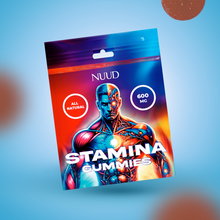
That last item gets a deliberately narrow placement. NUUD is a botanical supplement built around desire in general. It has nothing to do with lupus, rheumatoid arthritis, Sjögren's, or any other autoimmune condition, and it has no role in anything your rheumatologist is treating. The formula is anchored by the NUUD Mushroom Complex™, with Muira Puama, Boiled Rehmannia Root, Tribulus Terrestris, and Piper Nigrum for absorption, on a timeline of roughly 30 to 60 minutes. If the everyday levers are in reasonable shape and you want one more thing to try, that is what our women's libido gummies are for. Given how long your medication list probably is, it is worth a conversation with your doctor or pharmacist first, and it should wait until fatigue, mood, and pain have had their turn.
Nothing is wrong with you
You have probably been handed two unhelpful answers already. One is silence, from appointments with twenty minutes and forty things to cover. The other is a confident voice online telling you the disease destroyed your libido, attached to a protocol for sale.
The research supports neither. Across 68 studies and 5,457 women, 63% reported the same thing you are describing, the figure runs highest in Sjögren's and systemic sclerosis, and the comparison against people without the diagnosis is real and considerably smaller than the raw percentage. The mechanism has never been mapped. Fatigue, pain, and mood load travel with these diagnoses, and each carries its own evidence and its own responses.
That is a better starting position than a verdict. You are not an outlier, and nobody asking about it says something about how clinics run.
Keep reading
- Could your low libido be a thyroid problem?
- PCOS and low sex drive
- Depression and low libido
- Brain fog and sex drive
- Normal labs, low libido
Frequently asked questions
Does autoimmune disease cause low sex drive?
The research shows the two travel together, and it has not shown that one causes the other. Across 68 studies and 5,457 women with a systemic autoimmune rheumatic disease, 63% met the questionnaire threshold for sexual dysfunction, 95% CI 56 to 69%, heterogeneity 94%, with no comparison group in that estimate. Where a comparison group does exist, in rheumatoid arthritis, the relative risk in women was 1.73, 95% CI 1.36 to 2.22, across 7 studies and 44,745 participants, graded low quality with an absolute effect of 10 more cases per 1,000.
My rheumatologist never asked about this. Is that normal?
It is extremely common, and the researchers in the field say it should change. The team that pooled 68 studies of 5,457 women concluded that screening and treatment of sexual dysfunction in women with systemic autoimmune rheumatic disease should become an integral part of clinical practice. A separate review of primary Sjögren's syndrome retrieved 228 articles and found only 9 meeting inclusion criteria, which shows how little the question has been studied.
How do I tell whether it is the disease or the medication?
This research cannot separate them, because the reviews pooled prevalence in women who were nearly all on treatment and none isolated a drug effect. That question belongs with your rheumatologist and your pharmacist, who can see your whole list. Nothing here is a reason to change, pause, or skip any medication you have been prescribed. Bring the complete list to your appointment, including anything from another prescriber and anything over the counter.
Which autoimmune diseases affect sex drive the most?
In the 68-study review, Sjögren's syndrome was highest at 74%, 95% CI 58 to 87%, followed by systemic sclerosis at 69%, 95% CI 54 to 83%. Both intervals are wide because each subgroup rests on few studies. Rheumatoid arthritis came out at a pooled prevalence of 49.1%, 95% CI 38.2 to 60%, in a separate review of 13 studies and 2,327 participants. No separate pooled figure for lupus appears in that review's published results, and the authors concluded impairment appeared irrespective of which autoimmune rheumatic disease a woman had.
I'm exhausted before the day starts. Where do I even begin?
Begin by naming fatigue as its own item at your next appointment, since it is the symptom most tightly wound around desire and the one most likely to get lost in a visit built around inflammation. Bring your full medication list, including anything another prescriber started. Ask about mood, since depression and anxiety scores ran higher in women with Sjögren's than in comparison subjects and both are treatable in their own right. Ask who else you should be talking to, because rheumatology may not be where this ends.
References
- Minopoulou I, Pyrgidis N, Tishukov M, Sokolakis I, Baniotopoulos P, Kefas A, Doumas M, Hatzichristodoulou G, Dimitroulas T. Sexual dysfunction in women with systemic autoimmune rheumatic disorders: a systematic review and meta-analysis. Rheumatology (Oxford). 2023;62(3):1021-1030. https://pubmed.ncbi.nlm.nih.gov/35951753/
- Huang J, Guo C, Sun J, Hua R, Fan Y. Prevalence and risk factors of sexual dysfunction in female participants with rheumatoid arthritis: a systematic review and meta-analysis. The Journal of Sexual Medicine. 2024;21(11):1037-1046. https://pubmed.ncbi.nlm.nih.gov/39270639/
- Zhao S, Li E, Wang J, Luo L, Luo J, Zhao Z. Rheumatoid arthritis and risk of sexual dysfunction: a systematic review and metaanalysis. The Journal of Rheumatology. 2018;45(10):1375-1382. https://pubmed.ncbi.nlm.nih.gov/29858239/
- Hsu CW, Lee JT, Koo M. Sexual dysfunction in women with primary Sjögren's syndrome: a systematic review and meta-analysis. Sexual Medicine Reviews. 2024;12(3):299-306. https://pubmed.ncbi.nlm.nih.gov/38481023/
- Zhao S, Wang J, Liu Y, Luo L, Zhu Z, Li E, Luo J, Zhao Z. Inflammatory bowel diseases were associated with risk of sexual dysfunction in both sexes: a meta-analysis. Inflammatory Bowel Diseases. 2019;25(4):699-707. https://pubmed.ncbi.nlm.nih.gov/30476074/
This article is for general education and is not medical advice. Lupus, rheumatoid arthritis, Sjögren's syndrome, and every other autoimmune condition can only be diagnosed and managed by a licensed clinician. NUUD is a botanical supplement with no role in diagnosing, treating, curing, or preventing any disease, and these statements have not been evaluated by the Food and Drug Administration. Never change, pause, or stop a prescribed medication based on anything you read here. Talk with your rheumatologist about your symptoms, your medication list, and any supplement before you start it.
