


Low Libido With Normal Testosterone: Why the Bloodwork Is Fine but the Drive Is Gone
Share
Low libido with normal testosterone usually means testosterone is not your bottleneck, because desire runs on inputs a standard blood panel never measured. If your doctor said your labs came back normal and you walked out more confused than when you went in, that gap is common and it has real explanations. This article is for the man who keeps thinking his testosterone is fine but he has no sex drive, and still feels nothing after being told the numbers look good. First, what a standard panel can miss. Then the bigger half: the drivers of desire no blood test reads. The aim is a clearer conversation with your doctor and an honest map of where your drive went.
- Normal labs usually mean testosterone is not the main thing holding your drive down. Desire has other inputs.
- A standard panel can still miss details worth an informed talk with your doctor: total versus free testosterone, SHBG, draw timing, thyroid, prolactin, and vitamin D.
- The larger drivers are ones no blood test sees: sleep debt, chronic stress and cortisol, low mood and anxiety, antidepressants, alcohol, blunted dopamine, relationship strain, and overtraining.
- Desire and erections run on separate systems and can fail independently.
- Feeling flat with normal numbers is a signal to look wider. It is not proof that something is broken in you.
"My labs came back normal" and still no drive: what a standard panel can miss
A blood test inside the reference range is a good sign, and for most men it means testosterone is not the story. But "in range" is a wide band, and a basic panel captures a few things at one moment. What follows is background for a better conversation with your doctor. None of it is a reason to order your own tests.
Total testosterone versus free testosterone and SHBG
Most panels report total testosterone, which counts nearly all of it in your blood. Much of that is bound to a protein called sex hormone binding globulin (SHBG) and is not available to your tissues. The part that does the work is free testosterone. A man can show a normal total while high SHBG leaves his free testosterone lower than the headline number suggests. If your total looked fine and desire is still gone, free testosterone and SHBG are worth asking your doctor about.
When and how the blood was drawn
Testosterone follows a daily rhythm. It runs highest in the morning and drifts down through the afternoon, so a 4pm draw can read meaningfully lower than the same man at 8am. A single sample also varies day to day. Guidelines favor an early morning draw, confirmed on a second test, before anyone reads much into it. If your one result came from an afternoon appointment and was never repeated, that is worth raising with your doctor.
Thyroid, prolactin, and vitamin D
Testosterone is not the only lab that touches desire. An underactive thyroid can flatten energy and drive. A raised prolactin level can lower libido directly. And for many men, low vitamin D travels alongside low mood and fatigue. These are not always on a basic sexual health panel, and none is something to self diagnose. They are simply reasons a normal testosterone reading does not close the case on its own.
Educational background for a talk with your doctor, not a list of tests to order.
| What the standard panel shows | What an informed follow-up conversation covers |
|---|---|
| Total testosterone sitting inside the reference range | Free testosterone and SHBG, since high SHBG can leave free testosterone low behind a normal total |
| A single blood draw, often mid-afternoon | Whether it was an early-morning draw, confirmed on a second test |
| One snapshot treated as fixed | Normal day-to-day variation in any single sample |
| Testosterone read in isolation | Thyroid, prolactin, and vitamin D, which also shape energy and desire |
The drivers your bloodwork can't see
This is the bigger half, and for most men with normal labs it is where the answer lives. Desire is not one dial. It is the sum of your sleep, stress, mood, habits, and relationship, and a blood test measures none of them. If everything is normal on paper and you still feel nothing, one of the levers below is usually the reason, and these are the inputs you can actually move.
Sleep debt
Short sleep is one of the fastest ways to lose drive, and it works on two levels. It drops your energy for wanting anything, and it lowers testosterone directly. In a controlled study, one week of sleeping about five hours a night cut daytime testosterone in healthy young men by 10 to 15 percent (Leproult and Van Cauter, 2011). You can normalize a lab value and still be running on too little sleep. We go deeper on this in our piece on how sleep debt drags down both testosterone and desire.
Chronic stress and cortisol
A body under constant stress keeps cortisol high, and a system braced for threat is not a system cued for sex. This is why drive often disappears during a punishing stretch at work even when hormones look fine. Research on chronic stress and sexual function linked higher chronic stress to lower arousal and function, with cortisol part of the mechanism (Hamilton and Meston, 2013). More on that in what chronic stress and cortisol do to sex drive.
Low mood, anxiety, and antidepressants
Depression and anxiety flatten desire on their own, before any medication enters the picture. A study of people with major depression found low libido was common as a feature of the depression itself, present before any antidepressant was started (Kennedy et al., 1999). SSRIs and related antidepressants are among the most common causes of lowered desire and blunted arousal, and a meta-analysis put the rate of sexual side effects at a large share of users (Serretti and Chiesa, 2009). If your drive fell after starting an antidepressant, that is worth an honest talk with your prescriber, and we cover it in what antidepressants can do to libido. Do not stop a prescription on your own.
Source: Serretti and Chiesa 2009 (PMID 19440080) and Arackal and Benegal 2007 (PMID 20711392). Antidepressant rates span the lowest-impact drug, fluvoxamine, to the highest, sertraline.
Alcohol
A few drinks feels like it loosens things up in the moment, but regular heavier drinking works the other way over time. It lowers testosterone, dulls arousal, and interferes with desire and performance. A study of men with alcohol dependence found high rates of sexual dysfunction, including reduced desire (Arackal and Benegal, 2007). If most evenings end with several drinks, a few lighter weeks is a fair experiment before blaming your hormones.
Dopamine, reward, and habituation
Wanting runs on dopamine, the brain's pursuit and reward chemistry. When that system is worn down or fed all day by easier hits, real desire can go quiet. Long hours of doomscrolling, and heavy porn use in particular, can blunt how strongly a real partner registers, because the brain adapts to whatever it gets most of. This is not a moral failing and it is not permanent, and it usually eases with plainer stimulation and more genuine rest.
The relationship
Resentment, distance, and years of low-grade tension quietly cap desire, and no lab picks that up. If you feel closer to roommates than lovers, or sex has come to feel like an obligation, that is a driver in its own right. Sometimes the honest work is a real conversation or a couples therapist. Desire needs some safety and some spark, and chronic conflict starves both.
Overtraining
Exercise supports drive, right up until it does not. High training volume with too little recovery, food, and sleep pushes the body into a depleted state that suppresses hormones and desire together. Endurance athletes and men chasing an aggressive cut see this most, and if your training load climbed as your drive fell, that timing is a clue.
How each driver steals your drive, and what tends to help
Here is the same picture in one view. None of the fixes are glamorous, and all of them beat waiting on a second blood test.
| Driver | How it kills drive | What tends to help |
|---|---|---|
| Sleep debt | Drops daytime testosterone and the energy to want anything | Seven to nine hours on a steady schedule |
| Chronic stress | Keeps cortisol high; a threatened body will not cue arousal | Real recovery, daylight, protected downtime |
| Low mood and anxiety | Flattens desire directly, before any medication | Care from a professional; do not tough it out alone |
| Antidepressants | A common cause of lowered desire and blunted arousal | A frank conversation with your prescriber about options |
| Alcohol | Suppresses testosterone; dulls desire and performance | A few lighter weeks as an experiment |
| Blunted dopamine | Endless easy stimulation makes real cues register weakly | Less screen and porn load; more genuine rest |
| Relationship strain | Resentment and distance quietly cap desire | Honest conversation or a couples therapist |
| Overtraining | Too much load and too little recovery suppresses hormones | More recovery, more food, deload weeks |
Desire and erections are different problems
One clarification saves a lot of men from the wrong fix. Libido is desire. An erection is physical, largely a matter of blood flow. You can have strong desire and still struggle with an erection, and you can get reliable erections while feeling no desire at all. If your real problem is getting or keeping an erection, that is a medical question for a doctor, and no supplement addresses it. This article is about the desire side, the "I just do not want it the way I used to" version. If your recent labs actually came back low, the separate question of whether TRT fixes low libido is worth reading.
A practical order to work through it
If you are staring at normal labs and a flat drive, here is a sane order for the inputs you can control. Start at the top; the early steps do the most.
- Fix sleep first. Aim for a real seven to nine hours on a steady schedule. It is the highest-yield change for both testosterone and desire, and it is free.
- Lower the stress load. You cannot always remove the stressor, but you can add recovery: daylight, real breaks, and one thing that is only for you.
- Look honestly at mood. If low mood or anxiety is present, get real care for it. If an antidepressant flattened your drive, tell your prescriber before changing anything.
- Audit alcohol. If most nights involve several drinks, run a few lighter weeks and watch what happens to your desire.
- Reset your reward habits. Cut the endless screen and porn load so ordinary cues start to land again.
- Address the relationship, if that is where it lives. Some of this is a conversation, and no pill overrides a dynamic that needs one.
- Ease off if you are overtraining. Add recovery, food, and deload weeks if your training load climbed as your drive fell.
Most men with normal labs and no drive have two or three of these running unaddressed. Fixing them is slower than anyone wants, and far more likely to be what actually brings your drive back.
Where a supplement like NUUD fits, honestly
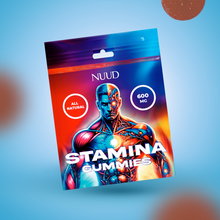
Straight answer first. NUUD is an over-the-counter botanical supplement with no prescription. It does not raise testosterone, is not medicine, and does nothing for erectile function. It sits next to the picture above and does not replace any of it. If your mood, sleep, drinking, or relationship is the real driver, a gummy is not a shortcut around it.
Where something like NUUD can be a small daily lever is on the desire side, for men whose levels are fine and who want a low-friction step alongside the sleep, stress, and lifestyle work. The men's formula centers on the NUUD Mushroom Complex, a proprietary botanical anchor, plus Muira Puama, Boiled Rehmannia Root, Tribulus Terrestris, and Piper Nigrum for absorption. It comes as a men's gummy and as a men's libido support capsule for daily use. We hold our own ingredients to the same standard we ask of hormones: Tribulus has a reputation for supporting desire in some men, and the evidence for it is mixed and limited, so we describe it that way and no stronger.
You will notice we are not naming maca, ashwagandha, or the herb people shorten to goat weed. They come up in every low-drive thread, but they are absent from the NUUD formula, so we will not imply otherwise. The useful mindset is plain: work the real inputs, keep any supplement as the small step it is, and see a doctor about the labs and symptoms that need one.
Frequently asked questions
My labs came back normal, so why is my sex drive gone?
Because desire is set by more than testosterone, and a normal panel only tells you your hormone level is probably not the problem. Sleep debt, chronic stress, low mood, antidepressants, alcohol, worn-down dopamine, and relationship strain each flatten drive on their own, and none show up on a standard blood test. Normal labs redirect the search toward those inputs.
Can you have low libido with normal testosterone?
Yes, and it is common. Testosterone in the normal range supports desire but does not make it automatic. Above a certain level, drive stops tracking your testosterone number and starts tracking sleep, stress, mood, habits, and your relationship. Plenty of men with textbook labs feel nothing, and the reason is almost always one of those non-hormonal drivers, and rarely a hidden hormone problem.
Everything is normal but I feel nothing. Is something wrong with me?
Feeling flat with normal numbers is a signal worth following, and it does not mean something is broken in you. It usually points to a driver your labs do not measure: exhaustion, a stressful stretch, low mood, a medication, drinking, or tension at home. If the flatness is deep or paired with low mood, bring it to your doctor, which points toward care and away from shame.
I just want to feel normal again. Where do I start?
Start with sleep, because it moves both testosterone and desire and is free. Then look honestly at stress, mood, alcohol, and screen and porn habits, in that order, giving each a few weeks. If low mood, anxiety, or a medication side effect is in the mix, bring it to your doctor. Most men who feel flat with normal labs have two or three of these at once.
Does NUUD raise testosterone or fix low libido?
No. NUUD does not raise testosterone, is not medicine, and is not a fix for any condition. It is an over-the-counter botanical supplement, no prescription, built around the NUUD Mushroom Complex with botanicals including Tribulus Terrestris. It sits on the desire side as a small daily step next to the real work, and it does nothing for erectile function. If your symptoms are strong, see a doctor.
References
- Leproult R, Van Cauter E. Effect of 1 week of sleep restriction on testosterone levels in young healthy men. JAMA. 2011. https://pubmed.ncbi.nlm.nih.gov/21632481/
- Hamilton LD, Meston CM. Chronic stress and sexual function in women. Journal of Sexual Medicine. 2013. https://pubmed.ncbi.nlm.nih.gov/23841462/
- Kennedy SH, Dickens SE, Eisfeld BS, Bagby RM. Sexual dysfunction before antidepressant therapy in major depression. Journal of Affective Disorders. 1999. https://pubmed.ncbi.nlm.nih.gov/10701478/
- Serretti A, Chiesa A. Treatment-emergent sexual dysfunction related to antidepressants: a meta-analysis. Journal of Clinical Psychopharmacology. 2009. https://pubmed.ncbi.nlm.nih.gov/19440080/
- Arackal BS, Benegal V. Prevalence of sexual dysfunction in male subjects with alcohol dependence. Indian Journal of Psychiatry. 2007. https://pubmed.ncbi.nlm.nih.gov/20711392/
This article is for general education and is not medical advice. NUUD is an over-the-counter botanical supplement and does not raise testosterone. Talk with a licensed clinician about testosterone testing, lab results, and any symptoms.
