

Libido Supplements the Research Doesn't Back (From a Brand That Sells One)
Share
Libido supplements promise a lot and prove very little. Most of the popular ones rest on small trials, deficient-only populations, results that barely clear statistical significance, or studies funded by the company that makes the product. The honest answer is that very few have clean, independent, repeated evidence in healthy people. Fenugreek shows up on plenty of these labels, so we gave the fenugreek placebo trials a full read of their own.
We are saying this as a brand that sells a botanical libido supplement. That feels backwards, but it is the whole point. If we are willing to score popular ingredients against their actual trials, we have to hold our own formula to the exact same ruler. We do that below, by name, and our deck does not come out exempt.
This is not a takedown of supplements or a pitch that ours is the magic exception. It is a reading guide. By the end you will know how to tell a real trial from marketing dressed as science, and you will be more skeptical of every libido supplement on the shelf, including the one we sell.
- Ginkgo is the cleanest "doesn't work" result: a triple-blind trial found no benefit over placebo, and the standout responses appeared in both groups (Wheatley, 2004; PMID 15378664).
- Zinc raised testosterone only in zinc-deficient men, going from 2.8 to 5.2 ng/mL, which does not transfer to people with normal zinc (Mahajan et al., 1982; PMID 7051913).
- Saffron's main desire endpoint hit p=0.050, exactly on the line, and much of its literature comes from one research group (Kashani et al., 2022; PMID 36186931).
- Ashwagandha's best results came from trials linked to the ingredient's maker, with independent replication still missing (Dongre et al., 2015; PMID 26504795).
- Our own formula is not exempt: one botanical has a single small RCT, two rest on traditional use alone, and we say so plainly.
Do any libido supplements actually work?
A few have signals worth taking seriously, but almost none clear the bar that matters: a benefit over placebo, in healthy people, repeated by researchers with no financial stake. In a triple-blind trial of ginkgo for sexual dysfunction, the supplement did no better than placebo, and only 16 participants completed it (Wheatley, Hum Psychopharmacol, 2004; PMID 15378664).
That study is worth sitting with, because it shows how easily we fool ourselves. The author noted "spectacular individual responses" during the trial. The catch is that those responses turned up in the placebo group too. When dramatic improvement happens whether or not someone got the real compound, the compound is not what produced the improvement. That is the placebo effect, doing exactly what it does best with anything tied to mood and expectation.
Here is the uncomfortable truth about this whole category. Desire is unusually sensitive to belief, attention, and context. Take a pill you expect to work, pay closer attention to your body, feel hopeful for the first time in months, and your sex life can genuinely improve. None of that requires the active ingredient to do anything. A good trial exists precisely to separate the pill from the hope.
So when a supplement says "clinically studied," ask which study and what it actually found. Sometimes the honest reading is: studied, and it lost. The cleanest evidence for a popular libido supplement is a triple-blind trial showing ginkgo performed no better than placebo, with the dramatic individual responses appearing in both arms, a textbook placebo signal (Wheatley, Hum Psychopharmacol, 2004; PMID 15378664).
Is zinc good for sex drive?
Zinc helps testosterone, but mostly if you were low to begin with. The most cited human study gave zinc to men on hemodialysis who were measurably zinc-deficient. Over the trial their serum testosterone roughly doubled, from about 2.8 to 5.2 ng/mL (Mahajan et al., Ann Intern Med, 1982; PMID 7051913). That sounds dramatic, and for those men it was real.
The detail marketing skips is the population. This was a double-blind crossover in 20 zinc-deficient men with kidney failure. Correcting a true deficiency is a fix, not a boost. If your zinc is already in normal range, replacing a deficiency you do not have should not push your hormones higher, and there is no good reason to expect it would.
The picture gets murkier in later work. A 1989 study in men with uremia concluded zinc was not a reversible cause of their hormonal problems, so even within deficient kidney patients the story is contested (Rodger et al., Nephron, 1989; PMID 2515494). One supportive trial and one that pushes back is not settled science. It is an open question with a narrow answer.
What does this mean for you? If a blood test shows you are low in zinc, correcting it is sensible and worth a doctor conversation. If your levels are normal, zinc as a libido lever has thin support. We dug into this alongside vitamin D in a separate piece, because both are real deficiencies worth checking and weak boosters when you are already replete: see our guide to zinc, vitamin D and libido. Zinc's best evidence comes from 20 zinc-deficient dialysis patients whose testosterone roughly doubled, a deficiency correction that does not generalize to people with normal zinc, and a later uremia study even questioned the link (Mahajan et al., Ann Intern Med, 1982; PMID 7051913).
Does maca work for libido?
Maca has a real human trial, and it is genuinely interesting, but it leans entirely on self-report with no mechanism. In a randomized placebo-controlled study of about 57 men, those taking maca reported improved sexual desire by week 8 and again at week 12 (Gonzales et al., Andrologia, 2002; PMID 12472620). The effect was independent of testosterone, mood, and depression scores.
That independence is both the strength and the puzzle. The men felt more desire, yet their hormones did not change, so the study could not say how maca produced the effect. A result with no mechanism is not disqualifying, plenty of useful compounds were used before anyone knew why they worked. But it does mean we are trusting a feeling reported on a questionnaire, in a fairly small group, without a biological fingerprint to confirm it.
Small sample plus self-report plus no mechanism is exactly the profile that needs replication before anyone calls it proven. To maca's credit, it did beat placebo on the desire question, which is more than ginkgo managed. It sits in the "weak but not nothing" tier: a real signal that has not yet been confirmed at scale. Maca's best evidence is a randomized trial of roughly 57 men reporting improved self-rated sexual desire by week 8, an effect independent of testosterone with no mechanism shown and a small sample (Gonzales et al., Andrologia, 2002; PMID 12472620).
Does saffron and ashwagandha hold up better?
Both score higher than ginkgo, but each carries a specific asterisk that marketing tends to hide. Saffron's recent trial of 74 people landed its primary endpoint at p=0.050, sitting exactly on the conventional line for significance (Kashani et al., Avicenna J Phytomed, 2022; PMID 36186931). On the line is not the same as comfortably positive.
Saffron: borderline, and from a narrow source
A p-value of exactly 0.050 means the result barely qualifies as statistically meaningful. Nudge the data slightly and it would not. That is not fraud, it is a thin margin, and thin margins demand replication by other teams. A lot of the saffron-for-libido literature traces back to one research group, which makes independent confirmation more important, not less.
An earlier saffron trial in people taking SSRIs is often cited as supportive, and it did show improvement on some sexual function measures. But desire itself, the thing most people are actually chasing, did not move significantly, landing at p=0.196 (Kashani et al., Hum Psychopharmacol, 2013; PMID 23280545). So even the friendly study is more nuanced than the headline suggests.
Ashwagandha: promising results, compromised funding
Ashwagandha shows the largest effect sizes in this whole roundup. In a trial of 80 women, female sexual function scores rose from 14.2 to 22.6 versus 14.2 to 19.3 on placebo, with p less than 0.0001 (Ajgaonkar et al., Cureus, 2022; PMID 36447681). On paper that is the strongest signal here.
The asterisk is who paid and who supplied. That trial used a branded extract, KSM-66, made by Ixoreal, with funding disclosure that is not fully clear, published in a journal with a lighter reputation than the big names. An earlier pilot of 50 women also hit p less than 0.001, but the acknowledgments state the manufacturer both supplied the product and part-funded the study (Dongre et al., Biomed Res Int, 2015; PMID 26504795). Industry money does not automatically falsify a result, but it raises the bar for trusting it, and independent replication is still missing.
So where does that leave the two best performers? Ashwagandha's effects are large but its evidence is manufacturer-entangled and unreplicated, while saffron's strongest desire result sits right on the edge of significance and flows mostly from one group (Ajgaonkar et al., Cureus, 2022; PMID 36447681).
The evidence scorecard for popular libido supplements
Here is the whole category in one view, scored by the best available human trial, an honest verdict, and the catch that usually goes unmentioned. None of these five is in our own formula, so we can discuss them as straight education. The ratings reflect study quality, sample size, population, and funding, not how loud the marketing is.
| Ingredient | Best study | Verdict | The catch |
|---|---|---|---|
| Ginkgo biloba | Triple-blind RCT, 16 completers (Wheatley, 2004; PMID 15378664) | Null. No benefit over placebo. | The "spectacular" responses appeared in the placebo group too. |
| Zinc | Double-blind, N=20 deficient men (Mahajan et al., 1982; PMID 7051913) | Works only if deficient. | Dialysis patients with low zinc; does not transfer to normal levels. |
| Maca | RCT, N~57 men (Gonzales et al., 2002; PMID 12472620) | Weak but not nothing. | Self-reported desire only, small N, no mechanism shown. |
| Saffron | RCT, N=74 (Kashani et al., 2022; PMID 36186931) | Borderline. | Primary endpoint p=0.050, mostly one research group. |
| Ashwagandha | RCT, N=80 women (Ajgaonkar et al., 2022; PMID 36447681) | Promising but compromised. | Branded extract, manufacturer-linked funding, not yet replicated independently. |
Read the table left to right and a pattern shows up. The deeper you look at any single ingredient, the more the catch matters. A null trial, a deficiency-only effect, a borderline p-value, and an industry funding tie are four very different problems, and each one alone is enough to keep a supplement out of the "proven" column.
How do I tell if a supplement's research is real?
Real evidence has a shape, and once you know it you can spot the gaps in seconds. Across the five ingredients above, the same weaknesses repeat: tiny samples, wrong populations, results on the edge of significance, and funding from whoever sells the product. A null triple-blind trial like ginkgo's is actually high quality science, it just delivered a no (Wheatley, 2004; PMID 15378664).
Use this quick checklist the next time a libido supplement waves a study at you.
- Check the comparison. Was there a placebo group, and did the supplement beat it? "Improved over baseline" is not the same as "beat placebo," because hope improves baselines on its own.
- Check the population. Were the subjects healthy people like you, or a special group such as deficient or dialysis patients whose results do not transfer?
- Check the sample size. A dozen or two completers can produce a real-looking effect by chance. Bigger and replicated beats small and singular.
- Check the p-value. Comfortably below 0.05 is reassuring; sitting exactly at 0.050 means nudge the data and it disappears.
- Check who paid. Scan the funding and acknowledgments. If the maker supplied the product or financed the trial, you want an independent team to confirm it before you believe it.
None of these five questions requires a science degree, and any honest brand should welcome you asking them about its own products. If a supplement's marketing cannot survive this checklist, the marketing is the product. For the broader picture of what genuinely shifts female desire, hormones, context, relationship, and health, our overview of low libido in women covers the non-supplement levers that often matter more.
So why does NUUD sell a libido supplement at all?
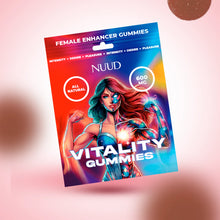
Because the honest answer is "tradition and early evidence," not "proven science," and we would rather say that out loud than hide it. Our Vitality Gummies for women contain Tribulus Terrestris, Muira Puama, Boiled Rehmannia Root, Piper Nigrum, and our NUUD Mushroom Complex. We are going to hold that exact list to the same ruler we used above, because it would be dishonest not to.
Tribulus is the only botanical in our deck with a modern randomized trial in women, and even that is one small study, not settled science. A placebo-controlled RCT reported improved sexual function scores in women taking Tribulus, at p less than 0.001 (Akhtari et al., DARU, 2014; PMID 24773615). One promising trial is a starting point, not a finish line, and it needs the same independent replication we asked of ashwagandha. We wrote more about that study and its limits in our piece on Tribulus Terrestris and women's libido.
Now the parts with no modern RCT at all. Boiled Rehmannia Root rests on traditional use, with no contemporary controlled trial behind its libido reputation. Muira Puama leans on traditional use and old, uncontrolled case-series, which is why we never cite it for erections or anything specific. Piper Nigrum is there mainly to aid absorption, and our Mushroom Complex is a wellness blend, not a proven aphrodisiac. That is the honest accounting of our own bottle.
So the pitch is not that NUUD beats maca or out-trials ashwagandha. We make no such claim, and the data would not support it if we tried. The pitch is that we will tell you which of our ingredients has a real trial and which ride on history, and then ask you to stay skeptical of any libido supplement promising miracles, ours included. If you want to read more before deciding anything, our arousal supplements overview lays out the category plainly. You can see the women's product itself here: Vitality Gummies.
Frequently asked questions
Do any libido supplements actually work?
A few show real signals, but almost none meet the gold standard of beating placebo in healthy people with independent, repeated trials. Maca and ashwagandha have the most encouraging data, yet maca rests on self-report and ashwagandha on manufacturer-linked studies. Ginkgo simply failed (Wheatley, 2004; PMID 15378664).
Does maca work for libido?
Maca beat placebo on self-reported desire in a randomized trial of about 57 men by week 8, which is a genuine signal (Gonzales et al., 2002; PMID 12472620). The catch is the small sample, the reliance on questionnaires, and that the effect appeared with no change in testosterone, so no mechanism was shown.
Does ashwagandha increase female libido?
Trials are promising but compromised. In 80 women, sexual function scores rose more on ashwagandha than placebo at p less than 0.0001 (Ajgaonkar et al., 2022; PMID 36447681). The problem is that the strongest studies used a branded extract with manufacturer-linked funding, and no independent team has replicated the result yet.
Is zinc good for sex drive?
Mainly if you are actually deficient. Zinc roughly doubled testosterone in zinc-deficient dialysis patients, from 2.8 to 5.2 ng/mL (Mahajan et al., 1982; PMID 7051913). That corrects a deficiency rather than boosting normal levels, and a later uremia study even questioned the link, so it is not a general libido fix.
How do I tell if a supplement's research is real?
Ask five questions: did it beat placebo, were the subjects healthy people like you, was the sample big enough, was the p-value comfortably under 0.05, and who funded it. A result that sits exactly at p=0.050 or comes from the maker's own trial deserves caution until an independent team repeats it (Kashani et al., 2022; PMID 36186931).
*These statements have not been evaluated by the Food and Drug Administration. This product is not intended to diagnose, treat, cure, or prevent any disease.
