


Low Libido or Not Attracted to My Partner? How to Tell the Difference
Share
The fastest way to tell whether you have low libido or you are not attracted to your partner is one honest question: does nothing spark desire anywhere, or does the wanting still exist but no longer point at the person next to you. If nothing sparks it, no fantasy, no pull toward anyone, that points toward your body and your circumstances: stress, sleep, hormones, medication, burnout. If the desire system still runs but has quietly stopped aiming at your partner, that points toward the relationship. This is the question people are terrified to google, and you are allowed to ask it without deciding your marriage is over. Nothing is wrong with you for wondering.
- Global desire loss means nothing turns you on anywhere. It usually points to biology or circumstances: stress, exhaustion, sleep debt, hormones, or a medication.
- Partner-specific desire loss means the wanting still works but has stopped aiming at your partner. It usually points to relationship dynamics.
- Desire fading in a long relationship is normal and well documented. Habituation happens to almost everyone, and it is not proof of lost attraction.
- Responsive desire, where wanting shows up after closeness starts rather than before, is a common and healthy pattern, especially for women and for anyone years into a relationship.
- Resentment, mental load, and feeling unseen are some of the most common relationship-side desire killers, and they are fixable.
- A botanical supplement can support the desire side of the equation. It cannot fix resentment or a relationship problem, and this article says so plainly.
The one question that tells you the most: is it me or is it us
Most people jump straight to the scariest interpretation. "I do not want sex with my partner" becomes "I must not love them anymore," and the panic starts. But desire and love are not the same wiring, and low desire has many more causes than lost attraction. The useful first move is to separate global desire loss from partner-specific desire loss, because they point in different directions and need different responses.
Global loss looks like this: you do not fantasize, you do not seek out solo pleasure, nobody at work or on a screen registers, and mornings are as flat as evenings. The wanting is simply gone across the board. That pattern rarely means you fell out of love with one person. It usually means the engine itself is running low from something physical or situational.
Partner-specific loss looks different: you still notice attractive people, you still have a private sex drive, maybe an old memory or a night away brings a flicker back, but with your actual partner the switch stays off. That pattern points at the space between the two of you rather than at your biology. Both are common, and neither makes you broken. Naming them stops you from treating a relationship question as a medical one, or a medical question as a breakup.
A comparison you can actually use
Read down the signs and notice which column your honest answers land in. Most people are a mix, and that is fine. What you are looking for is the lean.
| Sign | Points toward low libido (global) | Points toward attraction or relationship (partner-specific) |
|---|---|---|
| Fantasy and solo desire | Gone. You do not fantasize or seek pleasure alone either. | Still there, just not about your partner. |
| Attraction to other people | Nobody registers. No pull toward anyone. | You still find other people attractive. |
| Spontaneous or morning arousal | Absent everywhere, most of the time. | Shows up, just not directed at your partner. |
| How it started | Faded gradually alongside stress, fatigue, a new medication, or a hormonal shift. | Changed after a specific rupture, a resentment, or a slow slide into roommate life. |
| Energy and mood overall | Flat across your whole life, often with brain fog and exhaustion. | Fine elsewhere. The flatness is mostly in the bedroom. |
| A change of scene | A weekend away changes nothing. | Away from home, or remembering the early days, desire flickers back. |
- No fantasy, and no solo desire either
- Nobody catches your eye, no pull toward anyone
- Morning and spontaneous arousal absent nearly everywhere
- Faded gradually with stress, fatigue, a new medication, or a hormone shift
- Flat across your whole life, often with fog and exhaustion
- A weekend away changes nothing
- Fantasy and solo drive still run, just not about your partner
- You still find other people attractive
- Arousal shows up, just not aimed at your partner
- Changed after a rupture, a resentment, or a slide into roommate life
- Fine elsewhere, the flatness is mostly in the bedroom
- Away from home, or recalling the early days, desire flickers back
Why long-term desire fades for almost everyone
Before you read decline as lost attraction, know that fading desire in a long relationship is one of the most normal things in the research. Desire tends to drop the longer a couple has been together, and this shows up even in young, otherwise happy people. In a large study of partnership duration, women's desire fell steadily over the years of a relationship while men's stayed comparatively steady (Klusmann, 2002). A separate study of younger men and women found the same pull: longer relationships tracked with lower sexual desire, again most sharply for women (Murray and Milhausen, 2012).
The mechanism is habituation. The early phase of a relationship runs on novelty and its neurochemical charge, and that charge is designed to fade. Familiarity and the sheer repetition of daily life lower the temperature. It happens to couples who are still deeply in love. Feeling less spontaneous desire after five or ten years says nothing damning about your partner. It is the default setting of long-term intimacy, and almost nobody warns you before you live it.
If desire naturally cools with time, a quiet bedroom is weak evidence for lost attraction on its own. You need the other signs in the table before you draw that conclusion. We cover the novelty side of this in our piece on what happens when the new wears off.
Responsive desire: when wanting shows up after you start
Here is the other piece hardly anyone is taught. Desire does not always arrive first. For many people, especially women and especially years into a relationship, wanting shows up in response to closeness rather than before it. You may feel neutral at the start of the evening and only notice desire once touch and safety are already in play. Sex researcher Rosemary Basson described this as a circular model of sexual response, where arousal often precedes the conscious wanting instead of following it (Basson, 2000).
If that is you, you are not low libido in the way you fear. Your desire is responsive, and it is waiting for the right conditions rather than announcing itself out of nowhere. The trap is waiting around to feel spontaneously turned on and reading that absence as proof something is dead. Arousal never gets a chance to start the engine. If "I want to want it" sounds like your exact thought, read our full explainer on the difference between responsive and spontaneous desire, because that distinction alone resolves a lot of these fears.
The resentment and mental-load pathway
When desire really has narrowed to just your partner, the cause is often less mysterious than "I lost attraction" and more like a slow accumulation. Resentment is the quiet desire killer. If you are the one carrying the mental load and running the household in your head, the last thing your nervous system wants at the end of the day is one more demand on your body. Desire needs some room and some safety, and a person who feels like an unpaid manager rarely has either.
Feeling unseen does the same damage. When you stop feeling noticed, appreciated, or wanted as a person, the body follows the heart out of the room. We wrote about this directly in how feeling invisible kills desire. And the standard fix people reach for, doing more chores to earn their way back into the bedroom, usually backfires, which we unpack in why choreplay does not fix a dead bedroom.
Repeated rejection sits on this pathway too, from the other side. Being turned down again and again wears a person down, even when their partner insists the attraction is still there, as we cover in how sexual rejection kills desire. The common thread is that these are relationship dynamics, and dynamics can change. None of them mean the attraction is gone for good.
When it really is attraction loss, and what that talk sounds like
Sometimes the honest answer is that desire for this specific partner has faded, and no amount of sleep or supplements will move it. Even then, it is rarely a clean "I am not attracted anymore." When researchers asked married women why their passion had waned, the reasons clustered around over-familiarity, the relationship becoming an institution, and roles turning domestic and de-eroticized, rather than a sudden loss of finding their partner attractive (Sims and Meana, 2010). Over-familiarity can feel like attraction loss from the inside while actually being more workable.
A real mismatch in wanting is also common and does not doom a couple. Differences in how much two partners want sex, and how they handle that gap, shape satisfaction more than the raw numbers do (Attaky, Kok, and Dewitte, 2022). The couples who do well are the ones who can talk about the gap without it becoming a referendum on love.
If you do need that conversation, it works best when it is honest and kind at the same time. Lead with what is true for you and what you want to protect, something like "I love you and I miss wanting you, and I want to figure out why together." Skip the blame and the ultimatums, and stay on the same side of the problem. A conversation that opens with curiosity is a repair. One that opens with an accusation is a fight. The goal is to name the distance so you can close it together.
When to consider a couples therapist
Some knots are hard to untie alone, and a good sex or couples therapist is a resource worth reaching for early. Consider one when any of these are true.
- The same fight loops for months and nothing you try changes it.
- Resentment has hardened into contempt, stonewalling, or long stretches of silence.
- There has been a betrayal, a rupture, or a trust break that keeps resurfacing.
- One of you wants to work on it and the other will not engage at all.
- You genuinely cannot tell whether this is a desire problem, a relationship problem, or both, and you want a trained outside read.
Going to therapy is not an admission that the relationship failed. It is what people do when they take it seriously enough to get help. If your instinct is that the two of you are worth the effort, that instinct is usually worth listening to.
Where a supplement like NUUD fits, honestly
Here is the straight version, because you deserve it. If the honest diagnosis is resentment, mental load, feeling unseen, or a rupture that needs repair, no supplement touches that. A capsule cannot make you feel wanted or rebuild trust, and it will not redistribute the invisible work in your house. Anyone selling you a pill for a relationship problem is selling you a story. That side of the equation is talk, therapy, and changed behavior, and we will not pretend otherwise.
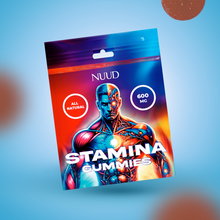
Where a botanical supplement can sit is on the desire side, for the person whose wanting has cooled globally and who wants a low-friction daily step alongside the sleep, stress, and lifestyle work. NUUD is an over-the-counter botanical supplement built around the NUUD Mushroom Complex, alongside Muira Puama, Boiled Rehmannia Root, Tribulus Terrestris, and Piper Nigrum for absorption. It works with responsive desire rather than against it, supporting the body so that when closeness starts, there is something there to build on. You can see the women's botanical libido gummy if that is the lever you want to try. It is not a treatment, not a hormone, and not a substitute for the harder relationship work. Use it for what it is.
Frequently asked questions
Is it me or is it us? How do I know if it is low libido or my relationship?
Run the global versus partner-specific test. If nothing sparks desire anywhere, no fantasy, no solo drive, nobody catches your eye, that points toward your body and your circumstances: stress, sleep, hormones, or a medication. If the wanting still works but has stopped aiming at your partner specifically, that points toward the relationship. Most people lean one way, and that lean tells you where to start.
Am I not attracted to my partner anymore, or is my desire just low?
Attraction loss and low desire feel similar from the inside but show up differently. If you still notice attractive people and still have a private sex drive, your desire system works and the issue is more likely relational: habituation, resentment, or feeling unseen. If the wanting is gone across your whole life, it is more likely global low desire from a physical or situational cause. Fading desire in a long relationship is normal and is not proof you lost attraction.
I love him but I do not want sex. Is that normal?
Yes, and it is one of the most common experiences in long-term relationships. Love and desire run on different wiring, so you can adore your partner and still feel low wanting. This is often responsive desire, where the wanting shows up after closeness begins rather than before, plus the natural habituation that comes with years together. It is worth understanding before you read it as a sign that something is wrong.
I still find other people attractive but not my partner. What does that mean?
It usually means your desire system is intact and the issue is partner-specific rather than a global libido problem. That points toward relationship dynamics such as over-familiarity, resentment, mental load, or feeling unappreciated, which are workable rather than permanent. It does not automatically mean you should leave. It means the work is between the two of you, and often a therapist helps.
Can a supplement help if I have lost attraction to my partner?
No, and any product that claims to is not being honest with you. A supplement cannot fix resentment, rebuild trust, or make you feel wanted, which are the usual drivers of partner-specific desire loss. A botanical supplement can support the desire side for someone whose wanting has cooled globally, as a small daily step alongside sleep, stress, and lifestyle work. It is not a treatment and not a substitute for the relationship work.
References
- Klusmann D. Sexual motivation and the duration of partnership. Archives of Sexual Behavior. 2002. https://pubmed.ncbi.nlm.nih.gov/12049023/
- Murray SH, Milhausen RR. Sexual desire and relationship duration in young men and women. Journal of Sex and Marital Therapy. 2012. https://pubmed.ncbi.nlm.nih.gov/22268980/
- Basson R. The female sexual response: a different model. Journal of Sex and Marital Therapy. 2000. https://pubmed.ncbi.nlm.nih.gov/10693116/
- Sims KE, Meana M. Why did passion wane? A qualitative study of married women's attributions for declines in sexual desire. Journal of Sex and Marital Therapy. 2010. https://pubmed.ncbi.nlm.nih.gov/20574890/
- Attaky A, Kok G, Dewitte M. Attachment Orientation Moderates the Sexual and Relational Implications of Sexual Desire Discrepancies. Journal of Sex and Marital Therapy. 2022. https://pubmed.ncbi.nlm.nih.gov/34665076/
This article is for general education and is not medical advice. NUUD is an over-the-counter botanical supplement and is not a treatment for any condition. If low desire is persistent or distressing, talk with a licensed clinician, and consider a couples or sex therapist for relationship concerns.
