


SSRI and Low Libido During Perimenopause: What You Can Actually Do (Without Going Off Your Medication)
Share
The Short Answer
SSRIs manage serotonin-driven mood, but libido runs on a different biochemical pathway: dopamine, androgens, and the HPA stress axis. Between 58% and 73% of SSRI users experience sexual side effects, depending on the specific drug (Montejo et al., Journal of Clinical Psychiatry, 2001). Here's what addresses the desire pathway without touching your medication.
Key Takeaways
- Sexual dysfunction affects 58-73% of SSRI users. It is not rare and not psychological (Montejo et al., 2001).
- The mechanism is biochemical: serotonin activates 5-HT2 receptors that directly suppress dopamine, the primary driver of desire.
- SSRIs also compound hypothalamic temperature dysregulation, which is why heat intolerance often worsens during perimenopause.
- The desire pathway (dopamine, androgens, HPA axis) is separate from the serotonin pathway. Addressing it does not require changing your medication.
- Any supplement containing piperine requires a pharmacist check before combining with an SSRI. Five minutes, not a hard stop.
Here's a scenario that's more common than any prescriber will spontaneously tell you. Your HRT started working. The hot flashes became manageable. But the anxiety and mood swings stayed rough, so your doctor added an SSRI. A reasonable clinical decision. And now you have a different problem: still no libido, and somehow the heat intolerance feels worse, not better.
Nothing is wrong with your response to treatment. Both outcomes are explained by the same pharmacology. SSRIs increase serotonin availability, which is the mechanism that relieves depression and anxiety. But serotonin is not the biochemical driver of desire. Desire runs on dopamine, androgens, and the HPA stress axis. And elevated serotonin, through 5-HT2 receptor activation, actively suppresses dopamine. The drug is doing its job. It's just doing it in a system adjacent to the one you also need.
The heat piece compounds this further. Serotonin directly regulates the hypothalamic thermostat, the same system perimenopause disrupts. Adding more serotonergic activity into an already-dysregulated system can push heat intolerance in the wrong direction for women who are already experiencing hot flashes.
This article does not suggest stopping your SSRI. It explains the mechanism in enough detail to make sense of what's happening, and lays out what you can address on the desire pathway while your medication continues doing what you need it to do. For a broader look at low libido in women outside of medication context, that article covers the full picture.
Why do SSRIs cause low libido? The actual mechanism.
This is not a rare side effect or a sign that the medication isn't working. A prospective study of 1,022 outpatients found SSRI-induced sexual dysfunction in 57.7% of people on fluoxetine and 72.7% on citalopram (Montejo et al., Journal of Clinical Psychiatry, 2001, PMID 11229449). Over 600 participants in that study were women. The numbers are clear. This is the rule, not an outlier.
The mechanism sits at the receptor level. SSRIs increase serotonin in the synapse. Elevated serotonin activates 5-HT2 receptors, and those receptors suppress dopamine release in the mesolimbic pathway. Dopamine is the primary neurochemical of wanting: motivation, anticipation, desire. When dopamine activity is reduced, the wanting goes quiet. A 2020 review confirmed this pathway directly: up to 80% of SSRI users experience sexual side effects, with women showing higher severity scores despite lower spontaneous reporting rates (Atmaca, Neuropsychiatric Disease and Treatment, 2020, PMID 32368066).
Women underreport at higher rates. If your prescriber didn't ask directly, that's the disclosure gap at work. The side effect is not less real because you didn't mention it first.
SSRI-induced sexual dysfunction by drug: the numbers
The Montejo et al. Study gives specific rates across the most commonly prescribed SSRIs. These are not estimates from spontaneous reporting; they used structured clinical assessment, which captures the real picture.
| SSRI | Sexual Dysfunction Rate |
|---|---|
| Fluoxetine | 57.7% |
| Sertraline | 62.9% |
| Paroxetine | 70.7% |
| Citalopram | 72.7% |
Source: Montejo et al., Journal of Clinical Psychiatry, 2001. Rates based on structured clinical assessment of 1,022 outpatients.
SSRI-induced sexual dysfunction is not a rare or idiosyncratic response. A prospective study of 1,022 outpatients found rates ranging from 57.7% (fluoxetine) to 72.7% (citalopram) using structured clinical assessment rather than spontaneous patient reporting. Women represented over half of the study population. (Montejo et al., Journal of Clinical Psychiatry, 2001. PMID 11229449)
Why does heat intolerance get worse on SSRIs during perimenopause?
Serotonin does not only regulate mood. It plays a direct role in hypothalamic temperature control, the same system that perimenopause disrupts. Adding SSRIs to an already-dysregulated thermoregulatory system can compound the problem, not relieve it. Research on menopausal thermoregulation confirms serotonin and norepinephrine as key drivers of hypothalamic dysfunction during the menopause transition (Bansal and Aggarwal, Journal of Midlife Health, 2019, PMID 31001050).
This explains a pattern some women notice: the hot flashes don't improve on SSRIs, and may feel more intense. The hypothalamus is managing conflicting serotonergic signals, some from perimenopause-driven hormonal shifts, some from the medication. For women already on HRT, this layer of dysregulation sits on top of hormone management that is otherwise working.
It doesn't happen to every woman. But it's a documented pattern, and naming it matters. If your heat intolerance worsened after starting an SSRI, that's a conversation worth having with your prescriber, not to stop the medication, but to inform the full clinical picture.
What SSRIs address and what they don't: a direct comparison
The core issue is that SSRIs are precision tools. They work on one pathway. The desire pathway is a different system entirely. Understanding the gap makes it easier to see where to direct additional support without touching your current treatment.
| System | What SSRIs Do | What Stays Unaddressed |
|---|---|---|
| Serotonin pathway (mood) | Reuptake inhibition increases serotonin availability | Working as intended |
| Dopamine / desire pathway | 5-HT2 activation suppresses dopamine | Desire remains suppressed |
| HPA axis / cortisol | No direct effect | Stress response and libido suppression remain unaddressed |
| Androgen receptors (T, DHEA) | No effect | Androgen-driven desire remains unaddressed |
| Hypothalamic thermostat | Increases serotonergic activity in same system | Heat intolerance can increase |
What can you do alongside your medication?
The desire pathway, dopamine, androgens, and the HPA axis, is addressable without modifying your SSRI. A 2025 systematic review and meta-analysis of RCTs in perimenopausal women specifically found that maca root improved arousal scores in this cohort, confirming that the desire pathway remains responsive to intervention even in women on serotonergic medications (de Aquino et al., Clinics (Sao Paulo), 2025, PMID 39985829). The pathway is there. It's just not the one SSRIs reach.
Before taking any supplement alongside prescription medication
NUUD Vitality Gummies contain piperine (black pepper extract). Piperine inhibits CYP3A4, an enzyme your liver uses to process certain medications. Physiologically-based pharmacokinetic modeling shows piperine at 20 mg/day increases blood concentrations of CYP3A4 substrate drugs by 35-59% (Lin et al., International Journal of Molecular Sciences, 2024, PMID 39456737). A separate mechanistic study confirmed piperine irreversibly inactivates CYP3A with 49.5% loss of activity after 20 minutes (Cui et al., Drug Metabolism and Disposition, 2020, PMID 31748224).
Some SSRIs are metabolized through CYP-related pathways. A five-minute pharmacist conversation confirms whether your specific SSRI interacts. This is not a contraindication and it's not a reason to avoid the supplement automatically. It's a precaution worth confirming before you start.
5 things that target the desire pathway alongside SSRIs
- Botanical adaptogens that address HPA axis stress. Cordyceps, Tribulus Terrestris, and related adaptogens work through the HPA axis and androgen-adjacent mechanisms. These are separate from the serotonin system entirely. They don't interact with the SSRI mechanism and don't address the same system. That's the point.
- Testosterone evaluation with your prescriber. SSRIs don't touch androgen receptors. If your testosterone or DHEA is low (common in perimenopause), that pathway stays suppressed regardless of SSRI therapy. This is a blood test conversation, not a supplement conversation.
- Sleep architecture repair. Fragmented sleep from perimenopause night sweats accelerates cortisol dysregulation, and cortisol suppresses the same dopamine pathway SSRIs are already taxing. This is a compounding effect. Addressing sleep quality directly reduces one layer of desire suppression.
- Movement that lowers cortisol specifically. High-intensity cardio can spike cortisol. Thirty minutes of walking or yoga has a more favorable cortisol profile for women in perimenopause. The goal here is reducing the HPA axis burden, not general fitness.
- Reducing the dopamine tax. Screen time, decision fatigue, and mental load all draw from the same dopamine reserve that desire depends on. This isn't a wellness platitude. When dopamine capacity is already suppressed by SSRI pharmacology, the discretionary drain matters more than it would otherwise.
The botanical angle: after the pharmacist conversation
Botanical support for the desire pathway has been studied in perimenopausal women specifically, and the research confirms the pathway is addressable. Maca root improved arousal scores in perimenopausal women in the 2025 de Aquino meta-analysis without requiring any change to concurrent medication. Tribulus Terrestris has been studied for desire-pathway support through androgen-adjacent mechanisms (see also PMID 24773615 for Tribulus and female sexual function). These are not mood interventions. They address a different system.
Cordyceps, included in the NUUD Mushroom Complex, is classified as an adaptogen with documented effects on HPA axis regulation. Adaptogenic activity operates through the stress-response system, not the serotonin system. This is what makes it relevant here: it addresses the HPA axis layer that SSRIs leave untouched.
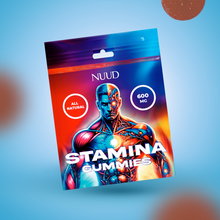
After confirming with your pharmacist that there's no interaction concern with your specific SSRI, NUUD Vitality Gummies are formulated specifically for the desire pathway. The formula includes Tribulus Terrestris, Muira Puama, Boiled Rehmannia Root, Piper Nigrum (the piperine source, covered in the callout above), and the NUUD Mushroom Complex. This is not a mood medication. It does not address the serotonin mechanism. It addresses the biochemical layer SSRIs don't reach: the HPA axis, androgen-adjacent signaling, and dopamine pathway support.
To understand more about how cortisol suppresses desire at a mechanistic level, that article covers the HPA axis and libido connection in detail.
In a 2025 systematic review and meta-analysis of RCTs focused on perimenopausal women specifically, maca root supplementation improved arousal scores without requiring modification of concurrent pharmaceutical therapy. The desire pathway in this cohort is responsive to botanical intervention independently of serotonergic medication status. (de Aquino et al., Clinics (Sao Paulo), 2025. PMID 39985829)
Frequently asked questions
Can I take libido supplements while on an SSRI?
You can, but a pharmacist check is the right first step, especially if the supplement contains piperine (black pepper extract), which is present in some formulas including NUUD Vitality Gummies. Piperine affects CYP enzyme activity, which processes several medications including certain SSRIs. A five-minute pharmacist conversation confirms whether your specific drug interacts. Once cleared, botanical support for the desire pathway, the system SSRIs don't address, is a reasonable approach alongside your existing treatment.
Why did my sex drive disappear on antidepressants?
SSRIs increase serotonin availability in the brain, which is the mechanism behind the antidepressant effect. But elevated serotonin activates 5-HT2 receptors that suppress dopamine, and dopamine drives motivation and desire. The suppression is a direct biochemical consequence of how the drug works. It's not psychological. It affects between 58% and 73% of SSRI users depending on the specific medication (Montejo et al., Journal of Clinical Psychiatry, 2001).
Will my sex drive come back if I stop SSRIs?
This article addresses what to do while on SSRIs, not stopping them. For some people, desire does return after discontinuing, but do not adjust your medication without your prescriber's guidance. SSRI discontinuation can cause serious withdrawal effects, and the underlying mood and anxiety symptoms that the medication is managing may return. The goal here is supporting the desire pathway that exists alongside your current treatment, not replacing the treatment.
Why is my heat intolerance worse on SSRIs during perimenopause?
Serotonin plays a direct role in hypothalamic temperature regulation, the same system that perimenopause disrupts. Adding SSRIs increases serotonergic activity in a system that's already dysregulated by hormonal shifts. This compounding effect is documented in research on menopausal thermoregulation (Bansal and Aggarwal, Journal of Midlife Health, 2019). It doesn't happen to every woman, but it's a known pattern worth mentioning to your prescriber if you're experiencing it.
Are there natural alternatives to SSRIs for perimenopause?
This article does not recommend alternatives to SSRIs. That's a conversation for your prescriber, not a supplement company. What it addresses is the desire pathway that SSRIs leave unaffected. Those are two separate systems. Botanical adaptogens like Cordyceps and Tribulus Terrestris have been studied for HPA axis support and desire-pathway engagement independently of serotonin. They don't replace your SSRI. They address what your SSRI doesn't reach.
The bottom line
Low libido on an SSRI during perimenopause is not one problem. It's two overlapping systems producing effects in the same direction. Your medication is managing the serotonin system, which is what you need it to do. The desire pathway, dopamine, androgens, and the HPA axis, runs on different biochemistry and is addressable without changing your treatment.
Start with the table above. Know which pathway your SSRI addresses and which it doesn't. If you're considering botanical support, check with your pharmacist before starting anything that contains piperine. That conversation takes five minutes and gives you real clarity. Once you have it, addressing the desire pathway directly, through adaptogens, sleep quality, cortisol load, and targeted botanical formulas, is a reasonable and documented approach.
The treatment you're on is working on the system it was designed for. This is about giving the other system the same attention.
*These statements have not been evaluated by the Food and Drug Administration. This product is not intended to diagnose, treat, cure, or prevent any disease. Always consult your healthcare provider before adding any supplement to your regimen, especially if you are taking prescription medications.
A hormone-free perimenopause supplement like NUUD can support desire alongside whatever your prescriber recommends.
