


ADHD and Sex Drive: What 13 Studies Actually Found
Share
ADHD and sex drive is a question where two confident internet answers collide. One says attention deficit hyperactivity disorder (ADHD) means a sky-high drive. The other says it kills your drive. The studies do not support either. A 2020 review found people with ADHD report more desire and more sexual problems at the same time. A 2026 review of 13 studies found a probable bidirectional association, with several studies showing no difference at all. The most likely mechanism is attention itself: when your mind wanders, your drive wanders with it.
Before you read on
Many adults with ADHD take prescription medicine that is doing work you cannot feel. Do not stop or change your medication without your doctor. Nothing here is medical advice or a reason to alter your prescriber's plan.
- Soldati and colleagues (2020) found people with ADHD report more desire, more solo sex, less satisfaction and more sexual problems than the general population, in a few small studies.
- Verney and colleagues (2026) reviewed 13 observational studies of 64 to 943 people each, found a probable bidirectional association, reported several null results, and called the measures too varied to pool.
- At one Dutch ADHD clinic, 39% of men and 43% of women screened positive for a sexual problem. Only one of 136 had ever been diagnosed with one.
- In a community sample of 943, presumptive ADHD carried odds of 2.16 for distressing problems with sexual function, adjusted for age, sex and orientation, with distraction the proposed mechanism.
- Among 730 people treated for hypersexuality or paraphilic disorders, 22.6% had ADHD (95% CI 17 to 29.4). That counts ADHD inside the hypersexuality group, the direction the data support.
Figures from Goldberg et al. 2024 (PMID 39158790), Bijlenga et al. 2018 (PMID 28831742) and Korchia et al. 2022 (PMID 35551451).
Is it the ADHD, or is it me?
Search ADHD and sex drive and you will meet two confident answers, in reverse. The first says people with ADHD want it all the time. The second says ADHD flattens desire until nothing moves. Both overreach. The evidence is smaller and messier than either claim. This page covers the condition. Our Adderall and sex drive page covers the stimulant medicines (amphetamines), which are a separate question with their own data. And if the flatness has been going on for a while and you are not sure where it comes from, why is my libido so low walks through the common causes one by one.
Here is the honest shape. The studies find more desire and more sexual problems at the same time, in small samples, with attention itself the most likely mechanism. It is a map of what the data can and cannot say, and no verdict on your life. If you are late-diagnosed, or you are the partner of someone who is, the map matters more than either internet answer. It tells you where to look first: at attention, at how the day is going, at what the medicine is doing, and at what the numbers actually show.
More desire and more trouble, at the same time
The first systematic review of sexuality in ADHD came out in 2020. Soldati and colleagues (2020) looked at the studies that existed and found a consistent picture. People with ADHD report more sexual desire than the general population. They also report more solo sex, less sexual satisfaction, and more sexual problems. That is the paradox in one line: more wanting and more trouble, in the same people.
If you only read the hypersexuality stories, you see the first half. If you only read the ADHD low libido stories, you see the second. Both are reading the same data and both stop at the first thing they find. The review was honest about its limits. There were few studies, the samples were small, and there was risk of bias. So the pattern is real, but the edges of it are soft.
The 2026 review is the biggest picture we have. Verney and colleagues (2026) pulled together 13 observational studies of adults, searched from the start of the literature to February 2025. Sample sizes ranged from 64 to 943. In the ADHD groups, the highest reported prevalences were 67.7% for trouble finishing in women and 39% for finishing too fast in men.
The link ran the other way, too. In groups recruited for a sexual problem, ADHD prevalence reached 34.6% among women with trouble finishing and about 42% among men with finishing too fast, versus 3.7% to 5% in controls. Most studies found a positive association. Several reported no significant differences. The measures and designs were too varied to pool into one number, so there is no single prevalence to quote. The authors' conclusion was a probable bidirectional association, and the small, varied studies are what it is built on.
One clinic, 136 adults with ADHD
Share of men and women who screened positive, by question. Blue bars men, orange bars women.
Source: Bijlenga D et al., Atten Defic Hyperact Disord 2018 (PMID 28831742). 136 outpatients, screening questionnaires, compared with Dutch population surveys.
The hypersexuality question, the right way round
The internet loves this one, and it asks it backwards. The studies start with people treated for hypersexuality or paraphilic disorders and count how many of those have ADHD. That is the direction the data actually support. They do not start from people with ADHD and count how many are hypersexual.
Korchia and colleagues (2022) pooled 7 studies from three countries, five of them from the US, covering 730 people with hypersexuality or paraphilic disorders. The pooled ADHD prevalence was 22.6%, on a 95% CI from 17 to 29.4. The spread between studies was moderate, at an I-squared of 63%. There was no difference between the hypersexuality and paraphilic subgroups, between childhood and adult ADHD, or between the US and the other countries. One French study reported 4.5%; remove it and the estimate moves to 25%. No publication bias was detected.
The direction is easy to misread. A 22.6% ADHD rate among people treated for hypersexuality does not mean most people with ADHD are hypersexual. It means ADHD is common in that group, one of several features that show up there.
Hertz and colleagues (2022) ran a small, anonymous online survey of 139 people with ADHD and 76 without. The ADHD group reported significantly more hypersexual behaviour. There was no difference in risky sexual behaviour or in sexual problems. In women with ADHD, hypersexual behaviour, risk-taking and sexual problems tracked emotional dysregulation, impulsivity and oppositional traits. In men the associations were less clear.
Soldati and colleagues (2021) reviewed the ADHD, hypersexuality and paraphilias literature and found that "no clear data emerged" supporting a causal link. They also noted that clinicians often assume ADHD raises the frequency of hypersexuality, which is an assumption the data do not yet carry. Read the porn and sex drive piece if you want the same caution applied to a different thread.
Distraction is the mechanism the data keep pointing at
Goldberg and colleagues (2024) are the study this page keeps coming back to. Their sample was 943 community adults: 837 controls and 106 with presumptive ADHD. Presumptive means the study identified them from reported features, without a formal diagnosis, so hold that caveat. The adults with presumptive ADHD scored lower on overall sexual function, reported more trouble finishing, and had more sexual distress. Presumptive ADHD carried an odds ratio of 2.16 for distressing problems with sexual function, after adjusting for age, sex and orientation.
Why attention? The authors point to cognitive models that put distraction at the centre of sexual problems. Inattention, distractibility and emotional dysregulation are the core difficulties of ADHD. The ADHD and intimacy question is the same question, in plainer clothes. If the machinery that keeps a scene alive is a wandering attention, the drive that depends on that scene gets hit too. That is the mechanism the data keep pointing at, and it is the one that fits the numbers best.
The everyday version is simpler than the literature. Wanting starts, and attention leaves. The thought you were chasing, the email you half-read, the thing that just happened in another room: any of it can pull you out of the moment, and with the moment goes the build.
This is why the responsive desire model fits ADHD so well. Responsive desire builds from attention and context, and it needs the mind to stay in the room to keep building. Spontaneous desire, the kind that arrives on its own, is harder to rely on for anyone, and harder still when attention is the thing that leaks.
If you have read our responsive versus spontaneous desire piece, this is what the ADHD data add to it. If the flatness feels more like fog than a lack of wanting, brain fog and sex drive walks through what it is made of.
Women with ADHD, in their own numbers
At the Dutch clinic, 43% of the women with ADHD screened positive for a sexual problem, against 39% of the men, from the same two questionnaires in the same 136 adults. Bijlenga and colleagues (2018) read that as a signal: screening should be standard at diagnosis, because the problems are there and almost nobody had been told. In that whole group, only one adult had ever been diagnosed with a sexual disorder at the clinic.
The 2026 review adds the highest single numbers for women. In the ADHD groups, the highest reported prevalence of trouble finishing was 67.7% among women. The review also counted the link the other way: among women recruited for trouble finishing, 34.6% had ADHD, versus 3.7% to 5% in the control groups. That is a high share of the problem group, in a small study, and it is the same bidirectional pattern the whole review describes.
Hertz and colleagues (2022) found the associations in women with ADHD were clearer than in men. Hypersexual behaviour, risk-taking and sexual problems tracked emotional dysregulation, impulsivity and oppositional traits. That matters for how you read the flatness. A woman with ADHD carries more than one of these reports, and all of them can be true at once. If you are sorting out what your own numbers mean, the low libido in women piece is the map this page plugs into.
Two things at once, study by study
Six findings, each from a small study with its own caveat, laid side by side. The mixed directions are the point.
What adults with ADHD report
Soldati and colleagues (2020) found people with ADHD report more sexual desire than the general population.
The same review found more solo sex than the general population.
And less sexual satisfaction than the general population.
Bijlenga and colleagues (2018): 39% of men, 43% of women screened positive at one Dutch clinic. Goldberg and colleagues (2024): odds of 2.16 for distressing problems.
Hertz and colleagues (2022) surveyed 139 with ADHD and 76 without: more hypersexual behaviour, no more problems.
Verney and colleagues (2026) reviewed 13 studies, and several reported no significant differences.
Built from PMID 32402814, 28831742, 39158790, 35651826 and 42225467. All are observational studies.
| Study | Design | People | Finding | Caveat |
|---|---|---|---|---|
| Verney 2026 | Systematic review | 13 studies, 64 to 943 each | Probable two-way association | Could not pool; several studies found no significant differences |
| Soldati 2020 | Systematic review | Not pooled | More desire, more solo sex, less satisfaction, more problems | Small studies, small samples, risk of bias |
| Korchia 2022 | Meta-analysis | 730 people with hypersexuality or paraphilic disorders | 22.6% had ADHD (95% CI 17 to 29.4) | Heterogeneity 63%; five of seven studies from the US |
| Bijlenga 2018 | Clinic screening | 136 adults at a Dutch clinic | 39% of men, 43% of women screened positive | One clinic, two screening questionnaires |
| Goldberg 2024 | Community survey | 943 adults, 106 with presumptive ADHD | Odds of 2.16 for distressing problems | ADHD self-reported |
| Hertz 2022 | Online survey | 139 with ADHD, 76 without | More hypersexual behaviour, no more problems | Self-selected sample |
What the medicines add to the picture
Stimulant medicines make this a two-variable question. Bies and colleagues (2025) reviewed 186 articles on methylphenidate and sexual function and included 14. The findings went both ways. In some people, especially those with psychiatric comorbidity, methylphenidate was linked with lower desire and problems finishing. In others, especially at low doses or in people with pre-existing problems, sexual function came out better. Their conclusion is the useful one: the effect depends on the person and the dose.
Both directions matter, because they explain the opposite verdicts you read online. If your prescriber has mentioned that stimulants can cut the drive, that is one side of the evidence. If you have noticed the drive moving with a dose change or a slow morning, that is the other side. The review cannot tell you which way yours will go, so name the change out loud, with dates.
That means the medicine can be part of the story without being the whole story. If your drive changed when a dose changed, name it to your prescriber, and do not adjust anything on your own. The full picture of the stimulant medicines lives on our what Adderall and Vyvanse do to your sex drive page.
When one of you has ADHD and the other does not
When one partner has ADHD and the other does not, the mismatch shows up in the smallest moments. The partner without ADHD plans the evening and gets met with a mind that is already three rooms away. What reads as disinterest is usually the attention leaving mid-evening, while the wanting is still there. No one is doing anything wrong, and the hurt runs both ways. That gap does the slow work of making a couple feel like roommates.
Mismatched desire is common, and mismatched attention makes it harder to see. Our piece on how common mismatched libido is is worth reading together, because you are far from the only couple with a gap. Why sex drive comes and goes explains the mechanics: desire moves with load, sleep and connection. When one of you has an extra filter of attention on top of that, the gap widens at exactly the moments that matter most.
Talking about it out loud is the part people skip. A conversation works best on a neutral day, when neither of you is tired, with the goal of understanding each other's experience. How to talk to your partner about low libido walks through that conversation step by step. If your mind drifts during the talk, name the drift out loud. Naming it keeps the other person from reading the silence as indifference. Keep it off the dinner table, where it becomes a scorecard.
What to bring to the conversation
When you sit down with your prescriber, the conversation works better with a list in your hand, because the details get lost in the drift.
- The timeline: diagnosis, medication changes, and the life load at each point.
- The attention question: when does the wanting start, and where does it go? Name the moment it leaves.
- The finishing question, named plainly: trouble finishing is the most-reported problem in these studies, so it gets its own line.
- The medicine question for your prescriber: dose, timing, and what has changed since the last appointment.
- Sleep, in quantity and quality, since broken sleep feeds every other item on the list.
- The supplement question, with the label in hand, so the talk is about the actual product and its warnings.
The everyday levers, and where a botanical fits
Start with who this section is not for. Stimulant medicines and blood pressure come up together, and both matter here: if you take blood-pressure medication or have a heart, kidney or lung condition, the label says no. The caution, straight from the label: avoid use if you are on blood pressure medication, have cardiovascular, renal, or pulmonary conditions, or if you are sensitive to any of the ingredients. For some readers that ends the section. Talk to your prescriber first, and bring the label.
A few ordinary things move desire, and the free ones do more work than the internet admits. Attention is the lever most specific to ADHD, and it is the one most people overlook. The studies keep pointing back to it.
- Sleep, in quantity and quality, since a tired mind drifts faster.
- Reducing the load on attention before sex, phones out of the room. Stress killing your sex drive covers the wider load.
- Scheduling that removes the surprise, since responsive desire needs a runway.
- Time with a partner, with nothing expected at the end.
- A botanical, if you want one, the smallest lever on the list.
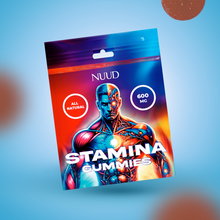
NUUD is a botanical supplement built around desire in general. It does nothing for ADHD, for attention, or for any medication you take, and it has no role in managing any medical condition. The formula is anchored by the NUUD Mushroom Complex™, with Muira Puama, Boiled Rehmannia Root, Tribulus Terrestris, and Piper Nigrum for absorption, on a timeline of roughly 30 to 60 minutes. If your prescriber has read that label and has no objection, that is what our women's libido gummies are for. There is a men's version.
Nothing is wrong with you
The internet gives you two verdicts that contradict. One says ADHD means a sky-high drive. The other says it is gone for good. The studies say both things are true: more desire and more sexual problems, in small samples, with several studies finding no difference at all. Neither verdict is about you.
Here is what the numbers actually say. The wanting is there, often more than average. The attention is what leaves. When your mind drifts mid-moment, the wanting stays put. It just loses the audience. That is a mechanics problem, and mechanics problems have levers: sleep, load, timing, and a conversation that names the drift out loud.
If you have been waiting for the one answer that tells you what is wrong, this is it: nothing is wrong with you. The studies point at attention, at life load, at the mismatch, and at the medicines. They do not point at you. If you want to want it again, that is a reasonable goal. If you want to feel normal again, start with the everyday levers, and give the small stuff time.
Keep reading
- Adderall and sex drive
- Brain fog and sex drive
- Responsive versus spontaneous desire
- Depression and low libido
- Low libido in men
- Why is my libido so low?
Frequently asked questions
Does ADHD affect sex drive?
Yes, in both directions at once. Soldati and colleagues (2020) found people with ADHD report more desire, more solo sex, less satisfaction and more problems than the general population, though the studies were small and carried a risk of bias. Verney and colleagues (2026) covered 13 studies and called the link a probable two-way association, with several finding no significant differences. The answer is both, in small samples.
Does ADHD cause hypersexuality?
The data run the other way more often. Korchia and colleagues (2022) found 22.6% of 730 people with hypersexuality or paraphilic disorders had ADHD (95% CI 17 to 29.4), with 63% heterogeneity. Hertz and colleagues (2022) found more hypersexual behaviour in 139 people with ADHD, though no more sexual problems. Soldati and colleagues (2021) found no clear data for a causal link. The direction runs from hypersexuality toward ADHD.
Why do I want sex and then lose interest halfway through?
Because the attention leaves. Goldberg and colleagues (2024) studied 943 adults and found ADHD symptoms linked to worse overall sexual function, more trouble finishing and distress, with presumptive ADHD carrying odds of 2.16 for distressing problems after adjusting for age, sex and orientation. Their mechanism puts distraction at the centre: inattention, distractibility and emotion dysregulation are the core difficulties. If the wanting starts and the focus drifts, that is the same mechanism.
Do ADHD medications lower sex drive?
Sometimes, and sometimes they improve it. Bies and colleagues (2025) reviewed 186 articles on methylphenidate and included 14. Some people, especially with psychiatric comorbidity, had lower desire and problems finishing. Others, at low doses or with pre-existing problems, had better function. The effect depends on the person and the dose. The full picture is on our Adderall and sex drive page. Do not change any dose on your own.
Can a botanical supplement help with ADHD and low sex drive?
No. NUUD is a botanical supplement built around desire in general. It does nothing for ADHD, for attention, or for any medication you take. A supplement does not bring attention back into the room. Ask your prescriber before adding anything, and bring the label, since it warns against use if you take blood-pressure medication or have a heart, kidney or lung condition. If they say yes, it is the smallest lever on the list.
References
- Verney P, Faugere M, Achour V, et al. Sexual dysfunction and attention-deficit/hyperactivity disorder: A systematic review of bidirectional associations. L'Encephale. 2026. https://pubmed.ncbi.nlm.nih.gov/42225467/
- Soldati L, Bianchi-Demicheli F, Schockaert P, et al. Sexual Function, Sexual Dysfunctions, and ADHD: A Systematic Literature Review. The journal of sexual medicine. 2020;17(9):1653-1664. https://pubmed.ncbi.nlm.nih.gov/32402814/
- Korchia T, Boyer L, Deneuville M, Etchecopar-Etchart D, Lancon C, Fond G. ADHD prevalence in patients with hypersexuality and paraphilic disorders: a systematic review and meta-analysis. European archives of psychiatry and clinical neuroscience. 2022;272(8):1413-1420. https://pubmed.ncbi.nlm.nih.gov/35551451/
- Bijlenga D, Vroege JA, Stammen AJM, et al. Prevalence of sexual dysfunctions and other sexual disorders in adults with attention-deficit/hyperactivity disorder compared to the general population. Attention deficit and hyperactivity disorders. 2018;10(1):87-96. https://pubmed.ncbi.nlm.nih.gov/28831742/
- Goldberg SY, Thulin MC, Kim HS, Dawson SJ. Distressing Problems with Sexual Function and Symptoms of Attention-Deficit/Hyperactivity Disorder. Archives of sexual behavior. 2024;53(10):3739-3745. https://pubmed.ncbi.nlm.nih.gov/39158790/
- Hertz PG, Turner D, Barra S, et al. Sexuality in Adults With ADHD: Results of an Online Survey. Frontiers in psychiatry. 2022;13:868278. https://pubmed.ncbi.nlm.nih.gov/35651826/
- Bies R, Szewczyk Z, Warchala A, Martyniak E, Krzystanek M. The Impact of Methylphenidate on Sexual Functions: A Systematic Review of Benefits and Risks. Pharmaceuticals (Basel, Switzerland). 2025;18(5). https://pubmed.ncbi.nlm.nih.gov/40430537/
- Soldati L, Bianchi-Demicheli F, Schockaert P, et al. Association of ADHD and hypersexuality and paraphilias. Psychiatry research. 2021;295:113638. https://pubmed.ncbi.nlm.nih.gov/33333439/
This article is for general education and is not medical advice. ADHD is a medical condition that only a licensed clinician can diagnose and manage. NUUD is a botanical supplement and has no role in diagnosing, treating, curing, or preventing ADHD, the side effects of any medication, or any other disease, and these statements have not been evaluated by the Food and Drug Administration. Talk with your doctor before starting any new supplement, and do not stop or change your medication without your doctor.
