


Ozempic and Sex Drive: What GLP-1 Medications Do to Libido
Share
If you have typed "ozempic sex drive" into a search bar after starting a GLP-1 medication, you are asking a fair and common question, and here is the honest one-sentence answer: yes, tirzepatide can cause low libido in some people, but that dip is usually a downstream effect of rapid weight loss and its fatigue, calorie deficit, and hormonal shifts rather than the drug reaching in and switching off desire. The same picture holds across the whole GLP-1 family, whether that is semaglutide (Ozempic, Wegovy) or tirzepatide (Mounjaro, Zepbound). What follows is a plain read of what the research measures, what only shows up in user reports, and why desire often climbs back for a lot of people as the weight comes off.
- Some people on GLP-1 medications report lower sex drive, but sexual function was rarely a measured outcome in the big weight-loss trials, so the direct evidence is thin.
- The most plausible reasons for an early dip are the effects of rapid weight loss itself: a large calorie deficit, fatigue, nausea, mood shifts, and a quieter reward system.
- The flip side is real and better documented. Losing significant weight tends to improve erectile function and raise testosterone in men with obesity, and both track with more desire.
- A 2026 meta-analysis found GLP-1 medications increased testosterone in men, and the rise did not depend only on weight loss.
- Never stop or change a prescribed medication on your own. If your libido drops and stays down, that is a conversation for your prescriber.
What GLP-1 medications actually are
GLP-1 medications copy a gut hormone called glucagon-like peptide-1. They slow how fast your stomach empties, tell your brain you are full sooner, and steady blood sugar. Semaglutide is the ingredient in Ozempic and Wegovy. Tirzepatide, sold as Mounjaro and Zepbound, adds a second target called GIP. In large trials, people taking these drugs lost a meaningful share of their body weight. Semaglutide produced roughly 15 percent average weight loss over 68 weeks (Wilding et al., 2021), and tirzepatide reached even higher averages at its top dose (Jastreboff et al., 2022).
That is the backdrop for any libido question. These are powerful metabolic drugs, and the thing most likely to touch your sex drive is not a mysterious effect on the brain. It is the sheer speed and size of the weight change they set in motion, plus the side effects that ride along with it.
The research on GLP-1 and sex drive
Start with the honest gap in the evidence. The landmark weight-loss trials were built to measure pounds lost, blood sugar, and safety. They tracked side effects like nausea, vomiting, diarrhea, and fatigue in detail (Wilding et al., 2021; Jastreboff et al., 2022). Sexual desire was not a headline endpoint in those studies, so when someone says "Ozempic killed my sex drive," they are describing a real experience that the trials were simply not designed to confirm or rule out. User reports are worth taking seriously, and they are also not the same thing as measured data.
When researchers have looked directly, the signal so far leans positive for men. A 2026 systematic review and meta-analysis of GLP-1 medications found they improved erectile function and raised both total and free testosterone, and the testosterone rise appeared partly independent of weight loss, hinting at a direct effect on the hormonal axis (Corona et al., 2026). That does not erase what anyone feels during a slump. It means the studied, pooled outcome points toward improvement over time, while the early-weeks dip many people describe sits mostly in the anecdotal column for now. Both things can be true.
Why desire can dip during rapid weight loss
Losing weight fast is a stress on the body, even when it is the goal. Several ordinary mechanisms can pull desire down in the first weeks and months, and none of them require the drug to act on libido directly.
- A large calorie deficit. When intake drops sharply, the body prioritizes essential functions over reproduction. Very low energy availability is a known way to blunt sex hormones and drive.
- Fatigue and nausea. Tiredness, queasiness, and feeling generally off are among the most common GLP-1 side effects (Wilding et al., 2021). It is hard to want sex when you feel wiped out or your stomach is unsettled.
- Hormonal shifts. Rapid changes in weight and metabolism move hormones around before things resettle at a new baseline.
- Mood changes. Big lifestyle shifts, a changing relationship with food, and the physical toll can all press on mood, and low mood flattens desire on its own.
- A quieter reward system. Part of how these drugs curb "food noise" is by dialing down reward and craving signals. Some people wonder whether that quieting spills over onto other appetites, including sex. This is a reasonable hypothesis rather than a settled finding, and it is one of the open questions researchers are still working on.
Notice that most of these fade as the body adjusts, side effects settle, and eating stabilizes at a maintainable level. The early weeks are often the hardest, which is why an early slump is not a reliable forecast of where you land months later.
Commonly reported pattern, not a fixed timeline or measured data.
The steepest calorie deficit, plus fatigue, nausea, mood dips, and a quieter reward system. This is when desire is most likely to dip.
Side effects settle, weight stabilizes, testosterone and erectile function tend to rise, and body confidence grows. Desire tends to recover.
| Factor | Likely effect on desire | Evidence level |
|---|---|---|
| Rapid weight loss and a large calorie deficit | Can lower desire early, especially with very low energy intake | Plausible mechanism, limited direct GLP-1 data |
| Fatigue, nausea, and GI side effects | Dampens desire while symptoms are active | Side effects well documented in trials |
| Reward and craving quieting ("food noise") | Unclear; possible spillover onto other appetites | Hypothesis only, unproven |
| Sustained weight loss over months | Tends to improve desire and erectile function | Supported by weight-loss and RCT data |
| Testosterone in men with obesity | Rises with weight loss and on GLP-1, which supports desire | Meta-analysis evidence |
The flip side: why weight loss often improves desire over time
The early-weeks story gets a lot of airtime, and the longer arc gets less. For many people, carrying less weight makes sex better over time. In a randomized trial, obese men who lost weight through diet and activity saw real improvement in erectile function compared with a control group, and about a third who had erectile dysfunction at the start regained normal function (Esposito et al., 2004). Erections and desire are different systems, but they lean on the same foundations of blood flow, energy, and mood, and improvement in one often travels with the other.
Higher score means better erectile function. The weight loss group improved; the control group stayed flat.
Testosterone is a big part of this for men. Excess body fat lowers testosterone, and losing weight reverses a chunk of that. A meta-analysis found that weight loss reliably raised testosterone in men with obesity, and the more weight lost, the bigger the rise (Corona et al., 2013). Layer the GLP-1-specific finding on top, where these drugs increased testosterone partly beyond what weight loss alone explained (Corona et al., 2026), and you have a real mechanism for desire to recover and then climb.
There is also the mirror. Feeling better in your body changes how much you want to be seen and touched, and that matters as much as any hormone. We wrote about that internal shift in how body confidence quietly gates desire. And if you have already lost weight and your drive has not followed, you are not imagining a problem. That specific disconnect is common enough that we gave it its own piece on why weight loss did not fix your libido.
Practical guidance if your desire drops
None of this is medical advice, and the single most important rule is to keep your prescriber in the loop. With that front and center, here is a sensible order of operations that respects your treatment.
- Give the early weeks some room. Side effects like nausea and fatigue are usually worst when you start or step up a dose. Desire often recovers as those settle, so an early slump is not the final verdict.
- Look at what is on your plate. A brutal calorie deficit and too little protein can flatten energy and desire. Eating enough of the right food, even while losing weight, protects more than your muscle.
- Guard sleep and movement. Both feed hormones, mood, and drive. They are unglamorous levers, and they work.
- Notice dose plateaus. Many people find side effects ease once they settle at a steady dose rather than during the climb. If your prescriber has you titrating up, the roughest stretch may be temporary.
- Talk to your prescriber if it persists. If low desire sticks around past the adjustment period, raise it directly. There may be options, and low libido can also have causes worth checking that have nothing to do with the medication. Do not stop or change the dose on your own.
Medication is rarely the only thing acting on desire at any given time. Sleep debt, stress, relationship strain, and mood all pull on it too, and GLP-1 medications sit inside that fuller picture rather than overriding it.
Where a supplement like NUUD fits, honestly
Straight answer: NUUD is a botanical supplement made for desire, and it does not fix medication side effects, change how a GLP-1 drug works, or treat any condition. If your libido dipped because of rapid weight loss, the real levers are the ones above, food, sleep, side-effect timing, and a conversation with your prescriber. A supplement does not replace any of that.
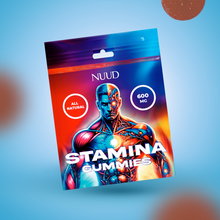
Where something like NUUD can be a small daily step is on the desire side, for people whose medical care is handled and who want a low-friction option alongside it. The formula centers on the NUUD Mushroom Complex, a proprietary botanical anchor, with Muira Puama, Boiled Rehmannia Root, Tribulus Terrestris, and Piper Nigrum for absorption. It comes as a libido gummy that works in roughly 30 to 60 minutes. We are the honest voice here, so we will say plainly that a gummy is not a hormone, it is not a substitute for seeing a doctor, and it will not out-argue a large calorie deficit. It is a small lever on the wanting, next to the ones that matter more.
If your low desire started with a different medication rather than a GLP-1, the same honesty applies there. We cover two of the most common cases in our pieces on what antidepressants do to libido and how testosterone therapy helps desire only when levels are genuinely low. None of it is a cure, and none of it is a guarantee.
Frequently asked questions
Can tirzepatide cause low libido?
Yes, some people report lower desire on tirzepatide (Mounjaro, Zepbound), but the drop is usually a knock-on effect of rapid weight loss rather than the drug acting on desire directly. A large calorie deficit, fatigue, nausea, and hormonal shifts can all dampen drive in the early weeks. For many people it recovers as side effects settle and weight stabilizes, and losing weight tends to improve sexual function over time. If low libido persists, talk to your prescriber and do not change your dose on your own.
Does Ozempic lower sex drive?
Ozempic and Wegovy, which contain semaglutide, can be linked to lower desire in some users, but sexual function was not a main outcome in the big trials, so the direct evidence is limited. The most likely driver is the rapid weight loss and its side effects, such as fatigue and nausea, rather than the medication itself. Studied over the longer term, weight loss and improved metabolic health generally support desire rather than harm it.
Will my sex drive come back after weight loss on a GLP-1?
For many people, yes. The hardest stretch is usually the early weeks when side effects peak and the calorie deficit is steepest. As your body adjusts and weight stabilizes, energy, mood, and hormones tend to improve, and desire often follows. In men, weight loss raises testosterone and improves erectile function, both of which support drive. If it stays low well past the adjustment period, that is worth raising with your prescriber.
Do GLP-1 medications raise or lower testosterone?
In men with obesity, the evidence points to a rise. A 2026 meta-analysis found GLP-1 medications increased total and free testosterone, and the increase appeared partly independent of weight loss, suggesting a direct effect on the hormonal axis. Higher testosterone generally supports desire. This is one of the reasons the longer-term sexual picture on these drugs looks more favorable than the early-weeks reports suggest.
Should I stop my GLP-1 medication if my libido drops?
No. Not on your own. Stopping or changing a prescribed medication without medical guidance can undo its benefits and cause other problems. If your desire drops and stays down, bring it to your prescriber, who can look at timing, dose, and other possible causes. Low libido has many drivers, and the medication may not be the only one at work. The best move is to raise it with your prescriber before making any change.
References
- Wilding JPH, Batterham RL, Calanna S, et al. Once-Weekly Semaglutide in Adults with Overweight or Obesity. New England Journal of Medicine. 2021. https://pubmed.ncbi.nlm.nih.gov/33567185/
- Jastreboff AM, Aronne LJ, Ahmad NN, et al. Tirzepatide Once Weekly for the Treatment of Obesity. New England Journal of Medicine. 2022. https://pubmed.ncbi.nlm.nih.gov/35658024/
- Esposito K, Giugliano F, Di Palo C, et al. Effect of lifestyle changes on erectile dysfunction in obese men: a randomized controlled trial. JAMA. 2004. https://pubmed.ncbi.nlm.nih.gov/15213209/
- Corona G, Rastrelli G, Monami M, et al. Body weight loss reverts obesity-associated hypogonadotropic hypogonadism: a systematic review and meta-analysis. European Journal of Endocrinology. 2013. https://pubmed.ncbi.nlm.nih.gov/23482592/
- Corona G, Sparano C, Romeo M, et al. Emerging Effects of Glucagon-Like Peptide-1 Receptor Agonists and Sodium-Glucose Cotransporter 2 Inhibitors on Male Sexual Hormones and Behaviors: Systematic Review and Meta-Analysis. Andrology. 2026. https://pubmed.ncbi.nlm.nih.gov/42011503/
This article is for general education and is not medical advice. NUUD is an over-the-counter botanical supplement, not a treatment for any condition, and it does not change how any medication works. Never start, stop, or change a prescribed medication without talking to a licensed clinician.
