


SSRI Libido Drop: What Actually Helps (Med-First Guide)
Share
By the NUUD team
You started the SSRI because something in your life was unmanageable. It worked. You can get out of bed, you can function at work, the spiral that used to eat your weekends is finally quiet. And then somewhere in month two or month three, you realized that something else had gotten quiet too. The wanting is gone. Sex feels distant, or it doesn't feel like much at all, or your body simply does not respond the way it used to.
You are not imagining it. You are not being dramatic. SSRI-induced sexual dysfunction is one of the most common and most under-discussed side effects of the most commonly prescribed class of antidepressant in the world. The good news is that there are real things that help, most of them well-studied. The honest news is that most of those things start in your prescriber's office, not in a supplement bottle. This guide walks the order they should be tried in, written for the person who wants the medication to keep working AND wants their libido back.
The key points
- SSRI-induced sexual dysfunction affects roughly 40-70% of people on SSRIs, depending on the drug and how the question is asked.
- The first conversation is with your prescriber not the supplement aisle. Dose adjustments, switching to bupropion or vortioxetine, or adding bupropion to your current SSRI all have published evidence.
- For most people, libido returns within weeks of stopping the SSRI. A small minority experience persistent symptoms (called PSSD) that can last months to years.
- Sildenafil has randomized-trial evidence for SSRI-induced sexual side effects in women, not just men.
- Among supplements, maca has the strongest human evidence a 2008 Massachusetts General Hospital trial specifically tested it in women on SSRIs and found a meaningful improvement at 3 g/day.
How common is SSRI-induced sexual dysfunction?
Common enough that if you're on an SSRI and you've noticed a change, you are statistically the rule, not the exception. A systematic review of second-generation antidepressants (Reichenpfader et al., Drug Safety, 2014, PMID: 24338044) confirmed that sexual dysfunction is highly prevalent across the SSRI class, with rates that vary by specific drug and how the question is asked. A separate 2014 systematic review (Pereira et al., CNS Neurol Disord Drug Targets, PMID: 24923342) cites broad prevalence data and identifies SSRIs as a primary causative agent. Most clinicians use the working figure of 40-70% meaning that for every ten people on an SSRI, somewhere between four and seven will notice some sexual side effect.
The most common patterns:
- Lower desire the wanting itself feels muted or absent
- Delayed or absent orgasm the body responds, but the finish doesn't arrive
- Reduced arousal less lubrication, less erection, less genital sensation
- Genital numbness a flatter, less responsive feeling, especially during stimulation
Some people get one of these. Some get all four. The pattern doesn't say anything about you it's a function of which serotonin receptors the drug hits hardest and how your particular nervous system responds.
Why SSRIs do this
The short version: serotonin and sexual function don't get along. SSRIs raise serotonin in the synapse on purpose that's the whole point of the drug class and elevated serotonin tends to dampen dopamine, which is the neurotransmitter most directly tied to sexual desire and reward. Higher serotonin also raises prolactin in some people, which independently suppresses libido. And several SSRIs blunt nitric-oxide signaling in genital tissue, which is the same pathway sildenafil works on. So you end up with a triple hit: less drive (dopamine), more prolactin, and less blood flow.
None of this is a defect in you. It is the expected pharmacology of the drug working as designed. The question is what you do about it.
Will my libido come back if I stop the SSRI?
For most people, yes usually within weeks of tapering off. Sexual function tends to return as serotonin levels normalize and the dopamine system recalibrates. This is the most common course.
For a smaller subset of people, sexual side effects persist after the SSRI is stopped sometimes for months, sometimes for years. This is called Post-SSRI Sexual Dysfunction (PSSD), and it is now formally described in the medical literature. A 2018 case series of 300 patients (Healy et al., Int J Risk Saf Med, PMID: 29733030) documented persistent symptoms including genital numbness, pleasureless or weak orgasm, and persistent loss of libido following antidepressant treatment. PSSD is rare relative to the number of people on SSRIs, and the research base is still developing but it is real, and it is worth knowing about before you decide on a medication change.
None of this means you should stop your SSRI without medical supervision. Abrupt discontinuation can trigger withdrawal symptoms, return of depression, and is more dangerous than the side effect you're trying to fix. Every change runs through your prescriber.
What to talk to your prescriber about FIRST
Before any supplement, before any alternative protocol, the highest-leverage conversation is with the person who wrote the prescription. There are several published, evidence-backed strategies they can offer that you cannot replicate with anything over-the-counter:
- Dose reduction. Sexual side effects are often dose-dependent. The lowest effective dose is the goal sometimes that's lower than where you currently are.
- Switching to a different antidepressant. Bupropion (Wellbutrin), vortioxetine (Trintellix), and mirtazapine (Remeron) all have substantially lower rates of sexual side effects than SSRIs. Bupropion in particular acts on dopamine and norepinephrine rather than serotonin, which is why it largely avoids the libido problem. Trazodone, often prescribed for sleep, comes up here too, and its studies are in trazodone and sex drive.
- Adding bupropion to your current SSRI. A randomized placebo-controlled trial (Clayton et al., J Clin Psychiatry, 2004, PMID: 14744170) found that adding bupropion SR to an existing SSRI produced significantly greater improvement in desire and frequency compared to placebo. This is a well-established add-on protocol. The full bupropion trial record is in Wellbutrin and sex drive.
- Sildenafil for women, not just men. A randomized controlled trial published in JAMA (Nurnberg et al., 2008, PMID: 18647982) found that sildenafil improved sexual function in women taking SSRIs versus placebo the first pharmacological treatment with positive trial evidence specifically for women on antidepressants.
- A "drug holiday." Some prescribers will discuss a planned brief pause from a short-half-life SSRI before sexual activity. This is controversial, has been studied with mixed results, is not appropriate for every patient, and is never something to attempt without medical guidance.
If your current prescriber dismisses the conversation or tells you sexual side effects are something you'll have to live with, it is reasonable to seek a second opinion ideally from a psychiatrist or a sexual medicine specialist who treats this regularly.
What's PSSD?
PSSD stands for Post-SSRI Sexual Dysfunction a recognized syndrome in which sexual side effects persist after the antidepressant has been discontinued. The hallmark features described in the literature include genital numbness, weakened or absent orgasm, persistent loss of libido, and emotional blunting. The Healy 2018 case series (PMID: 29733030) was a major step in establishing it as a distinct clinical entity.
Two practical points. First, PSSD is uncommon most people who stop SSRIs recover sexual function within weeks. Second, if symptoms persist beyond 3 months after taper, it is worth raising with your prescriber and asking for a referral to a sexual medicine clinic or a psychiatrist familiar with the literature. There is no approved treatment for PSSD as of today, but the research community is actively investigating, and being seen by a physician who knows the syndrome exists is meaningfully better than being told it doesn't.
What about supplements?
This is the section where most articles would start. We've put it deliberately last in the order-of-operations because the published evidence for medication adjustments and add-on prescriptions is substantially stronger than the evidence for any supplement. That said, several plant ingredients have real human trial data and one of them was studied specifically in women on SSRIs. Buspirone is the add-on people ask about most, and its trial record is in buspirone and sex drive.
Does maca help with SSRI side effects?
Yes for some women, in one of the better-designed trials in this category. A 2008 double-blind, placebo-controlled, dose-finding study at Massachusetts General Hospital tested maca root in women experiencing SSRI-induced sexual dysfunction (Dording et al., CNS Neuroscience & Therapeutics, PMID: 18801111). The 3 g/day dose produced statistically significant improvements on both the Arizona Sexual Experience Scale and the Massachusetts General Hospital Sexual Function Questionnaire. The 1.5 g/day dose did not. The authors concluded that maca may alleviate SSRI-induced sexual dysfunction and that the effect appears dose-related.
What this means in practice: maca is the supplement with the most direct evidence in this exact population. It does not work for everyone, and it does not produce a same-day effect most people who notice a change describe it after 2-4 weeks of consistent use. Read more in our deeper guide to maca and sexual wellness.
Ashwagandha for the stress side
SSRIs reduce depression, but they don't always reduce the chronic stress baseline underneath it and chronic cortisol elevation independently suppresses libido in both women and men. KSM-66 ashwagandha is the adaptogen with the most randomized human evidence for stress and sexual function, including a 2015 trial in women that found significant improvement in arousal, lubrication, and satisfaction at 600 mg/day over 8 weeks. It is not a direct counter to SSRI pharmacology, but for many people the cortisol reduction is what brings the rest of the system back online.
Mushroom complex
Functional mushroom extracts cordyceps, reishi, and related species show emerging evidence for libido and sexual response, though the human research base is still smaller than for ashwagandha or maca. We include a proprietary mushroom complex in every NUUD non-hemp formula because the combination layered on top of maca and ashwagandha is what most of our customers describe as the missing variable they hadn't tried before.
When NUUD fits
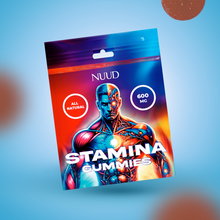
NUUD makes plant-based libido supplements for women and men, formulated for people who want something they can take when they want it not a daily-dosing protocol they have to remember for six weeks. We are not a substitute for the medication conversation above. If you are on an SSRI and experiencing sexual side effects, the first step is your prescriber. If, after that conversation, you want to add a plant-based layer that combines maca, ashwagandha, and a mushroom complex, that is what our products are built for.
Some women find that NUUD Libido Gummies for Women or our Libido Capsules for Women help support the wanting-to-want side that SSRIs tend to flatten. Some men find similar benefit with NUUD Libido Gummies for Men. None of this is a treatment for SSRI side effects it is a supportive layer that can be considered alongside the medical strategies above. Always run any new supplement by the prescriber who manages your antidepressant.
"My doctor switched me from Lexapro to bupropion, and I added the NUUD gummies a few weeks later. The combination is what finally worked."
Verified NUUD customer review
What to try first
- Talk to your prescriber. Name the side effect specifically desire, arousal, orgasm, or all three. Ask whether your current dose can be reduced.
- Discuss a switch or add-on. Bupropion, vortioxetine, and mirtazapine all have lower sexual side-effect profiles. Adding bupropion to your existing SSRI has placebo-controlled trial evidence (Clayton 2004).
- Ask about prescription add-ons targeted at the side effect. Sildenafil has JAMA-published evidence in women on SSRIs (Nurnberg 2008), in addition to its better-known use in men.
- Address the lifestyle baseline. Sleep, exercise, and cortisol regulation matter independently. Resistance training 3-4×/week and 7+ hours of sleep are the two highest-return inputs.
- Consider an evidence-based supplement layer. Maca has direct trial evidence in women on SSRIs (Dording 2008). KSM-66 ashwagandha supports the stress side. NUUD products combine both with a mushroom complex.
Comparison: medical and supplement options for SSRI-induced low libido
| Option | What it does | Onset | Best for |
|---|---|---|---|
| Bupropion add-on (Rx) | Adds dopamine/norepinephrine activity on top of SSRI; offsets libido suppression | 2-4 weeks | People who want to keep their SSRI working but restore desire |
| Switch to bupropion / vortioxetine / mirtazapine (Rx) | Replaces the SSRI with an antidepressant that has lower sexual side-effect rates | 4-8 weeks (full transition) | People whose SSRI side effects are not tolerable long-term |
| Sildenafil for women (Rx) | Improves genital blood flow and sexual response in women on SSRIs | Same day (per dose) | Women whose primary symptom is reduced arousal or orgasmic difficulty |
| Maca root (3 g/day) | Plant adaptogen with evidence for SSRI-induced sexual dysfunction in women | 2-4 weeks | People wanting a non-prescription layer on top of the medication conversation |
| KSM-66 ashwagandha (600 mg/day) | Lowers cortisol, supports baseline sexual function | 4-8 weeks | People whose stress baseline is also driving the libido drop |
| NUUD Libido Gummies / Capsules | Combine maca + ashwagandha + a mushroom complex in a once-as-needed dose | 30-60 minutes | People wanting same-night support alongside the slower medical strategy |
When should I talk to my doctor?
Start the conversation now if any of the following apply:
- You are on an SSRI and have noticed a clear sexual side effect that is interfering with your relationship or your sense of self
- The side effect started or worsened after a dose increase
- You are considering stopping the SSRI on your own (please don't taper with medical supervision)
- Sexual function has not returned within 3 months of stopping the SSRI (raise the question of PSSD and ask for a referral)
- You are also experiencing emotional blunting, persistent fatigue, or a sense that you no longer feel like yourself
The mistake most people make is staying silent because they think the side effect is the price of staying on the medication. It is not. There are real options, and the conversation is worth having even if your first answer is unsatisfying.
Lexapro, Zoloft, and Prozac: does the drug you are on matter?
Somewhat, but less than people hope. The heavy-hitting SSRIs, escitalopram (Lexapro), sertraline (Zoloft), paroxetine (Paxil), and fluoxetine (Prozac), all lower sex drive through the same serotonin mechanism, and head-to-head studies show broadly similar rates. Paroxetine tends to score worst in trials; the others cluster close together. So switching from, say, Lexapro to Zoloft usually does little for libido on its own. The bigger lever is switching drug class, to bupropion (Wellbutrin) or vortioxetine, both of which carry a much lower sexual side effect rate. If your antidepressant is working for your mood, that is worth protecting; have the swap conversation with your prescriber rather than stopping on your own. We went through the escitalopram trial numbers in Lexapro and sex drive. Sertraline gets the same treatment in Zoloft and sex drive. For Prozac, what the fluoxetine trials show is laid out in a page of its own.
FAQ
Does Lexapro lower sex drive, and does it come back?
Yes, escitalopram (Lexapro) lowers desire and delays orgasm for a large share of people who take it, through the same serotonin mechanism as other SSRIs. For most, drive returns within a few weeks of a dose change or switch. Talk to your prescriber before changing anything; a lower dose, or moving to bupropion, often helps without giving up the mood benefit.
Which is worse for libido, Zoloft or Prozac?
They are close. Sertraline (Zoloft) and fluoxetine (Prozac) show similar rates of lowered sex drive in studies, with paroxetine usually rating worst of the common SSRIs. Because the difference between Zoloft and Prozac is small, switching between them rarely fixes libido on its own; changing to a different class like bupropion tends to do more.
How common is SSRI-induced sexual dysfunction?
Sexual side effects are reported in roughly 40-70% of people on SSRIs, depending on the specific drug and how the side effect is asked about. It is one of the most prevalent and least discussed side effects of the medication class.
Will my libido come back if I stop the SSRI?
For most people, yes, usually within weeks of tapering off under medical supervision. A smaller subset experiences persistent symptoms called Post-SSRI Sexual Dysfunction (PSSD) that can last months to years. Never stop an SSRI without prescriber guidance.
Does maca actually help with SSRI side effects?
A 2008 double-blind placebo-controlled trial at Massachusetts General Hospital found that 3 g/day of maca significantly improved sexual dysfunction in women taking SSRIs (Dording et al., PMID 18801111). It does not work for everyone, and the effect typically takes 2-4 weeks of consistent use.
Can sildenafil help women on SSRIs, not just men?
Yes. A randomized controlled trial published in JAMA in 2008 (Nurnberg et al., PMID 18647982) found that sildenafil improved sexual function in women taking SSRIs versus placebo. It is a prescription medication and should be discussed with a doctor.
What's the best antidepressant for low libido?
Bupropion (Wellbutrin) has the lowest rate of sexual side effects of the commonly prescribed antidepressants because it does not act primarily on serotonin. Vortioxetine and mirtazapine also have lower rates than standard SSRIs. The right choice depends on what the antidepressant is treating and is a conversation for your prescriber.
Should I try a drug holiday from my SSRI?
Drug holidays brief planned pauses from a short-half-life SSRI before sexual activity have been studied with mixed results, are not appropriate for every patient, and should never be attempted without medical guidance. Withdrawal symptoms and return of depression are real risks.
What's PSSD?
PSSD stands for Post-SSRI Sexual Dysfunction a recognized syndrome in which sexual side effects persist after the SSRI is discontinued. Hallmark features include genital numbness, weakened orgasm, and persistent loss of libido. It is uncommon but real, and worth raising with a doctor if symptoms persist beyond 3 months after taper.
Do Lexapro sexual side effects persist after tapering off for 6 months?
Yes, this is possible and documented. Six months is within the normal recovery window for post-SSRI sexual dysfunction (PSSD). Some people take 12-18 months to fully recover. The persistence has documented neurological mechanisms. For the full post-discontinuation guide, see Why Your Libido Has Not Come Back After Stopping Antidepressants.
Keep reading
- Low Libido in Women: Causes & What Actually Works
- Low Libido in Men: What Causes It and How to Fix It
- How to Get Your Sex Drive Back After Menopause
- Mushrooms for Libido and Sex Drive
- Why Maca Root is a Game-Changer for Sexual Wellness
- Why Your Libido Has Not Come Back After Stopping Antidepressants
Shop NUUD
Disclosure: NUUD Pleasures sells plant-based libido supplements for women and men. This post reflects our perspective as a brand in the category and is not medical advice.
FDA disclaimer: These statements have not been evaluated by the Food and Drug Administration. NUUD products are not intended to diagnose, treat, cure, or prevent any disease, including SSRI-induced sexual side effects. Consult your healthcare provider before starting any supplement, especially if you are taking a prescription medication, are pregnant, nursing, or managing a medical condition. Never stop or adjust an antidepressant without medical supervision.
