

Libido Supplement Ingredients: An Honest Evidence Scorecard
Share
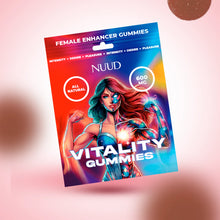
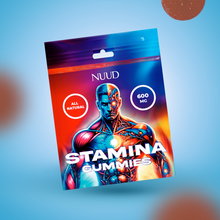
We read the human studies on every popular libido ingredient so you do not have to. This is the honest scorecard: which ones have real human evidence, which ones run on hype or a single industry-funded study, and which ones quietly failed when someone finally ran a proper test. It is also the reason NUUD's formula looks the way it does. We built it around the botanical with the most replicated evidence for women's desire, made it absorb properly, and left the hyped duds on the shelf.
The short version
- We graded 20 of the most-marketed libido ingredients on their human trial evidence, ignoring the marketing.
- The most replicated evidence for women's desire belongs to tribulus terrestris, the lead botanical in NUUD's formula, with three independent trials behind it.
- Many famous ingredients are weaker than their labels suggest. Maca's desire data is mostly in men, fenugreek rests on one supplier-funded study, and ginkgo and DHEA flat out failed their controlled trials.
- We left those out on purpose. Our formula pairs proven and traditional botanicals with black pepper extract so your body actually absorbs them.
How the evidence grades work
A grade here measures how much good human evidence exists, and how consistent it is. The single biggest factor is replication: one trial is a hint, three pointing the same way is a signal. The second is quality: a placebo-controlled, independent trial counts for far more than an open-label or supplier-funded one.
| Grade | What it means |
|---|---|
| A. Strong | Several independent human trials agree it helps desire, arousal, or sexual function. No libido ingredient on this page reaches it, and any brand claiming otherwise is ahead of the science. |
| B. Good | Either replicated across several independent human trials, or backed by one solid placebo-controlled trial with a clear benefit. |
| C. Limited | A single small trial, an uncontrolled or industry-funded one, or a benefit that shows up only in a specific group, such as correcting a deficiency. |
| D. Weak | No human efficacy trial at all, only animal studies or tradition, or the ingredient was tested properly and failed. |
The full ingredient evidence table
Here is the whole scorecard, sorted from strongest human evidence to weakest. The last column is the honest part most ingredient pages skip: whether we actually put it in our formula, and the answer is often a deliberate no.
| Ingredient | What the human evidence shows | Grade | In NUUD's formula? |
|---|---|---|---|
| Tribulus terrestris | Three independent trials in women point to a desire benefit; the most-replicated ingredient here | B | Yes |
| Ashwagandha | One independent placebo-controlled trial improved every measured area of sexual function | B | No |
| Maca | Desire benefit mostly in men; the women's trial did not reach significance | C | No |
| Korean red ginseng | One small crossover trial modestly improved arousal in menopausal women | C | No |
| Fenugreek | One supplier-funded trial, with no effect size reported in the abstract | C | No |
| Muira puama | One large human study found 65% of women improved; long Amazonian tradition | C | Yes |
| Saffron | Helps antidepressant-related sexual side effects, but did not raise desire itself | C | No |
| L-arginine / L-citrulline | Only helped inside a multi-herb blend; not proven on its own for women | C | No |
| Zinc | Restores sexual function only when you are genuinely deficient | C | No |
| Vitamin D | May help desire only when it is correcting a low level | C | No |
| DHEA | An oral hormone that matched placebo for libido and added androgen side effects | C | No |
| Yohimbine | Mixed results, and real blood-pressure and anxiety risks | C | No |
| Tongkat ali | Lowers stress hormones and raises testosterone; direct desire effect not measured | C | No (EU-restricted) |
| Boiled rehmannia root | No direct human libido trial; a classic Chinese tonic root used for centuries | D | Yes |
| Mushroom complex (Cordyceps) | Adaptogenic tradition and early animal data; no modern human libido trial yet | D | Yes |
| Ginkgo biloba | Matched placebo when finally tested in a controlled trial | D | No |
| Damiana | Aphrodisiac reputation rests on rat studies and folk use | D | No |
| Shilajit | Raised testosterone on a blood test, but measured no sexual outcome | D | No |
| Horny goat weed | Blood-flow action shown only in test tubes and rats; EU-banned | D | No (EU-banned) |
| Black pepper (piperine) | Not a libido ingredient; it sharply boosts how well the others absorb | Booster | Yes |
Why NUUD's formula looks the way it does
Our non-hemp formula is built on four botanicals plus black pepper for absorption: tribulus terrestris, muira puama, boiled rehmannia root, our mushroom complex, and piperine. Every one of them is a deliberate choice, and so is everything we left out.
We led with the most-tested botanical. Of every ingredient on this page, tribulus terrestris has the most replicated human evidence for women's desire. A 67-woman premenopausal trial improved total sexual function and desire (both p<0.001). (Akhtari et al., DARU, 2014) A postmenopausal trial raised desire alongside a real rise in free testosterone. (de Souza et al., Menopause, 2016) A third trial again found a desire benefit, though not on orgasm or satisfaction. (Postigo et al., 2016) A systematic review pulled five trials together and saw the same direction. (Martimbianco et al., 2020) No supplement herb is a sure thing, and the reviewers rate the certainty as still building, but three independent trials pointing one way is more than almost anything else in this category can claim. We dig into it in our guide to tribulus for women's libido.
We added muira puama for its human signal and its history. In the largest human study of the ingredient, 202 women with low sex drive used a muira puama preparation and 65% improved. (Waynberg & Brewer, Advances in Therapy, 2000) We are upfront that the study had no placebo group, so we grade it as limited rather than proven, but it is a positive result in more women than most trendy ingredients were ever tested on, backed by centuries of Amazonian use. More in our muira puama guide.
We use rehmannia and our mushroom complex as the traditional base. Boiled rehmannia root is a classic Chinese tonic used for centuries to support vitality, and our mushroom complex carries the adaptogenic tradition that sets NUUD apart from every testosterone-pill knockoff. We include them for that traditional role and the way they round out the blend. Their backing is centuries of use, and we will tell you that straight. They are the foundation the tested botanicals sit on, and we treat them that way. Read more on rehmannia root and mushrooms for libido.
We made it absorb. Most single-herb supplements ignore the part that decides whether any of it reaches your bloodstream. We add piperine, the active in black pepper, which raised the absorption of one studied compound by as much as 2000%. (Shoba et al., Planta Medica, 1998) A formula your body cannot absorb is just a label on a jar.
What we left out, and why
The "no" column above is a filter we applied on purpose. Here is what did not make the cut and the reason.
- Ginkgo biloba looked promising in an early uncontrolled report, then matched placebo at every time point when researchers ran a proper trial. (Kang et al., Human Psychopharmacology, 2002) A failed trial is a no.
- DHEA is an oral hormone that performed no better than placebo for libido over a full year and added androgen-type side effects such as acne and unwanted hair. (Panjari et al., Journal of Sexual Medicine, 2009) We are a plant-based formula with no added hormones, on purpose.
- Yohimbine is a stimulant that raises blood pressure and heart rate, commonly triggers anxiety, and did not beat placebo in the one controlled trial in women. (Michelson et al., Journal of Psychiatric Research, 2002) Risk forward, reward thin.
- Horny goat weed has only ever shown its blood-flow action in test tubes and rats, with no human sexual-function trial behind the marketing, and it is banned as an ingredient in the EU. An easy no.
- Maca, ginseng, and fenugreek all have something going for them, but their evidence is thinner than the hype. Maca's desire benefit shows up mainly in men, ginseng rests on a single 28-person trial, and fenugreek on one supplier-funded study with no published effect size. We led with the botanical that has been tested three times.
The popular ingredients, graded
If you are weighing another product, here is the honest read on the rest of the table, strongest first.
Ashwagandha. Grade B. The one non-NUUD ingredient with truly solid single-study evidence. In a placebo-controlled trial of 50 women taking 300 mg of root extract twice a day for eight weeks, it beat placebo on every measured area of sexual function, including arousal, lubrication, orgasm, and satisfaction (most at p<0.001). (Dongre et al., BioMed Research International, 2015) The likely route is lower stress feeding into desire indirectly, and it is still one study that needs repeating. Our take on ashwagandha for sex drive goes deeper.
Maca. Grade C. The clearest result is in men: a 12-week placebo-controlled trial found improved desire that did not depend on testosterone. (Gonzales et al., Andrologia, 2002) The women's trial hinted at a benefit only in postmenopausal women and did not reach significance. (Dording et al., 2015) A review called the overall evidence limited. (Shin et al., 2010) See our look at maca root.
Korean red ginseng. Grade C. One double-blind crossover trial of 28 menopausal women found 3 g a day modestly improved the arousal score versus placebo (p=0.006). (Oh et al., Journal of Sexual Medicine, 2010) One small trial, arousal only, with a couple of safety reports. More in whether ginseng increases sex drive.
Fenugreek. Grade C. One trial of 80 women reported raised desire and arousal alongside small hormone shifts. (Rao et al., Phytotherapy Research, 2015) The study used a single branded extract, was supplier-linked, and its abstract reports no effect size, so the magnitude is unconfirmed. One funded study is where evidence starts, well short of proof.
Saffron. Grade C. In 38 women on an antidepressant, saffron improved arousal and lubrication but showed no benefit for desire, satisfaction, or orgasm. (Kashani et al., Human Psychopharmacology, 2013) Its real evidence is for easing antidepressant-related sexual side effects. Raising baseline desire is a different claim the studies do not support.
L-arginine and L-citrulline. Grade C. These amino acids feed the blood-flow pathway, which is plausible, but the positive trials in women tested arginine inside a multi-herb blend, so the benefit cannot be pinned on it. (Ito et al., Journal of Sex & Marital Therapy, 2001) There is no solid standalone trial for women's desire.
Zinc and vitamin D. Grade C. Both matter, but only as deficiency correction. Zinc restored sexual function and testosterone in deficient patients. (Mahajan et al., Annals of Internal Medicine, 1982) Vitamin D improved desire in women who were low to begin with. (Krysiak et al., Endokrynologia Polska, 2018) If your levels are normal, more does not help. We cover both in zinc, vitamin D, and libido.
Tongkat ali. Grade C. In 63 stressed adults, a standardized extract lowered cortisol by 16% and raised testosterone by 37% versus placebo. (Talbott et al., Journal of the International Society of Sports Nutrition, 2013) That measured hormones and mood, while desire itself went untested, and tongkat is restricted as a food ingredient in the EU, so we leave it out.
Damiana, shilajit, and ginkgo. Grade D. Damiana's reputation comes from rat studies. (Estrada-Reyes et al., Journal of Ethnopharmacology, 2009) Shilajit raised testosterone on a blood test but measured no sexual outcome. (Pandit et al., Andrologia, 2016) And ginkgo, as above, matched placebo when finally tested. Our ginkgo piece has the full story.
Keep reading
- The libido supplements the research does not back
- Low libido and desire statistics, every number sourced
- Aphrodisiacs that actually work
- The best libido supplements for women
Want the plant-based blend we built from this evidence, with no hormones and no prescription? See our libido supplements for women and men.
How to vet any libido ingredient claim
You can run this same check on any product before you buy. It takes a minute and it filters out most of the hype.
- Look for a human trial. A rat study or a test tube only hints at what might happen in people, and plenty of those hints fall apart later.
- Check that it was placebo-controlled. Plenty of supplements improve desire in trials where the placebo group improved just as much.
- See whether it was tested more than once. One study is a hint; several independent trials pointing the same way is a signal.
- Watch for who funded it. A single supplier-funded study with no reported effect size is the weakest kind of evidence.
- Match the outcome to your goal. A trial that moved a hormone on a blood test says nothing about desire, and arousal and desire are two separate outcomes that often diverge.
Frequently asked questions
What is the most evidence-backed libido ingredient?
For women's desire, tribulus terrestris has the most replicated human evidence, with three independent trials behind it, which is why it leads NUUD's formula. Ashwagandha has one strong placebo-controlled trial. No single ingredient is a magic bullet, and any product promising a guaranteed result is ahead of the science.
Why isn't ginkgo or horny goat weed in NUUD's formula?
Because the evidence did not hold up. Ginkgo matched placebo when it was finally tested in a controlled trial. Horny goat weed has only ever shown its effect in test tubes and rats, with no human trial, and it is banned as an ingredient in the EU. We left both out on purpose.
What ingredients are in NUUD's supplements?
The non-hemp formula uses tribulus terrestris, the most-replicated botanical for women's desire, plus muira puama, boiled rehmannia root, a proprietary mushroom complex, and black pepper extract so your body absorbs it all. It is plant-based, with no added hormones and no prescription.
Does maca work for libido?
The clearest evidence is a desire benefit in men, seen in a 12-week placebo-controlled trial. The women's trial hinted at a benefit only in postmenopausal women and did not reach significance, so its case for women is weaker than the marketing suggests. It is not in our formula.
Is fenugreek a good libido supplement?
Its evidence is one supplier-funded trial of 80 women that reported raised desire but published no effect size. That is where evidence starts, well short of proof, so we built our formula on tribulus, the ingredient with three independent trials behind it.
These statements have not been evaluated by the Food and Drug Administration. This product is not intended to diagnose, treat, cure, or prevent any disease. Must be 21+ to purchase. Hemp-derived products contain less than 0.3% delta-9 THC.
