

Are Oysters an Aphrodisiac? What the Studies Actually Show
Share
Are oysters an aphrodisiac? Nobody has tested it. None of the 20 papers behind this page gave oysters to people and measured desire. The reputation rests on two ingredients. Zinc raised testosterone only in men who were short of it: in 4 young men, restricting dietary zinc for 20 weeks dropped testosterone from 39.9 to 10.6 nmol/L, and in 14 men with enough zinc a zinc supplement changed nothing. The amino acid D-aspartic acid has 4 human studies with inconsistent results. Read the numbers and the myth gets small.
- Two reviews of natural aphrodisiacs, Shamloul (2010) and West and Krychman (2015), land in the same place: little evidence to recommend any of them for desire, and randomized trial data are often lacking. Neither abstract mentions oysters.
- Zinc and testosterone tracked each other in 40 men (r = 0.43, p = 0.006). Restricting zinc in 4 young men cut testosterone from 39.9 +/- 7.1 to 10.6 +/- 3.6 nmol/L, and giving zinc to 9 marginally deficient older men raised it from 8.3 +/- 6.3 to 16.0 +/- 4.4 nmol/L. Small groups, a blood hormone, no desire measure.
- In 14 healthy trained men already eating 11.9 to 23.2 milligrams of zinc a day, a zinc supplement raised blood zinc and changed neither total nor free testosterone.
- D-aspartic acid: a 2017 review found 4 human studies with inconsistent results, and in three later trials in trained men testosterone did not rise. At 6 grams a day it fell (P = 0.03).
- In 8 placebo-controlled trials for women's sexual function, the 1,723 women on placebo improved 3.62 points on the Female Sexual Function Index (95% CI 3.29 to 3.94), and the authors put 67.7% of the treatment effect down to placebo.
Figures from Weinberger et al. 2018 (PMID 29995725), Prasad et al. 1996 (PMID 8875519) and Roshanzamir and Safavi 2017 (PMID 28280794). None of them tested oysters.
Where the reputation comes from
Type "are oysters an aphrodisiac" into a search bar and you get the same tidy story in two parts. Oysters are rich in zinc, and zinc is involved in testosterone. Oysters also carry an amino acid called D-aspartic acid, which raised testosterone in laboratory animals. That is the whole mechanism, and on a lot of websites a mechanism is proof.
The reviews set a lower bar. Al-Madhagi and Tarabishi (2024) survey food remedies sold for desire and fertility, print the mechanisms and the marketing, and print no trial results. They estimate erection problems at at least 150 million cases worldwide in 2022, believed to be an underestimate, and note that people hunt for food remedies because prescription options carry side effects and cost. Silva and colleagues (2019) review food and sexual health and call the evidence for dietary supplements weak. Shamloul (2010) concludes that objective evidence supports no natural aphrodisiac for men or women. West and Krychman (2015) say randomized trial data are often lacking and that trials are needed before most products can be recommended.
A mechanism story is where the evidence stops. For the wider picture, see what an aphrodisiac is and aphrodisiacs that actually work.
Zinc: real if you are short of it
Prasad and colleagues (1996) is the paper the zinc story leans on, and it has three parts. In 40 men aged 20 to 80, zinc inside immune cells tracked serum testosterone: lymphocyte zinc correlated at r = 0.43, p = 0.006, and granulocyte zinc at r = 0.30, p = 0.03. Then 4 young men ate a zinc-restricted diet, and serum testosterone fell from 39.9 +/- 7.1 to 10.6 +/- 3.6 nmol/L over 20 weeks (p = 0.005). Nine elderly men who were marginally zinc deficient took 459 micromoles a day of oral zinc gluconate for 3 to 6 months, testosterone rose from 8.3 +/- 6.3 to 16.0 +/- 4.4 nmol/L (p = 0.02). That figure is the dose a 1996 protocol gave nine men, and nothing on this page is a dosing suggestion for you. Groups of 4 and 9, men only, a blood hormone and nothing about desire.
The logic stops when men start out with enough. Koehler and colleagues (2009) gave 14 healthy, regularly exercising men aged 22 to 33 a zinc-containing supplement; their baseline intake was already 11.9 to 23.2 milligrams of zinc a day. Serum zinc rose (P = 0.031), urinary zinc excretion rose (P = 0.035), and total and free testosterone did not move. The authors conclude there is no significant effect on testosterone in men who eat a zinc-sufficient diet.
Kilic (2007) adds 10 sedentary young men given zinc for 4 weeks, with resting and post-exercise hormone values higher afterwards (p under 0.05). Ten men, no control arm, a fitness outcome.
Mazaheri Nia and colleagues (2021) ran the only study here that put zinc against a desire score. In 116 postmenopausal women selected for low blood zinc and low sexual function, zinc improved desire, getting turned on, climax, satisfaction, vaginal moisture and pain during intercourse against control (p under 0.001). The abstract describes no placebo arm and contradicts itself in one sentence about significance. It is a signal in women who were low.
Liu and colleagues (2017) added zinc to hormone therapy in men with a pituitary condition and found no gain: 55.9% against 60.6% reached the sperm target (P = 0.69).
Does oyster zinc even absorb? Song and colleagues (2024) report transport and uptake in a cell model as high as 62.15% and 15.85%, as good as or better than standard zinc salts, and Chen and colleagues (2026) report roughly two-fold higher bioavailability in rats. Cells and rats, no people. Our page on zinc, vitamin D and libido covers the wider nutrient picture.
Zinc moves testosterone when you start out short
Serum testosterone in nmol/L before and after, in 4 young men whose dietary zinc was restricted and 9 older men who were marginally deficient.
Source: Prasad AS et al. 1996 (PMID 8875519). Groups of 4 and 9 men; a blood hormone, no desire measure.
D-aspartic acid: the lab story that did not survive people
D-aspartic acid is an amino acid found in oysters, and in animals it behaves the way the blogs claim. Roshanzamir and Safavi (2017) searched four databases and, out of 396 records, included 23 animal studies and 4 human studies. Exogenous D-aspartic acid raised testosterone in male animal studies. In humans the results were inconsistent, the abstract's own wording, and the authors call the evidence in men sparse and mostly made of poor-quality studies.
The human trials are not kind. Melville and colleagues (2015) gave trained men 3 grams or 6 grams a day through 14 days. At 6 grams, total testosterone was significantly reduced (P = 0.03) and free testosterone was reduced against flour (P = 0.005). Crewther and colleagues (2019) gave 16 male climbers 3 grams a day for 2 weeks in a crossover design and found no significant effect on testosterone, free testosterone or luteinizing hormone. Melville and colleagues (2017) randomised 22 trained men to 6 grams a day for 12 weeks of supervised training and saw no change in total or free testosterone.
Morgado and colleagues (2024) widen the frame: a systematic review of 52 studies on 27 ingredients sold to raise testosterone, most of them failing, and it included 2 studies of D-aspartic acid and 5 of zinc with magnesium. Clemesha and colleagues (2020) audited 50 of these products: 90% claimed to raise testosterone, no data were found for 61.5% of them, and the products carried a median 272% of the recommended daily allowance for zinc. See do testosterone boosters work.
So why do they seem to work?
Because expectation is measurable. Weinberger and colleagues (2018) pulled the placebo response apart. From 605 articles they took 24 randomized trials with a placebo arm, and 8 of those used the same questionnaire, the Female Sexual Function Index. Across them, 1,723 women took placebo and 2,236 women took one of the prescription options studied. The placebo group improved 3.62 points (95% CI 3.29 to 3.94). The treatment arms improved 5.35 (95% CI 4.13 to 6.57). The authors put 67.7% of the treatment effect down to placebo and call the current options, overall, minimally superior to placebo. Eight pooled trials, a questionnaire score, a random-effects model.
Bradford and Meston (2009) found the same shape in 16 articles: most placebo groups improved significantly from baseline, with within-group effect sizes mostly in the moderate range.
Chocolate tells the identical story. Salonia and colleagues (2006) surveyed 163 women in Italy. The 120 who ate chocolate daily scored higher on desire (P = 0.01), and they were also younger, 33.9 against 40.4 years. Adjusted for age, the scores were similar.
A dozen oysters arrive with a dinner, a person you like, attention and expectation, and expectation is doing measurable work in these trials. That is a fine reason to order them. Our explainer covers what sex chocolate is and the same gap between claim and trial.
The claims, checked one by one
Five claims follow oysters around, and each one sounds like it has a study behind it. Read the studies and one pattern shows up: a real finding in a narrow group, then a wide claim about dinner. Zinc does matter when someone runs short of it. Expectation moves questionnaire scores by a measurable amount. Neither finding puts an oyster to the test, and no human trial in this evidence gave anyone oysters and measured desire.
Five claims, five findings
No human trial in this evidence. Two reviews of natural aphrodisiacs do not mention oysters.
Yes in men short of zinc: 8.3 to 16.0 nmol/L in 9 older men. No change in 14 men with enough.
4 human studies, results the review calls inconsistent. Three later trials found no rise.
163 women. The gap between groups vanished after adjusting for age.
Placebo accounted for 67.7% of the effect across 8 trials.
Built from PMID 19796015, 27784600, 8875519, 17882141, 28280794, 16681473, 29995725.
| Study | Design | Who | Finding | What it says about oysters |
|---|---|---|---|---|
| Shamloul 2010 | Narrative review | Natural aphrodisiacs | Little evidence to recommend any | Not mentioned |
| West and Krychman 2015 | Review of about 50 articles | Products sold in the United States | Randomized data often lacking | Not mentioned |
| Prasad 1996 | Restriction and supplementation | 4 and 9 men | Testosterone fell with restriction, rose with repletion | Zinc matters when a person is low |
| Koehler 2009 | Supplement study | 14 zinc-sufficient men | No change in testosterone | Extra zinc did nothing |
| Mazaheri Nia 2021 | Randomized trial | 116 postmenopausal women with low zinc | Desire scores rose against control (p under 0.001) | Only women selected for low zinc, and no placebo described |
| Roshanzamir and Safavi 2017 | Systematic review | 4 human studies | Inconsistent results | The amino acid story is unproven |
| Melville 2017 | Randomized, 12 weeks | 22 trained men | No change in testosterone | Unproven in trained men |
| Weinberger 2018 | Meta-analysis | 8 trials | Placebo 3.62 against 5.35 | Expectation is real |
What actually moves desire, graded honestly
Running short of a nutrient is a real cause, and a blood test finds it. Prasad and colleagues (1996) restricted zinc in 4 young men and serum testosterone fell from 39.9 to 10.6 nmol/L over 20 weeks. In 9 marginally deficient older men it rose from 8.3 to 16.0 nmol/L on a supplement. Mazaheri Nia and colleagues (2021) found better desire scores in 116 postmenopausal women chosen for low zinc.
Adding more of what you already have enough of did nothing. Koehler and colleagues (2009) gave 14 trained men, already eating 11.9 to 23.2 milligrams of zinc a day, a zinc supplement. Serum zinc rose. Testosterone did not.
Expectation moves scores by a measurable amount. Weinberger and colleagues (2018) pooled 8 trials: women on placebo improved 3.62 on the Female Sexual Function Index against 5.35 in the active arms. Bradford and Meston (2009) found moderate placebo effects across 16 articles.
The two reviews of the whole aphrodisiac shelf (Shamloul 2010; West and Krychman 2015) found randomized data lacking for most products, and we hold our own shelf to that standard. West and Krychman list Tribulus among ingredients with limited but emerging data. Morgado and colleagues (2024) counted 4 Tribulus studies in a review where most ingredients failed to raise testosterone. Tribulus is in our formula, and the honest word for that evidence is limited. More in libido supplements the research does not back, the evidence behind libido supplement ingredients, and Tribulus terrestris and libido.
If you like oysters, eat oysters
If you like oysters, nothing here is a reason to stop. They are good food, and a shared plate is a good night. The reputation is the part worth handling carefully. Four things, in the order I would do them.
- Enjoy them for what they are: a good dinner, with someone you want in the chair across from you.
- If you think you run short of zinc, ask your doctor for a blood test before buying anything. Prasad (1996) and Mazaheri Nia (2021) both found their effect in people who started low.
- Skip any product that promises testosterone. Clemesha and colleagues (2020) audited 50 of them and found no data at all for 61.5%.
- Notice what else was at the table. Weinberger and colleagues (2018) show that expectation moves scores.
The everyday levers, and where a botanical fits
Start with who this part is not for. Our own label answers that in one sentence: "avoid use if you are on blood pressure medication, have cardiovascular, renal, or pulmonary conditions, or if you are sensitive to any of the ingredients". If that sentence is about you, talk to your doctor first and bring the label.
A few ordinary things move desire in most people, and the free ones do more work than the internet admits.
- Sleep, in amount and in quality. Sleep, libido, and testosterone covers that.
- Movement you can keep up. Exercise and libido covers the wider picture.
- A lighter load of stress, named out loud at home.
- Time together with nothing expected at the end.
- A botanical supplement, if you want one, as the smallest lever on the list.
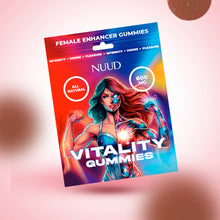
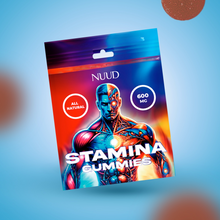
NUUD is a botanical supplement built around desire in general. It contains no oyster and no zinc. It carries no D-aspartic acid, and none of the research named here tested this formula. It has no role in managing any medical condition. The formula is anchored by the NUUD Mushroom Complex™ with Muira Puama, Boiled Rehmannia Root, Tribulus Terrestris, and Piper Nigrum for absorption, on a timeline of roughly 30 to 60 minutes. If you take blood pressure medication or have one of the conditions the label names, the label says no, and your doctor decides the rest. If you want something made for desire, that is what our women's libido gummies are for. There is a men's version.
Nothing is wrong with you
Two answers online fail you. One is a list of ten foods that will change your night. The other is the scold who says the whole subject is nonsense. The numbers sit between them. No trial ever served oysters and measured desire. Zinc helped only the people who started short. Four human studies of the amino acid in oysters disagree with each other. Placebo carried 67.7% of the effect in 8 trials.
So a dinner that makes the two of you feel wanted is doing something real. Set one on the table this week. Aim at wanting to want it again.
Keep reading
- Aphrodisiacs that actually work
- Zinc, vitamin D, and libido
- Do testosterone boosters work?
- What is sex chocolate?
- Do libido gummies actually work?
- How to increase sex drive naturally
Frequently asked questions
Are oysters an aphrodisiac?
No. No human trial tested oysters for desire. The two reviews of that shelf (Shamloul 2010; West and Krychman 2015) found little evidence to recommend any product and never mention oysters. The claim rests on zinc, which helps testosterone only in men short of it, and on D-aspartic acid, an amino acid whose human studies disagree. A nutrient with a trial is a long way from a food that works.
Do oysters increase testosterone?
No study measured testosterone after anyone ate oysters. The zinc work comes closest, and it points two ways. Prasad and colleagues (1996) restricted dietary zinc in 4 young men: testosterone fell from 39.9 to 10.6 nmol/L. In 9 marginally deficient older men it rose from 8.3 to 16.0 nmol/L. Koehler and colleagues (2009) gave 14 men with plenty of zinc a supplement and found no change. Being short is the variable.
Does zinc increase sex drive?
Only in people who started short. Mazaheri Nia and colleagues (2021) gave zinc to 116 postmenopausal women selected for low serum zinc, and desire scores rose against control (p under 0.001); the abstract describes no placebo arm. Koehler and colleagues (2009) found nothing in men with enough zinc at baseline. One more gap: testosterone is a blood hormone, and desire is a score a person fills in.
Why do aphrodisiac foods seem to work?
Because expectation is measurable. Weinberger and colleagues (2018) pooled 8 randomized trials that scored women with the Female Sexual Function Index. The placebo groups improved 3.62 (95% CI 3.29 to 3.94) while the active arms improved 5.35 (95% CI 4.13 to 6.57), so placebo carried 67.7% of the effect. Bradford and Meston (2009) found moderate placebo effects across 16 articles. Salonia and colleagues (2006) surveyed 163 women on chocolate, and the desire difference disappeared once age was taken into account.
Is a botanical supplement better than oysters?
Nobody compared them, so nobody can rank them. NUUD contains no oyster and no zinc, and none of the research named here tested this formula. West and Krychman (2015) put Tribulus, one ingredient we use, among products with limited but emerging data. Read the label caution before anything: it names blood pressure medication, and it names heart, kidney, and lung conditions. If that is you, ask your doctor first.
References
- Shamloul R. Natural aphrodisiacs. The journal of sexual medicine. 2010;7(1 Pt 1):39-49. https://pubmed.ncbi.nlm.nih.gov/19796015/
- Liu YL, Zhang MN, Tong GY, et al. The effectiveness of zinc supplementation in men with isolated hypogonadotropic hypogonadism. Asian journal of andrology. 2017;19(3):280-285. https://pubmed.ncbi.nlm.nih.gov/27768007/
- Al-Madhagi H, Tarabishi AA. Nutritional aphrodisiacs: Biochemistry and Pharmacology. Current research in food science. 2024;9:100783. https://pubmed.ncbi.nlm.nih.gov/38974844/
- Morgado A, Tsampoukas G, Sokolakis I, Schoentgen N, Urkmez A, Sarikaya S. Do "testosterone boosters" really increase serum total testosterone? A systematic review. International journal of impotence research. 2024;36(4):348-364. https://pubmed.ncbi.nlm.nih.gov/37697053/
- Silva T, Jesus M, Cagigal C, Silva C. Food with Influence in the Sexual and Reproductive Health. Current pharmaceutical biotechnology. 2019;20(2):114-122. https://pubmed.ncbi.nlm.nih.gov/30255750/
- Prasad AS, Mantzoros CS, Beck FW, Hess JW, Brewer GJ. Zinc status and serum testosterone levels of healthy adults. Nutrition (Burbank, Los Angeles County, Calif.). 1996;12(5):344-8. https://pubmed.ncbi.nlm.nih.gov/8875519/
- Clemesha CG, Thaker H, Samplaski MK. 'Testosterone Boosting' Supplements Composition and Claims Are not Supported by the Academic Literature. The world journal of men's health. 2020;38(1):115-122. https://pubmed.ncbi.nlm.nih.gov/31385468/
- Mazaheri Nia L, Iravani M, Abedi P, Cheraghian B. Effect of Zinc on Testosterone Levels and Sexual Function of Postmenopausal Women: A Randomized Controlled Trial. Journal of sex & marital therapy. 2021;47(8):804-813. https://pubmed.ncbi.nlm.nih.gov/34311679/
- Koehler K, Parr MK, Geyer H, Mester J, Schänzer W. Serum testosterone and urinary excretion of steroid hormone metabolites after administration of a high-dose zinc supplement. European journal of clinical nutrition. 2009;63(1):65-70. https://pubmed.ncbi.nlm.nih.gov/17882141/
- Kilic M. Effect of fatiguing bicycle exercise on thyroid hormone and testosterone levels in sedentary males supplemented with oral zinc. Neuro endocrinology letters. 2007;28(5):681-5. https://pubmed.ncbi.nlm.nih.gov/17984944/
- West E, Krychman M. Natural Aphrodisiacs-A Review of Selected Sexual Enhancers. Sexual medicine reviews. 2015;3(4):279-288. https://pubmed.ncbi.nlm.nih.gov/27784600/
- Song C, Zhong R, Zeng S, et al. Effect of baking on the structure and bioavailability of protein-binding zinc from oyster (Crassoetrea hongkongensis). Food chemistry. 2024;451:139471. https://pubmed.ncbi.nlm.nih.gov/38692241/
- Weinberger JM, Houman J, Caron AT, et al. Female Sexual Dysfunction and the Placebo Effect: A Meta-analysis. Obstetrics and gynecology. 2018;132(2):453-458. https://pubmed.ncbi.nlm.nih.gov/29995725/
- Roshanzamir F, Safavi SM. The putative effects of D-Aspartic acid on blood testosterone levels: A systematic review. International journal of reproductive biomedicine. 2017;15(1):1-10. https://pubmed.ncbi.nlm.nih.gov/28280794/
- Melville GW, Siegler JC, Marshall PW. Three and six grams supplementation of d-aspartic acid in resistance trained men. Journal of the International Society of Sports Nutrition. 2015;12:15. https://pubmed.ncbi.nlm.nih.gov/25844073/
- Crewther B, Witek K, Draga P, Zmijewski P, Obmiński Z. Short-Term d-Aspartic Acid Supplementation Does Not Affect Serum Biomarkers Associated With the Hypothalamic-Pituitary-Gonadal Axis in Male Climbers. International journal of sport nutrition and exercise metabolism. 2019;29(3):259-264. https://pubmed.ncbi.nlm.nih.gov/29893592/
- Bradford A, Meston CM. Placebo response in the treatment of women's sexual dysfunctions: a review and commentary. Journal of sex & marital therapy. 2009;35(3):164-81. https://pubmed.ncbi.nlm.nih.gov/19360517/
- Melville GW, Siegler JC, Marshall PWM. The effects of d-aspartic acid supplementation in resistance-trained men over a three month training period: A randomised controlled trial. PloS one. 2017;12(8):e0182630. https://pubmed.ncbi.nlm.nih.gov/28841667/
- Chen YH, Feng HL, Tang JL, Chang CW, Jeng SS. Oyster-derived Zinc Exhibits Superior Anti-anemic Efficacy and Bioavailability Compared with Conventional Zinc Supplements. Biological trace element research. 2026;204(8):5830-5842. https://pubmed.ncbi.nlm.nih.gov/41879943/
- Salonia A, Fabbri F, Zanni G, et al. Chocolate and women's sexual health: An intriguing correlation. The journal of sexual medicine. 2006;3(3):476-82. https://pubmed.ncbi.nlm.nih.gov/16681473/
This article is for general education and is not medical or dietary advice. Zinc deficiency and low testosterone are medical conditions that only a licensed clinician can diagnose and manage. NUUD is a botanical supplement and has no role in diagnosing, treating, curing, or preventing them or any other disease, and these statements have not been evaluated by the Food and Drug Administration. Talk with your doctor before starting any new supplement.
