

Does Estrogen Increase Sex Drive? What the Studies Actually Show
Share
Does estrogen increase sex drive? A little, on average, and much of that seems to come from making sex more comfortable. In natural cycles, desire rises and falls modestly with a woman's own estradiol. In menopause hormone therapy, the newest Cochrane review put estrogen alone at SMD 0.60 (95% CI 0.16 to 1.04) on overall sexual-function scores, with the gains showing most in dryness, pain and satisfaction. Trials that scored desire on its own found small changes or none. A pill raises sex hormone binding globulin and lowers free testosterone, and a patch does much less of that. In men, estradiol made from testosterone plays a part in desire too.
Before you read on
Estrogen therapy, vaginal estrogen and hormonal birth control are prescriptions doing work you cannot always feel, from bone health to comfort to contraception. Do not start, stop or change hormone therapy without your prescriber. Nothing here is medical advice or a reason to alter your prescriber's plan.
- In natural cycles, desire tends to move up with estradiol inside each woman's cycle, as a correlation.
- Across 9 studies and 1307 women, estrogen alone came out at SMD 0.60 (95% CI 0.16 to 1.04) on overall sexual-function score, with very high heterogeneity (I2 = 92%). The gains showed most in dryness, pain and satisfaction.
- Where desire was scored on its own, the signal was small: 0.3 (95% CI 0.0 to 0.6) with low-dose oral estradiol over 8 weeks, and no significant difference with an ultralow-dose patch in 417 older women.
- Route matters for the blood work. In a small crossover of 25 women, oral estrogen raised sex hormone binding globulin by 132.1% and cut free testosterone by 32.7%. The patch moved them by 12.0% and 1.0%.
- In men, a trial with an estradiol-blocking arm found that estrogen deficiency and testosterone deficiency both contributed to lower sexual function.
Figures from Lara et al. 2023 (PMID 37619252), Reed et al. 2014 (PMID 25004335) and Shifren et al. 2007 (PMID 17507833). One pooled review of mixed-quality trials, one 8-week trial and one small open-label crossover.
Is it the estrogen, or is it me?
You are in perimenopause, or past your last period, or you just started an estrogen patch, and your drive has gone quiet. Is it the estrogen, or is it me? Online, one camp says low estrogen is the whole reason your libido vanished. The other says a prescription will bring it all back. The studies land somewhere quieter.
Estradiol is the main estrogen your ovaries make before menopause. Prescriptions come as pills, patches, gels and vaginal products, and some trials used oral conjugated equine estrogens, an older pill. Where the product matters, we say which one each study used.
Desire also has company in these years: broken sleep, night sweats, dryness that makes sex hurt, a relationship on autopilot. Perimenopause and libido and low libido in menopause cover that picture. This page asks what estrogen itself does to wanting.
What your own cycle says about estradiol and desire
The cleanest look at estradiol and desire comes from women taking no hormones at all. Roney and colleagues (2013) collected daily saliva samples from young women across one to two menstrual cycles and paired them with daily diaries of desire and sex. Day to day, higher estradiol went with more desire and higher progesterone went with less. Desire was highest mid-cycle, and the fall after ovulation tracked the progesterone rise.
The details keep it modest. No combination of hormones explained the climb in desire before ovulation. Hormone effects on actual sex only reached trend level. Between different women the link was generally absent, so a woman with higher estradiol than her friend did not reliably want sex more. The summary gives no sample size and no effect sizes.
Cappelletti and colleagues (2016) reviewed the controlled trials of estrogen and testosterone for low desire after menopause. Their reading: estrogen-only therapy that brings circulating estradiol up to the levels seen around ovulation does raise desire. They also wrote that testosterone added to a low estrogen dose helped only at levels above the normal female range. It is a narrative review with no pooled number, and the summary does not say how often standard doses reach those levels.
So estradiol and desire move together inside a cycle, as a correlation, which is a long way from proof that a daily tablet will rebuild wanting after menopause. If your drive follows a monthly rhythm, sex drive across your menstrual cycle walks through the pattern.
Low estrogen and libido across the menopause years
The Melbourne Women's Midlife Health Project followed 438 Australian-born women aged 45 to 55 who were still having periods. Dennerstein and colleagues (2002) studied 226 of them with yearly blood tests. From the early to the late menopausal transition, the share whose questionnaire scores fell in the dysfunction range rose from 42% to 88%. Falling scores tracked falling estradiol and showed no link to androgens. It is observational, so it shows the two moving together and cannot say which drives which.
The same team's later review, Dennerstein and colleagues (2005), put that in proportion. The biggest influences on a woman's sexual function were how things were before, losing or gaining a partner, and her feelings toward that partner, with estradiol on the list too. Their summary: prior function and partner issues have larger effects than hormones do.
The US SWAN cohort shows the same thing at a larger scale. Avis and colleagues (2009) followed 3,302 women aged 42 to 52 at the start, none using hormones at entry, across six yearly visits. After adjusting for age and life circumstances, pain with sex rose and desire fell by late perimenopause. Health, mood and relationship change mattered across the board. The summary gives no odds ratios, so the size of the desire drop is unknown.
At SWAN's baseline, Avis and colleagues (2005) looked at 3,167 women. Early perimenopausal women reported more pain with intercourse (P = 0.01) and the same level of desire as women still cycling regularly. Relationship factors, how important sex felt, attitudes toward aging and vaginal dryness carried the strongest links, in a single cross-sectional snapshot. Put together, low estrogen and libido are linked in these cohorts, partly through comfort, and the relationship you are in carries at least as much weight.
Estrogen therapy and desire: what the big reviews found
Nastri and colleagues (2013) ran the first Cochrane review on hormone therapy and sexual function: 27 randomized trials, 16,393 women. In women with hot flushes or in early postmenopause, estrogen alone gave SMD 0.38 (95% CI 0.23 to 0.54, 3 studies, 699 women, high-quality evidence). In unselected postmenopausal women it was SMD 0.16 (95% CI -0.02 to 0.34, 2 studies, 478 women), low-quality evidence with an interval that crosses zero.
The reviewers called it a small to moderate improvement, particularly in pain, and none in unselected women. No trial was limited to women with a sexual problem, 18 of the 27 were at high risk of bias, 20 had commercial funding, and the summary gives no desire-only figure.
The 2023 update, Lara and colleagues, grew to 36 studies and 23,299 women. Estrogen alone gave SMD 0.50 (95% CI 0.04 to 0.96, 3 studies, 699 women) in early postmenopause and SMD 0.64 (95% CI -0.12 to 1.41, 6 studies, 608 women) in unselected women, which the authors read as probably little or no difference. Pooled across 9 studies and 1307 women, it came to SMD 0.60 (95% CI 0.16 to 1.04), moderate-quality evidence.
Hold that headline loosely. Heterogeneity was very high (I2 = 92%), partly from different doses and questionnaires. The gains showed most in the comfort items, dryness and pain, and in satisfaction, and the summary prints no desire figure. Of the 36 studies, 20 were at high risk of bias and 19 had commercial funding.
Meziou and colleagues (2023) ran their own update and pooled 34 trials with 15,079 participants. Estrogen came out at SMD 0.16 (95% CI 0.02 to 0.29, 16 studies, 2,925 participants), which they described as no effect to a small benefit on the composite score. Our page on progesterone and sex drive covers what adding a progestogen did in that review.
The shared message: estrogen moves overall scores a little, on average, with a wide spread between trials, mostly in comfort. If you are on HRT and still flat, HRT and libido: why it may still be low goes through the usual reasons, and testosterone and female desire after 50 covers the hormone that tends to come up next.
Pill or patch: why the route matters
The trial closest to how estrogen is prescribed today is KEEPS. Taylor and colleagues (2017) followed 670 recently menopausal women aged 42 to 58 in a 4-year randomized, placebo-controlled trial. One arm took oral conjugated equine estrogens at 0.45 milligrams a day, one wore an estradiol patch at 50 micrograms a day, and both hormone arms also took micronized progesterone for 12 days a month.
The patch improved the overall score by 2.6 points on a 36-point scale (95% CI 1.11 to 4.10). The pill's 1.4 (95% CI -0.1 to 2.8) did not separate from placebo, though the two hormone arms did not differ from each other either (P = .22). The patch gains came from the comfort items: dryness (0.61; 95% CI 0.25 to 0.97) and less pain (0.67; 95% CI 0.25 to 1.09). The summary gives no desire result, distress was not measured, and several authors report drug-company ties.
One reason the route might matter shows up in the blood. Shifren and colleagues (2007) gave 25 women 12 weeks of oral conjugated estrogens and 12 weeks of an estradiol patch, in random order. On the pill, sex hormone binding globulin, a binding protein that lowers how much testosterone is free to act, rose 132.1%, and free testosterone fell 32.7%. On the patch, the same two moved 12.0% and 1.0%.
Same women, two routes: what happened to binding globulin and testosterone
Mean change from baseline after 12 weeks on each route, from one crossover trial, Shifren et al. 2007. The oral bars are orange because they carry the large shifts.
Source: Shifren JL et al., Menopause 2007 (PMID 17507833). Randomized, open-label crossover; 27 women enrolled, 25 completed; desire was not measured.
That trial is small and open-label, and it measured no sexual outcome. Goodman (2012) reviewed two decades of research and concluded that the pill's rise in binding globulin lowers testosterone availability, "with clinically relevant effects on sexual vigor." It is a single-author narrative review with no desire figure. The chain from pill to free testosterone to desire is plausible, and no trial in our search measured every link in the same women.
Low doses, vaginal estrogen and stopping HRT
Low doses tell a similar story. Reed and colleagues (2014) randomized women aged 40 to 62 with hot flushes to 0.5 milligrams of oral estradiol a day, Effexor (venlafaxine), or placebo for 8 weeks. The overall score rose 1.4 (95% CI -0.4 to 3.2) on estradiol and moved -0.3 (95% CI -1.6 to 1.0) on placebo, with no significant difference between them (P=.38). Among sexually active women, the desire-domain difference for estradiol was 0.3 (95% CI 0.0 to 0.6), an interval that touches zero; the authors wrote that a subtle increase may exist.
Huang and colleagues (2008) gave 417 women aged 60 to 80 an ultralow-dose estradiol patch, 0.014 milligrams a day, or placebo, and checked in up to 24 months later. The patch improved the vaginal pain and dryness domain by 4.3 points (95% CI 0.3 to 8.4). Desire, satisfaction and how often women had sex showed no significant difference. At that dose, in older women, estrogen helped comfort and left wanting where it was.
Vaginal estrogen works on local tissue. Fernandes and colleagues (2014) randomized 80 postmenopausal women aged 40 to 70 with vaginal atrophy to vaginal estrogen, vaginal testosterone, a polyacrylic acid gel or a plain lubricant, three times a week for 12 weeks. Against lubricant alone, vaginal estrogen improved the desire domain. The summary gives no effect sizes or estrogen dose, and four arms in 80 women is small. Read it as a hint that when sex stops hurting, wanting can follow.
What happens when HRT stops? Gass and colleagues (2018) surveyed 13,902 women from the Women's Health Initiative oral hormone trials after the trials ended, at mean ages of 69.9 and 71.7. Former estrogen-alone users were more often sexually active than former placebo users, 27.6% versus 22.0%. Women who stopped estrogen plus progestin were 10% to 12% more likely to report lower desire, less sex and less satisfaction, plus more dryness and pain. That is self-report after stopping, with no baseline desire figure.
Estrogen in birth control
Most combined pills pair a synthetic estrogen, ethinyl estradiol, with a progestin. Greco and colleagues (2007) randomized 60 university students starting the pill to one of two versions of the same pill, with 25 or 35 micrograms of ethinyl estradiol, and 48 finished 3 months. Free testosterone fell on both, from 41.3 to 4.4 pmol/L on the higher dose and from 25.4 to 7.9 on the lower, a larger drop on the higher dose.
Sexual interest scores still did not change significantly on either pill. Partner-directed desire went from 40.5 to 39.6 on the higher dose and from 36.7 to 37.0 on the lower. It is a small, 3-month study in students, so it cannot rule out effects in other women or over longer use. Birth control and low libido compares the methods, and the progesterone page covers progestin-only options.
Estrogen for men: a smaller, real role
Men make estradiol too, from testosterone. The clearest test comes from Finkelstein and colleagues (2013). They shut down hormone production in 198 healthy men aged 20 to 50 with goserelin acetate and gave placebo or one of four testosterone gel doses for 16 weeks. Another 202 men got the same plus anastrozole, which blocks the conversion of testosterone to estradiol.
Desire generally fell as the testosterone dose fell. The authors concluded that missing testosterone accounted for the losses in lean mass and strength, missing estrogen mainly for the gain in body fat, and that both contributed to the decline in sexual function. The summary gives no desire numbers by arm, and a drug-made deficiency in young men says little about adding estrogen to men whose levels are normal.
The PATCH trial offers an odd natural test. Gilbert and colleagues (2017) studied 727 men with advanced prostate cancer whose testosterone was being suppressed, either with estradiol patches or with standard injections. At 6 months, 59% on patches reported a lack of sexual interest versus 74% on injections, and hot flushes ran 8% versus 46%. Breast swelling ran 37% versus 5%. Both groups had suppressed testosterone, and this substudy printed no desire scores.
In everyday men the picture is less tidy. O'Connor and colleagues (2011) measured hormones in 2838 European men aged 40 to 79. Testosterone tracked overall sexual function and estradiol did not, while higher estradiol went with more distress about sex, as a cross-sectional association. The trials do not support pushing estradiol down with an aromatase blocker, or adding estrogen, on your own. Low libido in men covers the more common causes.
Six studies, side by side
Lined up together, the studies point one way: estrogen helps comfort clearly, moves desire a little, and shares the stage with relationships, health and testosterone.
What each source can and cannot tell you
Daily estradiol went with more desire inside each cycle. A correlation; no sample size in the summary.
9 studies, 1307 women. Estrogen alone SMD 0.60 on the overall score; gains mostly in comfort and satisfaction.
KEEPS, 670 women. The patch improved the overall score; the pill did not separate from placebo.
25 women. The pill raised binding globulin 132.1% and cut free testosterone 32.7%. No sexual outcome.
Low-dose oral estradiol, 8 weeks. Desire difference 0.3, an interval that touches zero.
Healthy men. Estrogen deficiency and testosterone deficiency both contributed to lower sexual function.
Built from PMID 23601091, 37619252, 28846767, 17507833, 25004335 and 24024838.
| Question | Best evidence | Result | Caveat |
|---|---|---|---|
| Natural cycles | Roney 2013, daily saliva and diaries | Higher estradiol went with more desire within each cycle | Correlational; absent between women |
| The menopause transition | Melbourne cohort, 438 women; SWAN, 3,302 women | Scores fell with estradiol; desire fell by late perimenopause | Observational; partner factors weighed more |
| Estrogen alone after menopause | Lara 2023, 9 studies, 1307 women | SMD 0.60, 95% CI 0.16 to 1.04 | Overall score; I2 = 92%; no desire figure |
| Pill versus patch | KEEPS, 670 women; Shifren 2007, 25 women | Patch 2.6 (95% CI 1.11 to 4.10); pill 1.4 (95% CI -0.1 to 2.8) | Arms did not differ from each other; no desire result |
| Low and ultralow doses | Reed 2014; Huang 2008, 417 women | Desire 0.3 (95% CI 0.0 to 0.6); no significant desire change on the ultralow patch | Short or single-dose trials |
| Vaginal estrogen | Fernandes 2014, 80 women | Desire domain improved against plain lubricant | Small; no effect sizes in the summary |
| Pill estrogen dose | Greco 2007, 48 women | Free testosterone fell more on the higher dose; interest did not change significantly | Small; 3 months; students |
| Men | Finkelstein 2013; PATCH, 727 men | Estrogen deficiency contributed to lower sexual function; lack of interest 59% on patches versus 74% | Drug-induced deficiency; men with cancer |
What to bring to your prescriber
A few specifics make the visit shorter and more useful.
- The timeline: when your drive dropped, and when your periods, sleep or any prescription changed.
- Body changes: dryness, pain with sex, hot flushes, night sweats.
- Which estrogen you take or are offered, and whether it is a pill, a patch or gel, or a vaginal product.
- Whether desire itself, comfort, or both is the problem, since the trials found much more for comfort.
- Whether testosterone is worth a conversation.
- The supplement question, bottle in hand: NUUD does nothing for estrogen or any hormone, and the label carries its own caution.
"My numbers are fine and I still feel flat"
Many women say this, and it fits the evidence. In the cycle studies, one woman's estradiol said little about her desire compared with another woman's. A single blood result is a poor read on wanting. Numbers fine, still flat covers that situation in more depth.
The flip side holds too. If sex has started to hurt, comfort is where the trials found the clearest wins. If nothing hurts and you still feel nothing, the cohort studies point at mood, health and the relationship as places to look next.
The everyday levers, and where a botanical fits
Start with who this section is not for. NUUD's label says, word for word: avoid use if you are on blood pressure medication, have cardiovascular, renal, or pulmonary conditions, or if you are sensitive to any of the ingredients. For many readers of this article, that sentence is the answer. Talk to your prescriber first and bring the label.
A few ordinary things move desire in most people, and the free ones do more work than the internet admits.
- Sleep, since night sweats and broken nights flatten wanting fast.
- Comfort first, since sex that hurts is hard to want.
- Movement you can keep up, and care for your mood.
- Time with a partner, or alone, with nothing expected at the end.
- A botanical supplement, if you want one, as the smallest lever on the list.
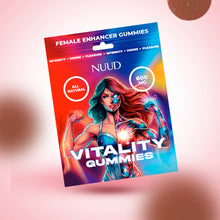
NUUD is a botanical supplement built around desire in general. It does not fix, offset or replace hormone therapy, it does nothing for estrogen, testosterone or any hormone level, and it has no role in managing menopause or any medical condition. The formula is anchored by the NUUD Mushroom Complex™, with Muira Puama, Boiled Rehmannia Root, Tribulus Terrestris, and Piper Nigrum for absorption. Onset is roughly 30 to 60 minutes. If your prescriber has read the label and has no objection, that is what our women's libido gummies and women's libido capsules are for. There is a men's version too.
Nothing is wrong with you
If your drive dipped as your periods changed, you have plenty of company in the cohorts on this page. In SWAN, desire fell by late perimenopause. A shift that common is a stage of life, and it says nothing about how much you love the person next to you.
Estrogen shapes comfort clearly and wanting a little. A page promising that one hormone will bring everything back is going past the trials.
If you just want to feel normal again, start with the plain things. Make sex comfortable, protect your sleep, and bring your questions to your prescriber. The wanting may well still be there, waiting for the rest of the picture to settle.
Keep reading
- HRT and libido: why it may still be low
- Low libido in menopause
- Perimenopause and libido
- Normal labs, low libido
- Low libido in men
Frequently asked questions
Does estrogen increase sex drive?
A little, on average, and mostly through comfort. In natural cycles, desire moves with estradiol from day to day, as a correlation. In menopause hormone therapy, the newest Cochrane review put estrogen alone at SMD 0.60 (95% CI 0.16 to 1.04) on overall sexual-function score across 9 studies and 1307 women, with very high heterogeneity, and the gains showed most in dryness, pain and satisfaction. Where desire was scored on its own, the changes were small or absent: 0.3 (95% CI 0.0 to 0.6) with low-dose oral estradiol, and no significant difference with an ultralow-dose patch.
Does low estrogen cause low libido?
It is linked to lower desire, and other things carry as much weight. In the Melbourne cohort, falling estradiol tracked falling sexual-function scores, and the share of women in the dysfunction range rose from 42% to 88% across the transition. In SWAN, desire fell by late perimenopause. Both are observational, so neither shows cause. The same Melbourne team found prior sexual function and partner issues had larger effects than hormones, and SWAN found relationship factors and vaginal dryness carried the strongest links.
Is an estrogen patch better than a pill for sex drive?
The patch did a little better in the one large trial that compared them, and neither printed a desire result. In KEEPS, the patch raised the overall score by 2.6 (95% CI 1.11 to 4.10), while the pill's 1.4 (95% CI -0.1 to 2.8) did not separate from placebo; the two did not differ from each other. In a small open-label crossover, oral estrogen raised sex hormone binding globulin by 132.1% and cut free testosterone by 32.7%, with far smaller changes on the patch. That trial measured no sexual outcome.
Does estrogen matter for sex drive in men?
Yes, alongside testosterone. In the Finkelstein trial of healthy men whose hormones were shut down by a drug, estrogen deficiency and testosterone deficiency both contributed to the decline in sexual function; the summary gives no desire numbers by arm. In a cross-sectional study of 2838 European men, testosterone tracked overall sexual function and higher estradiol went with more distress about sex. None of this supports adjusting estradiol on your own.
Can I take a botanical supplement with estrogen therapy?
Ask your prescriber first, and bring the label. NUUD is a botanical supplement built around desire in general. It does not fix, offset or replace hormone therapy, it does nothing for estrogen or any hormone level, and it has no role in managing menopause or any medical condition. No interaction studies exist for this formula. Its label says to avoid use if you are on blood pressure medication, have cardiovascular, renal, or pulmonary conditions, or if you are sensitive to any of the ingredients.
References
- Roney JR, Simmons ZL (2013). Hormonal predictors of sexual motivation in natural menstrual cycles. Horm Behav. PMID 23601091.
- Cappelletti M, Wallen K (2016). Increasing women's sexual desire: The comparative effectiveness of estrogens and androgens. Horm Behav. PMID 26589379.
- Dennerstein L, Randolph J, Taffe J, Dudley E, Burger H (2002). Hormones, mood, sexuality, and the menopausal transition. Fertil Steril. PMID 12007901.
- Dennerstein L, Lehert P, Burger H, Guthrie J (2005). Sexuality. Am J Med. PMID 16414328.
- Avis NE, Brockwell S, Randolph JF Jr, Shen S, Cain VS, Ory M, et al. (2009). Longitudinal changes in sexual functioning as women transition through menopause: results from the Study of Women's Health Across the Nation. Menopause. PMID 19212271.
- Avis NE, Zhao X, Johannes CB, Ory M, Brockwell S, Greendale GA (2005). Correlates of sexual function among multi-ethnic middle-aged women: results from the Study of Women's Health Across the Nation (SWAN). Menopause. PMID 16037753.
- Nastri CO, Lara LA, Ferriani RA, Rosa-E-Silva AC, Figueiredo JB, Martins WP (2013). Hormone therapy for sexual function in perimenopausal and postmenopausal women. Cochrane Database Syst Rev. PMID 23737033.
- Lara LA, Cartagena-Ramos D, Figueiredo JB, Rosa-E-Silva ACJ, Ferriani RA, Martins WP, et al. (2023). Hormone therapy for sexual function in perimenopausal and postmenopausal women. Cochrane Database Syst Rev. PMID 37619252.
- Meziou N, Scholfield C, Taylor CA, Armstrong HL (2023). Hormone therapy for sexual function in perimenopausal and postmenopausal women: a systematic review and meta-analysis update. Menopause. PMID 37159867.
- Taylor HS, Tal A, Pal L, Li F, Black DM, Brinton EA, et al. (2017). Effects of Oral vs Transdermal Estrogen Therapy on Sexual Function in Early Postmenopause: Ancillary Study of the Kronos Early Estrogen Prevention Study (KEEPS). JAMA Intern Med. PMID 28846767.
- Shifren JL, Desindes S, McIlwain M, Doros G, Mazer NA (2007). A randomized, open-label, crossover study comparing the effects of oral versus transdermal estrogen therapy on serum androgens, thyroid hormones, and adrenal hormones in naturally menopausal women. Menopause. PMID 17507833.
- Goodman MP (2012). Are all estrogens created equal? A review of oral vs. transdermal therapy. J Womens Health (Larchmt). PMID 22011208.
- Reed SD, Mitchell CM, Joffe H, Cohen L, Shifren JL, Newton KM, et al. (2014). Sexual function in women on estradiol or venlafaxine for hot flushes: a randomized controlled trial. Obstet Gynecol. PMID 25004335.
- Huang A, Yaffe K, Vittinghoff E, Kuppermann M, Addis I, Hanes V, et al. (2008). The effect of ultralow-dose transdermal estradiol on sexual function in postmenopausal women. Am J Obstet Gynecol. PMID 18313446.
- Fernandes T, Costa-Paiva LH, Pinto-Neto AM (2014). Efficacy of vaginally applied estrogen, testosterone, or polyacrylic acid on sexual function in postmenopausal women: a randomized controlled trial. J Sex Med. PMID 24612478.
- Gass M, Larson J, Cochrane B, Manson JE, Lane D, Barnabei V, et al. (2018). Sexual activity and vaginal symptoms in the postintervention phase of the Women's Health Initiative Hormone Therapy Trials. Menopause. PMID 29112594.
- Greco T, Graham CA, Bancroft J, Tanner A, Doll HA (2007). The effects of oral contraceptives on androgen levels and their relevance to premenstrual mood and sexual interest: a comparison of two triphasic formulations containing norgestimate and either 35 or 25 microg of ethinyl estradiol. Contraception. PMID 17586130.
- Finkelstein JS, Lee H, Burnett-Bowie SA, Pallais JC, Yu EW, Borges LF, et al. (2013). Gonadal steroids and body composition, strength, and sexual function in men. N Engl J Med. PMID 24024838.
- Gilbert DC, Duong T, Kynaston HG, Alhasso AA, Cafferty FH, Rosen SD, et al. (2017). Quality-of-life outcomes from the Prostate Adenocarcinoma: TransCutaneous Hormones (PATCH) trial evaluating luteinising hormone-releasing hormone agonists versus transdermal oestradiol for androgen suppression in advanced prostate cancer. BJU Int. PMID 27753182.
- O'Connor DB, Lee DM, Corona G, Forti G, Tajar A, O'Neill TW, et al. (2011). The relationships between sex hormones and sexual function in middle-aged and older European men. J Clin Endocrinol Metab. PMID 21849522.
This article is for general education and is not medical advice. Menopause hormone therapy, vaginal estrogen and hormonal contraception are prescribed and managed by a licensed clinician. NUUD is a botanical supplement and has no role in diagnosing, treating, curing, or preventing menopause changes, low hormone levels, the side effects of any medication, or any other disease, and these statements have not been evaluated by the Food and Drug Administration. Talk with your doctor before starting any new supplement, and do not start, stop or change your hormones without your prescriber.
