

Does Progesterone Increase Sex Drive? What the Studies Actually Show
Share
Does progesterone increase sex drive? The studies we found do not show that it does. In natural cycles, desire tends to dip as progesterone rises after ovulation, and in menopause hormone therapy the progestogen part has shown no clear effect of its own on sexual function. Both internet answers go further than the trials. The largest cycle study, Jones and colleagues (2018), followed 375 women and found desire moved against progesterone within each woman. A 2023 meta-analysis of 34 trials put estrogen plus progestogen at SMD 0.11 (95% CI -0.07 to 0.29), an interval that crosses zero. The one randomized trial of progesterone cream found no change in sexual feelings.
Before you read on
Progesterone and progestin products are prescription hormones that are doing work you cannot feel, including protecting the uterus when estrogen is prescribed. Do not stop or change them without your doctor. Nothing here is medical advice or a reason to alter your prescriber's plan.
- In natural cycles, higher progesterone goes with lower desire inside each woman's cycle, as a correlation. None of these studies gave anyone progesterone.
- In menopause hormone therapy, estrogen plus progestogen came out at SMD 0.11 (95% CI -0.07 to 0.29) across 7 studies and 2,432 participants. The interval crosses zero, and the score is overall sexual function with no desire-only figure.
- In the KEEPS trial of 670 women, everyone on hormones also took micronized progesterone, so the trial cannot say what progesterone did alone.
- For progestin-only contraception, the pooled analysis of 19 studies and 710 women found no significant change for the hormonal IUD through 12 months (WMD 3.20, 95% CI -1.56 to 7.98). One cross-sectional survey linked the injection to higher odds of lacking interest in sex.
- The one randomized trial of progesterone cream, in eighty postmenopausal women over 12 weeks, found no detectable change in sexual feelings.
Figures from Jones et al. 2018 (PMID 29287282), Meziou et al. 2023 (PMID 37159867) and Ghorbani et al. 2021 (PMID 32048542). The first is correlational; the other two pool trials of mixed quality.
Is it the progesterone, or is it me?
You started micronized progesterone with your HRT, or a progestin-only pill, and a few weeks later your drive had gone quiet. Is it the progesterone, or is it me? Online, one camp says progesterone kills libido and the other sells it as the hormone that brings desire back. Neither is quoting a trial that gave progesterone on its own and measured desire.
Two words get mixed up all the time, and it matters here. Progesterone is the hormone your ovaries make, and micronized progesterone is the same molecule as a prescription. Progestins are synthetic relatives, such as medroxyprogesterone acetate, norethisterone acetate and levonorgestrel. Menopause trials often lump both under the word progestogen. Where a study used one or the other, we say which. Where its summary did not say, we say that too.
Timing muddies things further. Progesterone often arrives alongside perimenopause, broken sleep or a new contraceptive, and any of those can flatten wanting. The hormone gets the blame because it is the newest thing in the bathroom cabinet. Our pieces on perimenopause and libido and low libido in menopause cover what else shifts in those years.
What the cycle studies say about the progesterone rise
The clearest link between progesterone and desire comes from women taking no hormones at all. Roney and colleagues (2013) had young women give a saliva sample every day across one to two menstrual cycles and log their desire in a daily diary. Day to day, estradiol predicted desire upward and progesterone downward, with desire highest mid-cycle. The measured rise in progesterone statistically accounted for the fall in desire from mid-cycle into the luteal phase, the stretch after ovulation.
The summary gives no sample size or effect sizes, and effects between women were generally absent: a woman with higher progesterone than her friend did not reliably want sex less. The link lived inside each woman's own cycle. Testosterone had no significant effect once estradiol and progesterone were accounted for.
Jones and colleagues (2018) tested the same idea at a larger scale: 375 young women followed over time, where earlier samples had been 43, 33 and 14. Changes in general desire within each woman were negatively related to progesterone and unrelated to testosterone or cortisol. Marcinkowska and colleagues (2023) measured estradiol and progesterone daily for 15 days in 97 women. Within each woman, estradiol went up with desire and progesterone went the other way.
These are correlations inside natural cycles. They show progesterone rising and desire dipping at the same time, and they cannot show that the hormone caused the dip. The labs do not all agree, either. Grebe and colleagues (2016) found the opposite pattern for desire toward a woman's own partner. Roney and colleagues (2016) went back to the partnered women in their sample and found progesterone negatively linked to desire for partners and for other men alike, with desire highest in the fertile window and lowest in the luteal phase.
A natural luteal rise is a different thing from a capsule taken alongside estrogen after menopause, and none of these studies gave anyone progesterone. If your drive follows a monthly rhythm, sex drive across your menstrual cycle walks through the pattern, and PCOS and sex drive covers what changes when cycles are irregular.
Progesterone in menopause hormone therapy, by the numbers
The newest Cochrane review, Lara and colleagues (2023), pooled 36 randomized trials covering 23,299 women. Estrogen alone probably improved the overall sexual-function score slightly, SMD 0.60 (95% CI 0.16 to 1.04, 9 studies, 1307 women), rated moderate-quality evidence with high heterogeneity (I2 = 92%). For estrogen plus a progestogen in unselected postmenopausal women, there was one study of 104 women: MD 0.08 (95% CI -1.52 to 1.68), very low-quality evidence. The reviewers called its effect uncertain.
Hold those numbers loosely. No trial was limited to women with a sexual problem, 20 were at high risk of bias, and 19 had commercial funding. The summary gives no desire-only result and does not say which progestogen each trial used.
Meziou and colleagues (2023) ran their own update: 47 randomized trials reviewed, and 34, with 15,079 participants, pooled. Estrogen came out at SMD 0.16 (95% CI 0.02 to 0.29, 16 studies, 2,925 participants). Estrogen plus progestogen came out at SMD 0.11 (95% CI -0.07 to 0.29, 7 studies, 2,432 participants), and that interval crosses zero. Tibolone sat at 0.15 and SERMs at 0.18, both with intervals clear of zero.
34 trials, 15,079 participants: hormone therapy and sexual-function scores
Standardized mean differences versus control from one paper, Meziou et al. 2023. The line at 0 is no change. The estrogen plus progestogen row is orange because its interval crosses that line.
Source: Meziou N et al., Menopause 2023 (PMID 37159867). Systematic review and meta-analysis of randomized trials; composite sexual-function score; desire was not reported on its own.
Read the orange row with care. Adding a progestogen did not give a result the review could separate from zero, and it did not give a clear drop either. These are overall sexual-function scores with no desire-only figure. The combined arm's heterogeneity was moderate (I2 = 65%). The older Cochrane review, Nastri and colleagues (2013), found SMD 0.09 (95% CI -0.02 to 0.20) for estrogen plus progestogen across 3 studies and 1314 unselected women.
The trial closest to how progesterone is prescribed today is KEEPS. Taylor and colleagues (2017) studied 670 recently menopausal women aged 42 to 58 in a 4-year randomized, placebo-controlled trial. Both hormone arms paired an estrogen with oral micronized progesterone. One estrogen arm improved the overall score (2.6; 95% CI 1.11 to 4.10). The other did not separate from placebo (1.4; 95% CI -0.1 to 2.8).
The gains came from the dryness domain (0.61; 95% CI 0.25 to 0.97) and less pain (0.67; 95% CI 0.25 to 1.09). Every woman on hormones in KEEPS also took progesterone, so the trial cannot say what progesterone did alone, and its summary reports no desire number. It does show that women taking micronized progesterone with estrogen did not end up below placebo overall.
Two small trials looked at synthetic progestins. Fonseca and colleagues (2007) gave 40 postmenopausal women estradiol plus norethisterone acetate for 6 months and placebo for 6 months, in a double-blind crossover. Sexual interest improved on the hormones (F=5.55, p<0.05), with fewer hot flashes. With both hormones given together, neither gets the credit alone. Myers and colleagues (1990) randomized 40 women across four arms, one of them estrogen plus medroxyprogesterone acetate, for 10 weeks. No hormone significantly changed mood or sexual behavior.
The hormone with a steady desire signal after menopause is testosterone. Islam and colleagues (2019) pooled 36 randomized trials with 8480 participants and found a small rise in desire and in satisfying sexual events for postmenopausal women on testosterone, plus lower distress, with more acne and hair growth. It says nothing about progesterone, and it explains why estrogen and testosterone come up first when HRT leaves desire flat; HRT and libido: why it may still be low and testosterone and female desire after 50 go into both.
Progestin-only birth control and desire
The broad meta-analysis here, Huang and colleagues (2020), pooled 12 studies of 9,427 participants and found a lower desire subscale among contraceptive users, SMD -1.17 (95% CI -2.09 to -0.24, I2 = 97.7%). The total score did not differ significantly (SMD -1.03, 95% CI -2.08 to 0.01). That desire figure pools every method across observational designs, with very high heterogeneity. It reports no progestin-only subgroup, so it is never a progesterone figure.
The analysis built on progestin methods, Ghorbani and colleagues (2021), pooled 19 studies with 710 participants. The implant showed no change at three months and a positive change at six months (WMD 3.48, 95% CI 2.78 to 4.19). The levonorgestrel IUS showed no significant change through 12 months (WMD 3.20, 95% CI -1.56 to 7.98). These are overall scores, the pool mixes randomized and before-after studies, and the review covers no progestin-only pill or injection.
Survey data point the other way for some methods. Boozalis and colleagues (2016) analysed 1,938 women in the CHOICE project six months after they started a method. 23.9% reported lacking interest in sex, and among 262 copper IUD users the figure was 18.3%. Compared with copper, the injection (depot medroxyprogesterone) carried adjusted odds of 2.61 (95% CI 1.47 to 4.61) and the implant 1.60 (95% CI 1.03 to 2.49). The hormonal IUD showed no association. It is cross-sectional with no baseline, so it cannot separate the method from the women who chose it.
Kerns and colleagues (2024) followed 1714 women in the phase 3 trial of a levonorgestrel IUD. At 360 days, trouble finishing or desire problems, counted as one item, ran at 3.1% versus 1.4%, split by the method women had used before. Zethraeus and colleagues (2016) randomized 340 women to a combined pill or placebo for 3 months. Desire scores fell (-4.4, 95% CI -8.49 to -0.38) while overall sexual function stayed similar. That pill contains an estrogen as well as levonorgestrel, so the drop cannot be pinned on the progestin.
Our guide to birth control and low libido sorts the methods against each other, and what the IUD studies show covers the hormonal IUD in detail.
Where the progesterone cream claim comes from
The upbeat version of the story mostly lives around over-the-counter progesterone cream, sold as bioidentical and often pitched as a way to bring desire back. Our search found one randomized trial that measured sexual feelings on it. Wren and colleagues (2003) gave eighty postmenopausal women progesterone cream or a placebo cream for 12 weeks, double-blind. Blood progesterone rose slightly. Hot flashes, mood and sexual feelings did not detectably change.
Wren (2005) later reviewed the published work on these creams: they raise blood progesterone slightly, show no effect on hot flashes, mood or psychosexual complaints, and cannot be recommended for menopause. The review is by the same lead author as the trial. No trial in our search showed a cream raising desire.
So where does the claim come from? Mostly from cycle logic run backwards. People hear that progesterone and estrogen balance each other and conclude that topping one up must restore desire. The cycle studies point the opposite way for progesterone, and no trial we found tested the balance idea against desire. If balancing hormones keeps coming up for you, hormones and female libido covers what the evidence supports.
Four kinds of evidence, one pattern
Each pile of evidence answers a different question, and none of them gave progesterone alone and measured desire. That gap is why both internet answers can sound confident while resting on so little.
What each source can and cannot tell you
375 young women. Desire moved against progesterone within each woman. A correlation in natural cycles.
34 trials pooled. Estrogen plus progestogen SMD 0.11, interval crossing zero. Overall score, no desire figure.
KEEPS, 670 women. Micronized progesterone in both hormone arms, so its own effect cannot be separated.
19 studies, 710 participants. No significant change for the hormonal IUD; a positive change for the implant at six months.
1,938 women. The injection carried odds of 2.61 for lacking interest versus copper. Cross-sectional.
Eighty women, progesterone cream versus placebo cream. No detectable change in sexual feelings.
Built from PMID 29287282, 37159867, 28846767, 32048542, 26855094 and 12544672.
| Question | Best evidence | Result | Caveat |
|---|---|---|---|
| Natural cycles | Jones 2018, 375 women; Marcinkowska 2023, 97 women | Higher progesterone went with lower desire within each woman | Correlational; one other lab found the opposite for partner desire |
| Estrogen plus progestogen after menopause | Meziou 2023, 7 studies, 2,432 participants | SMD 0.11, 95% CI -0.07 to 0.29 | Overall score; progestogen type not given |
| Micronized progesterone in HRT | KEEPS, 670 women | One estrogen arm improved the overall score (2.6; 95% CI 1.11 to 4.10); the other did not separate from placebo | Both hormone arms took progesterone; no desire number |
| Progestin-only contraception | Ghorbani 2021, 19 studies; Boozalis 2016, 1,938 women | No significant change for the hormonal IUD; injection odds 2.61 (95% CI 1.47 to 4.61) versus copper | Overall scores; the survey is cross-sectional |
| Progesterone cream | Wren 2003, eighty women | No detectable change in sexual feelings over 12 weeks | One small trial of one cream |
| Testosterone, for context | Islam 2019, 36 trials, 8480 participants | A small rise in desire for postmenopausal women | Says nothing about progesterone |
What to bring to your prescriber
A few specifics make the visit shorter and more useful.
- The timeline: when your drive dropped, and when the progesterone or progestin started or changed.
- Which product you take, and whether it is micronized progesterone or a synthetic progestin, since the studies rarely separate them.
- What else changed that season: sleep, hot flashes, pain with sex, mood, the relationship.
- The pooled figure for estrogen plus progestogen, SMD 0.11 (95% CI -0.07 to 0.29), so you can talk about what the trials can and cannot show.
- Whether estrogen or testosterone is worth discussing, since those carry the clearer signals in the trials.
- The supplement question, bottle in hand: NUUD does nothing for progesterone, estrogen, menopause or any contraceptive.
"I've tried everything"
If you have switched pills, waited out the first months of HRT and read every forum thread, you have done the hard part: noticing the change and naming it. For progesterone on its own, the honest count of evidence is short: a correlation in natural cycles, a combined-therapy interval that crosses zero, and one cream trial that found nothing.
Many women say some version of "my numbers are fine and I still feel flat." That is common, and a normal lab result says nothing about desire either way. Numbers fine, still flat covers that situation. If low desire has lasted months and it bothers you, what HSDD means explains the label your prescriber may use and what it does and does not imply.
The everyday levers, and where a botanical fits
Start with who this section is not for. NUUD's own label carries a caution, quoted here word for word: avoid use if you are on blood pressure medication, have cardiovascular, renal, or pulmonary conditions, or if you are sensitive to any of the ingredients. For many readers of this article, that sentence is the answer. Talk to your prescriber first and bring the label.
A few ordinary things move desire in most people, and the free ones do more work than the internet admits.
- Sleep, in quantity and quality, since night sweats and broken sleep flatten wanting fast. Sleep, libido and testosterone covers that.
- Movement you can keep up. Exercise and libido covers the wider picture.
- Comfort first, since the KEEPS gains came from dryness and pain scores, and sex that hurts is hard to want.
- Time with a partner, or alone, with nothing expected at the end.
- A botanical supplement, if you want one, as the smallest lever on the list.
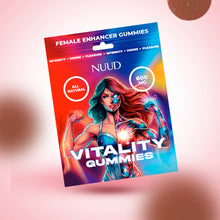
NUUD is a botanical supplement built around desire in general; it does nothing for progesterone, estrogen or any hormone level, for menopause, or for any hormone therapy or contraceptive you use, and it has no role in managing any medical condition. The formula is anchored by the NUUD Mushroom Complex™, with Muira Puama, Boiled Rehmannia Root, Tribulus Terrestris, and Piper Nigrum for absorption. Onset is roughly 30 to 60 minutes. If you take blood-pressure medication or have a heart, kidney or lung condition, the label says no, and your prescriber decides the rest. If your prescriber has read that label and has no objection, that is what our women's libido gummies are for. There is a men's version.
Nothing is wrong with you
If you take progesterone with estrogen, it is protecting your uterus, a job you cannot feel. Desire lives in a much wider system than one hormone. Adding a progestogen to estrogen gave an interval that crosses zero. The women in KEEPS who took micronized progesterone did not score lower than placebo overall. And in natural cycles, a monthly dip after ovulation is ordinary.
Low desire in these years usually has company, such as night sweats or a relationship on autopilot. Any of those can sit on top of a prescription and make the prescription look guilty. None of them means something is broken.
If you just want to feel normal again, start with the plain things. Protect your sleep and bring your questions to the person who prescribed the hormone. The wanting may well still be there, waiting for the rest of the picture to settle.
Keep reading
- HRT and libido: why it may still be low
- Perimenopause and libido
- Low libido in menopause
- Birth control and low libido
- Sex drive across your menstrual cycle
- Low libido in women
Frequently asked questions
Does progesterone increase sex drive?
Not in the studies we found. No trial in our search gave progesterone alone and found a rise in desire. In natural cycles, desire tends to dip as progesterone rises; Jones and colleagues (2018) saw that within each of 375 women, as a correlation. In menopause hormone therapy, estrogen plus progestogen came out at SMD 0.11 (95% CI -0.07 to 0.29) across 7 studies, an interval that crosses zero. The one randomized trial of progesterone cream, in eighty women, found no change in sexual feelings.
Does progesterone lower sex drive?
It moves with lower desire in natural cycles, and the trials have not shown it causes a drop. Three cycle studies linked higher progesterone with lower desire inside each woman's cycle, and another lab found the opposite for desire toward a partner. Those are correlations. In hormone therapy, adding a progestogen did not produce a clear drop in overall sexual-function scores. In contraception, the pooled progestin analysis found no significant change for the hormonal IUD through 12 months, while one cross-sectional survey linked the injection to higher odds of lacking interest in sex.
Does progesterone cream increase libido?
The one trial we found says no. Wren and colleagues (2003) randomized eighty postmenopausal women to progesterone cream or a placebo cream for 12 weeks. Blood progesterone rose slightly, and sexual feelings, mood and hot flashes showed no detectable change. A later review by the same lead author concluded the creams show no effect on mood or psychosexual complaints. That is a small evidence base, and it is all we found. A page promising a desire lift from a cream is going past the published trials.
Does progesterone in HRT affect libido?
On average, the trials cannot show that it does. Meziou and colleagues (2023) found estrogen plus progestogen at SMD 0.11 (95% CI -0.07 to 0.29) across 7 studies and 2,432 participants on overall sexual-function score, an interval that crosses zero. In the KEEPS trial, every woman on hormones also took micronized progesterone, so its own effect cannot be separated. None of these summaries reports a desire-only figure. If desire is still low on HRT, raise it with your prescriber, who can weigh the estrogen and testosterone questions against your history.
Can I take a botanical supplement with progesterone?
Ask your prescriber first, and bring the label. NUUD is a botanical supplement built around desire in general; it does nothing for progesterone, estrogen or any hormone level, for menopause, or for any hormone therapy or contraceptive you use, and it has no role in managing any medical condition. No interaction studies exist for this formula. Its label says to avoid use if you are on blood pressure medication, have cardiovascular, renal, or pulmonary conditions, or if you are sensitive to any of the ingredients.
References
- Roney JR, Simmons ZL. Hormonal predictors of sexual motivation in natural menstrual cycles. Hormones and behavior. 2013;63(4):636-45. https://pubmed.ncbi.nlm.nih.gov/23601091/
- Jones BC, Hahn AC, Fisher CI, Wang H, Kandrik M, DeBruine LM. General sexual desire, but not desire for uncommitted sexual relationships, tracks changes in women's hormonal status. Psychoneuroendocrinology. 2018;88:153-157. https://pubmed.ncbi.nlm.nih.gov/29287282/
- Marcinkowska UM, Shirazi T, Mijas M, Roney JR. Hormonal Underpinnings of the Variation in Sexual Desire, Arousal and Activity Throughout the Menstrual Cycle - A Multifaceted Approach. Journal of sex research. 2023;60(9):1297-1303. https://pubmed.ncbi.nlm.nih.gov/36018001/
- Roney JR, Simmons ZL. Within-cycle fluctuations in progesterone negatively predict changes in both in-pair and extra-pair desire among partnered women. Hormones and behavior. 2016;81:45-52. https://pubmed.ncbi.nlm.nih.gov/27049465/
- Lara LA, Cartagena-Ramos D, Figueiredo JB, Rosa-E-Silva ACJ, Ferriani RA, Martins WP, et al. Hormone therapy for sexual function in perimenopausal and postmenopausal women. The Cochrane database of systematic reviews. 2023;8(8):CD009672. https://pubmed.ncbi.nlm.nih.gov/37619252/
- Meziou N, Scholfield C, Taylor CA, Armstrong HL. Hormone therapy for sexual function in perimenopausal and postmenopausal women: a systematic review and meta-analysis update. Menopause (New York, N.Y.). 2023;30(6):659-671. https://pubmed.ncbi.nlm.nih.gov/37159867/
- Nastri CO, Lara LA, Ferriani RA, Rosa-E-Silva AC, Figueiredo JB, Martins WP. Hormone therapy for sexual function in perimenopausal and postmenopausal women. The Cochrane database of systematic reviews. 2013;(6):CD009672. https://pubmed.ncbi.nlm.nih.gov/23737033/
- Taylor HS, Tal A, Pal L, Li F, Black DM, Brinton EA, et al. Effects of Oral vs Transdermal Estrogen Therapy on Sexual Function in Early Postmenopause: Ancillary Study of the Kronos Early Estrogen Prevention Study (KEEPS). JAMA internal medicine. 2017;177(10):1471-1479. https://pubmed.ncbi.nlm.nih.gov/28846767/
- Fonseca AM, Bagnoli VR, Penteado SR, Paixão JS, Cavalcanti AL, Pinotti JA. Monophasic estrogen-progestogen therapy and sexuality in postmenopausal women. Clinical drug investigation. 2007;27(2):131-7. https://pubmed.ncbi.nlm.nih.gov/17217318/
- Myers LS, Dixen J, Morrissette D, Carmichael M, Davidson JM. Effects of estrogen, androgen, and progestin on sexual psychophysiology and behavior in postmenopausal women. The Journal of clinical endocrinology and metabolism. 1990;70(4):1124-31. https://pubmed.ncbi.nlm.nih.gov/1690746/
- Islam RM, Bell RJ, Green S, Page MJ, Davis SR. Safety and efficacy of testosterone for women: a systematic review and meta-analysis of randomised controlled trial data. The lancet. Diabetes & endocrinology. 2019;7(10):754-766. https://pubmed.ncbi.nlm.nih.gov/31353194/
- Huang M, Li G, Liu J, Li Y, Du P. Is There an Association Between Contraception and Sexual Dysfunction in Women? A Systematic Review and Meta-analysis Based on Female Sexual Function Index. The journal of sexual medicine. 2020;17(10):1942-1955. https://pubmed.ncbi.nlm.nih.gov/32694069/
- Ghorbani M, Ashrafizaveh A, Azmoude E. Effects of progestin contraceptive methods on sexual function in reproductive age women: a meta-analysis. Journal of psychosomatic obstetrics and gynaecology. 2021;42(1):3-14. https://pubmed.ncbi.nlm.nih.gov/32048542/
- Boozalis A, Tutlam NT, Chrisman Robbins C, Peipert JF. Sexual Desire and Hormonal Contraception. Obstetrics and gynecology. 2016;127(3):563-572. https://pubmed.ncbi.nlm.nih.gov/26855094/
- Kerns JL, Keder LM, Cwiak CA, Westhoff CL, Creinin MD. Hormone-related side effects in new users of a levonorgestrel 52-mg intrauterine device. American journal of obstetrics and gynecology. 2024;231(6):628.e1-628.e10. https://pubmed.ncbi.nlm.nih.gov/38969201/
- Zethraeus N, Dreber A, Ranehill E, Blomberg L, Labrie F, von Schoultz B, et al. Combined Oral Contraceptives and Sexual Function in Women-a Double-Blind, Randomized, Placebo-Controlled Trial. The Journal of clinical endocrinology and metabolism. 2016;101(11):4046-4053. https://pubmed.ncbi.nlm.nih.gov/27525531/
- Wren BG, Champion SM, Willetts K, Manga RZ, Eden JA. Transdermal progesterone and its effect on vasomotor symptoms, blood lipid levels, bone metabolic markers, moods, and quality of life for postmenopausal women. Menopause (New York, N.Y.). 2003;10(1):13-8. https://pubmed.ncbi.nlm.nih.gov/12544672/
- Wren BG. Transdermal progesterone creams for postmenopausal women: more hype than hope? The Medical journal of Australia. 2005;182(5):237-9. https://pubmed.ncbi.nlm.nih.gov/15748136/
This article is for general education and is not medical advice. Menopause hormone therapy and hormonal contraception are prescribed and managed by a licensed clinician, and progesterone and progestin products are prescription hormones. NUUD is a botanical supplement and has no role in diagnosing, treating, curing, or preventing menopause symptoms, hormone imbalance, the side effects of any medication, or any other disease, and these statements have not been evaluated by the Food and Drug Administration. Talk with your doctor before starting any new supplement, and do not stop or change your hormones without your doctor.
