


Does Gabapentin Affect Sex Drive? What the Studies Actually Show
Share
Gabapentin and sex drive have a thin paper trail behind them, and the honest answer is that the drug can lower desire or block finishing in some people while nobody has counted how many. The one randomized trial that measured desire on gabapentin put 89 women with provoked vulvodynia on the drug or on placebo, and their sexual function scored higher on gabapentin, because the pain fell. This page holds two kinds of evidence. One is that trial in women whose pain was the problem. The other is a row of case series about people who could not finish.
Before you read on
Gabapentin (Neurontin) and pregabalin (Lyrica) are prescription medicines for nerve pain, seizures, anxiety or hot flashes, doing work you cannot feel. Do not stop or change your medication without your doctor. Nothing here is medical advice or a reason to alter your prescriber's plan.
- In the only randomized trial of gabapentin that scored desire, 89 women with provoked vulvodynia rated their overall sexual function 1.3 points higher on gabapentin than on placebo (95% CI 0.4 to 2.2). The desire items moved 0.2 (95% CI 0.0 to 3.3), and the women on gabapentin scored below the 56 pain-free women measured alongside them.
- In one clinic, 3 of 15 older people started on gabapentin developed dose-dependent trouble reaching climax, 3 of 11 among those over 50, and climax returned when the dose came down or the drug stopped. The old epilepsy trials reported under 1%.
- A case series of 75 people on pregabalin found a sexual problem in 41.33%, at 50% in men and 36.73% in women. These problems were not dose related and showed up at 50 to 100 milligrams a day.
- A 14-week randomized trial of gabapentin in 69 people with social phobia, dosed between 900 and 3,600 milligrams daily, reported decreased libido more often on gabapentin than on placebo. It printed no rate, and the authors were affiliated with the manufacturer.
- The hormone data come up close to empty. Women with epilepsy taking gabapentin showed no hormone difference from controls, pregabalin had no effect on free testosterone, and in women aged 48 to 55 gabapentin samples carried lower free estradiol (p = 0.0050) in an exploratory lab study.
Figures from Bachmann et al. 2019 (PMID 30365922), Perloff et al. 2011 (PMID 21602106) and Hamed 2018 (PMID 30001248).
Is it the gabapentin, or is it me?
You typed a drug name into a search bar because something feels flat. Drug or me is the right question, and for most people reading this page it has no clean answer. Gabapentin goes out of the pharmacy for nerve pain, for seizures, for anxiety and for hot flashes. Every one of those lowers desire on its own, before the molecule gets a vote. Chronic pain drains appetite for sex, and our guide to chronic pain and sex drive walks through why.
Anxiety does its own work on desire, and stress, cortisol and sex drive covers the hormone side of that. If you take a seizure medicine, which one you take matters a lot; the lamotrigine page looks at another antiseizure drug with a very different reputation.
This page goes one drug deep. It stays on gabapentin and its close cousin pregabalin, and it reads every study we could find that measured anything sexual in people taking them. Where the evidence is a single case report, it says so.
The one trial that measured desire
Bachmann and colleagues (2019) ran a randomized, double-blind, placebo-controlled crossover trial in women with provoked vulvodynia, pain at the vaginal opening when something touches it. Eighty-nine women took gabapentin and placebo in turn, and sexual function was scored with the Female Sexual Function Index.
Gabapentin came out ahead on the overall sexual-function score, by an adjusted mean difference of 1.3 (95% CI 0.4 to 2.2). The desire items moved by 0.2, with a 95% CI of 0.0 to 3.3, an interval that starts at no difference at all. Physical response and satisfaction each improved by 0.3. Fifty-six matched women without pain were scored alongside them and sat higher than either group.
The women who hurt most gained the most. Above the median for pelvic muscle pain at baseline, the overall gap was 1.6 (95% CI 0.3 to 2.8), physical response was 0.3 (95% CI 0.1 to 0.6) and satisfaction was 0.4 (95% CI 0.02 to 0.9). Sexual function was a secondary outcome of a pain trial, so read those figures as what you get when someone asks about sex in women being helped for pain.
Bajzak and colleagues (2023) scoped the drug literature for localized provoked vulvodynia, 18 papers including 7 randomized trials, and landed in the same place. Oral gabapentin showed some improvement in sexual function against placebo, and small samples cap how far anyone can push that.
Gabapentin against placebo, 89 women
Adjusted mean differences on the Female Sexual Function Index; the desire interval runs from 0.0 to 3.3.
Source: Bachmann GA et al., Am J Obstet Gynecol 2019 (PMID 30365922). Secondary outcome of a pain trial; 56 matched pain-free women scored higher than either arm.
Two papers cover the cream. Boardman and colleagues (2008) looked back at 51 women using topical gabapentin for vulvodynia, and mean pain fell from 7.26 to 2.49; among the women with localized vulvodynia who had evaluable results, sexual function improved in 17 of 20. It is a retrospective study with no control arm, so it shows a pattern and not a rate. Ergisi and colleagues (2023) gathered four studies of topical gabapentin and found better pain measures in all four, then declined to draw conclusions, citing no control arms and small samples, with no randomization.
The people who could not finish
Perloff and colleagues (2011) followed 15 people started on gabapentin at one clinic over 18 months. Three of them developed trouble reaching climax that tracked the dose, rising on more drug and easing on less. A fourth case turned up in a second clinic. Among the people over 50 in that group the count was 3 of 11. Lower the dose or stop it, and climax came back.
The authors set that against the under 1% reported in the old epilepsy trials and made the obvious point: nobody was asking. Outside erection problems, clinicians rarely raise sex with an older adult at all.
Kaufman and colleagues (2011) published one person whose whole picture filled in on gabapentin: loss of desire, no finishing, trouble reaching climax, erection problems. The literature placed the threshold for that nearer 900 milligrams a day. This person reached it at 300 milligrams a day.
Nwankwo and colleagues (2024) searched the gabapentin literature for atypical side effects and listed trouble reaching climax among them, with no rate attached to anything. Yang and colleagues (2016) reviewed sexual side effects across the seizure drugs and said plainly that this ground gets too little attention. Gabapentin and pregabalin may cause sexual problems. Two of the newer drugs, oxcarbazepine and lamotrigine, may improve sexual function, and levetiracetam is named in that favorable group.
A case series tells you something happens, and it tells you the problem tracked the dose. It cannot tell you how often it happens, and no figure here does.
What pregabalin adds to the picture
Hamed (2018) gave pregabalin to 75 people for sciatica, facial pain, tension headache, transformed migraine, fibromyalgia or generalized anxiety. A sexual problem showed up in 31 of them, 41.33% of the group. It appeared in 50% of the men and 36.73% of the women.
Inside those 31, erection problems were reported by 16 people (51.61%), trouble reaching climax by 10 (32.26%), and loss of desire by 11 (35.48%). The problems appeared within weeks of starting pregabalin, showed up at daily doses as low as 50 to 100 milligrams with no link to the dose, and improved within weeks of stopping it. There was no control group and no placebo arm, so 41.33% is a count of what people reported. No rate on this page attaches to you.
Calabrò and colleagues (2013) described three men with epilepsy who developed severe trouble reaching climax after pregabalin was added to drugs they already took. The authors note that around 90% of climax problems are believed to be psychological in origin, and that serotonin-acting drugs are a common cause of situational trouble finishing. Three people, all on other medicines at the same time, is a signal and nothing more.
Murphy and colleagues (2020) reported the arrow pointing the other way. A 27-year-old man with recurrent depressive disorder took pregabalin for anxiety; his anxiety improved sharply and he developed acute sexual disinhibition and increased desire, tied in time to the drug and falling when the dose came down. Catching it early can mean a dose reduction is enough. Nerve pain drugs come up again for people with multiple sclerosis, and the multiple sclerosis page covers that ground.
Does it touch testosterone?
Morrell and colleagues (2001) measured hormones in 84 reproductive-aged women with epilepsy taking one seizure drug alone, against 20 women without epilepsy. Estrone, free testosterone and androstenedione all came in lower in the women on enzyme-inducing drugs than in controls. Free testosterone ran higher in women on valproate. The women taking gabapentin or lamotrigine showed no difference from controls on any hormone measured. Hormones were measured here; desire was not.
Ray and colleagues (2017) tested serum and plasma samples against free testosterone and free estradiol. Pregabalin had no effect on free testosterone. Neither did methadone, tramadol or fentanyl. In women aged 48 to 55, samples positive for gabapentin carried lower free estradiol (p = 0.0050), as did samples positive for fentanyl (p = 0.0045) and tramadol (p = 0.0243). The study was exploratory, the samples came from a testing lab, and nobody measured anyone's sex life.
On the male side, Sikka and colleagues (2015) ran a double-blind trial in healthy male volunteers: 109 on placebo and 111 on pregabalin 600 milligrams a day for 12 weeks. The share whose sperm concentration fell by half or more differed between the groups by 6% (95% CI -2.29 to 14.3%), inside the prespecified 20% margin. No difference appeared for follicle-stimulating hormone or testosterone, and sperm movement, semen volume and shape looked alike in both groups. Sperm production is not desire.
Mróz and colleagues (2010) reviewed androgens in epilepsy and reported that men with epilepsy run low free testosterone more often than men in the general population, with the older seizure drugs changing androgen availability. In an animal model, one androgen metabolite increased the anti-seizure action of phenobarbital and carbamazepine, and of gabapentin.
So the hormone studies find little, and the desire and finishing reports come from somewhere else. If your labs are the reassurance you are looking for, numbers fine, still flat explains why a normal testosterone panel answers a different question than the one you asked.
Six kinds of evidence, in order
Six studies keep coming up when you search gabapentin and sex drive, and they do not all point the same way. Read them in date order and the shape of the problem becomes clear: small numbers, different questions, no two measuring the same thing. One is a randomized trial in people with social phobia. One is a retrospective look at a topical gel for vulvar pain. One is a case series in older people. One is a sperm study in healthy men. One is an uncontrolled run of 75 people on pregabalin. The newest is a placebo-controlled trial in women with vulvar pain. None was built to answer your question, and together they are the best evidence there is.
What each study could see
69 people with social phobia. Decreased libido was more frequent on gabapentin than on placebo. No rate given.
51 women, topical gabapentin. Pain fell from 7.26 to 2.49. Retrospective, no control arm.
3 of 15 older people had dose-dependent trouble finishing on gabapentin. It came back when the drug was lowered.
220 healthy men on pregabalin, 600 milligrams a day. Sperm production unchanged. No measure of desire.
75 people on pregabalin. Sexual problems in 41.33%. No control group.
89 women with provoked vulvodynia. Overall sexual-function scores were 1.3 higher than placebo.
Built from studies indexed at PMID 10440462, 18757655, 21602106, 24450301, 30001248 and 30365922. All are small, and three of the six have no control group.
| Study | Design | Who | Finding | Caveat |
|---|---|---|---|---|
| Bachmann 2019 | Randomized, crossover | 89 women with provoked vulvodynia | Overall score 1.3 higher, 95% CI 0.4 to 2.2; desire items 0.2, 95% CI 0.0 to 3.3 | A pain trial; sexual function was a secondary outcome |
| Perloff 2011 | Case series, one clinic | 15 older people started on gabapentin | 3 had trouble finishing that tracked the dose; it reversed when the drug fell | No control, no blinding, 15 people |
| Hamed 2018 | Case series | 75 people on pregabalin | Sexual problems in 41.33%, no link to the dose, improved within weeks of stopping | No control group at all |
| Sikka 2015 | Randomized, placebo-controlled | 220 healthy men, pregabalin 600 milligrams a day | Sperm production, testosterone and sperm movement unchanged | Healthy volunteers; sperm is not desire |
| Pande 1999 | Randomized, placebo-controlled | 69 people with social phobia, 900 to 3,600 milligrams daily | Decreased libido more frequent than placebo | Small; manufacturer affiliation; no rate printed |
| Boardman 2008 | Retrospective | 51 women with vulvodynia, topical gel | Pain fell from 7.26 to 2.49; sex-life reports improved | No control arm; 35 of 51 evaluable |
What actually helps, graded honestly
Nothing here has been tested as a fix. There is no trial where one group took something for drug-related low desire and the other took nothing. So the honest grading is of what the reports show, strongest first.
Strongest: change the dose. In the series of older people on gabapentin, the 3 cases of trouble finishing tracked the dose, and climax returned when the drug was lowered or stopped. The case report at 300 milligrams a day fits the same shape. That is reversal in a handful of people, with no control group, which is enough to ask for and not enough to promise.
Next: switch drugs. The review of anti-seizure medicines names switching to another drug as one option, and no trial sits behind that sentence. It is a normal move in practice. It is also your prescriber's call, because the seizures or the pain came first.
For pregabalin the pattern is different and worth knowing before you negotiate. In 75 people, sexual problems were not dose related, showed up at low daily doses of 50 to 100 milligrams, and improved within weeks of stopping. Lowering a pregabalin dose may do little; stopping moved things.
Weakest: wait it out. Nobody followed people on one steady dose for months and counted what happened to desire, so there is no evidence for patience here at all.
The levers that are not the drug carry more weight in the long run. Treating pain properly, sleeping enough, and moving your body all show up in the desire literature with better evidence than any supplement.
Two pages cover the non-drug side in more depth: low libido in men and low libido in women.
Does it wear off on its own?
The closest thing to an answer comes from the pregabalin series: sexual problems appeared within weeks of starting the drug and improved within weeks of stopping it. In the gabapentin series, climax returned when the dose fell or the drug stopped. Both are stories about stopping.
Nobody followed people on one steady dose for months and tracked desire, so the familiar reassurance that side effects settle once your body adjusts has no study behind it here in either direction.
For sleepiness and dizziness, tolerance does build for many people. Nobody has shown that for desire.
What the pattern suggests is that the effect travels with the drug, which is a reason to raise it early and a bad reason to stop on your own. Stopping gabapentin or pregabalin suddenly can cause real harm, including seizures.
What to bring to your prescriber
Prescribers hear this more often than people expect, and the visit goes better with specifics. Write these down before you go, in the order that gets an answer fastest. A six-week note on your phone is enough.
- The timeline. What changed and when, in relation to the dose. An effect that starts two weeks after an increase is a different conversation from one that predates the drug.
- The difference between finishing and wanting. Say plainly whether you cannot finish, do not want to, or both. They are tracked separately and they point to different moves.
- The dose, in milligrams, and how long you have been on it. Dose-dependent effects tend to reverse when it falls; pregabalin effects showed no link to the dose in the one series.
- Whether the pain itself is the lever. In the vulvodynia trial, sexual-function scores rose where the pain fell.
- The switch question. Ask directly whether a different drug is reasonable. A review of anti-seizure medicines names switching as an option, with no trial behind it.
- The supplement question, bottle in hand, so your prescriber is reading the real label.
The everyday levers, and where a botanical fits
Start with who this section is not for. The NUUD label says to avoid use if you are on blood pressure medication, have cardiovascular, renal, or pulmonary conditions, or if you are sensitive to any of the ingredients. Nerve pain is often treated alongside blood pressure medicines, so read that line before you read the rest.
A drug effect is one lever among several. Most people who feel flat on gabapentin are being pulled down by more than the molecule, and the levers below move the number for most readers.
- Sleep, in quantity and quality. Broken sleep flattens desire on its own, and nerve pain is famously good at breaking it. Sleep, libido and testosterone covers that link.
- Movement you can sustain, sized to what your pain allows. Exercise and libido covers what the research shows.
- The pain or the seizures first. A drug that controls them is doing real work, and better control often lifts desire by itself, which is what the vulvodynia trial showed.
- Time with a partner where nothing is expected at the end. Pressure is its own desire killer, and it compounds a drug effect quickly.
- A botanical, as the smallest lever on this list, if you want one and your prescriber agrees.
None of these require you to stop anything. All of them are worth more than a supplement, and a supplement costs less time to try than any of them, which is why people reach for it first.
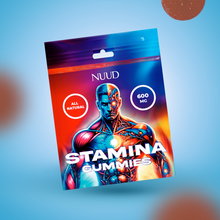
NUUD is a botanical supplement built around desire in general, anchored by the NUUD Mushroom Complex™, with Muira Puama, Boiled Rehmannia Root, Tribulus Terrestris, and Piper Nigrum for absorption. It does nothing for nerve pain, seizures, anxiety, hot flashes, or the side effects of gabapentin and pregabalin. If your prescriber has read that label and has no objection, that is what our women's libido gummies are for. There is a men's version.
Nothing is wrong with you
Two answers are unhelpful, and you have probably met both. The shrug, which says this is what the drug does and you should be grateful for the pain relief. And the forum post, which says the drug killed your sex drive permanently and nobody will help you.
The numbers say something flatter and more useful. In 15 older people started on gabapentin, 3 had trouble finishing, and it came back. In 75 people on pregabalin, 41.33% reported a sexual problem, with no control group to compare them to. In women whose vulvar pain fell on gabapentin, sexual-function scores rose by 1.3.
So nobody can tell you your odds. What the pattern does show is that the effect travels with the dose, and that it reverses.
The pain, the drug and the life you are living all flatten wanting at once. Treating one of them helps more than blaming one of them.
If you want to want it again, start the conversation with specifics. In these reports the effect reversed when the dose changed.
Keep reading
- Chronic pain and low sex drive
- Multiple sclerosis and sex drive
- Does lamotrigine affect sex drive?
- Stress, cortisol and sex drive
- Low libido in women
- Why is my libido so low?
Frequently asked questions
Does gabapentin lower sex drive?
Sometimes. In a 14-week randomized trial in 69 people with social phobia, decreased libido was reported more often on gabapentin than on placebo, and the paper prints no rate for it. A randomized trial in women with vulvar pain found the opposite direction: overall sexual-function scores were 1.3 higher on gabapentin, 95% CI 0.4 to 2.2, mostly because the pain fell. Nobody has counted how many people lose desire on this drug.
Does gabapentin cause trouble finishing?
In a few people, yes. In a series of 15 older people started on gabapentin, 3 men aged 73, 76 and 78 had trouble finishing that tracked the dose, and it came back when the drug was lowered or stopped. One case report described the same at 300 milligrams a day. A 2024 review of gabapentin's atypical side effects lists trouble reaching climax among them.
Does pregabalin (Lyrica) affect sex drive?
In one uncontrolled run of 75 people taking pregabalin for nerve and pain conditions, 31 reported a sexual problem, which is 41.33%, and 11 of those 31 reported lost desire. The problems were not dose related, appeared at low daily doses of 50 to 100 milligrams, and improved within weeks of stopping. There is no control group, so the drug is not proven to be the cause. One case report goes the other way, describing increased desire in a 27-year-old man that fell when the dose was lowered.
Does gabapentin lower testosterone?
Not on the evidence that exists. In an endocrine study of 84 women with epilepsy, those taking gabapentin showed no difference from controls on any hormone measured. Pregabalin did not change testosterone or sperm production in 220 healthy men. One exploratory lab study found lower free estradiol in samples from women aged 48 to 55 who had taken gabapentin, with no sexual outcome measured at all. Testosterone is not the whole story for desire.
Can I take a botanical supplement with gabapentin?
Ask your prescriber first, and bring the bottle. There are no interaction studies for this formula, so nobody can promise a clean combination. The label says to avoid use if you are on blood pressure medication, have cardiovascular, renal, or pulmonary conditions, or if you are sensitive to any of the ingredients. NUUD is built around desire in general. It does nothing for nerve pain, seizures, anxiety, or the effects of gabapentin and pregabalin.
References
- Bachmann GA, Brown CS, Phillips NA, et al. Effect of gabapentin on sexual function in vulvodynia: a randomized, placebo-controlled trial. American journal of obstetrics and gynecology. 2019;220(1):89.e1-89.e8. https://pubmed.ncbi.nlm.nih.gov/30365922/
- Boardman LA, Cooper AS, Blais LR, Raker CA. Topical gabapentin in the treatment of localized and generalized vulvodynia. Obstetrics and gynecology. 2008;112(3):579-85. https://pubmed.ncbi.nlm.nih.gov/18757655/
- Yang Y, Wang X. Sexual dysfunction related to antiepileptic drugs in patients with epilepsy. Expert opinion on drug safety. 2016;15(1):31-42. https://pubmed.ncbi.nlm.nih.gov/26559937/
- Nwankwo A, Koyyalagunta D, Huh B, D'Souza RS, Javed S. A comprehensive review of the typical and atypical side effects of gabapentin. Pain practice : the official journal of World Institute of Pain. 2024;24(8):1051-1058. https://pubmed.ncbi.nlm.nih.gov/38949515/
- Kaufman KR, Struck PJ. Gabapentin-induced sexual dysfunction. Epilepsy & behavior : E&B. 2011;21(3):324-6. https://pubmed.ncbi.nlm.nih.gov/21612983/
- Perloff MD, Thaler DE, Otis JA. Anorgasmia with gabapentin may be common in older patients. The American journal of geriatric pharmacotherapy. 2011;9(3):199-203. https://pubmed.ncbi.nlm.nih.gov/21602106/
- Hamed SA. Sexual Dysfunctions Induced by Pregabalin. Clinical neuropharmacology. 2018;41(4):116-122. https://pubmed.ncbi.nlm.nih.gov/30001248/
- Calabrò RS, De Luca R, Pollicino P, Bramanti P. Anorgasmia during pregabalin add-on therapy for partial seizures. Epileptic disorders : international epilepsy journal with videotape. 2013;15(3):358-61. https://pubmed.ncbi.nlm.nih.gov/23906723/
- Murphy R, McGuinness D, Hallahan B. Pregabalin-induced sexual disinhibition. Irish journal of psychological medicine. 2020;37(1):55-58. https://pubmed.ncbi.nlm.nih.gov/32223791/
- Sikka SC, Chen C, Almas M, Dula E, Knapp LE, Hellstrom WJ. Pregabalin does not affect sperm production in healthy volunteers: a randomized, double-blind, placebo-controlled, noninferiority study. Pain practice : the official journal of World Institute of Pain. 2015;15(2):150-8. https://pubmed.ncbi.nlm.nih.gov/24450301/
- Pande AC, Davidson JR, Jefferson JW, et al. Treatment of social phobia with gabapentin: a placebo-controlled study. Journal of clinical psychopharmacology. 1999;19(4):341-8. https://pubmed.ncbi.nlm.nih.gov/10440462/
- Ergisi M, Law A, Chaudhari N, Tsatsari S, Lawson K, Jenner C. Effectiveness of topical gabapentin in the treatment of vulvodynia: a narrative synthesis. Frontiers in pain research (Lausanne, Switzerland). 2023;4:1159268. https://pubmed.ncbi.nlm.nih.gov/37465763/
- Bajzak K, Rains A, Bishop L, et al. Pharmacological Treatments for Localized Provoked Vulvodynia: A Scoping Review. International journal of sexual health : official journal of the World Association for Sexual Health. 2023;35(3):427-443. https://pubmed.ncbi.nlm.nih.gov/38601726/
- Mróz T, Mróz K, Tutka P. [Androgens and epilepsy]. Przeglad lekarski. 2010;67(11):1186-93. https://pubmed.ncbi.nlm.nih.gov/21442974/
- Morrell MJ, Flynn KL, Seale CG, et al. Reproductive dysfunction in women with epilepsy: antiepileptic drug effects on sex-steroid hormones. CNS spectrums. 2001;6(9):771-2, 783-86. https://pubmed.ncbi.nlm.nih.gov/15492730/
- Ray JA, Kushnir MM, Meikle AW, Sindt JE, Strathmann FG. An exploratory study Evaluating the impact of opioid and non-opioid pain medications on serum/plasma free testosterone and free estradiol concentrations. Drug testing and analysis. 2017;9(10):1555-1560. https://pubmed.ncbi.nlm.nih.gov/28182836/
This article is for general education and is not medical advice. Nerve pain, epilepsy, anxiety disorders and the conditions gabapentin and pregabalin are prescribed for are medical conditions that only a licensed clinician can diagnose and manage, and gabapentin (Neurontin) and pregabalin (Lyrica) are prescription medicines. NUUD is a botanical supplement and has no role in diagnosing, treating, curing, or preventing any of those conditions, the side effects of any medication, or any other disease, and these statements have not been evaluated by the Food and Drug Administration. Talk with your doctor before starting any new supplement, and do not stop or change your medication without your doctor.
