


Does MS Affect Sex Drive? What 61 Studies of 16,266 People With Multiple Sclerosis Found
Share
Does MS affect sex drive? Yes, and the pooled evidence is consistent: across 61 studies covering 16,266 people with multiple sclerosis, women with MS scored lower than healthy controls (SMD -0.41, 95% CI -0.61 to -0.20), and men with MS scored lower too (SMD -0.77, 95% CI -1.32 to -0.22). What travelled alongside those scores is the useful half: higher disability ratings, longer disease duration and depression, and in women also older age and fatigue. So multiple sclerosis does reach desire, by a route the nervous system makes real. Most of what people feel day to day still has a name of its own, and several of those names have somebody trained to help.
Do not stop or change your medication without your doctor. Nothing here is a reason to alter a disease-modifying therapy, an antispasmodic, a bladder medication or an antidepressant. The other half matters just as much: bladder problems, spasticity, pain, fatigue and low mood are treatable on their own terms. Name them to your neurologist even when they feel too small or too private to raise.
- Across 61 studies and 16,266 people with MS, women scored lower than healthy controls (SMD -0.41, 95% CI -0.61 to -0.20) and men scored lower too (SMD -0.77, 95% CI -1.32 to -0.22). Pooled observational comparisons, so these are associations.
- Two prevalence pools land close together: 61% (95% CI 56% to 67%) across 56 articles, and 62.5% (95% CI 53.9% to 70.5%) across 14 studies. Reduced libido came out at 48% (95% CI 36% to 61%).
- Against women without MS, a pooling of 9 studies (1,485 women, 826 with MS) found a relative risk of 1.87 (95% CI 1.25 to 2.78), or 434 more per 1,000 on a range from 125 to 888 more. Its authors judged that evidence low quality, and every included study was observational.
- What carried the association: disability level, disease duration, depression, fatigue and older age. Heterogeneity is extreme almost everywhere here (95.7%, 97.2%, 89.0%, 98.88%), so these numbers describe groups and individual women vary enormously.
Figures from Yazdani et al. 2023 (PMID 37403051), Yazdan Panah et al. 2025 (PMID 40426296) and Zhao et al. 2018 (PMID 30393105). All three pool observational studies, so every figure here is an association.
"Is it the MS, or is it me?"
Type it into a search bar and the internet answers with total confidence in both directions at once. One page says MS destroys libido and that is your life now. The next says it has nothing to do with the disease and you need to work on your relationship.
MS predominantly affects young adults, and women are more frequently affected than men.
The association between multiple sclerosis and lower sexual function is large and replicates across dozens of studies, and MS is one of the few diagnoses where the disease plausibly reaches desire by a direct physical route. When you ask people what actually gets in the way, they describe fatigue, bladder urgency, spasticity, pain, low mood, and a relationship that quietly reorganized itself around a diagnosis. Both are true at once, and an article that stops at the first leaves you nothing to do on a Tuesday.
This is the sixth time we have walked into this shape of question, after the thyroid and low libido connection, PCOS and low sex drive, endometriosis and low sex drive, autoimmune disease and low sex drive, and diabetes. Every time, a diagnosis arrives, explains a real part of what someone feels, then gets stretched to cover the whole of it. MS is where that stretch is most understandable, because the disease really does act on the nervous system that carries wanting. It is still a stretch, and why your libido is so low walks through the parts that belong to no diagnosis at all.
What 61 studies of 16,266 people found
Yazdan Panah and colleagues searched four databases up to July 2024 for every study comparing sexual function in people with MS against healthy controls, or measuring what it correlated with. Sixty-one studies met the criteria, covering 16,266 people with multiple sclerosis: the largest pool anyone has assembled on this question.
Women with MS scored lower than healthy controls on the Female Sexual Function Index, at a standardized mean difference of -0.41 (95% CI -0.61 to -0.20, P < .0001). Men with MS scored lower on the standard men's questionnaire, at -0.77 on a much wider interval of -1.32 to -0.22 (P < .01). A standardized mean difference expresses a gap in units of the spread of the data, so -0.41 is a modest but detectable shift and -0.77 is bigger.
How far below healthy controls each group scored
Both figures come from one paper, Yazdan Panah et al. 2025. The filled point is the pooled estimate, the line through it is the 95% confidence interval, and anything left of the zero line is a lower score than controls.
Source: Yazdan Panah M et al., The Journal of Sexual Medicine 2025 (PMID 40426296). 61 studies, 16,266 people with MS. Pooled observational data, so the gap is an association.
The correlations are the part worth carrying around. Pooled across both sexes, lower scores went with higher scores on the Expanded Disability Status Scale (the standard measure of how much MS limits movement and function), longer disease duration, and depression. In women, the paper adds older age and fatigue. Only one item on that list is the diagnosis itself. The authors close by asking for more work on comorbidities and medications, which is a polite way of saying nobody has separated those out.
How common it is, in three separate pools
Yazdani and colleagues screened 2,150 articles, kept 56, and put the pooled prevalence in women with MS at 61% (95% CI 56% to 67%), heterogeneity 95.7%. The same paper reports reduced libido at 48% (95% CI 36% to 61%) and pooled odds of 3.05 (95% CI 1.74 to 5.35) against controls. Salari and colleagues used a different search and a smaller net, 14 studies and 2,115 women, and got 62.5% (95% CI 53.9% to 70.5%). Two teams landing within two points of each other on different study sets is the kind of agreement that makes a number worth quoting.
Zhao and colleagues asked the sharper question. They pooled 9 studies covering 1,485 women, 826 of whom had MS, mean ages from 29.15 to 45.89 and disease duration from 2.7 to 16.51 years. MS was associated with a relative risk of 1.87 (95% CI 1.25 to 2.78), heterogeneity 89.0%, and total scores were lower at a standardized mean difference of -2.41 (95% CI -3.87 to -0.96), heterogeneity 97.2%. As an absolute effect that came to 434 more per 1,000, on a range from 125 to 888 more.
That range is the honest headline. A finding whose plausible size runs from 125 to 888 extra cases per 1,000 women says "yes, this is real" and "no, we cannot tell you how big it is for you" in the same breath. Its authors judged that evidence low quality, and every included study was observational.
| Paper | Design | Size | Headline | Heterogeneity and certainty |
|---|---|---|---|---|
| Yazdan Panah 2025 | Meta-analysis, MS against healthy controls | 61 studies, 16,266 people | Women -0.41 (-0.61 to -0.20); men -0.77 (-1.32 to -0.22) | No heterogeneity figure in the abstract. Correlated with disability, duration, depression; in women age and fatigue |
| Yazdani 2023 | Prevalence meta-analysis | 56 articles | 61% (56% to 67%); reduced libido 48% (36% to 61%); odds 3.05 (1.74 to 5.35) | Heterogeneity 95.7% on the main estimate, 92.6% on reduced libido |
| Salari 2023 | Prevalence meta-analysis | 14 studies, 2,115 women | 62.5% (53.9% to 70.5%) | No heterogeneity figure in the abstract. Corroborates Yazdani on a different study set |
| Zhao 2018 | Risk meta-analysis, MS against no MS | 9 studies, 1,485 women, 826 with MS | RR 1.87 (1.25 to 2.78); 434 more per 1,000 (125 to 888) | Heterogeneity 89.0% and 97.2%. Overall quality judged low; all studies observational |
| White 2026 | Meta-analysis, non-drug trials | 32 studies, N = 1,844; 23 pooled | Hedges g = 2.1 (SE 0.62); 1.27 with two outliers removed | Heterogeneity 98.88%, then 85.15%. Certainty very low; small, high risk of bias, mostly one country |
| Giannopapas 2023 | Systematic review, no pooling | 36 screened, 9 included | Catalogues options studied 2010 to 2022 | No pooled estimate. Authors call the area under-investigated |
Three routes from MS to desire
The 2026 treatment review states the split in one line: these difficulties arise from neurogenic, symptom-mediated and psychosocial mechanisms. Giannopapas and colleagues use the older clinical labels for the same idea, primary, secondary and tertiary, and conclude that a care team has to address all three.
The same three routes, in plain words
MS damages the covering of nerves in the central nervous system, and those same pathways carry signal and sensation. This is what makes MS different from most diagnoses people search alongside low desire.
Fatigue, spasticity, pain and bladder problems are named in this literature as the common manifestations of MS. Each gets between a person and wanting anything, and each has its own management. They belong on the list you bring to an appointment.
Mood, the shift from partner to patient and back, and a relationship reorganized around appointments. Depression shows up in nearly every pooled analysis here, and it is treatable.
Framing from White et al. 2026 (PMID 42407255) and Giannopapas et al. 2023 (PMID 36585597).
The split matters because two of the three layers have people whose job is to work on them, and nobody in this literature reports that the first route accounts for the whole experience.
"Tired all the time", and what MS fatigue does to wanting
Ask a room of women with MS what gets in the way and fatigue wins before anyone finishes the question. The pooled evidence agrees in its careful way: in the largest analysis, reduced sexual function correlated with fatigue in women with MS, alongside older age, higher disability scores and depression. That correlation comes from observational studies, so it does not prove fatigue causes the drop.
MS fatigue is easy to underestimate from outside. It arrives without warning, a good night's sleep does not clear it, and it turns everything optional into something you cannot afford. Desire is optional in exactly that sense. Which is why "my drive is nowhere to be found" fits a lot of readers here better than "my drive is low", and why a page telling you to schedule intimacy will not help. If your fatigue has never been assessed on its own terms, raise it with your neurologist. Nothing about it is a personal failing. The wider version is in brain fog and sex drive and sleep, libido and testosterone.
Pain belongs in the same paragraph, since living with a body that hurts changes what you want and how much room you have to want it, covered in chronic pain and low sex drive. So does mood, and our guide to depression and low libido treats that on its own terms.
Medication deserves an honest sentence. None of the pooled reviews here separated out what any drug class is doing, and the largest says so by asking for future work on comorbidities and medications. People with MS often carry several prescriptions at once, and some classes prescribed alongside MS have documented effects on desire in their own right. Antidepressants are the clearest example, covered in what doctors do not say about antidepressants and libido. Review your list with whoever prescribed it, and change nothing on your own.
"I've tried everything": what the treatment research actually shows
Something does exist here. White and colleagues pooled controlled trials of non-drug approaches for adults with MS. Thirty-two studies met the criteria, covering 1,844 people, and 23 went into the meta-analysis; 24 were psychobehavioral. The pooled effect was large, at a Hedges g of 2.1 (SE 0.62, P = .001), falling to 1.27 once two outliers came out. Structured counseling models showed the biggest benefits, particularly one called PLISSIT delivered to women.
Now the caveats, which are why this section is short. Heterogeneity was 98.88%, dropping to 85.15% after the outliers. The studies were small, unregistered and at high risk of bias, and most enrolled only heterosexual married women from one country. The authors' verdict is that the certainty of the evidence is very low. So structured counseling shows promise on very low certainty evidence, and anyone quoting that effect size without the caveat is selling something.
The earlier review by Giannopapas and colleagues found nine clinical studies between 2010 and 2022. The non-drug side included aquatic exercise, pelvic floor exercises alone, with mindfulness, and with biofeedback, plus yoga. It also covered prescription options, which are a neurologist's decision and outside what a blog should describe. Pelvic floor work is the item you can ask about without any commitment, and we have a guide to pelvic floor exercises and sex drive. Nine studies in one review and 32 in another, most small and most in one demographic, is an early literature: enough to say the door is open, well short of saying what is behind it.
What about men with MS
The men's figure is larger than the women's and less certain: -0.77 below healthy controls, on an interval running from -1.32 to -0.22. A gap that could plausibly be anywhere from very large to quite small is what a smaller pool of studies produces, and men are the smaller pool in every one of these papers. Disability, duration and depression apply here too; older age and fatigue are reported for women only and we have not extended them to men. Either way, low desire alongside an MS diagnosis is worth raising with the neurologist who knows your history. Our general guide is low libido in men, and the labs-and-energy version is normal labs, low libido.
What to take to your neurologist
Appointments are shorter than anyone wants, so order matters. This list comes from what the papers above measured.
- Say it out loud in the first five minutes. The treatment review calls this under-recognized in MS care, and it is the item most likely to get skipped when it waits for the end.
- Ask about fatigue on its own terms. It correlated with lower scores in women in the largest analysis.
- Ask for mood to be looked at. Depression appears in nearly every pooled analysis here, and it is treatable on its own terms.
- Name the symptoms that physically get in the way: spasticity, pain, bladder urgency. Those have existing management paths.
- Hand over the complete medication list and ask someone qualified to read it with this question in mind. Do not stop or change your medication without your doctor.
- Ask what non-drug support exists locally, including pelvic floor physiotherapy and structured counseling. The evidence is early and its certainty very low, and both are low-risk to ask about.
The everyday levers, and where a botanical fits
Before anything else here: a large share of people living with MS take daily prescription medication, and many carry other conditions alongside it. NUUD's own label says to avoid use if you are on blood pressure medication, have cardiovascular, renal, or pulmonary conditions, or if you are sensitive to any of the ingredients. For a lot of readers that sentence is the whole answer, and the right move is to skip this section. If you take a disease-modifying therapy or any daily MS medication, your neurologist decides whether a supplement belongs in the picture. Talk to them first and bring the label.
Separate from anything clinical, a few ordinary things move desire in most people, and the free ones do more of the work than the internet admits.
- Fatigue management, taken as seriously as any other MS symptom, because capacity comes before wanting.
- Mood care, on its own terms, from someone qualified.
- Movement you can tolerate on your worst week.
- Time and safety, with a partner or alone, no expectation attached. Body confidence and the internal barrier covers the part that lives in your head.
- Pressure, removed wherever you can find it. Stress, cortisol and sex drive covers why that is a real lever.
- A botanical supplement, if you want one, as the smallest lever here.
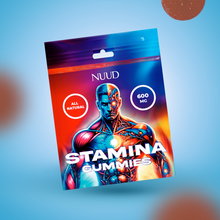
NUUD is a botanical supplement built around desire in general. It does nothing for multiple sclerosis, nothing for fatigue, nothing for mood, nothing for any drug you take, and it has no role in managing a medical condition of any kind. The formula is anchored by the NUUD Mushroom Complex™, with Muira Puama, Boiled Rehmannia Root, Tribulus Terrestris, and Piper Nigrum for absorption, on a timeline of roughly 30 to 60 minutes. If your neurologist has read the label and has no objection, and you want one more small thing on the desire side, that is what our women's libido gummies are for. There is a men's version of the same formula.
"Nothing is wrong with you"
You have probably been handed two unhelpful answers already. One is a shrug in an appointment that ran short and never got past your legs. The other is a confident voice online telling you MS took your sex life and here is the protocol that gets it back.
The research supports neither. Somewhere around 61% of women with MS score in the range these questionnaires call dysfunction, the gap against women without MS is real with a plausible size running from small to enormous, and what came out associated with it was disability, duration, depression, fatigue and age. Most of that list has a clinician attached to it.
You have a diagnosis, a nervous system doing something difficult, a medication list, and a life that asks a great deal of you. Any one of those flattens wanting. All four together is ordinary, and it says nothing about your character or your relationship. If you have been quietly wondering whether something is wrong with you: nothing is wrong with you. Desire gets crowded out when capacity is spent, and it comes back when some of that pressure comes off.
Keep reading
- Autoimmune disease and low sex drive
- Chronic pain and low sex drive
- Depression and low libido
- Brain fog and sex drive
- Why is my libido so low?
Frequently asked questions
Does MS affect sex drive?
Yes, and the pooled evidence is consistent. Across 61 studies covering 16,266 people with multiple sclerosis, women with MS scored lower than healthy controls (SMD -0.41, 95% CI -0.61 to -0.20) and men with MS scored lower too (SMD -0.77, 95% CI -1.32 to -0.22). Separate prevalence pools put the figure at 61% (95% CI 56% to 67%) and 62.5% (95% CI 53.9% to 70.5%). All come from pooled observational studies with very high heterogeneity, so they describe groups and not individuals.
Is it the MS or is it me?
It is most likely both, and the second part is the part with help attached. The MS literature describes three routes: the nervous system itself, the symptoms that get in the way such as fatigue, spasticity, pain and bladder problems, and the life layer of mood, roles and the relationship. In the largest pooled analysis, lower scores correlated with disability, disease duration and depression, and in women also older age and fatigue. Only one item there is the diagnosis. Nothing is wrong with you.
Why does MS fatigue kill sex drive?
The honest answer is that the pooled work shows a correlation and not a mechanism. In the largest analysis, reduced sexual function correlated with fatigue in women with MS, alongside older age, higher disability scores and depression, drawn from observational studies. What people describe is capacity: MS fatigue is not cleared by a good night of sleep, and desire goes first when capacity runs out. If your fatigue has never been assessed on its own terms, raise it with your neurologist.
Can MS medications lower libido?
Nobody has separated that out, and the largest review says so by calling for future work on comorbidities and medications. None of the pooled analyses here isolated a drug effect. People with MS do often take several prescriptions at once, and some classes prescribed alongside MS, antidepressants among them, have documented effects on desire in their own right. Bring your full list to your next appointment. Do not stop or change your medication without your doctor.
What helps?
The first move is your neurologist, because fatigue, spasticity, pain, bladder problems and low mood all have their own management. On the non-drug side, a 2026 meta-analysis of 32 studies covering 1,844 adults with MS found a large pooled effect for structured psychosexual approaches, at a Hedges g of 2.1 that fell to 1.27 once two outliers were removed. Its authors rate the certainty of that evidence very low, because the studies were small, at high risk of bias and mostly from one country.
References
- Yazdan Panah M, Oraee S, Fekri M, et al. Sexual function in people with multiple sclerosis: a systematic review and meta-analysis. The Journal of Sexual Medicine. 2025;22(7):1122-1138. https://pubmed.ncbi.nlm.nih.gov/40426296/
- Yazdani A, Ebrahimi N, Mirmosayyeb O, Ghajarzadeh M. Prevalence and risk of developing sexual dysfunction in women with multiple sclerosis (MS): a systematic review and meta-analysis. BMC Women's Health. 2023;23(1):352. https://pubmed.ncbi.nlm.nih.gov/37403051/
- Salari N, Hasheminezhad R, Abdolmaleki A, et al. The global prevalence of sexual dysfunction in women with multiple sclerosis: a systematic review and meta-analysis. Neurological Sciences. 2023;44(1):59-66. https://pubmed.ncbi.nlm.nih.gov/36114398/
- Zhao S, Wang J, Liu Y, et al. Association Between Multiple Sclerosis and Risk of Female Sexual Dysfunction: A Systematic Review and Meta-Analysis. The Journal of Sexual Medicine. 2018;15(12):1716-1727. https://pubmed.ncbi.nlm.nih.gov/30393105/
- White E, Adanijo A, Papiernik-Berkhauer P, et al. Effectiveness of non-pharmacological treatments for sexual difficulties in adults with multiple sclerosis: a systematic review and meta-analysis. Sexual Medicine Reviews. 2026;14(3):qeag032. https://pubmed.ncbi.nlm.nih.gov/42407255/
- Giannopapas V, Kitsos D, Tsogka A, et al. Sexual dysfunction therapeutic approaches in patients with multiple sclerosis: a systematic review. Neurological Sciences. 2023;44(3):873-880. https://pubmed.ncbi.nlm.nih.gov/36585597/
- Kapica-Topczewska K, Kulakowska A, Kochanowicz J, Brola W. Epidemiology of multiple sclerosis: global trends, regional differences, and clinical implications. Neurologia i Neurochirurgia Polska. 2025;59(4):375-384. https://pubmed.ncbi.nlm.nih.gov/40417948/
This article is for general education and is not medical advice. Multiple sclerosis is a medical condition that only a licensed clinician can diagnose and manage. NUUD is a botanical supplement and has no role in diagnosing, treating, curing, or preventing multiple sclerosis, fatigue, depression, or any other disease, and these statements have not been evaluated by the Food and Drug Administration. Talk with your doctor before starting any new supplement. Do not stop or change your medication without your doctor.
