


Does Lexapro Affect Sex Drive? What the Escitalopram Trials Actually Show
Share
Lexapro and sex drive: the confident internet answer is that it always flattens you. The two randomized trials of Lexapro (escitalopram) say something more precise: in pooled data, 36% of people on escitalopram had worsened sexual functioning by the end of treatment, versus 15% on placebo. In a meta-analysis ranking ten antidepressants by sexual side effects, escitalopram came in ninth, near the bottom. The effect is real, it is measurable, and it is smaller than you have been told. Depression itself does some of the work.
Before you read on
Lexapro (escitalopram) is a prescription antidepressant doing work you cannot feel. Do not stop or change your medication without your doctor. Nothing here is medical advice or a reason to alter your prescriber's plan.
- In two randomized, double-blind, placebo-controlled eight-week trials, 36% of people on escitalopram had worsened sexual functioning by the end of treatment, versus 15% on placebo. On the trials' primary endpoint, trouble finishing at week 8, the rate was 30% on escitalopram and 9% on placebo.
- In a meta-analysis of the studies that asked about sexual side effects directly, ten antidepressants ran significantly higher than placebo, with rates from 25.8% to 80.3%, and the abstract gives no per-drug percentages. Escitalopram ranked ninth of the ten, near the bottom of that list.
- A 2014 network meta-analysis of 63 studies on second-generation antidepressants found escitalopram at significantly higher risk than some other drugs, and the authors rated the overall evidence low, writing that it does not allow a precise estimate of comparative risk for a specific antidepressant.
- In a study of people with hard-to-treat depression on citalopram or paroxetine, 41% reported a sexual problem when asked directly and 6% when left to volunteer it. It tracked the length of the depressive episode, and it did not track with dose, blood level of the drug, length of treatment, or depression scores.
- For making an existing problem better, two things have trial evidence: adding bupropion at 150 milligrams twice daily beat placebo on rating scales, and in men, sildenafil and tadalafil improved erection scores. Other augmentation strategies failed to show significant improvement, and switching, drug holidays, and psychological approaches have no randomized trials behind them.
Figures from Clayton et al. 2006 (PMID 16841623), Serretti and Chiesa 2009 (PMID 19440080) and Landen et al. 2005 (PMID 15669895).
Is it the Lexapro, or is it me?
It is the 2am question: is it the Lexapro, or is it me? You feel flat, tired all the time, and you just want to feel normal again. People ask it both ways: does Lexapro lower sex drive, and can it raise it. The short answer from the trials is both. The drug moves sexual function in some people, and the depression pulls want down on its own, so the two are hard to split.
This page goes one drug deep, Lexapro (escitalopram), because that is the question you came with. If you take a different antidepressant, or you want the whole class in one place, the class-wide picture is our guide to SSRIs and libido. Antidepressants and low libido covers the wider ground. If the medication is working, your mood is steady, and the want is still missing, depression and low libido takes on the depression side of the split.
What the two escitalopram trials found
The direct evidence on escitalopram comes from a matched pair of studies. Clayton and colleagues (2006) ran two randomized, double-blind, placebo-controlled trials that each ran for eight weeks. Every trial had three arms: escitalopram, bupropion XL, and placebo.
On worsened sexual functioning at the end of treatment, 36% of people on escitalopram ended up in that group, 37% in the first trial and 34% in the second. Bupropion XL came in at 20%, 18% in the first study and 22% in the second. Placebo sat at 15%, 14% and 16%. Escitalopram was significantly higher than placebo, at p at or below .001. Bupropion XL was not different from placebo, at p at or above .067.
The primary endpoint was trouble finishing at week 8. Escitalopram ran at 30% pooled, 32% in the first study and 29% in the second. Bupropion XL was 15%, 13% and 16%. Placebo was 9%, 11% and 8%.
Escitalopram beat placebo on the depression scale in one of the two studies and in the pooled data. Bupropion did not separate from placebo on that scale. The abstract reports no sample sizes.
One trial pair, three arms
Percent of people with worsened sexual functioning at the end of treatment, pooled from two trials.
Source: Clayton AH et al., J Clin Psychiatry 2006 (PMID 16841623). Two randomized placebo-controlled studies; sample sizes are not reported in the abstract.
Where escitalopram sits in the class
Serretti and Chiesa (2009) pooled the studies that asked about sexual side effects directly. Ten antidepressants ran significantly higher than placebo, in decreasing order: sertraline, venlafaxine, citalopram, paroxetine, fluoxetine, imipramine, phenelzine, duloxetine, escitalopram, and fluvoxamine. Rates across those ten ran from 25.8% to 80.3%. The abstract gives no per-drug percentages, and escitalopram sits ninth, near the bottom. A separate group of drugs did not separate from placebo, among them bupropion, which has our Wellbutrin page if you want its own numbers.
Now the disagreement. Reichenpfader and colleagues (2014) ran a network meta-analysis of 63 studies, 58 randomized trials and 5 observational studies, covering more than 26,000 people on second-generation antidepressants. Most comparisons showed a similar risk, and the credible intervals were wide.
Bupropion came out at significantly lower risk than some other drugs. Both escitalopram and paroxetine came out at significantly higher risk than some other drugs. The authors rated the overall strength of the evidence low and wrote that it does not allow a precise estimate of comparative risk for a specific antidepressant. So one ranking sits escitalopram near the bottom, one network analysis sits it among the higher-risk drugs, and the second one rated its own evidence low.
Kearns and colleagues (2022) ran a Bayesian network meta-analysis of placebo-controlled trials of eight antidepressants, escitalopram among them. Their result, in their words: all antidepressants were associated with increased rates of sexual dysfunction relative to placebo. No per-drug figure is in the abstract. A pharmacovigilance analysis of more than 342,000 reports on six SSRIs (Chan, 2025) found paroxetine drew the highest reporting for sexual problems, with escitalopram not singled out. The profiles differ by drug.
The numbers nobody volunteers
Most of these numbers come from people who were asked a direct question. Montejo and colleagues (2001) interviewed 1,022 people, 610 women and 412 men with a mean age of 39.8, all with previously normal sexual function. Asked with a questionnaire, 59.1% of them, 604 of 1,022, reported a sexual problem. Citalopram led the list at 72.7% (48 of 66), and the rest of the rates ran well below it.
Men reported more than women, 62.4% versus 56.9%, and women reported higher severity. About 40% showed low tolerance of the problem. Escitalopram was not on the market in this study, but it is the active half of the citalopram molecule, so the citalopram row is the closest thing to its own number.
Clayton and colleagues (2002) looked across 1,101 US primary-care clinics at 4,534 women and 1,763 men, each on one antidepressant. The lowest rates were bupropion IR at 22%, bupropion SR at 25%, and nefazodone at 28%. SSRIs, mirtazapine, and venlafaxine XR ran from 36% to 43%. The prescribing physicians consistently underestimated how common these problems were.
Landen and colleagues (2005) studied people with hard-to-treat depression on citalopram or paroxetine. Asked directly, 41% reported a sexual problem. Left to volunteer it, only 6% did (p below .001). The problem tracked the length of the depressive episode and did not track age, dose, blood level, length of treatment, or depression scores.
Is it the drug, or the depression underneath it?
The cleanest way to separate the two stories is a study with no depression in it. Reed and colleagues (2012) ran a randomized controlled trial of escitalopram versus placebo for hot flashes in midlife women who were not depressed. There were 200 women at baseline, treatment ran for eight weeks, and the outcome was a standard sexual-function questionnaire.
Escitalopram did not move the composite score against placebo: P = .18 across all women, P = .47 among the sexually active. The mean change from baseline was 0.1 (95% CI -1.5 to 1.7) with escitalopram versus 2.0 (95% CI 0.2 to 3.8) with placebo, and a distress scale did not differ (P = .73). The conclusion was plain: in women without depression, the drug on its own did not worsen overall sexual function.
Then put the depression back in. Espinola and colleagues (2022) followed people with major depression taking escitalopram in the CAN-BIND study for eight weeks. Sexual satisfaction improved among responders of both sexes and did not improve among non-responders. For women, the overall frequency scores on the sexual-function questionnaire did not change over time, regardless of response. For men, those frequency scores fell among non-responders, and trouble finishing increased among non-responders and, to a lesser extent, among responders. Function before treatment predicted function at week 8.
Put the two together: the drug alone did little in women without depression, and with depression present the outcome tracked whether the depression was responding. If your mood is steady, your numbers are fine, and you still feel flat, that is a different question with its own evidence, and numbers fine, still flat takes it on.
Review by review, in order
The answers do not line up, and that is easier to see in date order. Six studies cover most of the escitalopram-specific ground, and each measures something different.
Six looks at escitalopram
Citalopram, the parent molecule, ran at 72.7% reporting a sexual problem. Escitalopram was not yet on the market.
Two randomized placebo-controlled trials: 36% on escitalopram versus 15% on placebo with worsened sexual functioning.
Meta-analysis of direct-ask studies: escitalopram ranked ninth of ten, rates 25.8% to 80.3%.
Randomized trial in 200 non-depressed midlife women: the composite score did not change versus placebo.
Network meta-analysis of 63 studies: higher risk than some other drugs, overall evidence rated low.
Bayesian network analysis of placebo-controlled trials: all eight antidepressants above placebo.
Built from PMID 11229449, 16841623, 19440080, 22353950, 24338044 and 35698594.
| Study | Design | Who | Escitalopram | Comparison |
|---|---|---|---|---|
| Clayton 2006 | Two randomized placebo-controlled trials | Adults with depression | 36% with worsened sexual functioning (37% in study 1, 34% in study 2) | Placebo 15%; bupropion XL 20% |
| Reed 2012 | Randomized placebo-controlled trial | 200 non-depressed midlife women with hot flashes | Composite score change 0.1 (95% CI -1.5 to 1.7) | Placebo 2.0 (95% CI 0.2 to 3.8); no significant difference |
| Espinola 2022 | Eight-week study for major depression | Adults with depression | Sexual satisfaction rose in responders of both sexes | In men, frequency scores fell in non-responders |
| Serretti 2009 | Meta-analysis | Studies that asked about side effects directly | Ninth of ten drugs with a signal above placebo | Rates across the ten ran 25.8% to 80.3% |
| Reichenpfader 2014 | Network meta-analysis | More than 26,000 people across 63 studies | Higher risk than some other drugs | Overall evidence rated low |
What actually helps, graded honestly
When the side effect is real, the question is what does something about it. The evidence here is thinner than the internet claims, and the grade goes down as you read.
The best evidence points at adding bupropion. In the Cochrane review (Taylor and colleagues, 2013), 23 trials covering 1,886 people, bupropion at 150 milligrams twice daily beat placebo on rating scales (SMD 1.60, 95% CI 1.40 to 1.81; three studies, men and women), while 150 milligrams once daily did not (RR 0.62, 95% CI 0.09 to 4.41; two studies). A 2025 review of women (de Aquino and colleagues) reviewed 11 studies (859 women aged 28 to 48) and pooled two: bupropion SR at 150 milligrams twice daily improved desire (1.74, 95% CI 1.03 to 2.44) and did not improve the depression itself, with the evidence rated low. The Cochrane authors called the overall evidence "rather limited".
For men, the erection drugs have the most data. In the Cochrane review, sildenafil (three studies, 255 men) and tadalafil (one study, 54 men) improved scores on erection, while for women it remains uncertain whether sildenafil beats placebo. A 2021 network review (Luft and colleagues) of 3,108 people found sildenafil the most consistent signal, though 70% of open-label trials reported a successful intervention versus 22% of placebo-controlled ones, with high heterogeneity across trials.
One older trial (Landen and colleagues, 1999) added buspirone to citalopram or paroxetine in 117 people: about 58% on buspirone reported improved sexual function versus 30% on placebo, with a larger difference in women. One trial, one add-on, 1999.
Everything else in the Cochrane review failed to show significant improvements, and there are no randomized trials of switching, of drug holidays, or of psychological approaches. Libido after stopping antidepressants covers what little is known after a stop, and SSRIs in perimenopause covers that layer. What the bupropion trials show goes deeper on the add-on.
Does it wear off on its own?
On the drug, no. In the 2005 study above, the rate did not fall with time on the drug, and the authors concluded that these side effects do not abate over time.
After stopping, this page's studies did not measure anything, because they followed people while they were taking the medication. Libido after stopping antidepressants covers what little exists on that question. Do not stop or change escitalopram without your doctor.
What to bring to your prescriber
Doctors consistently underestimate how common these side effects are, so saying it well matters. Here is what to bring, in the order worth raising.
- The timeline. When the escitalopram started, any dose changes, and where the depression itself sat at each point, since the side effect tracked the length of the episode.
- Ask to be asked. In the 2005 study, 41% reported the problem when asked directly and 6% when left to volunteer it. Ask, and name it.
- Dose is the least likely lever. In that same study the rate did not track SSRI dose, blood level, time on the drug, or depression scores.
- The three options, with their evidence: wait and see, add bupropion at 150 milligrams twice daily, or switch. No randomized trial of switching exists, and the evidence is called rather limited.
- Where the problem sits. The 2006 trial's primary endpoint was trouble finishing at week 8 (30% on escitalopram, 9% on placebo). Finishing and wanting are different problems, and the options differ.
- The supplement question, bottle in hand. If you are taking anything, show the label and the caution line, and let the prescriber decide.
The everyday levers, and where a botanical fits
Start by pointing this section away from some readers. The NUUD label carries a caution: avoid use if you are on blood pressure medication, have cardiovascular, renal, or pulmonary conditions, or if you are sensitive to any of the ingredients. If that applies to you, talk to your doctor first and bring the bottle.
A few ordinary things move desire in most people, and the free ones do more work than the internet admits.
- Sleep, in quantity and quality. sleep, libido and testosterone covers the overlap between broken sleep and flat drive.
- Movement you can sustain, even if it is just a daily walk. exercise and libido covers the wider picture.
- Treating the depression as the first lever, since in the CAN-BIND study satisfaction rose in the people whose depression responded.
- Time with a partner with nothing expected at the end, or solo time if that is what you want.
- A botanical supplement, if you want one, as the smallest lever on the list.
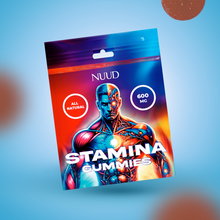
NUUD is a botanical supplement built around desire in general. It does nothing for depression, for anxiety, or for the side effects of escitalopram or any antidepressant, and it has no role in managing any medical condition. The formula is anchored by the NUUD Mushroom Complex™, with Muira Puama, Boiled Rehmannia Root, Tribulus Terrestris, and Piper Nigrum for absorption, on a timeline of roughly 30 to 60 minutes. If you take blood-pressure medication or have a heart, kidney or lung condition, the label says no, and your prescriber decides the rest. If your prescriber has read that label and has no objection, that is what our women's libido gummies are for. There is a men's version.
Nothing is wrong with you
You have probably searched this more than once. The internet hands you two answers. The first is a shrug: it is the medication, nothing to do about it. The second is a confident protocol: switch drugs, add this, cut that.
The point is the numbers, in plain words: 36 in a hundred on escitalopram against 15 on placebo, ninth of ten drugs, and 41% who report it when asked against 6% who volunteer it. Most people sit with it silently.
None of that is a personal failure. The depression itself flattens wanting. The drug adds its own layer. And the life you are running, tired and on medication, adds another.
You want to want it again. You want to feel normal again. Both are fair asks, and neither means anything is broken in you.
Keep reading
- SSRIs and the libido drop: what helps
- Does Wellbutrin affect sex drive?
- Antidepressants and low libido
- Depression and low libido
- Low libido in women
- Why is my libido so low?
Frequently asked questions
Does Lexapro lower sex drive?
Yes, for a measurable share of people. In the two 2006 placebo-controlled trials, 36% of people on it had worsened sexual functioning against 15% on placebo (p at or below .001), and 30% reported trouble finishing at week 8 against 9% on placebo. A 2009 meta-analysis ranked escitalopram ninth of ten antidepressants with a signal above placebo, with rates across those ten running 25.8% to 80.3%. The effect is real, and it sits below several other SSRIs.
Does Lexapro increase sex drive?
No trial shows it raising desire on its own. In the eight-week CAN-BIND study, sexual satisfaction improved among responders of both sexes and did not among non-responders, so the improvement tracked the depression responding. In 200 non-depressed midlife women taking escitalopram for hot flashes, the composite score on a standard sexual-function questionnaire did not change versus placebo (P = .18 all women). It can follow a lifting of the depression. It does not raise wanting by itself.
Will my sex drive come back after stopping Lexapro?
The studies on this page do not answer that. What they do show is that while people stayed on the drug, the side effect did not fade on its own: in the 2005 study, 41% reported it when asked and 6% volunteered it, and the authors concluded the side effects of SSRIs do not abate over time. After stopping, none of these studies followed people. See libido after stopping antidepressants for what little exists on that question. Do not stop without your doctor.
What helps with low sex drive on Lexapro?
Graded honestly: the strongest evidence is adding bupropion at 150 milligrams twice daily, which beat placebo on rating scales (SMD 1.60, 95% CI 1.40 to 1.81; three studies), with the overall evidence rated rather limited. For men, sildenafil and tadalafil improved erection scores in the trials. One 1999 trial found about 58% on buspirone reported improvement versus 30% on placebo. Other augmentation strategies failed, and switching has no randomized trial behind it.
Can I take a botanical supplement with Lexapro?
Ask your prescriber first. The NUUD label says to avoid use if you are on blood pressure medication, have cardiovascular, renal, or pulmonary conditions, or if you are sensitive to any of the ingredients, and it is worth bringing the bottle to that conversation. NUUD does nothing for the side effects of escitalopram or for depression, and no interaction studies exist for this formula. Your prescriber decides whether there is a place for it.
References
- Clayton AH, Croft HA, Horrigan JP, et al. Bupropion extended release compared with escitalopram: effects on sexual functioning and antidepressant efficacy in 2 randomized, double-blind, placebo-controlled studies. The Journal of clinical psychiatry. 2006;67(5):736-46. https://pubmed.ncbi.nlm.nih.gov/16841623/
- Serretti A, Chiesa A. Treatment-emergent sexual dysfunction related to antidepressants: a meta-analysis. Journal of clinical psychopharmacology. 2009;29(3):259-66. https://pubmed.ncbi.nlm.nih.gov/19440080/
- Reichenpfader U, Gartlehner G, Morgan LC, et al. Sexual dysfunction associated with second-generation antidepressants in patients with major depressive disorder: results from a systematic review with network meta-analysis. Drug safety. 2014;37(1):19-31. https://pubmed.ncbi.nlm.nih.gov/24338044/
- Kearns B, Cooper K, Orr M, Essat M, Hamilton J, Cantrell A. The Incidence and Costs of Adverse Events Associated with Antidepressants: Results from a Systematic Review, Network Meta-Analysis and Multi-Country Economic Model. Neuropsychiatric disease and treatment. 2022;18:1133-1143. https://pubmed.ncbi.nlm.nih.gov/35698594/
- Montejo AL, Llorca G, Izquierdo JA, Rico-Villademoros F. Incidence of sexual dysfunction associated with antidepressant agents: a prospective multicenter study of 1022 outpatients. Spanish Working Group for the Study of Psychotropic-Related Sexual Dysfunction. The Journal of clinical psychiatry. 2001;62 Suppl 3:10-21. https://pubmed.ncbi.nlm.nih.gov/11229449/
- Clayton AH, Pradko JF, Croft HA, et al. Prevalence of sexual dysfunction among newer antidepressants. The Journal of clinical psychiatry. 2002;63(4):357-66. https://pubmed.ncbi.nlm.nih.gov/12000211/
- Landen M, Hogberg P, Thase ME. Incidence of sexual side effects in refractory depression during treatment with citalopram or paroxetine. The Journal of clinical psychiatry. 2005;66(1):100-6. https://pubmed.ncbi.nlm.nih.gov/15669895/
- Espinola CW, Khoo Y, Parmar R, et al. Males and females differ in reported sexual functioning with escitalopram treatment for major depressive disorder: A CAN-BIND-1 study report. Journal of psychopharmacology (Oxford, England). 2022;36(5):604-613. https://pubmed.ncbi.nlm.nih.gov/35546043/
- Reed SD, Guthrie KA, Joffe H, Shifren JL, Seguin RA, Freeman EW. Sexual function in nondepressed women using escitalopram for vasomotor symptoms: a randomized controlled trial. Obstetrics and gynecology. 2012;119(3):527-38. https://pubmed.ncbi.nlm.nih.gov/22353950/
- Taylor MJ, Rudkin L, Bullemor-Day P, Lubin J, Chukwujekwu C, Hawton K. Strategies for managing sexual dysfunction induced by antidepressant medication. The Cochrane database of systematic reviews. 2013;2013(5):CD003382. https://pubmed.ncbi.nlm.nih.gov/23728643/
- de Aquino ACQ, Sarmento ACA, Teixeira RLA, et al. Pharmacological treatment of antidepressant-induced sexual dysfunction in women: A systematic review and meta-analysis of randomized clinical trials. Clinics (Sao Paulo, Brazil). 2025;80:100602. https://pubmed.ncbi.nlm.nih.gov/39985829/
- Luft MJ, Dobson ET, Levine A, Croarkin PE, Strawn JR. Pharmacologic interventions for antidepressant-induced sexual dysfunction: a systematic review and network meta-analysis of trials using the Arizona sexual experience scale. CNS spectrums. 2021:1-10. https://pubmed.ncbi.nlm.nih.gov/33843553/
- Landen M, Eriksson E, Agren H, Fahlen T. Effect of buspirone on sexual dysfunction in depressed patients treated with selective serotonin reuptake inhibitors. Journal of clinical psychopharmacology. 1999;19(3):268-71. https://pubmed.ncbi.nlm.nih.gov/10350034/
- Chan ACY. Comparative Real-World Safety Profiles of Six Selective Serotonin Reuptake Inhibitors: A Global Pharmacovigilance Analysis. Cureus. 2025;17(12):e98677. https://pubmed.ncbi.nlm.nih.gov/41510438/
This article is for general education and is not medical advice. Depression and anxiety are medical conditions that only a licensed clinician can diagnose and manage, and Lexapro (escitalopram) is a prescription medicine. NUUD is a botanical supplement and has no role in diagnosing, treating, curing, or preventing depression, anxiety, the side effects of any medication, or any other disease, and these statements have not been evaluated by the Food and Drug Administration. Talk with your doctor before starting any new supplement, and do not stop or change your medication without your doctor.
