


Does Melatonin Affect Sex Drive? What the Studies Actually Show
Share
Melatonin and sex drive have never been measured together in a trial of healthy adults. That is the honest answer, and it comes before any number on this page. The hormone question does have a clear answer: among 7,656 US men, melatonin use went with no association with low testosterone (OR 0.958), and 12 men taking 100 milligrams a day for 14 days showed no change in LH, FSH, prolactin or testosterone. The sleep gains are counted in minutes: sleep onset 7.06 minutes sooner and total sleep 8.25 minutes longer across 19 trials.
- In 7,656 US men, 51 reported melatonin use in the past 30 days at an average of 1 milligram a day (range 0.4 to 3). Their odds of low testosterone were 0.958 (95% CI 0.496 to 1.850, P = .898). The study is cross-sectional, so it shows no cause in either direction.
- In a double-blind crossover trial, 12 healthy men took 100 milligrams a day for 14 days with no effect on LH, FSH, prolactin or testosterone. In another study, 8 men on 80 or 240 milligrams showed only prolactin rising, with the pituitary gonadal axis, TSH and cortisol unchanged.
- Across 19 trials and 1683 people, sleep onset came 7.06 minutes sooner (95% CI 4.37 to 9.75), total sleep ran 8.25 minutes longer (95% CI 1.74 to 14.75), and sleep quality scored an SMD of 0.22. The authors call that modest, with no fade over continued use.
- In 24 randomized trials of chronic insomnia, adults got no significant benefit on sleep onset, total sleep or efficiency, while children and adolescents did. Prolonged-release melatonin moved subjective onset 6.30 minutes and efficiency 1.91%, effects the authors call small to medium.
- In 812 menopausal women on 1 to 5 milligrams, sexual issues scored an SMD of -0.661 (95% CI -1.416 to 0.093), an interval that crosses zero. In 41 men on androgen deprivation therapy, erection scores rose in both arms without significance.
Figures from Zizzo et al. 2022 (PMID 35963395), Ferracioli-Oda et al. 2013 (PMID 23691095) and Yi et al. 2021 (PMID 33784263). The first is cross-sectional; the other two pool randomized trials.
Is it the melatonin, or is it me?
You typed a question into a search bar, and the internet answers it twice in the same breath. One answer says melatonin lowers testosterone and takes your drive down with it. The other says melatonin fixes your sleep, so it fixes your desire. They sound like opposites, and they rest on two different sets of measurements. Keeping them apart is the whole point of this page.
Here is what exists. Testosterone has been measured in men taking melatonin, from a normal sleep dose up to 240 milligrams, and it did not move. Sleep has been measured dozens of times, and it moves by minutes. Desire itself has never been measured in healthy adults taking melatonin, in any trial, in any review gathered here.
So if your drive is flat while you take melatonin nightly, the pill is a small player in that story. Sleep, mood, pain, alcohol, shift work and ordinary strain are louder levers. Our guide to sleep, libido and testosterone covers how tangled those three are. Caffeine and sex drive covers the other daily lever that changes your sleep, and why sex drive comes and goes covers the fact that drive was never a flat line.
Does melatonin lower testosterone?
The biggest dataset is Zizzo and colleagues (2022), working from the NHANES surveys run 2011 to 2016. The 7,656 men analysed had a median age of 47 (31 to 63) years and a median total testosterone of 389.9 (289 to 513.9) nanograms per deciliter, with low testosterone defined as under 300 nanograms per deciliter. Fifty-one men, 0.7%, reported melatonin in the past 30 days at an average of 1 (0.4 to 3) milligrams a day. Their odds of low testosterone came out at 0.958 (95% CI 0.496 to 1.850, P = .898). Rising BMI (OR 1.133, 95% CI 1.122 to 1.144) and older age (OR 1.019, 95% CI 1.016 to 1.022) were the correlates that did show up. The interval spans 1, the design is cross-sectional, one blood draw sits against a 30-day recall, and the authors ask for work on higher doses and longer use.
The dosing trials point the same way. Anderson and colleagues (1993) ran a double-blind randomized crossover study in 12 healthy men: 100 milligrams of oral melatonin at 1600 h for 14 days, with a testosterone injection on day 8 of each period and a 2 month gap between periods. Melatonin was highest at 2 hours and still above normal at 24 hours. Judged over the first week, that dose had no significant effect on the secretion of LH, FSH, prolactin or testosterone, while testosterone rose 3 to 4-fold after the injection with a similar pattern in both periods.
Waldhauser and colleagues (1987) went higher. Eight men took 80 or 240 milligrams by mouth, melatonin climbed at least 1,500-fold over basal levels, and only prolactin rose consistently. In 2 men monitored for LH pulses, neither pulse amplitude nor frequency changed. In 14 men, prolactin was higher, growth hormone showed a slight trend that missed significance, and TSH and cortisol did not move. The authors state that hormones of the pituitary gonadal axis, TSH and cortisol are not altered.
The work describing a link runs the other direction. Schulz and colleagues (1995) sampled six healthy men every 20 minutes over two nights: testosterone rose 1.5- to 2-fold while melatonin rose 2.5- to 4-fold in parallel, no supplement was given, and the authors word it as a suggestion about night-time entrainment. Robeva and colleagues (2006) found lower total testosterone in 10 young men with metabolic syndrome against 10 controls, with an unchanged melatonin rhythm, and concluded the two were unrelated. Luboshitzky and colleagues (1997) followed 12 men with diagnosed low testosterone on testosterone injections for four months: their melatonin secretion shifted and matched the seven controls once testosterone matched, with no correlations against LH, FSH or estradiol, and none of them took melatonin. The Luboshitzky and Lavie (1999) review called the human evidence inconclusive, which is still the fair summary. If you are weighing products sold on hormones, read do testosterone boosters work first.
The route that is measured: sleep
Sleep is where melatonin has real numbers, and the numbers are small. Ferracioli-Oda and colleagues (2013) pooled 19 randomized placebo-controlled trials and 1683 people: sleep latency fell by a weighted mean difference of 7.06 minutes (95% CI 4.37 to 9.75), total sleep time rose by 8.25 minutes (95% CI 1.74 to 14.75), and overall sleep quality scored an SMD of 0.22 (95% CI 0.12 to 0.32). Longer and higher-dose trials showed bigger effects on latency and total sleep time, with no dose or duration effect on quality. The authors call the benefit modest, say it does not appear to fade with continued use, and note the absolute gain is smaller than prescription options for insomnia. Part of the funding came from a pharmaceutical company fellowship and research award.
Other reviews land in the same range. Brzezinski and colleagues (2005) pooled 17 studies and 284 people: onset 4.0 minutes faster (95% CI 2.5 to 5.4), efficiency up 2.2% (95% CI 0.2 to 4.2), duration up 12.8 minutes (95% CI 2.9 to 22.8), with doses and routes too heterogeneous to pool cleanly. Buscemi and colleagues (2005) put onset 11.7 minutes faster (95% CI -18.2 to -5.2), most of it in delayed sleep phase syndrome at 38.8 minutes against 7.2 minutes in insomnia, and conclude melatonin is not effective for most primary sleep disorders at 4 weeks or less.
Maruani and colleagues (2023) looked at prolonged-release melatonin: subjective onset 6.30 minutes faster, objective onset 5.05 minutes, efficiency up 1.91% and 2.95% in people aged 55 and over, effect sizes small to medium on mostly short-term studies. Choi and colleagues (2022) screened 24 randomized trials of chronic insomnia and found that in the adult group melatonin was not significantly effective for sleep onset, total sleep time or efficiency, while children and adolescents were helped. Fatemeh and colleagues (2022) pooled 23 trials in adults who were already unwell: the Pittsburgh Sleep Quality Index score improved by 1.24 points (95% CI -1.77 to -0.71), heterogeneity sat at I squared 80.7%, and the respiratory (weighted mean difference -2.20) and metabolic (weighted mean difference -2.74) subgroups carried the effect.
Melatonin's sleep gains, in minutes
Pooled minutes of earlier sleep onset or longer sleep from four meta-analyses. The orange bars are total sleep time; the rest are sleep onset.
Sources: Brzezinski A et al. 2005 (PMID 15649737); Ferracioli-Oda E et al., PLoS One 2013 (PMID 23691095); Buscemi N et al. 2005 (PMID 16423108); Maruani J et al. 2023 (PMID 37434463). All pool randomized placebo-controlled trials.
Read as a route to desire, that is the ledger: minutes of sleep, from supplementing a hormone your body already makes at night. If your real sleep problem is that you wake up gasping, melatonin is aimed at the wrong thing, and sleep apnea and low libido explains why that pairing keeps showing up together.
The one trial with a sexual score, and the women's pool
Two bodies of evidence touch a sexual outcome at all, and they point the same way. Hosseini and colleagues (2026) randomized 41 men with prostate cancer who were dealing with hot flashes or sexual problems on androgen deprivation therapy to melatonin 3 milligrams twice daily or placebo for four weeks. Quality of life scores improved significantly within the melatonin group (P below .05). Erection scores rose modestly in both groups without reaching significance (P above .05). The clearest result was fewer mild hot flashes in the melatonin group by week four (P below .05), and melatonin was well tolerated with no clinically significant adverse events. Sexual function was a secondary endpoint, and the authors state that its impact on sexual function remains inconclusive.
Yi and colleagues (2021) pooled eight cohorts and 812 menopausal women taking 1 to 5 milligrams for 3 to 12 months. Physical menopause issues improved, an SMD of -0.376 (95% CI -0.599 to -0.153). Sleep quality showed no benefit at an SMD of -0.659 (95% CI -1.535 to 0.217, p = .141). Sexual issues scored an SMD of -0.661 in the direction of improvement, with a 95% CI from -1.416 to 0.093 and p = .086, so the interval crosses zero. Estradiol did not move (weighted mean difference 0.016 picograms per millilitre, 95% CI -1.220 to 1.252, p = .980), and few trials sit behind each outcome.
A 41-person trial whose own authors call the sexual result inconclusive, plus a women's pool whose sexual interval lands on zero. That is the entire direct evidence on melatonin and anything sexual. Nothing in it says desire rises, and nothing in it says desire falls. If you are working out where your own drive went, low libido in women and low libido in men lay out the causes that do get measured.
Is melatonin safe to take every night?
Safety has better data than desire does. Besag and colleagues (2019) reviewed 37 randomized placebo-controlled trials with daily doses from 0.15 milligrams to 12 milligrams and monitoring up to 29 weeks, most of them 4 weeks or less. The most frequent adverse events were daytime sleepiness at 1.66%, headache at 0.74%, other sleep-related events at 0.74%, dizziness at 0.74% and hypothermia at 0.62%. Very few events were serious, and most settled within a few days on their own or right after stopping. Reporting was the weak spot: 8 studies rated good, 16 fair and 13 poor.
The higher doses get less scrutiny. Menczel Schrire and colleagues (2022) screened 79 studies and 3861 adults over 30 taking 10 milligrams and above. Twenty-nine studies, 37%, said nothing at all about adverse events, and only four met a low risk of bias bar. In that small subset, serious adverse events showed a rate ratio of 0.88 (95% CI 0.52 to 1.50) and withdrawals 0.93, while events such as drowsiness, headache and dizziness came in at 1.40 (95% CI 1.15 to 1.69). The authors describe their confidence limits as very wide for lack of data.
Two context notes. Besag and Vasey (2022) point out that melatonin is regulated as a drug in the UK and EU and sold as an over-the-counter dietary supplement in the US and Canada, and that systematically assessed safety data from long-term prospective trials are still lacking. Buscemi and colleagues (2005) found no evidence of adverse effects and concluded melatonin appears safe with short-term use of 3 months or less, with larger trials needed. None of these reviews reports a sexual adverse event rate at all. If you want the realistic timeline on a supplement you take for desire, how long libido supplements take to work covers it.
What has been counted, in order
Melatonin and sex drive is a question with an awkward answer: the two have almost never been measured in the same study. Eight papers carry most of what anyone knows, and they run below in publication order. Four measured hormones in men taking melatonin. One watched the nightly rise of both hormones in six men who took nothing at all. Two pooled the sleep trials. One pooled trials in menopausal women and carried a sexual outcome. One pooled 7,656 US men on a 30-day supplement recall. A 2026 randomized trial scored erection in 41 men whose testosterone was already suppressed by cancer care. Read left to right, the papers get bigger. The desire signal never shows up.
Eight looks at melatonin and sex
8 men on 80 or 240 milligrams. Only prolactin rose.
12 men on 100 milligrams a day for 14 days. No change in LH, FSH, prolactin or testosterone.
6 men. Melatonin and testosterone rise in parallel at night. No supplement given.
17 studies. Sleep onset 4.0 minutes sooner, total sleep 12.8 minutes longer.
19 studies, 1683 people. 7.06 minutes and 8.25 minutes.
812 menopausal women. Sexual issues SMD -0.661, interval crossing zero.
7,656 men. No association with low testosterone, OR 0.958.
41 men on androgen deprivation. Erection scores rose modestly in both arms, without reaching significance in either.
Built from PMID 3114663, 8288743, 8609591, 15649737, 23691095, 33784263, 35963395 and 41660902. The hormone studies are small, short, and all in men.
| Study | Design | Who | Finding | What it says about desire |
|---|---|---|---|---|
| Zizzo 2022 | Cross-sectional survey | 7,656 men, 51 users | No association with low testosterone, OR 0.958 (95% CI 0.496 to 1.850, P = .898) | A hormone level, measured in 51 users |
| Anderson 1993 | Randomized crossover | 12 men | 100 milligrams a day, no change in LH, FSH, prolactin or testosterone | A pharmacological dose, with the first week judged |
| Waldhauser 1987 | Acute dosing, three experiments | 8, 2 and 14 men | Prolactin up. Nothing else moved. | Single doses only |
| Ferracioli-Oda 2013 | Meta-analysis | 19 trials, 1683 people | 7.06 and 8.25 minutes, quality SMD 0.22 | The indirect route, and a modest one |
| Choi 2022 | Meta-analyses | 24 trials | Adults showed no measurable benefit in non-comorbid insomnia | The route may be narrower than the bottle claims |
| Yi 2021 | Meta-analysis | 812 menopausal women | Sexual issues SMD -0.661 (95% CI -1.416 to 0.093, p = .086), crossing zero | The closest thing to a desire result, and it does not clear |
| Hosseini 2026 | Randomized, placebo-controlled | 41 men on androgen deprivation | Erection scores rose modestly in both arms, without reaching significance in either | Sexual function sat as a secondary endpoint |
| Menczel Schrire 2022 | Meta-analysis | 79 studies, 3861 people on 10 milligrams and above | Drowsiness and dizziness at a rate ratio of 1.40 (95% CI 1.15 to 1.69, p below .001) | A safety review. Desire is not in it. |
What actually helps, graded honestly
Dose and duration do move the sleep numbers. Ferracioli-Oda and colleagues (2013) pooled 19 trials and 1683 people, then ran a meta-regression on top of the averages. Trials that ran longer and used higher doses showed greater effects on sleep latency and total sleep time. Neither dose nor trial length changed the sleep quality score, which improved by a standardized mean difference of 0.22 (95% CI 0.12 to 0.32). Bigger doses buy minutes. They do not buy that questionnaire score.
Age is the sharper split. Choi and colleagues (2022) pooled 24 randomized trials of chronic insomnia and cut them by age group, because the trials were too heterogeneous to read as one pool. In children and adolescents, melatonin separated from placebo on sleep onset latency and total sleep time. In the adult group the numbers for sleep onset latency, total sleep time and sleep efficiency never separated from placebo, and the authors concluded that melatonin did not appear effective in adults.
The largest number in this literature belongs to a narrow group. Buscemi and colleagues (2005) found sleep onset latency 11.7 minutes shorter overall, with far more in delayed sleep phase syndrome at -38.8 minutes (95% CI -50.3 to -27.3, 2 studies) against -7.2 minutes (95% CI -12.0 to -2.4, 12 studies) in insomnia. If your body clock runs late, that is where melatonin earns its keep.
The common cost is daytime sleepiness. Besag and colleagues (2019) pooled 37 trials and put it at 1.66%. Menczel Schrire and colleagues (2022), working on doses of 10 milligrams and above, found events such as drowsiness and dizziness at a rate ratio of 1.40 (95% CI 1.15 to 1.69, p below .001), with only four low risk-of-bias studies carrying that pooled estimate.
Nobody in any of this tested desire. The honest claim is minutes of sleep. If sleep is what is flattening you, our pages on low libido in men and low libido in women go further, and brain fog and sex drive covers the exhausted end of it.
Does the effect fade?
Ferracioli-Oda and colleagues (2013) report that the effects on sleep do not appear to dissipate with continued use. That is the one reassuring line in this literature, and it rests on 19 small trials. Buscemi and colleagues (2005) judged efficacy at 4 weeks or less and called melatonin safe with short-term use of 3 months or less. Besag and colleagues (2019) found most of 37 trials ran 4 weeks or less, with monitoring reaching 29 weeks in the longest study. Besag and Vasey (2022) state that systematically assessed safety data from long-term prospective trials remain lacking, while use has risen fast in many countries over the last 15 years. Nightly use lasting years is common and barely watched.
What to bring to your doctor
Melatonin is sold as a supplement in the US, so nobody asks you about it at an appointment. Bring the numbers yourself. Six items make that conversation short. Write them down the week before, while the details are fresh.
- The dose and the hour you take it. Trials in Besag and colleagues (2019) ran from 0.15 milligrams to 12 milligrams a day, and Menczel Schrire and colleagues (2022) reviewed doses of 10 milligrams and above on their own.
- The sleep picture, because sleep is the measured route: how long falling asleep takes, how long you sleep, and what Ferracioli-Oda (2013) and Choi (2022) found in adults.
- Daytime sleepiness, the most common reported event at 1.66%, plus the drowsiness that shows up at higher doses.
- A testosterone test only if you have symptoms. The melatonin association is null: odds ratio 0.958 across 7,656 men.
- Caffeine and alcohol, the two daily levers our other pages cover, since both move sleep.
- The supplement question, bottle in hand, including anything botanical you are considering.
The everyday levers, and where a botanical fits
Start with who this section is not for. Melatonin is popular with people being treated for high blood pressure, and with people managing heart disease, kidney disease or lung disease. Those are exactly what NUUD's own label names: avoid use if you are on blood pressure medication, have cardiovascular, renal, or pulmonary conditions, or if you are sensitive to any of the ingredients. For a lot of readers that sentence is the whole answer. Talk to your doctor first and bring the label with you.
A few ordinary things move desire in most people, and the free ones do more work than the internet admits.
- Sleep, in the amount and the quality you actually get. Broken nights and low desire feed each other, and the melatonin sleep numbers above are modest. How sleep and testosterone work on desire covers that.
- Movement you can keep up with, on the days you have energy for it. Exercise and libido covers the wider picture.
- Your mood, and anxiety named out loud. Both deserve the same seriousness you give your labs.
- Time with a partner, or time on your own, with nothing expected at the end.
- A botanical supplement, if you want one, as the smallest lever on this list.
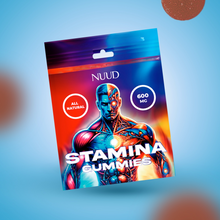
NUUD is a botanical supplement built around desire in general. It does nothing for sleep, for melatonin, for testosterone, for cortisol, or for any hormone level, no interaction study exists for this formula and melatonin, and it has no role in managing any medical condition. The formula is anchored by the NUUD Mushroom Complex™, with Muira Puama, Boiled Rehmannia Root, Tribulus Terrestris, and Piper Nigrum for absorption, on a timeline of roughly 30 to 60 minutes. If you take blood-pressure medication or have a heart, kidney or lung condition, the label says no, and your doctor decides the rest. If your doctor has read that label and has no objection, that is what our women's libido gummies are for. There is a men's version.
Nothing is wrong with you
Two useless answers dominate this topic, and you have met both. The shrug says desire fades with age, so stop asking about it. The forum post says melatonin wrecks your testosterone, or that better sleep fixes everything, delivered with total confidence and nothing to back it up.
The real count is quieter. Across 7,656 men, melatonin use showed no association with low testosterone. In 12 men taking 100 milligrams a day for 14 days, LH, FSH, prolactin, testosterone: none of them moved. Sleep comes about 7 minutes sooner and lasts about 8 minutes longer. The one meta-analysis that scored sexual issues produced an interval crossing zero.
What flattens wanting is usually boring and stackable: broken sleep, stress that never clocks off, a relationship run on logistics, alcohol, a mood that needs attention. If your sentence is I am tired all the time, or I just want to feel normal again, start with sleep, start with mood, get the blood work your symptoms justify, and let the melatonin bottle be the smallest thing in the room.
Keep reading
- How sleep and testosterone affect libido
- Does caffeine affect sex drive?
- Sleep apnea and low libido
- Does alcohol lower libido?
- Does magnesium increase sex drive?
- Why is my libido so low?
Frequently asked questions
Does melatonin lower sex drive?
No trial has measured desire in healthy adults taking melatonin, so nobody can say it lowers sex drive or raises it. Across 7,656 US men, the 51 who reported melatonin showed no association with low testosterone (odds ratio 0.958, 95% CI 0.496 to 1.850, P = .898). The one meta-analysis carrying a sexual outcome pooled 812 menopausal women and put sexual issues at SMD -0.661 (95% CI -1.416 to 0.093, p = .086), an interval that crosses zero. What melatonin reliably buys is minutes of sleep.
Does melatonin lower testosterone?
That claim has the least support of anything in this literature. Zizzo and colleagues (2022) found no association in 7,656 US men: odds ratio 0.958 for low testosterone, 95% CI 0.496 to 1.850, P = .898, among the 51 who reported melatonin. Anderson and colleagues (1993) gave 12 healthy men 100 milligrams a day for 14 days in a crossover trial and found no change in LH, FSH, prolactin or testosterone. Waldhauser and colleagues (1987) found only prolactin rose. Two small studies in men with metabolic syndrome and in men with diagnosed low testosterone found no link either.
Does melatonin help sex drive through sleep?
Sleep is the only measured route, and it is a short one. Ferracioli-Oda and colleagues (2013) pooled 19 trials and 1683 people: sleep onset 7.06 minutes sooner, total sleep 8.25 minutes longer, overall quality at a standardized mean difference of 0.22. Brzezinski and colleagues (2005) found 4.0 minutes and 12.8 minutes across 17 studies. Choi and colleagues (2022), pooling 24 trials of chronic insomnia, found no benefit in adults on sleep onset latency, total sleep time and sleep efficiency. No trial scored desire.
Is melatonin safe to take every night?
In the trials that exist, yes, with a known cost. Besag and colleagues (2019) reviewed 37 trials and put daytime sleepiness at 1.66%, headache at 0.74%. Menczel Schrire and colleagues (2022), pooling 79 studies and 3861 people on 10 milligrams and above, found events such as drowsiness and dizziness at a rate ratio of 1.40 (95% CI 1.15 to 1.69, p below .001). Buscemi and colleagues (2005) call melatonin safe with short-term use of 3 months or less. Besag and Vasey (2022) report long-term prospective safety data lacking.
Can I take a botanical supplement with melatonin?
Ask your doctor first, and bring both bottles. The label caution is specific: avoid use if you are on blood pressure medication, have cardiovascular, renal, or pulmonary conditions, or if you are sensitive to any of the ingredients. NUUD is a botanical supplement built around desire in general. It does nothing for sleep, for melatonin, or for any hormone level, and no interaction study exists between this formula and melatonin. Your doctor decides the combination.
References
- Maruani J, Reynaud E, Chambe J, Palagini L, Bourgin P, Geoffroy PA. Efficacy of melatonin and ramelteon for the acute and long-term management of insomnia disorder in adults: A systematic review and meta-analysis. Journal of sleep research. 2023;32(6):e13939. https://pubmed.ncbi.nlm.nih.gov/37434463/
- Choi K, Lee YJ, Park S, Je NK, Suh HS. Efficacy of melatonin for chronic insomnia: Systematic reviews and meta-analyses. Sleep medicine reviews. 2022;66:101692. https://pubmed.ncbi.nlm.nih.gov/36179487/
- Ferracioli-Oda E, Qawasmi A, Bloch MH. Meta-analysis: melatonin for the treatment of primary sleep disorders. PloS one. 2013;8(5):e63773. https://pubmed.ncbi.nlm.nih.gov/23691095/
- Zizzo J, Reddy R, Kulkarni N, Blachman-Braun R, Ramasamy R. Impact of Low-Dose Melatonin Supplementation on Testosterone Levels in U.S. Adult Males. Urology. 2022;169:92-95. https://pubmed.ncbi.nlm.nih.gov/35963395/
- Luboshitzky R, Lavie P. Melatonin and sex hormone interrelationships: a review. Journal of pediatric endocrinology & metabolism : JPEM. 1999;12(3):355-62. https://pubmed.ncbi.nlm.nih.gov/10821215/
- Brzezinski A, Vangel MG, Wurtman RJ, et al. Effects of exogenous melatonin on sleep: a meta-analysis. Sleep medicine reviews. 2005;9(1):41-50. https://pubmed.ncbi.nlm.nih.gov/15649737/
- Hosseini AK, Etedali A, Darakhshandeh A, et al. Targeting Side Effects Associated with Androgen Deprivation Therapy Using Melatonin: A Randomized Trial on Hot Flashes and Sexual Health in Prostate Cancer Patients. Asian Pacific journal of cancer prevention : APJCP. 2026;27(2):453-462. https://pubmed.ncbi.nlm.nih.gov/41660902/
- Robeva R, Kirilov G, Tomova A, Kumanov P. Low testosterone levels and unimpaired melatonin secretion in young males with metabolic syndrome. Andrologia. 2006;38(6):216-20. https://pubmed.ncbi.nlm.nih.gov/17081173/
- Schulz P, Chardon F, Degli Agosti R, Schaad N, Rivest RW. Parallel nocturnal secretion of melatonin and testosterone in the plasma of normal men. Journal of pineal research. 1995;19(1):16-22. https://pubmed.ncbi.nlm.nih.gov/8609591/
- Luboshitzky R, Wagner O, Lavi S, Herer P, Lavie P. Abnormal melatonin secretion in hypogonadal men: the effect of testosterone treatment. Clinical endocrinology. 1997;47(4):463-9. https://pubmed.ncbi.nlm.nih.gov/9404445/
- Anderson RA, Lincoln GA, Wu FC. Melatonin potentiates testosterone-induced suppression of luteinizing hormone secretion in normal men. Human reproduction (Oxford, England). 1993;8(11):1819-22. https://pubmed.ncbi.nlm.nih.gov/8288743/
- Waldhauser F, Lieberman HR, Lynch HJ, et al. A pharmacological dose of melatonin increases PRL levels in males without altering those of GH, LH, FSH, TSH, testosterone or cortisol. Neuroendocrinology. 1987;46(2):125-30. https://pubmed.ncbi.nlm.nih.gov/3114663/
- Fatemeh G, Sajjad M, Niloufar R, Neda S, Leila S, Khadijeh M. Effect of melatonin supplementation on sleep quality: a systematic review and meta-analysis of randomized controlled trials. Journal of neurology. 2022;269(1):205-216. https://pubmed.ncbi.nlm.nih.gov/33417003/
- Besag FMC, Vasey MJ, Lao KSJ, Wong ICK. Adverse Events Associated with Melatonin for the Treatment of Primary or Secondary Sleep Disorders: A Systematic Review. CNS drugs. 2019;33(12):1167-1186. https://pubmed.ncbi.nlm.nih.gov/31722088/
- Menczel Schrire Z, Phillips CL, Chapman JL, et al. Safety of higher doses of melatonin in adults: A systematic review and meta-analysis. Journal of pineal research. 2022;72(2):e12782. https://pubmed.ncbi.nlm.nih.gov/34923676/
- Besag FMC, Vasey MJ. Adverse events in long-term studies of exogenous melatonin. Expert opinion on drug safety. 2022;21(12):1469-1481. https://pubmed.ncbi.nlm.nih.gov/36562403/
- Yi M, Wang S, Wu T, Zhang X, Jiang L, Fang X. Effects of exogenous melatonin on sleep quality and menopausal symptoms in menopausal women: a systematic review and meta-analysis of randomized controlled trials. Menopause (New York, N.Y.). 2021;28(6):717-725. https://pubmed.ncbi.nlm.nih.gov/33784263/
- Buscemi N, Vandermeer B, Hooton N, et al. The efficacy and safety of exogenous melatonin for primary sleep disorders. A meta-analysis. Journal of general internal medicine. 2005;20(12):1151-8. https://pubmed.ncbi.nlm.nih.gov/16423108/
This article is for general education and is not medical advice. Insomnia and other sleep disorders, hormone conditions and prostate cancer are medical conditions that only a licensed clinician can diagnose and manage. NUUD is a botanical supplement and has no role in diagnosing, treating, curing, or preventing any of them or any other disease, and these statements have not been evaluated by the Food and Drug Administration. Talk with your doctor before starting any new supplement, and do not stop or change any medication without your doctor.
