

Does Caffeine Affect Sex Drive? What the Studies Actually Show
Share
Caffeine and sex drive have never been tested together in a trial. No trial gave people caffeine and then asked them about desire. The direct measurements that exist are about erection problems in men, and there the answer is close to nothing. A US survey of 3,724 men found the middle intakes less likely to report erection problems than the lowest, with no trend. A cohort of 21,403 men found no association for coffee and a higher risk only for decaffeinated coffee. A meta-analysis of four cohorts, 51,665 men, found no relationship (RR 0.94, 95% CI 0.86 to 1.03). The routes to desire that are measured run through sleep and anxiety.
- Lopez and colleagues (2014) asked 3,724 men one question about erection problems. Men at 85 to 170 milligrams of caffeine a day had OR 0.58 (95% CI 0.37 to 0.89) against men at 0 to 7 milligrams a day, and 171 to 303 milligrams a day gave OR 0.61 (95% CI 0.38 to 0.97). No trend across quintiles, one self-report question, one time point, men only.
- In 21,403 men followed over time, with 7,298 new cases, coffee at 4 or more cups a day against 0 cups gave HR 1.00 (95% CI 0.90 to 1.11). Decaffeinated coffee at the highest intake gave HR 1.37 (95% CI 1.08 to 1.73), printed exactly as the authors report it. Self-reported intake and outcome, men only.
- A meta-analysis of four cohort studies, 51,665 men, found no relationship between caffeine intake and erection problems (RR 0.94, 95% CI 0.86 to 1.03). A genetic study using proxies for coffee intake returned a combined OR of 1.011 (95% CI 0.841 to 1.216). Four studies is thin, and those authors say so.
- In 372 men, caffeine was inversely associated with testosterone, while the odds of low testosterone were non-significant for two active metabolites. In 2,377 women with a mean age of 57.2 years, caffeine at 265 milligrams a day or more went with lower odds of falling in the lowest SHBG quartile (OR 0.71, 95% CI 0.53 to 0.95). Both are cross-sectional, and neither measured desire.
- Pooled across 24 sleep studies, caffeine cut total sleep time by 45 minutes and sleep efficiency by 7%, with coffee at least 8.8 hours before bed sparing that loss. Across 14 studies of 546 people, anxiety rose with caffeine (SMD 0.94, 95% CI 0.28 to 1.60), high dose reaching SMD 2.86 (95% CI 2.50 to 3.22), with the authors flagging intake above 400 milligrams.
Figures from Lopez et al. 2014 (PMID 25919661), Karimi et al. 2024 (PMID 39342393) and Gardiner et al. 2023 (PMID 36870101). The first two are observational and men-only; the third pools sleep studies.
Is it the coffee, or is it me?
You typed this into a search bar at 11 in the morning with a third cup beside you. The usual shape of the question is coffee and libido, and the internet answers it in both directions on the same afternoon: caffeine moves your blood vessels, so it helps; caffeine spikes your cortisol, so it flattens you.
Caffeine is the one drug most adults take every day, and nobody has tested it on desire. So this page splits the evidence into two piles and labels them. The direct pile is men: erection problems counted in surveys and cohorts, plus hormone levels measured in blood and saliva. The indirect pile is sleep, anxiety and cortisol, where caffeine has real, replicated, dose-dependent effects.
Say the honest headline once, before any number on this page: desire itself was never measured on caffeine. What was measured is enough to reason with. If coffee is flattening you, the likeliest path runs through your sleep and your anxiety, and both have pages of their own: stress, cortisol and sex drive and sleep, libido and testosterone. Caffeine is also the second daily drug people bring us, and alcohol and libido has its own long evidence trail.
What the men's studies counted
Lopez and colleagues (2014) worked through NHANES data on 3,724 men aged 20 and over. Caffeine came from a single 24-hour dietary recall in milligrams a day. Erection problems came from one question in a self-paced computer interview. Men in the 3rd quintile (85 to 170 milligrams a day) and the 4th (171 to 303 milligrams a day) were less likely to report erection problems than men in the lowest quintile (0 to 7 milligrams a day): OR 0.58 (95% CI 0.37 to 0.89) and OR 0.61 (95% CI 0.38 to 0.97). No evidence for a trend across quintiles, which is the catch. The middle groups looked best, and the heaviest drinkers did not look better than they did.
The inverse pattern held among overweight and obese men and among hypertensive men (p less than or equal to .05 for each quintile), and a trend by intake appeared only among men without diabetes (p trend = 0.01). The authors name an intake of about 2 to 3 daily cups of coffee, 170 to 375 milligrams a day, and ask for prospective study. Read that as one self-report question, at one time point, in men only.
Lopez and colleagues (2018) ran the prospective version in 21,403 men aged 40 to 75 from the Health Professionals Follow-Up Study, tracking 7,298 new cases across three questionnaire rounds. Comparing 4 or more cups a day against 0: total coffee HR 1.00 (95% CI 0.90 to 1.11), regular coffee HR 1.00 (95% CI 0.89 to 1.13). Decaffeinated coffee at the highest intake carried a 37% higher risk, HR 1.37 (95% CI 1.08 to 1.73), with a significant trend (p trend = 0.02), and an association among current smokers (p trend = 0.005). The authors conclude that long-term coffee intake was not associated with risk.
Karimi and colleagues (2024) pooled four cohort studies covering 51,665 men and found no significant relationship (RR 0.94, 95% CI 0.86 to 1.03; p = 0.999), while stating that the limited number of studies limits conclusions and that larger samples and standardized outcome assessments are needed. Xiang and colleagues (2024) used genetic variants as proxies for habitual intake and found a combined OR of 1.011 (95% CI 0.841 to 1.216) for coffee and 1.061 (95% CI 0.682 to 1.651) for caffeine from tea, with wide intervals on two estimates.
Allen and Walter (2018) pooled 89 studies, 452 effect sizes and 348,865 people across six lifestyle factors and three common sexual problems. Caffeine intake was unrelated to erection problems, and the authors name low statistical power in the models that tested caffeine, diet and cannabis. Smoking, alcohol and physical activity were the lifestyle factors that moved.
Five estimates, one line at 1.0
Odds, hazard or risk of erection problems with caffeine or coffee intake against the lowest intake. The decaffeinated row is orange because it is the only one above the line.
Source: Lopez DS et al., PLoS One 2014 (PMID 25919661); Lopez DS et al., Am J Epidemiol 2018 (PMID 29020139); Karimi M et al., 2024 (PMID 39342393). All observational, men only.
Caffeine and testosterone
"Does caffeine lower testosterone" is the second question people bring, and the honest answer is a cross-sectional shrug with a metabolic footnote.
Glover and colleagues (2022) looked at 372 adult men in the 2013 to 2014 NHANES cycle, relating serum testosterone to caffeine and 14 caffeine metabolites. Caffeine showed a significant inverse association with testosterone, as did 6 xanthine metabolic products of caffeine. Significant positive associations appeared for 7-methyl xanthine, 3,7-dimethyluric acid and 7-methyluric acid. For the two biologically active metabolites, theobromine and theophylline, the odds of low testosterone below 300 nanograms per deciliter were non-significant. The design is a single snapshot, the authors call this a potential role, and they ask for corroborating studies. No effect size with an interval is printed for that inverse association.
Pihan-Le Bars and colleagues (2017) went the other way in 2,377 nondiabetic pre- and postmenopausal women from the E3N cohort, mean age 57.2 years, with 61% postmenopausal. High coffee intake, 3 or more cups a day, went with lower odds of sitting in the 1st quartile of SHBG, below 46.3 nmol/L: OR 0.72 (95% CI 0.52 to 1.01). Caffeine at 265 milligrams a day or more gave OR 0.71 (95% CI 0.53 to 0.95). Tea showed nothing. The associations were restricted to women with a BMI of 25 and above or who were postmenopausal, and appeared with caffeinated coffee and caffeine, and decaffeinated coffee showed no association. SHBG here is a diabetes risk marker, measured once, cross-sectionally.
The only randomized trial in the set measured neither testosterone nor desire. MacKenzie and colleagues (2007) gave 16 healthy adults aged 18 to 22 years 200 milligrams of caffeine twice a day for 7 days in a crossover design: insulin rose by 1.80 microU/mL (95% CI 0.33 to 3.28) and an index of insulin sensitivity fell by 35% (95% CI 7% to 62%), with no differences in glucose, DHEA, androstenedione or melatonin. Weibel and colleagues (2020) gave 20 young men 150 milligrams three times daily for 10 days and found the time course of melatonin and of cortisol unaffected. If you are weighing a bottle of pills against any of this, read do testosterone boosters work.
The route that is measured: sleep
Here the evidence stops being thin. Gardiner and colleagues (2023) pooled 24 studies of night-time sleep after caffeine. Total sleep time fell by 45 minutes. Sleep efficiency fell by 7%. Sleep onset latency rose by 9 minutes and wake after sleep onset rose by 12 minutes. Light sleep (N1) duration rose by 6.1 minutes and its proportion by 1.7%, while deep sleep (N3 and N4) duration fell by 11.4 minutes and its proportion by 1.4%.
The point of that review was a cut-off time. To spare the loss in total sleep time, coffee at 107 milligrams per 250 mL should be consumed at least 8.8 hours before bedtime, and a standard serve of pre-workout supplement at 217.5 milligrams at least 13.2 hours before bedtime. Both numbers come from pooled sleep data, and the outcome there is sleep. Nobody in that analysis scored desire.
Clark and Landolt (2017) reviewed epidemiological studies and randomized trials and found the same shape: caffeine typically prolonged sleep latency, reduced total sleep time and sleep efficiency, and worsened perceived sleep quality, with slow-wave sleep reduced and stage 1 sleep, wakefulness and awakenings increased. Dose and timing relationships were established. Older adults may be more sensitive, young people vary a lot, and genetic studies isolated polymorphisms in adenosine neurotransmission and metabolism that contribute to individual sensitivity. Most of those studies were done in male adults of Western countries, which limits generalizability.
Two trials in a systematic review by Sin and colleagues (2009) went the removal direction: caffeine abstinence lengthened sleep duration (p < 0.01) and improved sleep quality (p < 0.05), and on decaffeinated days subjects had less difficulty falling asleep (p < 0.05). Those two trials were too heterogeneous to pool.
At the high end, De Souza and colleagues (2022) reviewed 25 studies with 421 athletes and found negative effects on sleep onset among the highest-prevalence side effects, with prevalence reaching 83% at high doses and about 3.0 milligrams per kilogram named as the dose with the lowest side-effect burden. Temple and colleagues (2018) found that caffeine in shift workers improved psychomotor vigilance (SMD 0.75, 95% CI 0.30 to 1.19) while two studies reported reduced sleep quality and sleep duration, with the risk and benefit ratio of chronic use called unknown.
Sleep is the strongest measured lever on desire that we have a page for, which is why our page on why sex drive comes and goes starts in the evening. The 45 minutes is the number to plan around.
The route that is measured: anxiety and cortisol
Liu and colleagues (2024) meta-analysed caffeine intake and anxiety risk in healthy people without psychiatric disorders: 546 participants from 14 studies inside eight articles, searched to December 2022. Because the anxiety scales varied, the authors pooled standardized mean differences. Caffeine intake increased the risk of anxiety (SMD 0.94, 95% CI 0.28 to 1.60, p < 0.05). Low-dose intake moderately increased it (SMD 0.61, 95% CI 0.42 to 0.79), and high-dose intake showed a highly significant increase (SMD 2.86, 95% CI 2.50 to 3.22). Dose size explained the heterogeneity in sensitivity analysis, and the authors flag the elevated risk especially above 400 milligrams.
Klevebrant and colleagues (2022) pooled blinded, placebo-controlled caffeine challenges in people with panic disorder. Of 1,893 articles, ten met criteria. The 9 studies on panic attacks covered 237 people: 51.1% had a panic attack after caffeine and none did after placebo. Six studies compared 128 people with panic disorder to 115 healthy controls, at 53.9% against 1.7% (log RR 3.47; 95% CI 2.06 to 4.87). Doses ran from 400 to 750 milligrams, so little is known below 480 milligrams.
Lovallo and colleagues (2005) measured cortisol eight times a day in 48 men and 48 women over four crossover weeks. After 5 days of abstinence, a caffeine challenge raised cortisol across the test day (p < .0001). Five days of intake at 300 and 600 milligrams a day abolished the response to the 9:00 AM dose, while cortisol was again elevated between 1:00 PM and 7:00 PM (p = .02 to .002). Daily consumers show reduced cortisol responses. The word to keep is reduced.
For women, Mott and Goeders (2024) reviewed the sexual effects of recreational stimulants and report that caffeine has been shown to enhance one physiological measure, vaginal blood flow, with no studies on the subjective sexual effects of the drug. That is the whole of the women's direct evidence on caffeine. On the cortisol side we have supplements to lower cortisol, which is a longer conversation than a coffee cup.
What has been counted, in order
Seven studies have looked at caffeine and sex between 2005 and 2024, and each one counted a different thing. None of them asked anybody about desire. One measured cortisol across the working day, one measured a hormone called SHBG in women, two asked men about erection problems, one measured testosterone in a national survey, one pooled sleep studies, and one reviewed the sexual effects of stimulants in women. The questions get bigger over time: a small lab trial of capsules, then big US surveys, then pooled analyses of tens of thousands of people. Read in sequence, the picture narrows to two routes that reach desire by indirect means.
Seven looks at caffeine and sex
96 adults. Intake at 300 and 600 milligrams a day blunted the morning cortisol response, and the afternoon rise stayed.
3,724 men. Middle intakes were less likely to report erection problems, OR 0.58 and 0.61, with no trend.
2,377 women. At 265 milligrams a day or more, lower odds of the lowest SHBG quartile, OR 0.71.
21,403 men followed for years. Coffee HR 1.00, decaffeinated coffee HR 1.37.
372 men. Caffeine ran inverse to testosterone, and the odds of low testosterone came out non-significant.
24 sleep studies. 45 minutes of sleep lost; coffee at least 8.8 hours before bed spares it.
Four cohorts, 51,665 men. RR 0.94 and no relationship.
Built from PMID 16204431, 25919661, 28664630, 29020139, 35578259, 36870101 and 39342393. All lab studies or observational studies.
| Study | Design | Who | Finding | What it says about desire |
|---|---|---|---|---|
| Lopez 2014 | Cross-sectional survey | 3,724 men | OR 0.58 (95% CI 0.37 to 0.89) and OR 0.61 (95% CI 0.38 to 0.97) at the middle intakes, with no trend | The outcome is erection problems from one self-report question, taken once. |
| Lopez 2018 | Prospective cohort | 21,403 men | Coffee HR 1.00 (95% CI 0.90 to 1.11), decaffeinated coffee HR 1.37 (95% CI 1.08 to 1.73) | Erection problems counted over years. Desire never entered the analysis. |
| Karimi 2024 | Meta-analysis of cohorts | Four cohorts, 51,665 men | RR 0.94 (95% CI 0.86 to 1.03; p = 0.999) | A flat result in men. Women appear in none of the four cohorts. |
| Glover 2022 | Cross-sectional survey | 372 men | Caffeine showed an inverse association with testosterone, and the odds of low testosterone were non-significant | A blood hormone level was measured, and a level carries no wanting with it. |
| Gardiner 2023 | Meta-analysis of sleep studies | 24 studies | 45 minutes less total sleep and 7% lower sleep efficiency, cut-off 8.8 hours before bed | The indirect route with a usable number attached. |
| Liu 2024 | Meta-analysis | 546 people, 14 studies | Anxiety SMD 0.94 (95% CI 0.28 to 1.60), high dose SMD 2.86 (95% CI 2.50 to 3.22) | The other indirect route. Anxiety is measured, and desire sits outside the analysis. |
| Mott 2024 | Narrative review | Women, human and animal studies | Caffeine enhanced one physiological measure, vaginal blood flow, and no study asked about subjective effects | Nobody has asked women how caffeine makes sex feel. That gap is the honest headline here. |
What actually helps, graded honestly
Timing carries the strongest pooled numbers on this page. Gardiner and colleagues (2023) pooled 24 studies and found caffeine cut total sleep time by 45 minutes and sleep efficiency by 7%. Their cut-off for protecting total sleep time: a cup of coffee, counted as 107 milligrams per 250 mL, at least 8.8 hours before bedtime. A standard serve of pre-workout supplement, 217.5 milligrams, wants 13.2 hours. The outcome they measured is sleep.
Dose is the second lever. Liu and colleagues (2024) pooled 546 people across 14 studies and found the anxiety signal climbing with intake: SMD 0.94 overall (95% CI 0.28 to 1.60), and SMD 2.86 (95% CI 2.50 to 3.22) at high dose, with the authors flagging intake above 400 milligrams. In athletes, de Souza and colleagues (2022) found the lowest side-effect burden at about 3.0 milligrams per kilogram across 25 studies and 421 participants.
Stopping for a day does something measurable. Sin and colleagues (2009) reviewed the abstinence trials and reported one in which a caffeine-free day lengthened sleep duration (p < 0.01) and improved sleep quality (p < 0.05). Withdrawal has a cost too: Weibel and colleagues (2020) ran 10 days of 150 milligrams three times daily in 20 young men and found two days of extra sleepiness and attentional lapses on the way out.
None of these trials measured desire, so the claim here is narrow: better sleep and less anxiety. Those are the two levers our other pages keep finding, and they rank above any bottle. Our guides to low libido in men and low libido in women both put them first, and brain fog and sex drive covers the exhausted route.
Does it wear off on its own?
Partly, and the split is lopsided. Lovallo and colleagues (2005) gave 96 adults capsules at 300 and 600 milligrams a day for five days. By the end, the cortisol response to a morning challenge dose was gone, while the afternoon rise survived (p = .02 to .002). Weibel and colleagues (2020) went further: after 10 days at 150 milligrams three times daily, melatonin kept its normal time course, and so did cortisol. Tolerance builds on that side of the ledger.
The sleep numbers do not behave that way. Gardiner and colleagues (2023) counted the loss night by night, so every late cup buys 45 fewer minutes. Hormones adapt, and sleep does not.
What to bring to your doctor
Bring numbers, and leave impressions at home. Caffeine is one of the few habits you can describe exactly, and exactness turns this into a conversation about your sleep, your anxiety and your labs. Six things are worth writing down, and none of them needs a diary.
- The cup count on a normal day and the clock time of the last one. The 8.8 hour figure from the sleep meta-analysis is what your doctor will want.
- The sleep picture: how long you take to fall asleep, how often you wake, how you feel mid-afternoon. Sleep is the measured route from caffeine to desire.
- The anxiety picture, with the dose line in it. The pooled anxiety signal climbs above 400 milligrams a day, which is a specific sentence to say out loud.
- Every other daily drug in the mix, nicotine and alcohol included, since each has its own evidence on desire that our other pages cover.
- A testosterone test, and only if you have symptoms. The finding in 372 men is a hormone level, and a level sits a long way from a diagnosis.
- The supplement question with the bottle in hand, so the ingredient list and the label cautions sit on the table between you.
The everyday levers, and where a botanical fits
Start with who this section is not for. Caffeine is a heart-rate and blood-pressure topic before it is a desire topic, and palpitations were among the most common side effects in the 25-study review of athletes. NUUD's own label says it plainly: avoid use if you are on blood pressure medication, have cardiovascular, renal, or pulmonary conditions, or if you are sensitive to any of the ingredients. If that sentence describes you, it is the answer. Talk to your doctor first and bring the label.
A few ordinary things move desire in most people, and the free ones do more work than the internet admits.
- Sleep, in quantity and quality, with coffee at least 8.8 hours before bed as the one caffeine rule the pooled data supports. Sleep, libido and testosterone covers that link.
- Movement you can keep doing, since the desire pages keep landing on it. Exercise and libido has the detail.
- Your anxiety, named out loud and taken as seriously as your labs, with the 400 milligram line in hand.
- Time with a partner, or on your own, with nothing expected at the end.
- A botanical supplement, if you want one, as the smallest lever on this list.
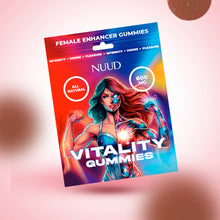
NUUD is a botanical supplement built around desire in general. It does nothing for sleep, anxiety, caffeine, cortisol or any hormone level, and it has no role in managing any medical condition. The formula is anchored by the NUUD Mushroom Complex™, with Muira Puama, Boiled Rehmannia Root, Tribulus Terrestris, and Piper Nigrum for absorption, on a timeline of roughly 30 to 60 minutes. If you take blood-pressure medication or have a heart, kidney or lung condition, the label says no, and your doctor decides the rest. If your doctor has read that label and has no objection, that is what our women's libido gummies are for. There is a men's version.
Nothing is wrong with you
Two answers circulate online, and both are useless. The shrug says nobody knows, caffeine is fine, have another cup. The forum certainty says coffee either kills your libido or works as a free stimulant you should dose at 600 milligrams before bed. Neither one has read the studies above, and neither one helps you at 11 PM when you are lying there wired.
Read the pooled numbers in plain words. Across four cohorts and 51,665 men, caffeine and erection problems showed no relationship (RR 0.94, 95% CI 0.86 to 1.03). A late cup costs about 45 minutes of sleep a night. The anxiety signal climbs above 400 milligrams a day. None of those three facts says coffee switches desire off.
What flattens wanting is the pile those numbers sit on: months of short sleep, a running anxiety you have stopped noticing, work, money, pain, medication, a relationship that has gone logistical. If your sentence is I'm tired all the time, or I just want to feel normal again, the coffee-shaped part of that is real, small, and fixable in one evening.
Keep reading
- Sleep, libido and testosterone
- Cortisol and sex drive
- Does alcohol lower libido?
- Does nicotine affect sex drive?
- Supplements to lower cortisol
- Why is my libido so low?
Frequently asked questions
Does caffeine lower sex drive?
No trial has measured desire on caffeine, and no survey in this evidence did either, so the direct answer is that nobody knows. What the cohorts show is flat: four cohorts covering 51,665 men found no relationship between coffee and erection problems (RR 0.94, 95% CI 0.86 to 1.03). The effects with real numbers land on sleep and anxiety, and both move desire. A late cup takes about 45 minutes off the night.
Does coffee help erections?
The honest reading is no effect. In 3,724 men surveyed once, the middle intakes reported fewer erection problems, OR 0.58 (95% CI 0.37 to 0.89) and OR 0.61 (95% CI 0.38 to 0.97), with no trend across quintiles. In 21,403 men followed for years, coffee carried HR 1.00 (95% CI 0.90 to 1.11). A genetic study put the odds at 1.011 (95% CI 0.841 to 1.216).
Does caffeine lower testosterone?
Treat this as unsettled. In 372 men from a US survey, caffeine showed an inverse association with testosterone, while the odds of low testosterone came out non-significant. A 16-person randomized crossover trial at 200 milligrams twice a day for a week found no difference in DHEA or androstenedione. In 2,377 women, higher caffeine went with lower odds of the lowest SHBG quartile (OR 0.71, 95% CI 0.53 to 0.95).
Can coffee affect sex drive through sleep?
Yes, and this route has the strongest numbers behind it. Gardiner and colleagues (2023) pooled 24 studies and put total sleep time down 45 minutes with sleep efficiency down 7%, the loss avoided when coffee went down at least 8.8 hours before bed. One abstinence trial found a caffeine-free day lengthened sleep. Clark and Landolt (2017) add that older adults appear more sensitive.
Can I take a botanical supplement with coffee?
Ask your doctor first, and bring the label. NUUD's label says to avoid use if you are on blood pressure medication, have cardiovascular, renal, or pulmonary conditions, or if you are sensitive to any of the ingredients. No interaction studies exist for this formula taken with coffee. NUUD does nothing for sleep, anxiety, caffeine intake or any hormone level.
References
- Gardiner C, Weakley J, Burke LM, et al. The effect of caffeine on subsequent sleep: A systematic review and meta-analysis. Sleep medicine reviews. 2023;69:101764. https://pubmed.ncbi.nlm.nih.gov/36870101/
- Liu C, Wang L, Zhang C, et al. Caffeine intake and anxiety: a meta-analysis. Frontiers in psychology. 2024;15:1270246. https://pubmed.ncbi.nlm.nih.gov/38362247/
- Clark I, Landolt HP. Coffee, caffeine, and sleep: A systematic review of epidemiological studies and randomized controlled trials. Sleep medicine reviews. 2017;31:70-78. https://pubmed.ncbi.nlm.nih.gov/26899133/
- Lovallo WR, Whitsett TL, al'Absi M, Sung BH, Vincent AS, Wilson MF. Caffeine stimulation of cortisol secretion across the waking hours in relation to caffeine intake levels. Psychosomatic medicine. 2005;67(5):734-9. https://pubmed.ncbi.nlm.nih.gov/16204431/
- Klevebrant L, Frick A. Effects of caffeine on anxiety and panic attacks in patients with panic disorder: A systematic review and meta-analysis. General hospital psychiatry. 2022;74:22-31. https://pubmed.ncbi.nlm.nih.gov/34871964/
- Mott MN, Goeders NE. Sexual effects of commonly used recreational psychostimulants in women and the female rat model. Sexual medicine reviews. 2024;12(3):256-262. https://pubmed.ncbi.nlm.nih.gov/38486472/
- Lopez DS, Liu L, Rimm EB, et al. Coffee Intake and Incidence of Erectile Dysfunction. American journal of epidemiology. 2018;187(5):951-959. https://pubmed.ncbi.nlm.nih.gov/29020139/
- Karimi M, Asbaghi O, Kazemi K, Sedgi FM, Soleimani E, Moghadam HK. Association between caffeine intake and erectile dysfunction: a meta-analysis of cohort studies. Journal of health, population, and nutrition. 2024;43(1):154. https://pubmed.ncbi.nlm.nih.gov/39342393/
- Xiang N, Hu Y, Peng W, Luo M, Chen H, Zhang Q. Potential genetic association between coffee/caffeine consumption and erectile dysfunction: a Mendelian randomization study and meta-analysis. Frontiers in endocrinology. 2024;15:1400491. https://pubmed.ncbi.nlm.nih.gov/39444457/
- Glover FE, Caudle WM, Del Giudice F, et al. The association between caffeine intake and testosterone: NHANES 2013-2014. Nutrition journal. 2022;21(1):33. https://pubmed.ncbi.nlm.nih.gov/35578259/
- Allen MS, Walter EE. Health-Related Lifestyle Factors and Sexual Dysfunction: A Meta-Analysis of Population-Based Research. The journal of sexual medicine. 2018;15(4):458-475. https://pubmed.ncbi.nlm.nih.gov/29523476/
- Temple JL, Hostler D, Martin-Gill C, et al. Systematic Review and Meta-analysis of the Effects of Caffeine in Fatigued Shift Workers: Implications for Emergency Medical Services Personnel. Prehospital emergency care. 2018;22(sup1):37-46. https://pubmed.ncbi.nlm.nih.gov/29324066/
- Lopez DS, Wang R, Tsilidis KK, et al. Role of Caffeine Intake on Erectile Dysfunction in US Men: Results from NHANES 2001-2004. PloS one. 2014;10(4):e0123547. https://pubmed.ncbi.nlm.nih.gov/25919661/
- Pihan-Le Bars F, Gusto G, Boutron-Ruault MC, Fagherazzi G, Bonnet F. Cross-sectional association of coffee and caffeine consumption with sex hormone-binding globulin in healthy nondiabetic women. Clinical endocrinology. 2017;87(5):475-483. https://pubmed.ncbi.nlm.nih.gov/28664630/
- MacKenzie T, Comi R, Sluss P, et al. Metabolic and hormonal effects of caffeine: randomized, double-blind, placebo-controlled crossover trial. Metabolism: clinical and experimental. 2007;56(12):1694-8. https://pubmed.ncbi.nlm.nih.gov/17998023/
- de Souza JG, Del Coso J, Fonseca FS, et al. Risk or benefit? Side effects of caffeine supplementation in sport: a systematic review. European journal of nutrition. 2022;61(8):3823-3834. https://pubmed.ncbi.nlm.nih.gov/35380245/
- Weibel J, Lin YS, Landolt HP, et al. Caffeine-dependent changes of sleep-wake regulation: Evidence for adaptation after repeated intake. Progress in neuro-psychopharmacology & biological psychiatry. 2020;99:109851. https://pubmed.ncbi.nlm.nih.gov/31866308/
- Sin CW, Ho JS, Chung JW. Systematic review on the effectiveness of caffeine abstinence on the quality of sleep. Journal of clinical nursing. 2009;18(1):13-21. https://pubmed.ncbi.nlm.nih.gov/19120728/
This article is for general education and is not medical advice. Sleep disorders, anxiety disorders and hormone conditions are medical conditions that only a licensed clinician can diagnose and manage. NUUD is a botanical supplement and has no role in diagnosing, treating, curing, or preventing any of them or any other disease, and these statements have not been evaluated by the Food and Drug Administration. Talk with your doctor before starting any new supplement, and do not stop or change any medication without your doctor.
