


Does Magnesium Increase Sex Drive? What the Studies Actually Show
Share
Magnesium and sex drive have never been tested together in a randomized trial, as far as our search of PubMed could find. No study we found gave people magnesium and then measured desire. What does exist sits one step away. A small athlete study and a study of 399 older men tie magnesium to testosterone. Small trials tie it to falling asleep faster in older adults, and an open-label trial ties it to lower depression scores. Each of those can touch desire. Nobody has tested the whole chain from magnesium to wanting sex, so any page that promises it is guessing.
- No randomized trial in our search gave people magnesium and measured desire. The one study that put blood magnesium next to a sexual-function score, in two hundred pregnant teenagers, found no significant link.
- Testosterone: in 399 men aged 65 or older, higher blood magnesium went with higher testosterone. That is an association from one blood draw, and testosterone is one input to desire among many.
- Sleep: three small trials in 151 older adults pooled to 17.36 minutes faster sleep onset (95% CI -27.27 to -7.44), on low to very low quality evidence. A 2026 review of 12 trials called the findings inconsistent.
- Mood: an open-label trial in 126 adults found depression scores improved by a net -6.0 points over 6 weeks, with no placebo. The pooled reviews of placebo-controlled trials disagree with each other.
- NUUD contains no magnesium and does nothing for a magnesium deficiency. If you think you are low, that is a question for your doctor.
Figures from Mah et al. 2021 (PMID 33865376) and Tarleton et al. 2017 (PMID 28654669). The first pools three small trials; the second had no placebo arm. Neither measured desire.
Where the magnesium for libido idea comes from
You have probably seen it. A short video or a top-ten supplement list puts magnesium next to the words libido, testosterone or sex drive, often with a confident before-and-after story. The question worth asking is plain: did anyone give people magnesium and check whether they wanted sex more?
One study shows how the testosterone side of the claim gets packaged. Clemesha and colleagues (2020) looked at 50 testosterone supplements found through a web search and checked their label claims against the published research. Ninety percent claimed to raise testosterone and 50% claimed to "improve libido". Only 24.8% of the supplements had data showing a rise in testosterone, and for 61.5% there were no data at all. Thirteen products went over the US upper intake level for an ingredient, and magnesium was one of the three ingredients named.
That review did not test magnesium on its own, and it measured nobody's desire. Still, the pattern is familiar. A libido promise sits on the label, a thin or missing study sits behind it, and the mineral dose is sometimes above the level regulators set. Our guide to libido supplements the research doesn't back walks through other ingredients sold the same way.
Has anyone measured magnesium against desire?
Our PubMed search found no randomized trial that gave people magnesium and measured desire as an outcome. Desire is the thing people buy magnesium for, and it is the thing nobody measured. Every study that follows measures something next door: a hormone, a sleep score, a depression score or a blood level.
The closest study we found came from a very different group. Bahramy and colleagues (2020) took blood from two hundred healthy pregnant adolescents aged 11 to 19 and scored their sexual function on a standard questionnaire. 68% scored in the dysfunction range, and serum magnesium was normal in 89.5% of them. The researchers found no significant link between magnesium, or any other mineral they tested, and sexual function (P > 0.05).
That is one cross-sectional study in pregnant teenagers, so it says little about an adult in midlife thinking about a supplement. Nobody in it took magnesium. It does mean that the one time someone put magnesium beside a sexual-function score in our search, nothing showed up.
Magnesium and testosterone: a small trial and a study of older men
Testosterone is the bridge most magnesium claims lean on. The idea runs like this: magnesium raises testosterone, testosterone drives desire, so magnesium drives desire. Each step needs its own evidence, and the first step is thinner than it sounds.
Cinar and colleagues (2011) gave tae kwon do athletes and sedentary men 10 milligrams of magnesium per kilogram of body weight for 4 weeks, with a second athlete group taking none. The authors report that free and total testosterone rose in both supplemented groups, and more in the men who exercised. The summary gives no sample size and no size of the change. It does not describe randomization, blinding or a placebo, and the sedentary men had no unsupplemented group to compare against.
Maggio and colleagues (2011) took a different approach. They looked at 399 men aged 65 or older in an Italian study of ageing, with a mean age of 74.18 years, and compared each man's blood magnesium with his hormones. Higher magnesium went with higher total testosterone after adjusting for age (beta 34.9, SE 10.3; p = 0.001). The link held after further adjustment for body mass index, inflammation, other hormones, grip strength and illness (beta 48.72, SE 12.61; p = 0.001).
That is an association measured once, in older men. It cannot say whether magnesium raised testosterone, whether healthier men simply had more of both, or whether the same holds in younger men. Nobody in the study took magnesium, and nobody was asked about desire.
Even a real testosterone rise is a separate claim from a rise in desire. Testosterone is one input to wanting sex. Many men with normal levels still feel flat, and women's desire tracks plenty besides this hormone. Our pages on low libido in men and on zinc, vitamin D and libido cover what the hormone studies show for the other minerals sold with the same promise.
Tired all the time? What the magnesium sleep trials found
Sleep is the more believable path. Short, broken sleep flattens desire for most people, and our piece on sleep, libido and testosterone covers that link in detail. If magnesium helped people sleep, a small knock-on effect on wanting would at least be plausible.
Abbasi and colleagues (2012) ran a double-blind trial in 46 older adults with insomnia, giving 500 milligrams of magnesium or a placebo daily for 8 weeks. Magnesium beat placebo on the Insomnia Severity Index (P = 0.006), on sleep efficiency (P = 0.03) and on time to fall asleep (P = 0.02). Total sleep time showed no significant difference between groups (P = 0.37). The summary reports p values with no sizes of change, and it is one small trial.
Mah and colleagues (2021) pooled that kind of trial: 3 randomized trials covering 151 older adults. People fell asleep 17.36 minutes faster on magnesium (95% CI -27.27 to -7.44, p = 0.0006). Total sleep time was 16.06 minutes longer, a difference that was not statistically significant. Every trial was at moderate to high risk of bias, and the evidence was rated low to very low quality. The authors called the literature substandard for making recommendations.
Schuster and colleagues (2025) tested magnesium bisglycinate, the glycinate form, in 155 adults aged 18 to 65 who reported poor sleep. They took 250 milligrams of elemental magnesium daily or a placebo. By week 4, insomnia scores had fallen -3.9 points on magnesium and -2.3 points on placebo (p = 0.049). The effect size was small (Cohen's d = 0.2), and the other psychological questionnaires showed no significant difference.
One glycinate trial, four weeks of sleep scores
Change in Insomnia Severity Index score from baseline to week 4, from one paper, Schuster et al. 2025. More negative means fewer insomnia complaints. The magnesium row is orange; its interval overlaps the placebo row.
Source: Schuster J et al., Nat Sci Sleep 2025 (PMID 40918053). 155 adults reporting poor sleep; 250 milligrams of elemental magnesium daily as bisglycinate. Self-reported scores; one author runs a contract research organization funded by supplement companies.
Read the two rows together. Both groups improved, and their intervals overlap across most of the range. One author of that trial runs a research company funded by supplement makers. The exploratory hint that people eating less magnesium gained more is a hint and nothing firmer. The trial asked nothing about desire.
The widest look is also the newest. Lopresti and colleagues (2026) reviewed 12 randomized trials of magnesium alone for sleep in adults. They found the results inconsistent across self-reports, sleep lab readings, activity trackers and blood markers, with low to very low certainty. They concluded the evidence does not support magnesium as a routine insomnia fix, with possible modest gains on some self-reported measures. None of these sleep studies asked about desire.
When your drive is nowhere to be found: magnesium and mood
Low mood and low desire often travel together, which makes mood the third bridge in the magnesium story. Here the results look larger, and the caveats are larger too. If your mood has been low for weeks, that deserves attention on its own.
Tarleton and colleagues (2017) randomized 126 adults with mild to moderate depression in primary care to 6 weeks of magnesium chloride, at 248 milligrams of elemental magnesium per day, and 6 weeks of taking nothing, in a crossover design. Depression scores improved by a net -6.0 points (CI -7.9 to -4.2; P<0.001), and anxiety scores by -4.5 points. Effects showed within two weeks, and 61% said they would use magnesium again.
The design is the catch. The trial was open-label, and the comparison period was simply no pill at all. People who know they are taking something that might help tend to report feeling better, so part of that -6.0 could be expectation. Scores were collected in phone check-ins, the trial ran for 6 weeks, and it measured nothing about sex.
The pooled numbers disagree with each other. Phelan and colleagues (2018) found that magnesium went with lower depression scores in uncontrolled trials (g = -1.60) and showed no such effect in placebo-controlled trials (g = -0.21). They concluded there is little evidence that magnesium is involved in mood disorders. Moabedi and colleagues (2023) pooled 7 placebo-controlled trials with 325 people and found depression scores fell (SMD -0.919, 95% CI -1.443 to -0.396), while calling for larger, better trials.
Survey data add a twist. Tarleton and colleagues (2015) analysed national survey data on 8894 US adults. Very low magnesium intake went with depression (RR 1.16; 95% CI 1.06 to 1.30), more clearly under age 65 (RR 1.22). In seniors the link flipped (RR 0.75; 95% CI 0.56 to 0.98). A cross-sectional snapshot cannot show which came first. Our guide to low libido in women covers how mood and desire tangle together.
Stress, anxiety and a mineral with a calm reputation
Magnesium's other reputation is as the calming mineral. Stress shuts desire down for a lot of people, which our article on stress, cortisol and sex drive explains, so this link gets quoted too. The evidence here is mostly small trials in specific groups.
Boyle and colleagues (2017) reviewed 18 studies of magnesium, alone or with up to 5 other ingredients, for self-reported anxiety and stress. Positive results came in four of eight mildly anxious samples, four of seven premenstrual samples and one of two samples with high blood pressure, and none in postpartum women. No study used a validated stress measure. The authors rated the evidence quality as poor, and one author sits on a consumer-health company's advisory board.
Rawji and colleagues (2024) updated the count with 15 trials. Five of seven anxiety studies and five of eight sleep studies reported improvements, and two sleep studies found none. Doses, forms and durations varied, samples were small, and some products held other active ingredients. Counting studies that reported a benefit tells you nothing about how big that benefit was, and neither review measured desire.
If stress is the thread you want to pull, our review of supplements to lower cortisol grades the common options against their trials.
How common is magnesium deficiency?
Many magnesium videos open with a scary number about how many people are deficient. Those figures usually come from food-intake surveys. Eating less than a target amount and having a measured deficiency are two different findings.
Rosanoff and colleagues (2012) reported that almost half (48%) of the US population got less than the required amount of magnesium from food in 2005 to 2006, down from 56% in 2001 to 2002. That figure leaves out supplements, and the first author works at a magnesium education and research center. Schwalfenberg and colleagues (2017) wrote that nearly two-thirds of people in the western world miss the recommended daily allowance, in a narrative review whose summary gives no source for that figure.
A recent review strikes a calmer note. Sankararaman and colleagues (2026), in a paper titled "Magnesium: Hype and Health Benefits", write that true biochemical magnesium deficiency is rarely seen in clinical practice, while milder subclinical shortfalls appear more common. They add that status is hard to judge from one blood test and is best read from blood, urine and diet together. They also note that magnesium is heavily advertised for benefits that still need better evidence.
None of these papers measured desire. Low intake is common on paper, true deficiency is uncommon, and no study in our search shows that either one lowers sex drive. If your bloodwork came back normal and you still feel flat, our piece for people who say my numbers are fine and I still feel flat covers what else to look at.
Magnesium glycinate, citrate or oxide: what the form changes
If you do take magnesium for sleep or anything else, the form changes how much of it you absorb. No study we found tested any form against desire, glycinate included.
Pardo and colleagues (2021) reviewed 14 studies comparing forms. Organic forms appear better absorbed than inorganic ones, and the share absorbed depends on the dose. Every form kept normal levels in healthy people without a prior shortfall. The authors could not say the same for older people, people with illness or people who start low.
Walker and colleagues (2003) compared 300 milligrams of elemental magnesium a day as amino-acid chelate, citrate or oxide in 46 healthy people over 60 days. Citrate produced the highest blood magnesium after the first dose (P = 0.026) and after 60 days (P = 0.006), and oxide did not differ from placebo. The trial did not test glycinate by name. These are blood, urine and saliva levels, with no measure of how anyone felt.
On safety, Costello and colleagues (2023) set out the US upper intake level for adults: 350 milligrams a day of magnesium from supplements, set in 1997 with diarrhea as the limiting effect. They argue the limit could be raised, and they write from a magnesium education and research center. The limit itself is still 350 milligrams a day. The 2026 review adds that caution is needed in people with kidney problems. Ask your doctor before going past a label dose.
Five links in a chain nobody has tested
Each pile of evidence answers a different question, and none of them gave magnesium and measured desire.
What each source can and cannot tell you
399 older men. Higher blood magnesium went with higher testosterone. An association, with no desire measure.
3 trials, 151 older adults. Sleep onset 17.36 minutes faster. Low to very low quality evidence.
126 adults with mild to moderate depression. Net -6.0 points. Open-label, with no placebo.
18 studies on anxiety and stress. Mixed results in anxiety-prone groups. Evidence quality rated poor.
Two hundred pregnant teenagers. No significant link between blood magnesium and sexual function. Cross-sectional.
None found. No randomized trial in our search gave magnesium and measured desire.
Built from PMID 21675994, 33865376, 28654669, 28445426 and 32166563.
| Question | Best evidence | Result | Caveat |
|---|---|---|---|
| Desire itself | No randomized trial found | Untested | Every other row is one step away |
| Sexual function score | Bahramy 2020, two hundred pregnant adolescents | No significant link with blood magnesium | Cross-sectional; one narrow group |
| Testosterone | Maggio 2011, 399 men; Cinar 2011, athletes | Higher magnesium went with higher testosterone; rises reported after 4 weeks | Association; the trial reports no sample size or placebo |
| Sleep | Mah 2021, 3 trials; Schuster 2025, 155 adults | Sleep onset 17.36 minutes faster; small drop in insomnia scores | Low to very low quality; small effect |
| Mood | Tarleton 2017, 126 adults; Moabedi 2023, 7 trials | Net -6.0 points; SMD -0.919 | Open-label; another review found no placebo-controlled effect |
| Anxiety and stress | Boyle 2017, 18 studies | Mixed results in anxiety-prone groups | Evidence quality rated poor |
| Deficiency | Rosanoff 2012; Sankararaman 2026 | 48% below the food target; true deficiency rarely seen | Intake surveys are not diagnoses |
What to ask before you buy magnesium for libido
If you still want to try magnesium, a few questions make the decision safer and more honest.
- What do you actually want it for? If the honest answer is sleep, the sleep trials are the relevant ones, and they are small.
- Could you be low? Ask your doctor whether checking makes sense, since one blood test tells only part of the story.
- Do your kidneys or your medicines change the picture? Magnesium needs caution in people with kidney problems.
- How much is too much? The US upper level for magnesium from supplements is 350 milligrams a day for adults, so stay within the label unless your doctor says otherwise.
- What else is going on? Sleep, mood, stress, health, medications and the relationship usually explain more of a flat drive than one mineral.
Our review of libido supplement ingredients and their evidence grades the herbs and nutrients sold for desire the same way this page grades magnesium.
Nothing is wrong with you
If you landed here after trying magnesium, zinc, a couple of herbal blends and a sleep app, and your drive still feels flat, you are in good company. "I've tried everything" is one of the most common things people tell us. Desire runs on sleep, mood, stress, health, hormones and the relationship all at once. A single mineral was always unlikely to move all of that.
A flat stretch says nothing final about you or your relationship. Plenty of people want to want it again, and most of them are dealing with ordinary things: a bad run of sleep, a heavy season at work, a body that changed, or a partnership that has started feeling like roommates. None of those means something is broken.
If you just want to feel normal again, start with the plain things. Protect your sleep, take low mood seriously, and bring your questions to a doctor who can look at the whole picture.
The everyday levers, and where a botanical fits
Start with who this section is not for. NUUD's own label carries a caution, quoted here word for word: avoid use if you are on blood pressure medication, have cardiovascular, renal, or pulmonary conditions, or if you are sensitive to any of the ingredients. For some readers, that sentence is the answer. Talk to your doctor first and bring the label.
A few ordinary things move desire in most people, and the free ones do more work than the internet admits.
- Sleep, in quantity and quality, since broken sleep flattens wanting fast. How sleep affects libido covers that.
- Care for your mood and your stress, taken as seriously as any lab number.
- Movement you can keep up, most days.
- Time with a partner, or alone, with nothing expected at the end.
- A botanical supplement, if you want one, as the smallest lever on the list.
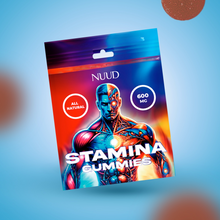
NUUD is a botanical supplement built around desire in general. It contains no magnesium. It does not fix or correct a magnesium deficiency or any other nutrient shortfall, and it has no role in managing any medical condition. The formula is anchored by the NUUD Mushroom Complex™, with Muira Puama, Boiled Rehmannia Root, Tribulus Terrestris, and Piper Nigrum for absorption. Onset is roughly 30 to 60 minutes. If your doctor has read the label and has no objection, that is what our women's libido gummies and men's libido gummies are for. If you prefer capsules, there are capsules for women and capsules for men.
Keep reading
- Libido supplements the research doesn't back
- Libido supplement ingredients and their evidence
- Zinc, vitamin D and libido
- Low libido in men
- Low libido in women
Frequently asked questions
Does magnesium increase sex drive?
Not in any study we found. Our PubMed search turned up no randomized trial that gave people magnesium and measured desire. The research sits one step away: magnesium tied to testosterone in a small athlete study and in 399 older men, to faster sleep onset in three small trials, and to lower depression scores in an open-label trial with no placebo. The one study that compared blood magnesium with sexual function, in two hundred pregnant teenagers, found no significant association. Sleep, mood and testosterone can each touch desire, and nobody has tested the whole chain.
Does magnesium raise testosterone?
The evidence is thin and mostly observational. Maggio and colleagues (2011) found that higher blood magnesium went with higher total testosterone in 399 men aged 65 or older, an association from one blood draw. Cinar and colleagues (2011) reported rises in free and total testosterone after 4 weeks of magnesium in athletes and sedentary men, and the summary gives no sample size, no size of change and no placebo. A testosterone change is also a separate claim from a desire change, and neither study asked about desire.
Is magnesium glycinate good for libido?
We found no study of magnesium glycinate and libido. The glycinate trial we found was about sleep: Schuster and colleagues (2025) gave 155 adults 250 milligrams of elemental magnesium as bisglycinate or a placebo, and insomnia scores fell -3.9 points versus -2.3 points by week 4 (p = 0.049), a small effect. Forms differ mainly in how well they are absorbed, and organic forms appear better absorbed than inorganic ones. None of that research measured desire.
Can magnesium deficiency lower your sex drive?
No study we found shows that it does. Low intake is common on paper: almost half (48%) of the US population got less than the required amount from food in 2005 to 2006, in one review that left out supplements. A 2026 review says true biochemical deficiency is rarely seen in clinical practice. The one study that put blood magnesium beside sexual function found no significant link. If you suspect you are low, ask your doctor, since status is best judged from blood, urine and diet together.
Does NUUD contain magnesium, and can it fix a deficiency?
No to both. NUUD contains no magnesium, and it does not fix or correct a magnesium deficiency or any other nutrient shortfall. It has no role in managing any medical condition. It is a botanical supplement built around desire in general. If you think you are low in magnesium, that is a question for your doctor and a blood test. Before you take NUUD, read the label caution: avoid use if you are on blood pressure medication, have cardiovascular, renal, or pulmonary conditions, or if you are sensitive to any of the ingredients.
References
- Clemesha CG, Thaker H, Samplaski MK (2020). 'Testosterone Boosting' Supplements Composition and Claims Are not Supported by the Academic Literature. World J Mens Health. PMID 31385468.
- Bahramy P, Mohammad-Alizadeh-Charandabi S, Ramezani-Nardin F, Mirghafourvand M (2020). Serum Levels of Vitamin D, Calcium, Magnesium, and Copper, and their Relations with Mental Health and Sexual Function in Pregnant Iranian Adolescents. Biol Trace Elem Res. PMID 32166563.
- Cinar V, Polat Y, Baltaci AK, Mogulkoc R (2011). Effects of magnesium supplementation on testosterone levels of athletes and sedentary subjects at rest and after exhaustion. Biol Trace Elem Res. PMID 20352370.
- Maggio M, Ceda GP, Lauretani F, Cattabiani C, Avantaggiato E, Morganti S, et al. (2011). Magnesium and anabolic hormones in older men. Int J Androl. PMID 21675994.
- Abbasi B, Kimiagar M, Sadeghniiat K, Shirazi MM, Hedayati M, Rashidkhani B (2012). The effect of magnesium supplementation on primary insomnia in elderly: A double-blind placebo-controlled clinical trial. J Res Med Sci. PMID 23853635.
- Mah J, Pitre T (2021). Oral magnesium supplementation for insomnia in older adults: a Systematic Review & Meta-Analysis. BMC Complement Med Ther. PMID 33865376.
- Schuster J, Cycelskij I, Lopresti A, Hahn A (2025). Magnesium Bisglycinate Supplementation in Healthy Adults Reporting Poor Sleep: A Randomized, Placebo-Controlled Trial. Nat Sci Sleep. PMID 40918053.
- Lopresti AL, Smith SJ, Drummond PD (2026). Magnesium Supplementation for Sleep in Adults: A Systematic Review of Randomized Controlled Trials. J Diet Suppl. PMID 42661485.
- Tarleton EK, Littenberg B, MacLean CD, Kennedy AG, Daley C (2017). Role of magnesium supplementation in the treatment of depression: A randomized clinical trial. PLoS One. PMID 28654669.
- Moabedi M, Aliakbari M, Erfanian S, Milajerdi A (2023). Magnesium supplementation beneficially affects depression in adults with depressive disorder: a systematic review and meta-analysis of randomized clinical trials. Front Psychiatry. PMID 38213402.
- Phelan D, Molero P, Martinez-Gonzalez MA, Molendijk M (2018). Magnesium and mood disorders: systematic review and meta-analysis. BJPsych Open. PMID 29897029.
- Tarleton EK, Littenberg B (2015). Magnesium intake and depression in adults. J Am Board Fam Med. PMID 25748766.
- Boyle NB, Lawton C, Dye L (2017). The Effects of Magnesium Supplementation on Subjective Anxiety and Stress-A Systematic Review. Nutrients. PMID 28445426.
- Rawji A, Peltier MR, Mourtzanakis K, Awan S, Rana J, Pothen NJ, et al. (2024). Examining the Effects of Supplemental Magnesium on Self-Reported Anxiety and Sleep Quality: A Systematic Review. Cureus. PMID 38817505.
- Rosanoff A, Weaver CM, Rude RK (2012). Suboptimal magnesium status in the United States: are the health consequences underestimated? Nutr Rev. PMID 22364157.
- Schwalfenberg GK, Genuis SJ (2017). The Importance of Magnesium in Clinical Healthcare. Scientifica (Cairo). PMID 29093983.
- Sankararaman S, Memel Z, Dubroff J, Rocha JP (2026). Magnesium: Hype and Health Benefits. Curr Nutr Rep. PMID 42484803.
- Pardo MR, Garicano Vilar E, San Mauro Martin I, Camina Martin MA (2021). Bioavailability of magnesium food supplements: A systematic review. Nutrition. PMID 34111673.
- Walker AF, Marakis G, Christie S, Byng M (2003). Mg citrate found more bioavailable than other Mg preparations in a randomised, double-blind study. Magnes Res. PMID 14596323.
- Costello R, Rosanoff A, Nielsen F, West C (2023). Perspective: Call for Re-evaluation of the Tolerable Upper Intake Level for Magnesium Supplementation in Adults. Adv Nutr. PMID 37487817.
This article is for general education and is not medical advice. Magnesium deficiency, sleep problems, depression and low testosterone are diagnosed and managed by a licensed clinician. NUUD is a botanical supplement and has no role in diagnosing, treating, curing, or preventing magnesium deficiency or any other disease, and these statements have not been evaluated by the Food and Drug Administration. Talk with your doctor before starting any new supplement, magnesium included, and do not stop or change any medication without your doctor.
