


Does Nicotine Affect Sex Drive? What the Studies Actually Show
Share
Nicotine and sex drive have been studied far less directly than the internet suggests. Most research measures erection problems, blood flow in a lab, or an overall sexual-function score, and only a few studies asked about desire itself. The largest one that did, Mima and colleagues (2022), found low libido in 25.6% of men who smoked against 21.0% of men who never had, in a one-time snapshot of 6754 men aged 50 to 75. In lab trials, one dose of nicotine gum cut the measured physical response of non-smoking men by 23% and women by 30%, while their own ratings of the moment did not move.
- Few studies measured desire. In the biggest, current smokers reported low libido at 25.6% against 21.0% for non-smokers. It is a cross-sectional snapshot of older men, so it shows a link and no direction.
- One dose of nicotine gum lowered the physical response measured in the lab by 23% in non-smoking men and 30% in non-smoking women. How they rated their own feelings during the test did not change.
- Smoking is tied to erection problems: odds of 1.51 (95% CI 1.34 to 1.71) for current smokers across prospective cohorts. That is an erection outcome, and a separate question from wanting sex.
- Testosterone cuts against the simple story. Men who smoke had slightly higher testosterone in a review of 22 studies, by 1.53 nmol/L (95% CI 1.11 to 1.96).
- For e-cigarettes the evidence is thin, and for nicotine pouches we found no study of sexual outcomes at all. Studies of people who quit smoking show better scores afterwards, though none of them was randomized.
Figures from Mima et al. 2022 (PMID 35166438), Harte and Meston 2008 (PMID 17971108 and 18331269) and Zhao et al. 2016 (PMID 26763163). The first and last are observational, so those figures are associations.
Is it the nicotine, or is it me?
Maybe you smoke, use an e-cigarette or keep a tin of nicotine pouches in your pocket, and somewhere along the way your drive went quiet. Maybe you quit months ago and you are still waiting for it to come back. Either way, the question is the same: is it the nicotine, or is it me? Online, one camp says nicotine wrecks your sex life and the other says it barely matters. Neither is quoting a study that measured desire.
Most of the research on smoking and sex looks at erections. It asks men whether they have trouble getting or keeping one, or it measures blood flow in a lab. Those outcomes matter, and they answer a different question from yours. Wanting sex and your body's physical response are related, and they can come apart: you can want sex while your body lags, or have everything work and feel no pull.
So this page sorts the studies by what they measured. Three put a number on desire or libido, and we name them. The rest measured erections, lab blood flow, testosterone, or an overall sexual-function score. Where a study did not measure desire, we say so. This page is about tobacco and nicotine only.
The few studies that asked about desire
The clearest desire number comes from Mima and colleagues (2022). They looked at baseline data from 6754 men aged 50 to 75 who had enrolled in REDUCE, a large prostate cancer prevention trial. 3069 (45.4%) had never smoked, 2673 (39.6%) had quit, and 1012 (15%) still smoked. Current smokers reported low libido more often than men who had never smoked: 25.6% against 21.0% (P = 0.002). They also reported erection problems more often, 31.6% against 26.0%.
Sexual activity was about the same in both groups, 81.7% against 82.8% (P = 0.420). The current smokers were a little younger and leaner, with less high blood pressure, and the gap in low libido still showed up. Men who had quit reported less low libido than men who still smoked (odds ratio 0.8, P = 0.013). The caveats are big: one snapshot, older men in a prostate trial, no confidence intervals, and no word on how low libido was asked.
6754 men, one snapshot: current smokers against men who never smoked
Share of men reporting each item, from one paper, Mima et al. 2022. The low libido row is orange because it is the only desire measure on the chart.
Source: Mima M et al., BJU International 2022 (PMID 35166438). Baseline data from a prostate cancer prevention trial; cross-sectional, so these are associations, and the summary gives no confidence intervals.
Read the orange bar with its neighbours in mind. A gap of a few points in low libido sits next to an almost identical rate of sexual activity. The difference is real enough to notice and small enough to keep in proportion, and it says nothing about younger people, women, or anyone using e-cigarettes or pouches.
The second desire number is smaller and odder. Chellaiah and colleagues (2026) surveyed 132 adults in Malaysia and compared people who used both e-cigarettes and cigarettes with people who only smoked. The dual users had higher desire scores. The summary gives no score values and no group of non-users, the sample was a convenience sample, and the authors call it preliminary. It points the opposite way from the simple story. The third desire signal is a women's study, Ju and colleagues (2021), covered further down.
What one dose of nicotine does in the lab
For what nicotine itself does, apart from the smoke, the cleanest tests come from Harte and colleagues (2008): two randomized, double-blind, placebo-controlled crossover trials in young adults with less than 100 lifetime exposures to nicotine. On one visit they chewed nicotine gum, 6 milligrams, roughly one high-yield cigarette by the researchers' estimate; on the other, a matched placebo gum. About 40 minutes later they watched an erotic film while instruments recorded their body's response.
In the men's trial, 28 men with a mean age of 21 took part. Nicotine reduced the physical erection response measured in the lab by 23% (P = 0.02), and the drop showed in 16 of 20 men with valid recordings. In the women's trial, 25 women with a mean age of 20 took part. Nicotine reduced the physical response measured in the lab by 30% (P = 0.05), seen in 11 of 18 women with valid readings. These are small trials, one dose, one session.
Here is the part most write-ups skip. In both trials, the participants also rated their own feelings second by second during the film, and nicotine made no significant difference to those ratings: P = 0.70 in men and P = 0.45 in women. Mood did not change either. So one dose of nicotine dampened the body's measurable response while people's own sense of the moment stayed put. Neither trial measured desire, and neither tested people who use nicotine every day, whose bodies may respond differently. What they do show is that nicotine alone, with no smoke, can change the body's response within the hour.
Smoking and erection problems: what the big reviews found
This is the best-studied piece by a long way, and it is about erections. Cao and colleagues (2013) pooled 4 prospective cohort studies and 4 case-control studies, with 28,586 participants. The case-control studies made the results uneven, so the authors leaned on the cohort studies, which follow men forward in time. Against men who never smoked, the odds of erection problems were 1.51 (95% CI 1.34 to 1.71) for current smokers and 1.29 (95% CI 1.07 to 1.47) for former smokers. All of it is observational, so it is an association.
Cao and colleagues (2014) then asked whether more smoking meant more risk. Pooling 1 cohort and 9 cross-sectional studies, 50,360 participants and 12,218 men with erection problems, they found a straight-line pattern. Every 10 more cigarettes a day went with odds of 1.14 (95% CI 1.09 to 1.18), with moderate heterogeneity (I2 = 44.7%). Every 10 more years of smoking went with 1.15 (95% CI 1.10 to 1.19). Most of those studies were cross-sectional snapshots, so cause and effect stay open.
Other reviews line up. Verze and colleagues (2015) reviewed 13 articles; most showed a link, with evidence that quitting helped, and the studies were too different to pool. Allen and colleagues (2018) covered 89 studies and 348,865 people and found dose-dependent links between past and current smoking and erection problems. Biebel and colleagues (2016) reviewed eighty-three studies and articles and agreed. None of these reviews reported a desire result.
Why would smoking affect erections? The review summaries point to the blood vessels: damage to their lining, less nitric oxide, more oxidative stress, and vessel spasm with a nervous system stuck on alert. That is plumbing. If your body lags behind your interest, this is the evidence that speaks to you, and our guide to low libido in men covers how the two problems feed each other. If the interest itself has faded, these numbers sit next door to your question.
"My numbers are fine and I still feel flat": the testosterone twist
A common guess: nicotine lowers testosterone, which lowers desire. The pooled data do not back the first step. Zhao and colleagues (2016) reviewed 28 observational studies. In 22 studies of 13,317 men, men who smoked had higher mean testosterone than men who did not, by 1.53 nmol/L (95% CI 1.11 to 1.96). In 6 studies of 6089 women, smoking was not clearly tied to testosterone (0.11 nmol/L, 95% CI -0.08 to 0.30).
The REDUCE data point the same way. In Mima and colleagues (2022), current smokers had higher average total testosterone than men who never smoked, 485.4 against 451.2 (P < 0.001), and they still reported low libido more often. The summary prints a unit for those values that does not match its own stated normal range, so we leave the unit off. Zhao's review notes that cotinine, a breakdown product of tobacco, slows the breakdown of testosterone, which may explain part of it.
For smokeless nicotine, the closest evidence we found is about snus, a smokeless oral tobacco. Byhamre and colleagues (2026) studied 6,158 never-smoking adults in northern Sweden, where 21% of the men and 3.3% of the women used snus. Men who used snus had slightly higher calculated free testosterone (1.04, 95% CI 1.01 to 1.07). It is cross-sectional, snus is tobacco and differs from a nicotine pouch, and the study measured no sexual outcome at all.
So if your testosterone came back normal, or even high, and you still feel flat, that is consistent with these studies. A normal hormone result says little about desire either way. Normal labs and low libido walks through that situation, and if testosterone keeps coming up, what to try before testosterone therapy covers the evidence on everyday options.
Vaping and nicotine pouches: what little exists
For e-cigarettes, the main study is El-Shahawy and colleagues (2022), an analysis of Wave 4 (2016 to 2018) of the PATH survey (Population Assessment of Tobacco and Health) of men aged 20 and over. Erection problems were reported by 20.7% of the full sample and 10.2% of a restricted group aged 20 to 65 with no heart disease. Daily e-cigarette users had adjusted odds of erection problems of 2.24 (95% CI 1.50 to 3.34) against never users in the full sample, and 2.41 (95% CI 1.55 to 3.74) in the restricted group.
Put that next to the other figures in the same study. Being 65 or older carried odds of 17.4 (95% CI 12.15 to 24.91), and physical activity went with lower odds (0.44 to 0.58). Only 2.1% of the full sample used e-cigarettes daily. The data come from one survey question at one point in time, so the study cannot say whether vaping came first, and the summary gives no past smoking details for daily users. It did not ask about desire.
Vaping and sex drive, as a desire question, rests on almost nothing: the only desire figure we found is the small Malaysian survey. For nicotine pouches, our search found no study of desire, erections or sexual function at all. Nobody has measured it yet. A confident answer about pouches and libido is a guess borrowed from cigarettes, gum or snus.
Women who smoke: overall scores, few desire numbers
Research on women is thinner and mostly uses overall sexual-function scores. Salari and colleagues (2022) pooled 10 studies with a sample described as 15,334 women smokers, aged 18 to 79 years. Women who smoked had odds of 1.48 (95% CI 1.2 to 1.83) of a sexual problem against women who did not. The studies were observational, and the summary gives no desire-only result, so it cannot say which part of sex was affected.
Ju and colleagues (2021) studied 621 women aged 24 to 75 in China using the Female Sexual Function Index, with a cut-off of 26.55. Women who smoked had adjusted odds of 6.226 (95% CI 1.561 to 24.822) of scoring in the dysfunction range. That interval is very wide, and the authors note that women who smoke are rare in China. Secondhand smoke counted too (OR 1.887, 95% CI 1.092 to 3.260), and an unhappy marriage carried odds of 3.771 (95% CI 1.768 to 8.045).
This is the third desire signal. In Ju's study, women who smoked showed more problems on the finishing, physical-response and satisfaction items. It was women exposed to secondhand smoke who showed more problems on the desire items. The summary does not give those item-level numbers, and the study is cross-sectional. If your own drive has gone quiet and you are not sure why, low libido in women sorts the common causes.
What changes after you quit
This is the most hopeful part of the evidence, and the softest, since none of these studies was randomized. Harte and colleagues (2012) followed men through an 8-week quit programme with a nicotine patch and counselling, then tested them 4 weeks after quitting. Men who stayed off cigarettes (n = 20) had stronger physical erection responses measured in the lab than men who went back (n = 45), and they reached their highest self-rated response faster. Their self-reported sexual function improved, though no more than in the men who relapsed.
A related study by Harte and colleagues (2013) in 62 men who smoked found that bigger cuts in smoking went with gains in a measure of heart rhythm, which went with stronger erection responses. Pourmand and colleagues (2004) followed men who smoked and had erection problems for 1 year. Of 118 who stopped, erection scores improved in 25% or more, against none of the 163 who kept smoking. Older men and men with more advanced problems improved less.
Sahin and colleagues (2020) tested men aged 30 to 60 before quitting and six months after. Total scores rose in every age group and every smoking band except the heaviest, 101 pack-years or more (p = 0.051). Biebel and colleagues (2016) add a caution from their review: recovery seemed likelier when lifetime smoking had been limited. These studies measured erections and overall scores, and none of their summaries reports a desire-only figure.
For women, Celikhisar and colleagues (2021) compared premenopausal smokers with non-smokers. 86.0% of the smokers scored in the dysfunction range against 32.5% of non-smokers. Nine months after quitting, that rate in the former smokers fell from 86% to 35.1% (P < .001). The summary gives no sample size or desire-only figure, and there was no randomization. With the REDUCE finding on former smokers, quitting smoking and sex drive line up in the hopeful direction. How long it takes, and how much is the cigarettes against everything else that changes, nobody has pinned down.
Eight kinds of evidence, side by side
Each pile of evidence answers a different question. Only three studies in our search put a number on desire, and they disagree in direction. Everything else measured the body's response or an overall score. Read the panel and table with that in mind.
What each study measured, and whether desire was one of them
6754 men. Low libido 25.6% in smokers against 21.0%. Desire measured. Cross-sectional.
132 adults. Dual users had higher desire scores than smokers. Desire measured. Small and preliminary.
621 women. Desire items worse with secondhand smoke. Desire items reported, no figures given.
28 men, 25 women. One dose cut the lab response 23% and 30%. Self-ratings unchanged.
Prospective cohorts. Erection problems at odds of 1.51 for current smokers. No desire figure.
13,317 men. Smokers had testosterone higher by 1.53 nmol/L. No desire figure.
Built from PMID 35166438, 42538878, 34027789, 17971108, 18331269, 23573257 and 26763163. Orange marks the studies that reported on desire.
| Question | Best evidence | Result | Desire measured? | Caveat |
|---|---|---|---|---|
| Smoking and low libido | Mima 2022, 6754 men | 25.6% against 21.0% (P = 0.002) | Yes | One snapshot of older men; no intervals |
| One dose of nicotine | Harte 2008, 28 men and 25 women | Lab response down 23% and 30%; self-ratings unchanged | No | Small; near-never users; one session |
| Smoking and erections | Cao 2013, 28,586 participants | OR 1.51 (95% CI 1.34 to 1.71), current smokers | No | Observational |
| Testosterone | Zhao 2016, 22 studies of men | Higher in smokers by 1.53 nmol/L | No | Observational; cuts against the simple story |
| E-cigarettes | El-Shahawy 2022, PATH Wave 4 | Daily users: AOR 2.24 (95% CI 1.50 to 3.34) for erection problems | No | Cross-sectional; one question |
| Nicotine pouches | None found; nearest is snus, Byhamre 2026 | Slightly higher free testosterone in men who used snus | No | No sexual outcome measured |
| Women who smoke | Salari 2022, 10 studies | OR 1.48 (95% CI 1.2 to 1.83) | Not separately | Overall score; observational |
| After quitting | Pourmand 2004; Celikhisar 2021; Mima 2022 | Scores improved; former smokers reported less low libido (OR 0.8) | Only in Mima | Not randomized; people chose to quit |
Nicotine rarely travels alone
Nicotine usually comes with company. Many people reach for a cigarette or a pouch when they are stressed, and stress on its own flattens desire for a lot of people; stress, cortisol and sex drive covers that link. Smoking and drinking often go together too, and what alcohol does to libido has its own numbers. Low mood can quietly take desire with it as well, and depression and low libido explains how.
The everyday levers, and where a botanical fits
Start with who this section is not for. NUUD's own label carries a caution, quoted here word for word: avoid use if you are on blood pressure medication, have cardiovascular, renal, or pulmonary conditions, or if you are sensitive to any of the ingredients. For many readers of this article, that sentence is the answer. If you have smoked for years, talk to your doctor first and bring the label.
A few ordinary things move desire in most people, and the free ones do more work than the internet admits.
- Sleep, in quantity and quality, since broken sleep flattens wanting fast. Sleep, libido and testosterone covers that.
- Movement you can keep up. In the e-cigarette study, physical activity went with lower odds of erection problems.
- Care for your stress and your mood, named out loud and taken as seriously as any habit.
- Time with a partner, or alone, with nothing expected at the end.
- A botanical supplement, if you want one, as the smallest lever on the list.
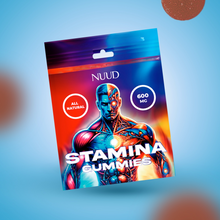
NUUD is a botanical supplement built around desire in general. It does nothing for nicotine's effects on your body, does not undo or offset them, and is no quitting aid. It has no role in managing any medical condition. The formula is anchored by the NUUD Mushroom Complex™, with Muira Puama, Boiled Rehmannia Root, Tribulus Terrestris, and Piper Nigrum for absorption. Onset is roughly 30 to 60 minutes.
If you take blood-pressure medication or have a heart, kidney or lung condition, the label says no, and your doctor decides the rest. If your doctor has read that label and has no objection, that is what our women's libido gummies and men's libido gummies are for. If you prefer a capsule, there are capsules for women and capsules for men.
Nothing is wrong with you
If your drive faded while you were smoking, vaping or using pouches, you are in common company, and the studies give no reason for panic. In the biggest desire study, most men who smoked did not report low libido, and most were still sexually active. Desire lives in a much wider system than one habit.
Low desire usually has company: poor sleep, a heavy job, a relationship that feels like roommates, a low mood that crept in. Nicotine can sit on top of any of those and take all the blame. It may be part of the picture, and no study we found shows it is the whole of it.
If you quit and you are still waiting, give it time. The quit studies saw scores improve over months, from six months to a year. If you want to want it again, start with the plain things, and bring the question to your doctor if it has dragged on and bothers you. The wanting may well still be there.
Keep reading
- Low libido in men
- Low libido in women
- Stress, cortisol and sex drive
- Does alcohol lower libido?
- Sleep, libido and testosterone
Frequently asked questions
Does nicotine lower sex drive?
It may, a little, though few studies measured desire directly. In the largest that did, current smokers reported low libido at 25.6% against 21.0% of men who never smoked, among 6754 men aged 50 to 75. That is a cross-sectional association, so it cannot show cause. In lab trials, one dose of nicotine gum lowered the body's measured response in non-smokers by 23% in men and 30% in women, with no change in how they rated their own feelings. Most other research measured erection problems, which is a separate question from desire.
Does vaping affect sex drive?
Nobody has shown that it does, because desire has barely been measured in people who use e-cigarettes. The main e-cigarette study found daily users had adjusted odds of 2.24 (95% CI 1.50 to 3.34) of reporting erection problems, in a cross-sectional national survey. That is an erection outcome. The only desire figure we found came from a small survey of 132 adults, where people who used both e-cigarettes and cigarettes had higher desire scores than people who only smoked. The authors called it preliminary.
Will my sex drive come back after I quit smoking?
The studies point that way, though none of them was randomized. Men who had quit reported less low libido than men who still smoked (odds ratio 0.8) in one large cross-sectional study. Quit studies in men saw erection scores improve at six months and one year, and in one study of premenopausal women the share scoring in the dysfunction range fell from 86% to 35.1% nine months after quitting. People chose whether to quit, so other changes may explain part of it, and recovery seemed likelier after less lifetime smoking.
Do nicotine pouches affect libido?
We do not know, because our search found no study of nicotine pouches and desire, erections or sexual function. The nearest evidence is about snus, a smokeless oral tobacco, where men who used it had slightly higher free testosterone in a cross-sectional study, with no sexual outcome measured. Lab trials of nicotine gum in non-smokers showed a lower physical response after one dose, so nicotine alone can affect the body. How that applies to daily pouch use has not been tested.
Can a supplement undo what nicotine does to sex drive?
No. NUUD is a botanical supplement built around desire in general. It does nothing for nicotine's effects on your body, does not undo or offset them, and is no quitting aid. No interaction studies exist for this formula. Its label says to avoid use if you are on blood pressure medication, have cardiovascular, renal, or pulmonary conditions, or if you are sensitive to any of the ingredients. If you have smoked for years, ask your doctor first and bring the label.
References
- Mima M, Huang JB, Andriole GL, Freedland SJ, Ohlander SJ, Moreira DM (2022). The impact of smoking on sexual function. BJU Int. PMID 35166438.
- Harte CB, Meston CM (2008). Acute effects of nicotine on physiological and subjective sexual arousal in nonsmoking men: a randomized, double-blind, placebo-controlled trial. J Sex Med. PMID 17971108.
- Harte CB, Meston CM (2008). The inhibitory effects of nicotine on physiological sexual arousal in nonsmoking women: results from a randomized, double-blind, placebo-controlled, cross-over trial. J Sex Med. PMID 18331269.
- Cao S, Yin X, Wang Y, Zhou H, Song F, Lu Z (2013). Smoking and risk of erectile dysfunction: systematic review of observational studies with meta-analysis. PLoS One. PMID 23573257.
- Cao S, Gan Y, Dong X, Liu J, Lu Z (2014). Association of quantity and duration of smoking with erectile dysfunction: a dose-response meta-analysis. J Sex Med. PMID 25052869.
- Verze P, Margreiter M, Esposito K, Montorsi P, Mulhall J (2015). The Link Between Cigarette Smoking and Erectile Dysfunction: A Systematic Review. Eur Urol Focus. PMID 28723353.
- Allen MS, Walter EE (2018). Health-Related Lifestyle Factors and Sexual Dysfunction: A Meta-Analysis of Population-Based Research. J Sex Med. PMID 29523476.
- Biebel MG, Burnett AL, Sadeghi-Nejad H (2016). Male Sexual Function and Smoking. Sex Med Rev. PMID 27872030.
- Zhao J, Leung JYY, Lin SL, Mary Schooling C (2016). Cigarette smoking and testosterone in men and women: A systematic review and meta-analysis of observational studies. Prev Med. PMID 26763163.
- Byhamre ML, Blankenberg S, Dahlqvist P, Eriksson M, Oskarsson V, Soderberg S, Zeller T, Wennberg P (2026). Associations between snus use and concentrations of CRP, 25(OH)D and testosterone: a population-based study. Scand J Clin Lab Invest. PMID 41916418.
- El-Shahawy O, Shah T, Obisesan OH, Durr M, Stokes AC, Uddin I, Pinjani R, Benjamin EJ, Mirbolouk M, Osei AD, Loney T, Sherman SE, Blaha MJ (2022). Association of E-Cigarettes With Erectile Dysfunction: The Population Assessment of Tobacco and Health Study. Am J Prev Med. PMID 34922653.
- Chellaiah D, Yee A, Amer Nordin ASB (2026). Comparing mental health and sexual function in dual users of E-cigarettes and conventional cigarettes in Malaysia. J Ethn Subst Abuse. PMID 42538878.
- Salari N, Hasheminezhad R, Abdolmaleki A, Kiaei A, Shohaimi S, Akbari H, Nankali A, Mohammadi M (2022). The effects of smoking on female sexual dysfunction: a systematic review and meta-analysis. Arch Womens Ment Health. PMID 36445469.
- Ju R, Ruan X, Xu X, Yang Y, Cheng J, Zhang L, Wang B, Qin S, Dou Z, Mueck AO (2021). Importance of active and passive smoking as one of the risk factors for female sexual dysfunction in Chinese women. Gynecol Endocrinol. PMID 34027789.
- Celikhisar H, Dasdemir Ilkhan G, Irer B (2021). Effects of smoking cessation on sexual functions and health quality of life in premenopausal women: A prospective case - Controlled study. Int J Clin Pract. PMID 33111367.
- Harte CB, Meston CM (2012). Association between smoking cessation and sexual health in men. BJU Int. PMID 21883852.
- Harte CB, Meston CM (2013). Association between cigarette smoking and erectile tumescence: the mediating role of heart rate variability. Int J Impot Res. PMID 23303335.
- Pourmand G, Alidaee MR, Rasuli S, Maleki A, Mehrsai A (2004). Do cigarette smokers with erectile dysfunction benefit from stopping?: a prospective study. BJU Int. PMID 15610111.
- Sahin MO, Sen V, Gunduz G, Ucer O (2020). Effect of smoking cessation on sexual functions in men aged 30 to 60 years. Int Braz J Urol. PMID 32374127.
This article is for general education and is not medical advice. Nicotine dependence and its health effects are best discussed with a licensed clinician. NUUD is a botanical supplement and has no role in diagnosing, treating, curing, or preventing any disease, the effects of nicotine or tobacco, or nicotine dependence, and these statements have not been evaluated by the Food and Drug Administration. Talk with your doctor before starting any new supplement.
