


Does Paxil Affect Sex Drive? What the Paroxetine Studies Actually Show
Share
Paxil and sex drive belong in the same sentence more often than the leaflet admits. Paxil (paroxetine) carries the highest counted rate of sexual side effects among the SSRIs in the comparative studies. In 1022 people in outpatient care with normal sexual function before treatment, 70.7% (147 of 208) on paroxetine reported a new sexual problem. In 361 healthy adults, 20 milligrams a day for 5 weeks worsened sexual function against placebo. Desire is among the items hit, and in the dose studies the problems tracked the dose and improved when the dose fell or the drug changed.
Before you read on
Paxil is a prescription medicine that is doing work you cannot feel. Do not stop it, lower it or switch it without your prescriber. Nothing here is medical advice or a reason to alter your treatment plan.
- In 1022 people in outpatient care with normal sexual function before the antidepressant, any sexual problem was reported by 70.7% on paroxetine (147 of 208), against 57.7% on fluoxetine, 62.9% on sertraline, 72.7% on citalopram and 24.4% on mirtazapine. Men reported problems at 62.4%, women at 56.9%, and women rated them more severe. Open-label, counted by questionnaire, no placebo arm.
- In 361 healthy adults aged 18 to 40, paroxetine 20 milligrams a day for 5 weeks produced significantly more new sexual problems than placebo. Vortioxetine 10 milligrams did not, scoring 2.74 points better than paroxetine (P = .009). Non-compliance appeared to influence results, most in the paroxetine arm.
- In 107 people, the three SSRIs decreased desire, physical response and finishing to an equal degree. 27% of SSRI-treated people had no adverse sexual effect at all, against 86% on bupropion.
- Asked directly, 58% of 344 people showed a sexual problem; 14% raised one on their own. Problems correlated with dose and improved substantially when the dose fell or the drug was withdrawn. Within 6 months the problem disappeared completely in only 5.8%, and 81.4% showed no improvement. The earlier 308-person study put the split at 55.29% against 14.2%.
- In 1,174 postmenopausal women taking paroxetine 7.5 milligrams for hot flashes, no sexual-function measure changed, and adverse events suggesting a sexual problem were low and similar to placebo. Pooled analysis, women aged 40 and over, the low dose, industry affiliation in the author list.
Figures from Montejo et al. 2001 (PMID 11229449), Montejo-González et al. 1997 (PMID 9292833) and Modell et al. 1997 (PMID 9129565). All three are open-label or survey studies with no placebo arm.
Is it the Paxil, or is it me?
You typed the question into a search bar late at night and got a wall of ingredient talk back. Depression, anxiety and panic flatten desire before any pill enters the picture, so when Paxil is part of the plan the two causes arrive tangled. "My numbers are fine and I still feel flat" is a sentence a lot of people here know, and the tangle is why the research has to be read in separate threads.
The first thread is the counted rates: what a clinician finds when they ask directly about desire, finishing and erection problems in people already on the drug. The second is the trials in healthy adults, people with no depression in the room, where a low mood cannot explain a falling score. The third is what moved the numbers back, because dose changes and switches did move them. Wanting to want it again is not a character flaw, and tired all the time with a drive that is nowhere to be found is a documented, common experience on this medicine. Our guides to what helps an SSRI libido drop, depression and low libido and what doctors do not say about antidepressants and libido cover the ground next to this one.
The counted rates, drug by drug
Montejo and colleagues (2001) followed 1022 people in outpatient care (610 women, 412 men, mean age 39.8 years) with normal sexual function before the antidepressant, asking directly about desire, finishing, erection hardness and overall satisfaction. Across every drug, 59.1% (604 of 1022) showed a sexual problem. By drug: paroxetine 70.7% (147 of 208), fluoxetine 57.7%, sertraline 62.9%, fluvoxamine 62.3%, citalopram 72.7%, venlafaxine 67.3%, mirtazapine 24.4%, nefazodone 8%, amineptine 6.9% and moclobemide 3.9%. Men reported problems at 62.4%, women at 56.9%, with higher severity in women, and about 40% showed low tolerance of the problem.
The authors put the SSRIs and venlafaxine in a range of 58% to 73% and state that the incidence is underestimated without direct questioning. Open-label, no placebo arm. Citalopram lands above paroxetine in this table, so read any single figure with the design attached.
Montejo-González and colleagues (1997) interviewed 344 people in outpatient care (192 women, 152 men, mean age 39.6 years) on fluoxetine, fluvoxamine, paroxetine or sertraline. Sexual problems appeared in 58% when the physician asked directly against 14% spontaneously reported. Paroxetine produced more delay of finishing and more erection problems than fluvoxamine, fluoxetine and sertraline (chi square, p under .05). Only 24.5% tolerated it well, problems correlated positively with dose, people improved substantially when the dose was lowered or the drug withdrawn, and 12 of 15 switched to moclobemide improved completely.
The group's 1996 analysis in 308 people in outpatient care (169 women, 139 men, mean age 41 years) found 55.29% against 14.2%, with 22.6% tolerating it well and 7 of 9 improving completely on moclobemide. Philipp and colleagues (2000) counted the same gap in routine practice across 268 people: new impairment in 61.5% on the SSRIs by physician rating against 21.6% as adverse-event reports, with moclobemide at 24.3% and 1.9%. Antidepressant benefit was comparable, and no tolerance built up over 6 months.
Two syntheses rank the drugs. Serretti and Chiesa (2009) pooled only studies that asked people directly with specific questionnaires, in people with no sexual problems beforehand, and found rates of new sexual problems from 25.8% to 80.3%, in decreasing order sertraline, venlafaxine, citalopram, paroxetine, fluoxetine, imipramine, phenelzine, duloxetine, escitalopram and fluvoxamine, with no significant difference from placebo for bupropion, mirtazapine, moclobemide and nefazodone. Their own limits: open-label studies and differences in the scales used could reduce the significance. Reichenpfader and colleagues (2014) ran a network meta-analysis of 63 studies and more than 26,000 people treated; most pairs showed similar risk, paroxetine and escitalopram came out significantly higher than some others and bupropion lower, with wide credible intervals and strength of evidence rated low. The sibling pages chart that line for Zoloft and sex drive and Lexapro and sex drive.
The number depends on who asked
Share with a sexual problem when the clinician asked directly (orange) against the share who raised it on their own (blue), four studies on SSRIs including paroxetine. The vertical axis runs from 0% to 70%.
Sources: Montejo AL et al. 1996 (PMID 9054202); Montejo-González AL et al. 1997 (PMID 9292833); Philipp M et al. 2000 (PMID 10974600); Landén M et al. 2005 (PMID 15669895). Open-label studies, no placebo arms.
The trials in healthy adults, where depression cannot explain it
A low mood explains a low score. It cannot explain these. Jacobsen and colleagues (2019) ran a phase 4 randomized, double-blind, placebo-controlled, 4-arm trial in 361 healthy adults aged 18 to 40 with normal self-reported sexual function, mean age 28.4 years: vortioxetine 10 milligrams, vortioxetine 20 milligrams, paroxetine 20 milligrams, or placebo for 5 weeks. The primary endpoint was the change in the 14-item sexual-function questionnaire total score. Vortioxetine 10 milligrams produced significantly fewer new sexual problems than paroxetine (mean difference +2.74 points, P = .009), and the 20 milligram dose scored numerically better (+1.05 points) without significance. Paroxetine produced significantly more new sexual problems than placebo; vortioxetine at either dose did not. Non-compliance appeared to influence results, most in the paroxetine and vortioxetine 20 milligram arms, one comparator, 5 weeks, healthy adults.
Dunn and colleagues (2007) gave 99 sexually active healthy men (mean age 31 years) 20 milligrams a day for 3 weeks. A significant between-group difference in sexual function appeared by day 8 and stayed significant through day 21, and the SSRI affected every domain of the questionnaire. Telephone ratings taken at home on days 2, 4 and 6 placed the onset at day 4, before any scheduled visit caught it.
Abler and colleagues (2011) scanned 18 healthy men after 7 days each on paroxetine 20 milligrams, bupropion 150 milligrams and placebo. Subjective sexual-problem ratings rose against placebo and bupropion, and activation fell in the anterior cingulate cortex, the ventral striatum and the midbrain, regions tied to motivation and emotion. Eighteen men, 7 days per arm, brain activation as the outcome.
Kennedy and colleagues (2006) randomized 141 people with a current major depressive episode (68 women, 73 men) to bupropion sustained-release 150 to 300 milligrams daily or paroxetine 20 to 40 milligrams daily for 8 weeks. Men on paroxetine reported worsening; men on bupropion did not change significantly. Women showed no significant drug difference between the two. Both drugs lifted depression equally.
Delgado and colleagues (2005) pooled four 8-week double-blind trials: placebo 371, duloxetine 736, paroxetine 20 milligrams a day 359. New sexual problems ran significantly above placebo for paroxetine (p under .001) and duloxetine (p = .007), with duloxetine below paroxetine (p = .015). In the smaller group of men, duloxetine did not differ from placebo while paroxetine was significantly higher (p = .012). In a 26-week extension, rates did not differ significantly between duloxetine, paroxetine and placebo. Post hoc, and the long-term data came from 2 of the 4 trials. For the comparator that keeps surfacing here, see Wellbutrin and sex drive.
Desire, specifically
Modell and colleagues (1997) asked 107 people in psychiatric outpatient care on bupropion, fluoxetine, paroxetine or sertraline to compare their sex life with life before their illness started, anonymously. The three SSRIs decreased desire, physical response, and the duration and intensity of finishing to an equal degree. Bupropion increased all four beyond premorbid levels. 27% of the SSRI-treated people had no adverse sexual effect at all; on bupropion, 86% had none and 77% reported at least one heightened aspect.
Kennedy and colleagues (2000) followed 107 people on moclobemide, paroxetine, sertraline or venlafaxine for 8 or 14 weeks. Men reported significantly greater drug-related impairment in the desire items (p under .05), with no significant sex difference in the finishing-phase items: 38% to 50% of men against 26% to 32% of women. In women, rates were generally higher with sertraline and paroxetine.
Labbate and colleagues (1998) rated 31 people with anxiety disorders on three SSRIs over 3 months. Finishing quality was lower and finishing delay longer at months one, two and three (p under .01). Desire, physical wetness and sexual frequency were not appreciably changed, and erection scores fell over time without significance.
Baldwin and colleagues (2006) compared reboxetine 4 milligrams twice a day with paroxetine 20 milligrams in depression. Reboxetine showed significant advantages on the item for becoming sexually excited at weeks 4 and 8 (p 0.05), with non-significant advantages for sexual thoughts and the desire to initiate sexual activity.
The honest read: the desire item is hit in some studies and untouched in others, and finishing is the consistent one. Men report the desire items more often, 62.4% against 56.9% in the 1022-person study, and women rate the problem more severe. See low libido in men and low libido in women for that split.
Does it wear off, and what moves it
Every lever on this list belongs to your prescriber. Paxil comes down slowly, on a schedule set by someone who has your full history, and nothing below is a reason to change anything on your own.
In the 344-person study, problems correlated positively with dose and people improved substantially when the dose was lowered or the drug withdrawn. Only 5.8% saw the problem disappear completely within 6 months, and 81.4% showed no improvement at all in that window. Of those switched to moclobemide 450 to 600 milligrams a day, 12 of 15 improved completely.
Landén and colleagues (2005) asked 119 people with hard-to-treat depression on citalopram or paroxetine about sexual function, openly first and then directly. Direct questioning found problems in 41% against 6% by spontaneous report. The problems correlated with the length of the depressive episode, and showed no link to age, SSRI dose, blood level, how long the SSRI had been taken, or any depression measure; citalopram and paroxetine did not differ from each other. Philipp's group found no tolerance to these effects across 6 months.
Dose shows up at the bottom of the range too. In 1,174 postmenopausal women taking paroxetine 7.5 milligrams for hot flashes, no sexual-function measure changed from baseline, and adverse events suggesting a sexual problem were low and similar to placebo. Pooled analysis of two trials, women aged 40 and over, industry affiliation in the author list.
Biology shifts the odds. Zourková and Hadasová (2002) split 30 people on long-term paroxetine by CYP2D6 metabolic status and report a markedly higher incidence of sexual problems in those converted to poor metabolizers, a difference they call significant, with no numbers printed. The same group's 2013 work on the MDR1 G2677T/A variant found difficulties with finishing (p = .008) and with physical wetness (p under .001) among paroxetine-treated carriers, in small groups.
Switch studies add two threads. Jacobsen and colleagues (2020) moved adults with new sexual problems on an SSRI to vortioxetine or escitalopram for 8 weeks; the vortioxetine advantage appeared in subgroups, women and people aged 45 years or under (P = 0.045) and prior SSRI treatment over 1 year (P = 0.001), with industry affiliation in the author list. Ahrold and Meston (2009) reanalyzed an 8-week crossover trial of ephedrine 50 milligrams taken 1 hour before sex in 19 women on paroxetine (5), sertraline (7) or fluoxetine (7): the women on sertraline and paroxetine improved on physical-response and finishing items, and fluoxetine showed no change or a decrease.
Ask your prescriber about the dose, the switch and the timeline, and bring these numbers to that visit. Libido after stopping antidepressants covers what the research says about the weeks that follow.
What has been counted, in order
People have been counting Paxil (paroxetine) and sex for thirty years, and the counting got better as it went. The early work asked out loud in clinics with no placebo arm. Later work randomized people against placebo, then head to head against other drugs, then pooled whole trials into meta-analyses. The picture does not flip. It sharpens. Every study below asked people directly with a questionnaire, and that detail is worth more than any single percentage: the same clinic found problems in 58% of people when the physician asked and in 14% when it waited for someone to mention them.
Eight looks at paroxetine and sex
308 people. Sexual problems in 55.29% when physicians asked directly, against 14.2% reported on their own.
107 people. The SSRIs cut desire equally. 27% were free of sexual effects, against 86% on bupropion.
344 people. 58% when asked. Only 5.8% were completely better within 6 months.
268 people. New impairment in 61.5% on the SSRIs against 24.3% on moclobemide, rated by physicians.
1022 people. Paroxetine 70.7%, above fluoxetine at 57.7% and sertraline at 62.9%.
141 people with depression. Men on paroxetine worsened. Women showed no drug difference.
1,174 postmenopausal women on paroxetine 7.5 milligrams. No change in any sexual-function measure.
361 healthy adults. Paroxetine 20 milligrams scored worse than placebo at 5 weeks.
Built from PMID 9054202, 9129565, 9292833, 10974600, 11229449, 16629348, 24552977 and 31405765. Most of these are open-label clinic studies, so read them as counts of what people reported.
| Study | Design | Who | Finding | What it says about desire |
|---|---|---|---|---|
| Montejo 2001 | Open-label, prospective, no placebo | 1022 people in outpatient care | Paroxetine 70.7% (147 of 208), counted by questionnaire | The biggest single clinic count for paroxetine, and the authors say direct questioning still undercounts it |
| Jacobsen 2019 | Randomized, double-blind, placebo-controlled, 5 weeks | 361 healthy adults aged 18 to 40 | Paroxetine 20 milligrams produced more new sexual problems than placebo; vortioxetine 10 milligrams scored 2.74 points better than paroxetine | The drug separates from placebo in people with no depression, so this is the drug itself; short trial, and non-compliance appeared to influence results |
| Modell 1997 | Anonymous survey, no randomization, no placebo | 107 people in psychiatric outpatient care | Desire cut equally by the three SSRIs; 27% of SSRI-treated people untouched against 86% on bupropion | Desire falls below the level before the illness, and people stay quiet about it unless asked each item |
| Kennedy 2000 | Prospective clinic study, no placebo, 8 or 14 weeks | 107 people with depression | Desire-item impairment in men 38% to 50%, in women 26% to 32% | Men report the desire fall more often, and paroxetine and sertraline ran higher in women than moclobemide |
| Kennedy 2006 | Randomized, double-blind, 8 weeks, no placebo | 141 people with a current depressive episode | Men on paroxetine worsened; women showed no significant drug difference against bupropion | The sex difference is in the counted data, and the drug effect showed on the self-report scale only |
| Delgado 2005 | Post hoc pooling of four 8-week double-blind trials | Placebo 371, duloxetine 736, paroxetine 359 | Paroxetine sat significantly above placebo (p under 0.001); the long-term extension showed no significant difference | Paroxetine pulls away from placebo fast, and the long-term signal goes flat |
| Portman 2014 | Pooled analysis of two randomized placebo-controlled trials | 1,174 postmenopausal women with hot flashes | Paroxetine 7.5 milligrams changed no sexual-function measure; sexual adverse events low and similar to placebo | Dose matters, and this is a low dose in a population chosen for hot flashes |
| Reichenpfader 2014 | Systematic review with network meta-analysis | 63 studies, more than 26,000 people treated | Most drug pairs showed similar risk; paroxetine showed a statistically significantly higher risk than some others | A ranking with wide credible intervals and strength of evidence rated low, plus inconsistent reporting of sexual harm |
| Serretti 2009 | Meta-analysis of studies that asked people directly | People with no sexual problems beforehand, rates from 25.8% to 80.3% | A ranking by impact with paroxetine fourth; no paroxetine-only rate printed in the abstract | A cross-drug ranking, with the authors warning that open-label studies and mixed scales weaken the significance |
What actually helps, graded honestly
Dose is the lever with numbers behind it. In a prospective study of 344 people in outpatient care on four SSRIs, sexual problems rose with dose, and people improved substantially when the dose was lowered or the drug was stopped (Montejo-Gonzalez and colleagues, 1997). The earlier study of 308 people in outpatient care reports the same pattern. The low-dose data point the other way: in 1,174 postmenopausal women taking paroxetine 7.5 milligrams for hot flashes, no sexual-function measure moved at all (Portman and colleagues, 2014). Only your prescriber moves the dose, and stopping on your own is not one of the levers here.
Switching has counted outcomes. Of people switched to moclobemide, 12 of 15 improved completely in the 1997 study and 7 of 9 in the 1996 one. A double-blind trial of reboxetine against paroxetine found a significant advantage for reboxetine on becoming sexually excited at week 4 and week 8 (Baldwin and colleagues, 2006). A switch study found greater improvement on vortioxetine than escitalopram in subgroups that included women and people aged 45 or younger (Jacobsen and colleagues, 2020). In a randomized trial, men on paroxetine worsened while men on bupropion did not change (Kennedy and colleagues, 2006). Each is a prescriber's call made with your history. Two add-on options people ask about are covered in buspirone and sex drive and trazodone and sex drive.
Asking out loud is a lever you can pull today. Problems appeared in 58% of people in the 344 when the physician asked directly and in 14% who volunteered them, in 55.29% against 14.2% in the 308-outpatient study, and in 41% against 6% in 119 people with hard-to-treat depression. What helps an SSRI libido drop walks through that conversation.
Waiting is the weakest option. Only 5.8% got completely better within 6 months, 81.4% showed no improvement at all, and a 6-month follow-up in 268 adults found no tolerance building to SSRI effects. Your depression moves the score too: women's depression scores and sexual function showed a significant inverse relation in a randomized trial of 141 people, and problem rates tracked the length of the depressive episode in 119 people.
Does it wear off on its own?
Rarely, and slowly. In the study of 344 people in outpatient care, only 5.8% had the problem disappear completely within 6 months, and 81.4% showed no improvement at all over that period. Time on the drug tells you nothing useful: in 119 people with hard-to-treat depression, sexual problems showed no link with how long the SSRI had been taken, which the authors read as evidence the effects do not fade. The 6-month follow-up of 268 adults found no tolerance to SSRI effects. The one hopeful line comes from pooled trials: in a 26-week extension, rates did not differ significantly between paroxetine, duloxetine and placebo. That is a post hoc analysis using long-term data from only 2 of the 4 trials, so treat it as a hint.
What to bring to your doctor
Walk in with specifics, because the study that found 41% by direct questioning found 6% by waiting. Write these six things down the night before, since talking about sex with your doctor is rarely anyone's strong suit.
- Your dose, and the date it last changed. Sexual problems correlated positively with dose in both Montejo studies, and people improved substantially when the dose came down.
- Which items changed. Say the words: desire, finishing, erections. In one 3-month study of three serotonin-reuptake antidepressants, finishing quality fell and finishing delay lengthened at months one, two and three while desire and sexual frequency barely moved. In an anonymous survey, the SSRIs cut desire below the level reported before the illness started.
- When it started. In 99 healthy men tracked by telephone, the onset sat at day 4, before a scheduled visit caught the difference at day 8. In the 3-month study, changes were present by month one.
- Your depression or anxiety picture, including how long this episode has lasted. Problem rates tracked episode length in 119 people, and women's depression scores and sexual function moved in opposite directions in a randomized trial of 141 people.
- Whether a dose or switch question fits you, asked as a question: is there room to go lower, and what would you switch to? Counted outcomes exist for lowering the dose, for moclobemide, for reboxetine, for vortioxetine in subgroups, and for bupropion in men. The choice is your prescriber's.
- The supplement question, bottle in hand. Every ingredient at once, so the blood-pressure warning and your full medication list get read together.
The everyday levers, and where a botanical fits
Start with who this section is not for. Blood-pressure medication and heart, kidney or lung conditions are common, and they are what NUUD's own label warns about: avoid use if you are on blood pressure medication, have cardiovascular, renal, or pulmonary conditions, or if you are sensitive to any of the ingredients. For many readers of this article, that sentence is the answer. Talk to your doctor first and bring the label.
A few ordinary things move desire in most people, and the free ones do more work than the internet admits. None of them interfere with an antidepressant.
- Sleep, in quantity and quality. Poor sleep drags mood, energy and wanting down together, and it makes a drug side effect feel bigger than it is. Sleep, libido and testosterone covers that.
- Movement you can sustain, the kind you do twice a week for months. Exercise and libido covers the wider picture.
- Care for your mood and your anxiety, both named out loud and taken as seriously as your medication schedule, since depression and low desire tracked each other in the counted data.
- Time with a partner, or on your own, with nothing expected at the end. Pressure is its own desire killer, and the studies show how easily wanting drops.
- A botanical supplement, if you want one, as the smallest lever on this list.
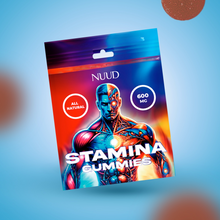
NUUD is a botanical supplement built around desire in general. It does nothing for Paxil (paroxetine), for paroxetine's side effects, for serotonin, for depression or for anxiety, and no interaction study exists for this formula and paroxetine. It has no role in managing any medical condition. The formula is anchored by the NUUD Mushroom Complex™, with Muira Puama, Boiled Rehmannia Root, Tribulus Terrestris, and Piper Nigrum for absorption, on a timeline of roughly 30 to 60 minutes. If you take blood-pressure medication or have a heart, kidney or lung condition, the label says no, and your doctor decides the rest. If your doctor has read that label and has no objection, that is what our women's libido gummies are for. There is a men's version.
Nothing is wrong with you
Two answers out there do you no good. The first is the shrug: everyone on an SSRI loses interest, it is the price of feeling better, get used to it. The numbers say that 70.7% is a counted rate, and that people improved substantially when the dose moved. A rate is not a life sentence.
The second answer is the forum certainty that Paxil ends your sex life for good. That one is louder and worse. In the study that followed people for 6 months, only 5.8% got completely better on their own, which is genuinely hard news, and 81.4% showed no improvement in that window. Get better on your own and get better with a dose change are two different claims, and the second one has numbers behind it. Onset runs early, around day 4, which means this started when the drug started.
The depression flattens wanting. The anxiety flattens wanting. The drug flattens wanting. Three causes reach the same flat feeling, and what helps depends on which part is doing the most work in your case. Wanting to want it again is a clear thing to ask for. Feeling normal again is a realistic target.
Keep reading
- SSRI libido drop: what actually helps
- Does Zoloft affect sex drive?
- Does Lexapro affect sex drive?
- Does Prozac affect sex drive?
- Wellbutrin and sex drive
- Libido after stopping antidepressants
Frequently asked questions
Does Paxil lower sex drive?
Yes. In a study of 1022 people in outpatient care with normal sexual function before treatment, 70.7% of people on paroxetine reported a new sexual problem. An anonymous survey of 107 people in psychiatric outpatient care found that the three SSRIs, paroxetine among them, significantly decreased desire below the level reported before the illness started. In 107 people treated with four antidepressants, impairment in the desire items ran from 38% to 50% in men and 26% to 32% in women. One 3-month study found finishing was the item that moved most, with desire barely changed.
Is Paxil worse than other SSRIs for sexual side effects?
In the counted comparisons it sits at the top. In 1022 people in outpatient care, 70.7% reported a problem on paroxetine against 57.7% on fluoxetine and 62.9% on sertraline. In a study of 344 people on four SSRIs, paroxetine produced more delay of finishing and more erection problems than fluvoxamine, fluoxetine and sertraline. A network meta-analysis of 63 studies rated paroxetine a statistically significantly higher risk than some other antidepressants, with strength of evidence rated low. A 2009 meta-analysis ranked it fourth.
How soon do Paxil sexual side effects start?
Early. In 99 healthy men randomized to paroxetine 20 milligrams, telephone ratings taken at home placed the onset at day 4, and a scheduled visit method caught the difference by day 8. In a 3-month study of people with anxiety disorders taking serotonin-reuptake antidepressants, finishing quality and finishing delay were already changed at month one. Dose matters too: in 344 people in outpatient care, sexual problems rose with dose and improved when the dose came down.
Do Paxil sexual side effects go away?
Sometimes, and usually slowly. In a study of 344 people in outpatient care followed for 6 months, only 5.8% had the problem disappear completely and 81.4% showed no improvement at all, while people improved substantially when the dose was lowered or the drug was stopped. In 119 people, sexual problems showed no link with how long the SSRI had been taken, which the authors read as no fading over time. A pooled 26-week extension found no significant difference between paroxetine, duloxetine and placebo.
Can I take a botanical supplement with Paxil?
Ask your prescriber first, with the bottle in hand. The NUUD label says to avoid use if you are on blood pressure medication, have cardiovascular, renal, or pulmonary conditions, or if you are sensitive to any of the ingredients. NUUD is a botanical supplement built around desire in general. It does nothing for Paxil, for paroxetine side effects, for serotonin, for depression or for anxiety. No interaction studies exist for this formula and paroxetine.
References
- Serretti A, Chiesa A. Treatment-emergent sexual dysfunction related to antidepressants: a meta-analysis. Journal of clinical psychopharmacology. 2009;29(3):259-66. https://pubmed.ncbi.nlm.nih.gov/19440080/
- Montejo AL, Llorca G, Izquierdo JA, Rico-Villademoros F. Incidence of sexual dysfunction associated with antidepressant agents: a prospective multicenter study of 1022 outpatients. Spanish Working Group for the Study of Psychotropic-Related Sexual Dysfunction. The Journal of clinical psychiatry. 2001;62 Suppl 3:10-21. https://pubmed.ncbi.nlm.nih.gov/11229449/
- Portman DJ, Kaunitz AM, Kazempour K, Mekonnen H, Bhaskar S, Lippman J. Effects of low-dose paroxetine 7.5 mg on weight and sexual function during treatment of vasomotor symptoms associated with menopause. Menopause (New York, N.Y.). 2014;21(10):1082-90. https://pubmed.ncbi.nlm.nih.gov/24552977/
- Jacobsen P, Zhong W, Nomikos G, Clayton A. Paroxetine, but not Vortioxetine, Impairs Sexual Functioning Compared With Placebo in Healthy Adults: A Randomized, Controlled Trial. The journal of sexual medicine. 2019;16(10):1638-1649. https://pubmed.ncbi.nlm.nih.gov/31405765/
- Kennedy SH, Eisfeld BS, Dickens SE, Bacchiochi JR, Bagby RM. Antidepressant-induced sexual dysfunction during treatment with moclobemide, paroxetine, sertraline, and venlafaxine. The Journal of clinical psychiatry. 2000;61(4):276-81. https://pubmed.ncbi.nlm.nih.gov/10830148/
- Delgado PL, Brannan SK, Mallinckrodt CH, et al. Sexual functioning assessed in 4 double-blind placebo- and paroxetine-controlled trials of duloxetine for major depressive disorder. The Journal of clinical psychiatry. 2005;66(6):686-92. https://pubmed.ncbi.nlm.nih.gov/15960560/
- Reichenpfader U, Gartlehner G, Morgan LC, et al. Sexual dysfunction associated with second-generation antidepressants in patients with major depressive disorder: results from a systematic review with network meta-analysis. Drug safety. 2014;37(1):19-31. https://pubmed.ncbi.nlm.nih.gov/24338044/
- Modell JG, Katholi CR, Modell JD, DePalma RL. Comparative sexual side effects of bupropion, fluoxetine, paroxetine, and sertraline. Clinical pharmacology and therapeutics. 1997;61(4):476-87. https://pubmed.ncbi.nlm.nih.gov/9129565/
- Montejo-González AL, Llorca G, Izquierdo JA, et al. SSRI-induced sexual dysfunction: fluoxetine, paroxetine, sertraline, and fluvoxamine in a prospective, multicenter, and descriptive clinical study of 344 patients. Journal of sex & marital therapy. 1997;23(3):176-94. https://pubmed.ncbi.nlm.nih.gov/9292833/
- Philipp M, Tiller JW, Baier D, Kohnen R. Comparison of moclobemide with selective serotonin reuptake inhibitors (SSRIs) on sexual function in depressed adults. The Australian and German Study Groups. European neuropsychopharmacology : the journal of the European College of Neuropsychopharmacology. 2000;10(5):305-14. https://pubmed.ncbi.nlm.nih.gov/10974600/
- Kennedy SH, Fulton KA, Bagby RM, Greene AL, Cohen NL, Rafi-Tari S. Sexual function during bupropion or paroxetine treatment of major depressive disorder. Canadian journal of psychiatry. Revue canadienne de psychiatrie. 2006;51(4):234-42. https://pubmed.ncbi.nlm.nih.gov/16629348/
- Zourková A, Hadasová E. Relationship between CYP 2D6 metabolic status and sexual dysfunction in paroxetine treatment. Journal of sex & marital therapy. 2002;28(5):451-61. https://pubmed.ncbi.nlm.nih.gov/12378847/
- Montejo AI, Llorca G, Izquierdo JA, et al. [Sexual dysfunction secondary to SSRIs. A comparative analysis in 308 patients]. Actas luso-espanolas de neurologia, psiquiatria y ciencias afines. 1996;24(6):311-21. https://pubmed.ncbi.nlm.nih.gov/9054202/
- Landén M, Högberg P, Thase ME. Incidence of sexual side effects in refractory depression during treatment with citalopram or paroxetine. The Journal of clinical psychiatry. 2005;66(1):100-6. https://pubmed.ncbi.nlm.nih.gov/15669895/
- Baldwin D, Bridgman K, Buis C. Resolution of sexual dysfunction during double-blind treatment of major depression with reboxetine or paroxetine. Journal of psychopharmacology (Oxford, England). 2006;20(1):91-6. https://pubmed.ncbi.nlm.nih.gov/16204325/
- Zourková A, Slanař O, Jarkovský J, Palčíková I, Pindurová E, Cvanová M. MDR1 in paroxetine-induced sexual dysfunction. Journal of sex & marital therapy. 2013;39(1):71-8. https://pubmed.ncbi.nlm.nih.gov/23152970/
- Jacobsen PL, Nomikos GG, Zhong W, Cutler AJ, Affinito J, Clayton A. Clinical implications of directly switching antidepressants in well-treated depressed patients with treatment-emergent sexual dysfunction: a comparison between vortioxetine and escitalopram. CNS spectrums. 2020;25(1):50-63. https://pubmed.ncbi.nlm.nih.gov/31010445/
- Dunn JA, Arakawa R, Greist JH, Clayton AH. Assessing the onset of antidepressant-induced sexual dysfunction using interactive voice response technology. The Journal of clinical psychiatry. 2007;68(4):525-32. https://pubmed.ncbi.nlm.nih.gov/17474807/
- Ahrold TK, Meston CM. Effects of SNS activation on SSRI-induced sexual side effects differ by SSRI. Journal of sex & marital therapy. 2009;35(4):311-9. https://pubmed.ncbi.nlm.nih.gov/19466669/
- Abler B, Seeringer A, Hartmann A, et al. Neural correlates of antidepressant-related sexual dysfunction: a placebo-controlled fMRI study on healthy males under subchronic paroxetine and bupropion. Neuropsychopharmacology : official publication of the American College of Neuropsychopharmacology. 2011;36(9):1837-47. https://pubmed.ncbi.nlm.nih.gov/21544071/
- Labbate LA, Grimes JB, Arana GW. Serotonin reuptake antidepressant effects on sexual function in patients with anxiety disorders. Biological psychiatry. 1998;43(12):904-7. https://pubmed.ncbi.nlm.nih.gov/9627745/
This article is for general education and is not medical advice. Depression, anxiety disorders, panic disorder and PTSD are medical conditions that only a licensed clinician can diagnose and manage. NUUD is a botanical supplement and has no role in diagnosing, treating, curing, or preventing any of them or any other disease, and these statements have not been evaluated by the Food and Drug Administration. Talk with your doctor before starting any new supplement, and do not stop or change any medication without your doctor.
