


Does Vyvanse Affect Sex Drive? What the Stimulant Studies Actually Show
Share
Vyvanse and sex drive can move in either direction, and the trials never measured it well enough to tell you which way yours will go. The main Vyvanse (lisdexamfetamine) trials in adults with ADHD and binge eating list dry mouth, insomnia, headache and a smaller appetite as the common side effects, and none of their published summaries prints a rate for lower libido. A records study of over 600 000 adolescents linked stimulants to higher desire, while a methylphenidate review found sexual function falling for some people and improving for others. ADHD itself shows up in the desire data too, and so do the sleep and appetite losses Vyvanse brings.
Before you read on
Vyvanse (lisdexamfetamine) is a prescription medicine that is doing work you cannot feel. Do not stop or change your medication without your doctor. Nothing here is medical advice or a reason to alter your prescriber's plan.
- In the 12-month Vyvanse extension study of 349 adults with ADHD, the top side effects included insomnia at 19.5%, dry mouth at 16.6% and a smaller appetite at 14.3%. Libido is missing from that list. It was open-label, with no placebo group.
- A network meta-analysis of 10 adult ADHD drug trials (n = 3006) found one libido difference, and it involved atomoxetine, a non-stimulant (OR 0.28, 95% CrI 0.08 to 0.90). The summary names no libido difference for any stimulant.
- Desire going up on a stimulant has some evidence behind it: a records study of over 600 000 adolescents linked stimulants to increased libido, especially in boys. It is an association from diagnosis codes in teenagers, and Vyvanse was never broken out separately.
- ADHD carries its own weight. At one Dutch clinic, 39% of men and 43% of women with ADHD screened positive for a sexual problem, and in a community survey of 943 people, presumptive ADHD came with 2.16 times the odds of distressing sexual problems.
- Sleep is where Vyvanse has the firmest data. Insomnia shows up in 10 to 19% of people on it in trials, and adults with ADHD report insomnia at 43 to 80% before any pill is added.
Figures from Weisler et al. 2009 (PMID 20095369), Goldberg et al. 2024 (PMID 39158790) and Hale et al. 2025 (PMID 40192478). The first is an open-label extension; the other two are observational, so their figures are associations.
Vyvanse and sex drive: is it the Vyvanse, or is it me?
People who search this usually live one of three stories. Desire went up once the dose kicked in. Desire went flat after starting Vyvanse. Or desire is fine at noon and gone by nine at night, right when the medicine wears off and there is finally time for each other. The research covers them unevenly. "Is it the Vyvanse, or is it me?" is a fair question, and the honest answer is often a bit of both, plus the ADHD, plus how tired you are.
Start with what came before the prescription. If desire was already patchy, and you were already tired all the time, the medicine may be getting blamed for a pattern it walked into. ADHD and sex drive covers what the condition does on its own. If your mood has been low for a while, depression and low libido is worth reading too. And if the change began within days of your first dose or a dose increase, write that date down. Timing is the most useful thing you can bring to your prescriber.
Desire up, desire down: what the Vyvanse and stimulant studies report
The direct Vyvanse evidence is shorter than you would expect. Adler and colleagues (2008) ran the main adult ADHD trial: 420 adults aged 18 to 55 on one of three doses of lisdexamfetamine or placebo for 4 weeks, double-blind. On the global rating, 29% of the placebo group improved against 57%, 62% and 61% on the three doses. The side effects the summary lists are dry mouth, a smaller appetite and insomnia, mostly mild. Libido does not appear. Weisler and colleagues (2009) then followed 349 of those adults for up to 12 months, open-label, and 191 (54.7%) finished. Their most common side effects were upper respiratory infections at 21.8%, insomnia at 19.5%, headache at 17.2%, dry mouth at 16.6%, a smaller appetite at 14.3% and irritability at 11.2%. No libido figure there either. That absence only tells you libido changes were rarer than those. A fuller table may still list them.
The binge-eating trials tell the same story. McElroy and colleagues (2015) gave 259 adults either lisdexamfetamine or placebo for 11 weeks. Any side effect at all showed up in 58.7% on placebo and 84.7% on the drug, and 1.5% on the drug had a serious one. The summary gives no breakdown by type. The two larger trials that followed, McElroy and colleagues (2016), enrolled 383 and 390 adults, and the side effects reported by at least 10% on the drug were dry mouth, insomnia and headache. Gasior and colleagues (2017) then followed 599 adults, 521 women and 78 men, for a year, open-label: 84.5% reported some side effect, and the most common were dry mouth at 27.2%, headache at 13.2% and insomnia at 12.4%. All three binge-eating papers were industry-funded, and none of their summaries mentions libido.
The desire-going-up side comes from other study designs. Hale and colleagues (2025) searched medical records for over 600 000 adolescents with ADHD, matched them statistically, and found stimulants linked to increased libido, especially in boys, who also had more erection problems. Girls on stimulants showed slightly higher libido. Non-stimulants showed fewer sexual side effects. The caveats are big: teenagers, diagnosis codes, a retrospective design, and no separate result for lisdexamfetamine. Bies and colleagues (2025) reviewed 14 methylphenidate studies from 186 screened and found desire falling for some people, especially those with other psychiatric diagnoses, and sexual function improving for others, especially on low doses. Methylphenidate is a different stimulant, and the review pooled no rates. For the neighbouring drug, see what the amphetamine studies show.
The oldest thread is a case series. Bartlik and colleagues (1995) described five people whose SSRI-related sexual side effects reversed when they took low doses of dextroamphetamine or methylphenidate as needed. The women reported a stronger response and the men firmer erections. Five cases, no control group, and neither drug was lisdexamfetamine. It explains where the forum idea comes from and proves nothing about your Vyvanse.
What ADHD itself does to desire
This is the part most articles skip, and it may be the biggest piece. Bijlenga and colleagues (2018) gave screening questionnaires to 136 adults at a Dutch outpatient ADHD clinic and compared them with two large general-population surveys. 39% of the men and 43% of the women screened positive for a sexual problem. Another 17% of men and 5% of women screened positive for some other sexual disorder. Only one man had ever been diagnosed with a sexual disorder at that clinic before the study asked. The summary does not give the general-population percentages or say how many were taking a stimulant, so the chart only shows the ADHD group.
136 adults at one Dutch ADHD clinic
Share who screened positive, by sex, from Bijlenga and colleagues (2018). Orange is a sexual problem; blue is any other sexual disorder. The paper's summary gives no general-population figures, so only the ADHD group is drawn.
Source: Bijlenga D et al., Atten Defic Hyperact Disord 2018 (PMID 28831742). Screening-questionnaire survey at one outpatient clinic; medication use not reported.
Amani Jabalkandi and colleagues (2020) compared adults with ADHD (N = 63, mean age 31.11) with matched controls (N = 66, mean age 31.37). Women with ADHD scored lower in every domain of the women's questionnaire, desire included (P below .001). Men with ADHD scored lower on every subscale except desire, where there was no difference (P = .75). It is a small study from one clinic, and it does not say who was medicated. Goldberg and colleagues (2024) surveyed 943 people in the community, 106 with presumptive ADHD, and found those with presumptive ADHD more likely to have distressing sexual problems, with an odds ratio of 2.16. ADHD there was judged by questionnaire, in a one-time survey.
Soldati and colleagues (2020) pulled the field together in a systematic review. People with ADHD reported more sexual desire, more solo sex, less sexual satisfaction and more sexual problems than the general population. So ADHD can come with higher wanting and lower satisfaction at the same time. The review warns that the studies were few and small. For a partner, this matters. A relationship where one person's attention drifts mid-conversation and mid-intimacy can end up feeling like roommates, and that pattern predates any pill. Stress killing your sex drive covers how a heavy mental load does its own damage.
The comedown, sleep and appetite on Vyvanse
The firmer data is about sleep and appetite. Coghill and colleagues (2014) reviewed the Vyvanse safety record across children, adolescents and adults. In the short-term placebo-controlled trials, 25% to 39% reported a smaller appetite and 11% to 19% reported insomnia. The same review found no overall worsening of sleep quality in adults. Wynchank and colleagues (2017) put the Vyvanse insomnia rate in trials at 10 to 19%, and they point out something easy to miss: adults with ADHD report insomnia at 43 to 80% across three studies, against 31 to 56% in the general population. Many people start Vyvanse already short on sleep.
Timing adds another layer. Snitselaar and colleagues (2017) reviewed sleep in adult ADHD and found longer time to fall asleep, broken sleep, later waking and a delayed melatonin signal, and they report that stimulants push the body clock later still. None of these papers measured desire. But put them together and the evening slump makes sense. You skip lunch, run hard all day, the medicine fades after dinner, and bedtime keeps sliding. When you are that tired, desire is often the first thing to go. Sleep, libido and testosterone goes through how much short sleep alone can take away.
Appetite deserves its own line. In the year-long binge-eating extension, weight fell by an average of 7.04 kg. For some people that is the goal. For others, eating little all day means the evening crash lands harder. No trial measured desire here, so this link is a guess. You can test it yourself: eat a real lunch and see whether the evenings change.
What the Vyvanse reviews and adverse-event tables say
The big reviews mostly answer different questions. Chierrito de Oliveira and colleagues (2019) ran a network meta-analysis of 10 double-blind adult ADHD drug trials (n = 3006). They found differences on appetite, insomnia and sleepiness, and one on decreased libido, between atomoxetine, a non-stimulant, and placebo (OR 0.28, 95% CrI 0.08 to 0.90). The summary names no libido difference for any stimulant. Ten trials is a small base, the intervals are wide, and the summary does not say which way each odds ratio runs, so read it as "one libido signal, and it came from atomoxetine".
Cortese and colleagues (2018) pooled 133 double-blind trials, 51 of them in adults, covering amphetamines including lisdexamfetamine, atomoxetine, bupropion, clonidine, guanfacine, methylphenidate and modafinil. In 5362 adults, several drugs, amphetamines among them, had more dropouts from side effects than placebo. Confidence was low or very low for most indirect comparisons. Sexual side effects are absent from their summary. If you are weighing bupropion as well, what the bupropion trials show covers that drug on its own terms. Castells and colleagues (2018), the Cochrane review, pooled 19 studies in 2521 adults, including lisdexamfetamine. Studies averaged 5.3 weeks, 16 were industry-funded, the evidence was low or very low quality, and again the summary has no sexual outcome.
So the Vyvanse evidence on desire is mostly gaps. The drug's own trials left libido out of their summaries, and the desire studies looked at teenagers, other stimulants, or five cases. Anyone who says Vyvanse definitely lowers or raises desire has gone past these papers.
What each source can and cannot tell you
349 adults, up to 12 months on Vyvanse: insomnia 19.5%, appetite 14.3%. No libido figure. Open-label.
420 adults, 4 weeks, placebo-controlled: dry mouth, appetite, insomnia. Libido absent from the summary.
Three trials and an extension: dry mouth, headache, insomnia lead. Industry-funded, no libido figure.
10 trials, n = 3006: the one libido difference was atomoxetine versus placebo, OR 0.28.
Over 600 000 adolescents: stimulants linked to increased libido. Records study, teenagers only.
136 adults with ADHD: 39% of men and 43% of women screened positive for a sexual problem.
943 people: presumptive ADHD came with an odds ratio of 2.16 for distressing sexual problems.
Vyvanse safety review: smaller appetite 25% to 39%, insomnia 11% to 19%.
Built from PMID 20095369, 19012818, 25587645, 26346638, 28383364, 28366111, 40192478, 28831742, 39158790 and 24788672.
| Study | People | Result | Caveat |
|---|---|---|---|
| Adler 2008 | 420 adults with ADHD, 4 weeks | Side effects mostly mild: dry mouth, appetite, insomnia | No libido figure in the summary |
| Weisler 2009 | 349 adults with ADHD, up to 12 months | Insomnia 19.5%, dry mouth 16.6%, appetite 14.3%, irritability 11.2% | Open-label; 54.7% finished |
| Gasior 2017 | 599 adults with binge eating, 52 weeks | Dry mouth 27.2%, headache 13.2%, insomnia 12.4% | Open-label; industry-funded |
| Chierrito de Oliveira 2019 | 10 trials, n = 3006 | Decreased libido: atomoxetine versus placebo, OR 0.28 (95% CrI 0.08 to 0.90) | No stimulant libido signal named; wide interval |
| Hale 2025 | Over 600 000 adolescents with ADHD | Stimulants linked to increased libido, more so in boys | Retrospective records; teenagers |
| Bies 2025 | 14 methylphenidate studies | Desire down in some, sexual function up in others | A different stimulant; no pooled rates |
| Bijlenga 2018 | 136 adults with ADHD | 39% of men, 43% of women screened positive for a sexual problem | One clinic; medication use not given |
| Amani Jabalkandi 2020 | Adults with ADHD (N = 63, mean age 31.11) and controls (N = 66, mean age 31.37) | Women lower on desire (P below .001); men no difference on desire (P = .75) | Small; medication use not given |
What to bring to your prescriber
You will get a better answer if you walk in with the question already shaped. Bring these six things.
- Which direction your desire moved, up, down, or gone only in the evenings, and whether a partner has noticed the same.
- The timeline: when you started Vyvanse or changed the dose, and when the change in desire began.
- How you are sleeping and eating on a typical medicated day, including whether you skip meals.
- What desire was like before the prescription, since adults with ADHD report sexual problems at high rates on their own, 39% of men and 43% of women in one clinic sample.
- Your mood, any other medicines, and anything you have changed recently, since each of these can pull desire down too.
- If you are thinking about a supplement, the bottle itself, so your prescriber can read the label.
"I've tried everything"
You may have moved your dose earlier, skipped a day, blamed yourself, or blamed your partner. That is exhausting. The Vyvanse trials counted dry mouth and headache carefully and left desire out of their summaries. The studies that did look at desire mixed stimulants together, studied teenagers, or described five people. What the trials never tested is the ordinary stuff that often carries the most weight: sleep, food, stress and the state of the relationship. If your labs came back normal and you still feel nothing, numbers fine, still flat walks through what that can mean. And if low desire has lasted months and bothers you, what HSDD means explains when it is worth naming to a clinician as its own thing.
The everyday levers, and where a botanical fits
Start with who this section is not for. Vyvanse raised pulse and blood pressure a little in the trials, and NUUD's own label carries a caution, quoted here word for word: avoid use if you are on blood pressure medication, have cardiovascular, renal, or pulmonary conditions, or if you are sensitive to any of the ingredients. If any of that applies to you, that sentence is the answer. Talk to your prescriber first and bring the label.
A few ordinary things move desire in most people, and the free ones do more work than the internet admits.
- Sleep, protected on purpose, since Vyvanse and ADHD both push bedtime later. Sleep, libido and testosterone covers why it matters.
- Food on medicated days, so the evening does not start on empty.
- Movement you can keep up. Exercise and libido covers the wider picture.
- Time with a partner that is planned for when you have energy, which may be earlier in the day.
- A botanical supplement, if you want one, as the smallest lever on the list.
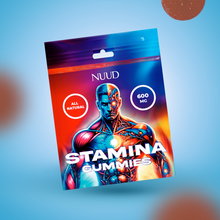
NUUD is a botanical supplement built around desire in general; it does nothing for ADHD, binge eating, or the side effects of Vyvanse or any stimulant, and it has no role in managing any medical condition. The formula is anchored by the NUUD Mushroom Complex™, with Muira Puama, Boiled Rehmannia Root, Tribulus Terrestris, and Piper Nigrum for absorption, and it takes roughly 30 to 60 minutes to kick in. If you take blood-pressure medication or have a heart, kidney or lung condition, the label says no, and your prescriber decides the rest. If your prescriber has read that label and has no objection, that is what our women's libido gummies are for. There is a men's version. For the bigger picture by sex, see low libido in women and low libido in men.
Nothing is wrong with you
You were prescribed Vyvanse because something was making daily life harder than it needed to be, and the medicine is helping with that. In the main adult trial, 57% to 62% of people on it improved on the global rating, against 29% on placebo. That work matters. Now look at desire with the same clear eyes. The adults in these studies were often sleeping badly before they started, many were eating less once they did, and ADHD itself comes with high rates of sexual problems, 39% of men and 43% of women in one clinic sample. That is a tired body carrying a lot, and tired is ordinary. If your version of this is "I just want to feel normal again", or you want to want it again, that is a reasonable goal, and the place to start is an honest conversation with the person who writes your prescription.
Keep reading
- Does Adderall affect sex drive?
- ADHD and sex drive
- Does Wellbutrin affect sex drive?
- Sleep, libido and testosterone
- Low libido in men
- Why is my libido so low?
Frequently asked questions
Does Vyvanse lower sex drive?
The trials give no rate, and the wider evidence runs both ways. The main adult ADHD trial of 420 people and the 12-month extension of 349 people list dry mouth, insomnia, headache, a smaller appetite and irritability as the common side effects, and neither summary includes libido. A network meta-analysis of 10 adult trials found one libido difference, and it was for atomoxetine, a non-stimulant. If Vyvanse lowers desire, it did so less often in those trials than the listed effects, and poor sleep and skipped meals may explain part of it.
Does Vyvanse increase sex drive?
Some people report desire going up, and the evidence for it is observational. A records study of over 600 000 adolescents with ADHD linked stimulants to increased libido, more so in boys, though it did not separate Vyvanse from other stimulants. A review of 14 methylphenidate studies found sexual function improving for some people, especially on low doses, and falling for others. A 1995 case series described five people whose SSRI side effects reversed on a stimulant. None of these is a trial of Vyvanse.
Why does my sex drive drop when Vyvanse wears off?
No study has measured desire across the Vyvanse day, so this is a reasonable guess from related data. Vyvanse trials report a smaller appetite in 25% to 39% of people and insomnia in 11% to 19%, and a review found that stimulants push the body clock later. Adults with ADHD report insomnia at 43 to 80% before any medicine is added. By evening, many people are underfed, short on sleep and running on empty, and desire tends to fade in a tired body.
Is Vyvanse or Adderall worse for sex drive?
No study in this article compared the two on desire, so there is no fair ranking. Vyvanse is lisdexamfetamine and Adderall is a mixed amphetamine salt, and both sit in the amphetamine family. The one adult meta-analysis that found a libido difference found it for atomoxetine, a non-stimulant, and named none for either amphetamine. How your own desire responds depends on your sleep, your appetite, your mood and your ADHD, and a switch between drugs is a decision for your prescriber.
Can I take a botanical supplement with Vyvanse?
Ask your prescriber first, and bring the label. NUUD's label says to avoid use if you are on blood pressure medication, have cardiovascular, renal, or pulmonary conditions, or if you are sensitive to any of the ingredients, and Vyvanse raised pulse and blood pressure a little in the trials. NUUD does nothing for ADHD, binge eating, or the side effects of Vyvanse or any stimulant, and it has no role in managing a medical condition. No interaction studies exist for this formula, so the decision belongs to you and your prescriber.
References
- Hale EW, Igoe TJ, Bernat OR, Cohan TD, Thompson KP. From hyper- to hypo-: ADHD medications & sexual dysfunction. The journal of sexual medicine. 2025;22(5):701-710. https://pubmed.ncbi.nlm.nih.gov/40192478/
- Chierrito de Oliveira D, Guerrero de Sousa P, Borges Dos Reis C, Tonin FS, Maria Steimbach L, Virtuoso S, et al. Safety of Treatments for ADHD in Adults: Pairwise and Network Meta-Analyses. Journal of attention disorders. 2019;23(2):111-120. https://pubmed.ncbi.nlm.nih.gov/28366111/
- Adler LA, Goodman DW, Kollins SH, Weisler RH, Krishnan S, Zhang Y, et al. Double-blind, placebo-controlled study of the efficacy and safety of lisdexamfetamine dimesylate in adults with attention-deficit/hyperactivity disorder. The Journal of clinical psychiatry. 2008;69(9):1364-73. https://pubmed.ncbi.nlm.nih.gov/19012818/
- Weisler R, Young J, Mattingly G, Gao J, Squires L, Adler L, et al. Long-term safety and effectiveness of lisdexamfetamine dimesylate in adults with attention-deficit/ hyperactivity disorder. CNS spectrums. 2009;14(10):573-85. https://pubmed.ncbi.nlm.nih.gov/20095369/
- McElroy SL, Hudson JI, Mitchell JE, Wilfley D, Ferreira-Cornwell MC, Gao J, et al. Efficacy and safety of lisdexamfetamine for treatment of adults with moderate to severe binge-eating disorder: a randomized clinical trial. JAMA psychiatry. 2015;72(3):235-46. https://pubmed.ncbi.nlm.nih.gov/25587645/
- McElroy SL, Hudson J, Ferreira-Cornwell MC, Radewonuk J, Whitaker T, Gasior M. Lisdexamfetamine Dimesylate for Adults with Moderate to Severe Binge Eating Disorder: Results of Two Pivotal Phase 3 Randomized Controlled Trials. Neuropsychopharmacology : official publication of the American College of Neuropsychopharmacology. 2016;41(5):1251-60. https://pubmed.ncbi.nlm.nih.gov/26346638/
- Gasior M, Hudson J, Quintero J, Ferreira-Cornwell MC, Radewonuk J, McElroy SL. A Phase 3, Multicenter, Open-Label, 12-Month Extension Safety and Tolerability Trial of Lisdexamfetamine Dimesylate in Adults With Binge Eating Disorder. Journal of clinical psychopharmacology. 2017;37(3):315-322. https://pubmed.ncbi.nlm.nih.gov/28383364/
- Coghill DR, Caballero B, Sorooshian S, Civil R. A systematic review of the safety of lisdexamfetamine dimesylate. CNS drugs. 2014;28(6):497-511. https://pubmed.ncbi.nlm.nih.gov/24788672/
- Bijlenga D, Vroege JA, Stammen AJM, Breuk M, Boonstra AM, van der Rhee K, et al. Prevalence of sexual dysfunctions and other sexual disorders in adults with attention-deficit/hyperactivity disorder compared to the general population. Attention deficit and hyperactivity disorders. 2018;10(1):87-96. https://pubmed.ncbi.nlm.nih.gov/28831742/
- Amani Jabalkandi S, Raisi F, Shahrivar Z, Mohammadi A, Meysamie A, Firoozikhojastefar R, et al. A study on sexual functioning in adults with attention-deficit/hyperactivity disorder. Perspectives in psychiatric care. 2020;56(3):642-648. https://pubmed.ncbi.nlm.nih.gov/32043624/
- Goldberg SY, Thulin MC, Kim HS, Dawson SJ. Distressing Problems with Sexual Function and Symptoms of Attention-Deficit/Hyperactivity Disorder. Archives of sexual behavior. 2024;53(10):3739-3745. https://pubmed.ncbi.nlm.nih.gov/39158790/
- Soldati L, Bianchi-Demicheli F, Schockaert P, Köhl J, Bolmont M, Hasler R, et al. Sexual Function, Sexual Dysfunctions, and ADHD: A Systematic Literature Review. The journal of sexual medicine. 2020;17(9):1653-1664. https://pubmed.ncbi.nlm.nih.gov/32402814/
- Bieś R, Szewczyk Z, Warchala A, Martyniak E, Krzystanek M. The Impact of Methylphenidate on Sexual Functions: A Systematic Review of Benefits and Risks. Pharmaceuticals (Basel, Switzerland). 2025;18(5):718. https://pubmed.ncbi.nlm.nih.gov/40430537/
- Bartlik BD, Kaplan P, Kaplan HS. Psychostimulants apparently reverse sexual dysfunction secondary to selective serotonin re-uptake inhibitors. Journal of sex & marital therapy. 1995;21(4):264-71. https://pubmed.ncbi.nlm.nih.gov/8789508/
- Wynchank D, Bijlenga D, Beekman AT, Kooij JJS, Penninx BW. Adult Attention-Deficit/Hyperactivity Disorder (ADHD) and Insomnia: an Update of the Literature. Current psychiatry reports. 2017;19(12):98. https://pubmed.ncbi.nlm.nih.gov/29086065/
- Snitselaar MA, Smits MG, van der Heijden KB, Spijker J. Sleep and Circadian Rhythmicity in Adult ADHD and the Effect of Stimulants. Journal of attention disorders. 2017;21(1):14-26. https://pubmed.ncbi.nlm.nih.gov/23509113/
- Cortese S, Adamo N, Del Giovane C, Mohr-Jensen C, Hayes AJ, Carucci S, et al. Comparative efficacy and tolerability of medications for attention-deficit hyperactivity disorder in children, adolescents, and adults: a systematic review and network meta-analysis. The lancet. Psychiatry. 2018;5(9):727-738. https://pubmed.ncbi.nlm.nih.gov/30097390/
- Castells X, Blanco-Silvente L, Cunill R. Amphetamines for attention deficit hyperactivity disorder (ADHD) in adults. The Cochrane database of systematic reviews. 2018;8(8):CD007813. https://pubmed.ncbi.nlm.nih.gov/30091808/
This article is for general education and is not medical advice. ADHD and binge eating disorder are medical conditions that only a licensed clinician can diagnose and manage, and Vyvanse (lisdexamfetamine) is a prescription medicine. NUUD is a botanical supplement and has no role in diagnosing, treating, curing, or preventing ADHD, binge eating disorder, the side effects of any medication, or any other disease, and these statements have not been evaluated by the Food and Drug Administration. Talk with your doctor before starting any new supplement, and do not stop or change your medication without your doctor.
