

Sex Drive After Breast Cancer Treatment: What 36 Studies of 9,749 Survivors Found
Share
Sex drive after breast cancer treatment drops for most women, and the pooled numbers say so plainly: across 36 studies covering 9,749 breast cancer survivors, 70% scored in the range questionnaires call sexual dysfunction (95% CI 64% to 76%). Sexual distress came out at 57%, on an interval running from 29% to 86%, wide enough to tell you the thing is common and the measurement is rough. The risk factors that analysis names are mastectomy, adjuvant therapies, dissatisfaction with body image, and lack of sexual counseling. That last one is the tell: it describes care nobody gave you, and your oncology team can change it with a single referral.
Do not stop or change your medication without your doctor. Endocrine therapy is the treatment that lowers your risk of the cancer coming back, and every decision about it belongs to your oncologist: dose, tamoxifen against an aromatase inhibitor, whether ovarian suppression stays. The symptoms it leaves you with are a separate conversation, and that one has real options.
- Across 36 studies and 9,749 survivors, 70% scored in the dysfunction range (95% CI 64% to 76%). Sexual distress came out at 57%, on an interval of 29% to 86% too wide to lean on.
- In a cross-sectional French cohort of 356 women five years on, adjuvant endocrine therapy carried adjusted odds of 1.87 (95% CI 1.14 to 3.06) of a higher dysfunction class, with radiotherapy at 2.36. No direction of cause can be read off cross-sectional data.
- In a Brazilian cohort of 363 premenopausal women, both groups declined early, and by 24 months the endocrine-therapy-only group was back to baseline while the ovarian-suppression group stayed below. A group average from one observational study.
- The pooled work groups chemotherapy, radiotherapy and endocrine therapy together as "adjuvant therapies", so it cannot say which one is doing what.
- The best non-hormonal evidence here is about hot flush bother and menopausal symptom load, at SMD -0.54 short term across 12 randomized trials. That same review found too few studies reporting on sexual functioning to pool at all.
Figures from Liu et al. 2026 (PMID 41563059), Radwan et al. 2026 (PMID 42668330) and Nunes et al. 2025 (PMID 41097755). All three are observational, so every figure is an association.
"Is it the treatment, or is it me?"
Type that into a search bar and two confident answers come back. One says breast cancer treatment ends your sex life. The other says it is all in your head. The research says something narrower: most survivors report this, and much of what carries it has a name and a clinician attached. If seven women in ten who have been through this live with the same thing, the odds that you are the broken one are small. Our guide to why your libido is so low covers the parts with nothing to do with cancer, and low libido and menopause covers the version most survivors get moved into years early.
What makes it lonely is that almost nobody gets asked. The largest analysis in this literature lists lack of sexual counseling among its risk factors, a careful way of saying that the absence of one conversation travels with worse outcomes.
What 36 studies of 9,749 survivors found
Liu and colleagues searched nine databases for studies published between January 2014 and October 2025. Thirty-six met the criteria, covering 9,749 survivors. Pooled prevalence of scoring in the dysfunction range: 70% (95% CI 64% to 76%). Sexual distress: 57%, interval 29% to 86%.
Read that second interval before you carry the number anywhere. From 29% to 86% is most of the possible range, which happens when the underlying studies measure distress in ways that do not line up. The honest reading of 57% is that plenty of women are distressed and nobody agrees how to count them.
The risk factors identified were mastectomy, adjuvant therapies, dissatisfaction with body image, and lack of sexual counseling. Prevalence also differed by educational level, economic development level, pathological stage, surgical method, and how soon after surgery a woman had sex again. Each is an observed difference in pooled observational data, so none shows a direction of travel.
Four of the nine databases were Chinese-language sources, so the pool leans toward cohorts recruited in China, and prevalence is a snapshot of women asked once. Treat 70% as the shape of a problem and never a prediction about you. The biggest limit is the phrase "adjuvant therapies": one line item covering chemotherapy, radiotherapy and endocrine therapy together. Whether the letrozole in your kitchen cabinet is doing this, the pooled work cannot say.
Letrozole, anastrozole and tamoxifen: what the odds look like
Radwan and colleagues took 356 women from the French national VICAN5 survey, all five years past a breast cancer diagnosis, and sorted them by their answers to five items from the Relationship and Sexuality Scale. A three-class model fit best: no or low dysfunction (124 women, 34.8%), moderate (133, 37.4%), high (99, 27.8%).
How 356 French survivors sorted, five years on
Three classes from one paper, Radwan et al. 2026. Bars show the share of the cohort in each class, count printed underneath.
Source: Radwan E et al., Journal of Cancer Survivorship 2026 (PMID 42668330). Cross-sectional analysis of the French VICAN5 survey, so the classes describe one cohort at one moment and carry no direction of cause.
The regression on those classes is where endocrine therapy shows up. Adjuvant endocrine therapy at the time of the survey carried adjusted odds of 1.87 (95% CI 1.14 to 3.06, p = 0.013) of sitting in a higher dysfunction class. Radiotherapy came out at 2.36 (1.21 to 4.61), being over 50 at diagnosis at 2.30 (1.34 to 3.97), hypnotic use at 1.66 (1.09 to 2.53), frequent excessive sweating at 1.67 (1.01 to 2.77), and frequent paresthesia in the breast or arm at 1.78 (1.07 to 2.95).
Hold that at arm's length in the right way. It is one cross-sectional French cohort, a photograph of 356 women at a single moment, and no arrow of cause can be drawn from a photograph. What it does is put a number on something women in this position get told is imaginary.
Two of those odds ratios point at things easier to change than your cancer treatment. Hypnotic use is both a marker of a sleep problem and a medication in its own right. If your medication list has grown since diagnosis, read it through with someone qualified, mood medications included: we covered that class in antidepressants and low libido. Change nothing on your own.
Does it come back? The 24-month picture
Nunes and colleagues followed 363 premenopausal women, all 50 or under, with stage I to III hormone-receptor-positive breast cancer, treated in private facilities in Brazil between 2013 and 2023. Eighty percent were on endocrine therapy alone, 20% on endocrine therapy plus ovarian function suppression, measured at baseline and at 3, 6, 9, 12 and 24 months.
Both groups reported early declines. By 24 months the endocrine-therapy-only patients had returned to baseline. The ovarian-suppression patients remained below it. That is the most hopeful sentence in this literature, and conditions come attached.
At the item level the picture is mixed. There was no significant difference between the groups on the desire item (51.5% versus 42.0%, p = 0.33) or on enjoyment (26.0% versus 13.5%, p = 0.20). Lack of sexual activity was more frequent with ovarian suppression (60.6% versus 41.2%, p = 0.05), as was feeling less attractive (38.2% versus 19.9%, p = 0.04) and less feminine (26.5% versus 11.7%, p = 0.05).
What this cohort cannot say matters as much. It is observational, one country, private healthcare, everyone premenopausal at diagnosis, and the follow-up stops at 24 months. "Back to baseline" is a group average, and a group average never described anyone's Tuesday night.
"I just want to feel normal again"
Desire does not get flattened in isolation. Han and colleagues surveyed 214 women on endocrine therapy in China who were seeking traditional Chinese medicine. The most common moderate to severe symptoms were sleep disturbance (57%), difficulty remembering (49%), sweating (42%), fatigue (41%), and distress (39%). Six clusters emerged, one of which the authors labelled breast-sexual dysfunction.
Two clusters dragged on quality of life: distress paired with sleep disturbance (B = -0.258, 95% CI -0.383 to -0.133) and hot flashes paired with sweating (B = -0.128, 95% CI -0.243 to -0.013).
That sample is specific, since these women went looking for a particular kind of care, so the percentages are not a general survivor population. What travels is the shape: tired, foggy, sweating through the night, sleeping badly, carrying distress. Desire will never be the loudest thing in a body holding that list. We wrote about sleep in sleep and sex drive and about the mood half in depression and low libido.
The body image conversation nobody starts
The largest odds ratio in Radwan's entire model belongs to something no prescription covers. Feeling less sexually attractive carried adjusted odds of 4.72 (95% CI 3.01 to 7.41, p < 0.001) of a higher dysfunction class, more than double the odds attached to radiotherapy. The Brazilian cohort found the same at the item level, and Liu's pooled analysis named dissatisfaction with body image as a risk factor outright, alongside mastectomy.
None of that means the problem is in your head. It means a body that has been cut, irradiated, and pushed into early menopause has to be lived in again, and that process has been studied and has support attached. We wrote the general version in body confidence and libido, and the closest surgical parallel is sex drive after hysterectomy. Psychosexual support for body image is named by the French authors themselves.
What is treatable, and how good the evidence is
Van Driel and colleagues pooled 12 randomized controlled trials of mindfulness and cognitive behavioural approaches for menopausal symptoms, natural and treatment-induced. Short term, under 20 weeks, hot flush bother came down at SMD -0.54 (95% CI -0.74 to -0.35, I2 18%) and menopausal symptoms generally at SMD -0.34 (95% CI -0.52 to -0.15, I2 0%). Medium term it held at SMD -0.38 (95% CI -0.58 to -0.18, I2 16%). In the treatment-induced menopause subgroup, which the authors state was exclusively breast cancer populations, it came down too.
The same review set out to measure sexual functioning as a main outcome and could not: too few studies reported on it to pool. So the strongest non-hormonal evidence here is about hot flush bother and symptom load. Anyone telling you a mindfulness course is proven to bring desire back is quoting a study nobody ran.
It matters anyway, for a reason the same review gives in its background: hormone replacement is contraindicated after breast cancer. The lever most women in early menopause reach for is off the table, which is why the non-hormonal work carries weight, and why hormone therapy and libido reads differently for a survivor. Local vaginal therapies are the oncologist's call, and our write-up of natural remedies for dryness is background reading, never a substitute. Perimenopause and sex drive covers the timeline of early menopause on its own terms.
Anbari and colleagues screened 3,041 records and included 21 clinical practice guideline documents on breast cancer survivorship care. Of the three topics those guidelines agree on, one is fertility, reproductive, endocrine and sexual health. Asking for it by name is asking for standard care.
What to ask your oncology team
Five conversations this literature says are worth starting
Lack of sexual counseling was a risk factor in the 36-study analysis. Ask for sexual health support and say the guidelines list it.
Hot flushes, night sweats, sleep. Non-hormonal options have randomized trials behind them, SMD -0.54 for hot flush bother.
Hypnotic use carried odds of 1.66 in the French cohort. Bring the full list, mood medications included. Change nothing yourself.
Feeling less sexually attractive carried the largest odds in the French model, at 4.72. Psychosexual support exists for it.
Tamoxifen against an aromatase inhibitor, dose, duration, ovarian suppression. Raise it, let your oncologist call it.
Built from PMID 41563059, 42668330, 29542222 and 42487025. Every item is a question for a clinician who knows your history.
The papers side by side
| Paper and population | Design | Size | Headline figure | What it cannot say |
|---|---|---|---|---|
| Liu 2026, survivors worldwide | Meta-analysis of observational studies | 36 studies, 9,749 survivors | 70% in the dysfunction range (64% to 76%); distress 57% (29% to 86%) | Which treatment did it. Chemotherapy, radiotherapy and endocrine therapy are pooled as "adjuvant therapies" |
| Radwan 2026, French VICAN5, five years on | Cross-sectional secondary analysis | 356 women | Endocrine therapy aOR 1.87 (1.14 to 3.06); classes 34.8%, 37.4%, 27.8% | Anything about cause. One country, one moment, five self-reported items |
| Nunes 2025, premenopausal Brazilian patients | Prospective cohort, 24-month follow-up | 363 patients, 80% endocrine therapy alone | Endocrine-therapy-only group back to baseline by 24 months; ovarian-suppression group below | Whether it holds past 24 months, outside private Brazilian clinics, or postmenopausal |
| Van Driel 2019, natural and treatment-induced menopause | Meta-analysis of randomized trials | 12 RCTs | Hot flush bother SMD -0.54 (-0.74 to -0.35) short term; symptoms SMD -0.34 | Anything about desire. Too few studies reported on sexual functioning to pool |
| Han 2025, Chinese patients seeking traditional medicine | Cross-sectional survey | 214 patients | Sleep disturbance 57%, difficulty remembering 49%, sweating 42%, fatigue 41% | Anything about survivors generally. A self-selected sample in one country |
| Anbari 2026, survivorship guidelines | Review of clinical practice guidelines | 21 guideline documents from 3,041 records | Sexual health sits inside one of three consolidated survivorship topics | Whether any of it happens in your clinic. The model is proposed for testing |
How to raise it in a fifteen-minute appointment
Take it in this order, because the appointment will be shorter than you want:
- Say it in the first two minutes. Desire is the first item dropped when the clock runs out.
- Ask for a sexual health referral by name. Lack of sexual counseling is a risk factor in the largest analysis, and the guidelines list this care.
- Bring the menopause symptoms with it. Hot flushes, night sweats and broken sleep have non-hormonal options with trials behind them.
- Hand over the whole medication list, sleeping aids and mood medications included. Hypnotic use carried odds of 1.66 in the French cohort. Change nothing on your own.
- Say the body image part out loud, hard as that sentence is. It carried the largest odds in the French model, 4.72, and psychosexual support for it is a real referral.
- Ask the switch question last, and let it stay a question. Tamoxifen against an aromatase inhibitor, dose, and whether ovarian suppression continues are your oncologist's calls.
The everyday levers, and where a botanical fits
Start with who this section is not for. NUUD's label says to avoid use if you are on blood pressure medication, have cardiovascular, renal, or pulmonary conditions, or if you are sensitive to any of the ingredients. On top of that: if you have had a hormone-receptor-positive cancer or you are on endocrine therapy, do not take NUUD or any botanical for desire without your oncologist's explicit OK. Tribulus Terrestris is described in the literature as testosterone-adjacent, and anything hormone-adjacent is what an oncology team wants to review first. For most readers of this article, right now, those two sentences are the whole answer.
What is left is ordinary and free, and does more work than the internet admits.
- The symptoms, on their own terms, starting with sleep and hot flushes. That is where the randomized evidence is.
- Mood, screened and treated properly.
- The sexual health referral, standard care that is almost never offered unasked.
- Time in your body with no audience and no expectation attached.
- Movement you enjoy, at whatever scale your energy allows.
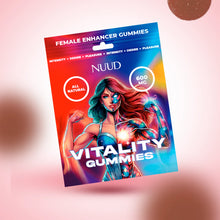
NUUD is a botanical supplement built around desire in general. It does nothing for cancer, recurrence risk, hot flushes, or the side effects of endocrine therapy, and has no role in managing any medical condition. The formula is anchored by the NUUD Mushroom Complex™, with Muira Puama, Boiled Rehmannia Root, Tribulus Terrestris, and Piper Nigrum for absorption, on a timeline of 30 to 60 minutes. If there is a later chapter for you, after treatment, with your oncologist having read the label and said yes, that is when our women's libido gummies become a question worth asking. Talk to your doctor first and bring the label.
"Nothing is wrong with you"
You have probably been handed two useless answers. One is a shrug in an appointment that was always going to be about your scan. The other is a voice online promising the right protocol brings it back in six weeks.
The research supports neither. Seven survivors in ten score in the dysfunction range. Endocrine therapy sits in the models with adjusted odds under two, next to radiotherapy at 2.36 and body image at 4.72. One cohort watched the endocrine-therapy-only group climb back to baseline by 24 months while the ovarian-suppression group did not. Every number is an association from observational work.
You had surgery, possibly radiation, possibly chemotherapy, and you take a daily tablet that suppresses the hormone your body used to run on, while sleeping badly and sweating through the night. Any one of those flattens wanting. If you have been quietly asking whether something is wrong with you: no. No sex drive after 40 and autoimmune disease and low sex drive walk through how ordinary this question is, and normal labs, low libido is for the appointments where everything came back fine and you still feel nothing.
Keep reading
- Low libido and menopause
- Hormone therapy and libido
- Body confidence and libido
- Depression and low libido
- Low libido in women
Frequently asked questions
Does breast cancer treatment lower sex drive?
Yes, for most survivors. Across 36 studies covering 9,749 breast cancer survivors, 70% scored in the dysfunction range on a standard questionnaire (95% CI 64% to 76%), and sexual distress came out at 57% on a very wide interval of 29% to 86%. The risk factors identified were mastectomy, adjuvant therapies, body image dissatisfaction, and lack of sexual counseling. It is pooled observational data, so it is an association with no direction of cause, and it groups chemotherapy, radiotherapy and endocrine therapy together, so it cannot say which part of your treatment did what.
Do aromatase inhibitors (letrozole, anastrozole) or tamoxifen lower sex drive?
The evidence points that way and stops short of proof. In a cross-sectional French cohort of 356 women five years after diagnosis, adjuvant endocrine therapy carried adjusted odds of 1.87 (95% CI 1.14 to 3.06) of falling in a higher dysfunction class, alongside radiotherapy at 2.36. A Brazilian cohort of 363 premenopausal women found early declines in both groups. The large pooled analyses group all adjuvant therapies together, so they cannot single out one drug class. Observational data cannot establish cause, and no dose or drug decision belongs to anyone but your oncologist.
Does sex drive come back after breast cancer treatment?
For some women it does, and one cohort put a timeline on it. Among 363 premenopausal Brazilian patients, both groups declined early, and by 24 months the endocrine-therapy-only group had returned to baseline while the group on ovarian suppression stayed below it. That is a group average from one observational study in private clinics, with follow-up stopping at 24 months, so it describes a pattern and never a promise about you.
What can my oncology team actually do about it?
More than most teams offer without being asked. Lack of sexual counseling is a risk factor in the 36-study analysis, and a review of 21 clinical practice guideline documents found sexual health inside one of three consolidated survivorship topics, so a referral is standard care you can request by name. The symptom load has randomized evidence behind it: 12 trials of mindfulness and cognitive behavioural approaches brought hot flush bother down at SMD -0.54 (95% CI -0.74 to -0.35) short term. That same review found too few studies reporting on sexual functioning to pool, so it is honest evidence about symptoms and never about desire. A medication review and the tamoxifen question are your oncologist's calls.
Can I take a botanical supplement for sex drive during or after breast cancer treatment?
Not without your oncology team clearing it first. If you have had a hormone-receptor-positive cancer or you are on endocrine therapy, do not take NUUD or any botanical for desire without your oncologist's explicit OK. Tribulus Terrestris is described in the literature as testosterone-adjacent, and anything hormone-adjacent is what an oncology team needs to review against your history. NUUD is a botanical supplement built around desire in general, and it does nothing for cancer, recurrence risk, hot flushes, or the side effects of endocrine therapy. Bring the label and let your doctor answer.
References
- Liu Y, Sun D, Wen Y, et al. The prevalence and risk factors of female sexual dysfunction in breast cancer survivors: a systematic review and meta-analysis. The Journal of Sexual Medicine. 2026;23(2):qdag005. https://pubmed.ncbi.nlm.nih.gov/41563059/
- Radwan E, Seguin L, Provansal M, Mancini J, Bouhnik AD. Patterns of sexual dysfunction among breast cancer survivors five years after diagnosis: a latent class analysis of the French VICAN5 study. Journal of Cancer Survivorship. 2026; online ahead of print, 29 August 2026. https://pubmed.ncbi.nlm.nih.gov/42668330/
- Nunes N, Carvalho G, Ramos B, et al. Self-Reported Outcomes of Endocrine Therapy with or Without Ovarian Suppression in Premenopausal Breast Cancer Patients: A Brazilian Quality-of-Life Prospective Cohort. Cancers. 2025;17(19):3229. https://pubmed.ncbi.nlm.nih.gov/41097755/
- van Driel CM, Stuursma A, Schroevers MJ, Mourits MJ, de Bock GH. Mindfulness, cognitive behavioural and behaviour-based therapy for natural and treatment-induced menopausal symptoms: a systematic review and meta-analysis. BJOG. 2019;126(3):330-339. https://pubmed.ncbi.nlm.nih.gov/29542222/
- Han B, Ren S, Jin J, et al. Symptom burden and symptom clusters in patients with breast cancer undergoing endocrine therapy: a cross-sectional survey. Supportive Care in Cancer. 2025;33(7):598. https://pubmed.ncbi.nlm.nih.gov/40536603/
- Anbari AB, Anderson L, Graves R, Anderson EA, Hulett JM. Synthesis of clinical practice guidelines and recommendations for breast cancer survivorship care: a systematic review. Supportive Care in Cancer. 2026;34(8):792. https://pubmed.ncbi.nlm.nih.gov/42487025/
This article is general education and is not medical advice. Breast cancer and its treatment are managed only by a licensed oncology team. NUUD is a botanical supplement and has no role in diagnosing, treating, curing, or preventing cancer, recurrence, menopausal symptoms, or any other disease, and these statements have not been evaluated by the Food and Drug Administration. Do not stop or change your medication without your doctor, and talk with your oncologist before starting any supplement.
