


Does Fenugreek Increase Sex Drive? What the Trials Actually Show
Share
Fenugreek and sex drive is one pairing where the trials are real. They are also small, short, and often run close to the companies that make the extracts. In the best-known men's trial, Steels and colleagues (2011) gave 60 healthy men a fenugreek extract called Testofen or a placebo for 6 weeks and reported a positive effect on libido. In women, Rao and colleagues (2015) ran a similar trial in 80 women over two menstrual cycles and reported a rise in desire. Neither abstract prints a desire score, and neither says who paid. On testosterone, the newest meta-analysis found a small effect on total testosterone, SMD 0.25 (95% CI 0.02 to 0.48), and rated its certainty very low.
- Fenugreek is one of the few libido herbs tested against a placebo with desire questionnaires. Across the 18 abstracts we read, none prints a desire score, a desire change or an effect size. Each one says significant or improved and stops there.
- The men's desire trials are small and short: 60 men for 6 weeks, 120 men for 12 weeks, and 20 men for 14 days on a four-ingredient drink. The abstracts of the first two do not say who paid for them.
- Yang and colleagues (2026) pooled 6 studies for total testosterone at SMD 0.25 (95% CI 0.02 to 0.48), a small effect with very low certainty. Free testosterone came out at SMD 0.08 (95% CI -0.48 to 0.63), an interval that crosses zero.
- The one dose-range trial that asked men about libido, Lee-Ødegård and colleagues (2024), observed no subjective effects in 95 men over 12 weeks. It was funded by a commercial laboratory in which two authors own stock.
- For women there is one placebo-controlled desire trial of 80 women, one menopause trial of 115 women, and one uncontrolled blend study. Mild gut upset is the most common side effect, and fenugreek is not recommended in pregnancy.
Figures from Steels et al. 2011 (PMID 21312304), Yang et al. 2026 (PMID 42688439) and Rao et al. 2015 (PMID 25914334). Small, short trials; none prints a desire score in its abstract, and the two trials do not name a funder.
Why fenugreek keeps showing up on testosterone labels
You picked up a testosterone product and fenugreek sat near the top of the label. Or you found it on the back of a women's libido blend. The question you actually want answered is simple. Did anyone test it against a placebo, in how many people, for how long, and how big was the change in wanting sex?
Fenugreek is a seed most people know as a kitchen spice. The supplements are concentrated, branded extracts. Testofen is the name that turns up most in the men's research, and a women's version from the same group is called Libifem. Each extract is made differently, so a result from one does not automatically carry over to the next.
Fenugreek also sits across two separate questions: does it raise testosterone, and does it raise desire? Labels blur them, as if more testosterone simply means more wanting. The trials measured them separately, and the answers come in different sizes. Our overview of which libido supplement ingredients have evidence sets fenugreek next to the rest of the shelf, and testosterone support before TRT covers the hormone side for men weighing their options.
The men's trials that asked about desire
The trial most often quoted is Steels and colleagues (2011). They randomized 60 healthy men aged 25 to 52, none with erection problems, to Testofen at 600 milligrams a day or a placebo for 6 weeks. The product was a fenugreek extract combined with minerals, and the men filled in a standard self-report questionnaire, the DISF-SR. The authors reported an overall positive effect on libido, the sentence you will see quoted on labels.
Look closer. The two subdomains the abstract names as rising significantly are the excitement-phase items and the finishing-phase items. It reports no desire-domain result on its own, and it prints no score, no change and no effect size for anything. The men also felt better about strength, energy and well-being. Testosterone stayed within the normal range. The abstract does not say who paid for the trial, and the lead author's listed affiliation is a clinical trials company.
Rao and colleagues (2016), from the same group, ran a bigger and longer trial: 120 healthy men aged 43 to 70 years, on Testofen at 600 milligrams a day or a placebo for 12 weeks. An aging-male questionnaire score fell significantly against placebo, sexual function improved, including morning erections and how often the men had sex, and total and free testosterone rose. The abstract prints no number for any of it and names no funder.
The third trial has the clearest desire wording and the hardest result to read. Shirai and colleagues (2021) ran a crossover pilot in 20 men who reported a sexual problem and kept using their on-demand erection drugs. Each man took a placebo drink for 14 days and, after a 7-day break, a drink with Testofen at 600 milligrams a day plus three other ingredients for 14 days. Desire frequency improved significantly, along with erection items, intercourse satisfaction, finishing-phase items and overall satisfaction.
The authors made the drink themselves and declared nothing to disclose. With four ingredients, 20 men, 14 days per arm and an erection drug in the mix, fenugreek's own share cannot be separated, and the abstract prints no scores.
So for fenugreek libido claims in men, the count is three placebo-controlled trials, each with a positive headline and none with a printed desire number. That beats most herbs on the shelf, and it is still a small base for the tone on most labels. Our piece on libido supplements the research doesn't back walks through how often that gap shows up.
Open-label studies and company-linked trials
A second group of studies looks bigger in marketing copy than in the abstracts. Maheshwari and colleagues (2017) gave 50 men aged 35 to 65 a patented extract standardised to 20% protodioscin, at 500 milligrams a day, for 12 weeks. There was no placebo group, and everyone knew what they were taking. Free testosterone "improved up to 46% in 90% of the study population", and sperm counts improved in 85.4%. Libido was reported as significantly improved, with no number attached.
The same abstract discloses that the extract was developed in the authors' own laboratory, and that one author is the company's chief scientific officer and another its president. With no control group, the study cannot tell a supplement effect from expectation.
Park and colleagues (2018) did use a double-blind placebo. Their product mixed fenugreek seed with a second herb, at 200 milligrams twice a day for 8 weeks, in men diagnosed with testosterone deficiency syndrome. Total testosterone improved at 8 weeks, 34.1% of the extract group screened negative on a short low-testosterone questionnaire by the end, and sexual-function scores improved. The abstract gives no sample size and no questionnaire numbers. Two authors were employees of a pharmaceutical company.
Wankhede and colleagues (2016) randomized 60 healthy men on an 8-week resistance training program to a fenugreek glycoside fraction, 300 milligrams twice a day, or a placebo. They reported significant anabolic and androgenic activity and less body fat against placebo. The abstract prints no testosterone number, and libido was never an outcome. Two of the three authors list a biotech company's scientific affairs department as their affiliation.
The most useful trial here may be the one that found the least. Lee-Ødegård and colleagues (2024) randomized 95 men aged 40 to 80 to a placebo or to 600, 1200 or 1800 milligrams of a fenugreek extract with nutrients for 12 weeks, and asked about libido before and after. Plasma total testosterone rose 13.0% from baseline, but the comparison with placebo (9.0%, p = 0.122) was not significant. Saliva testosterone did separate from placebo, at 37.2% (p = 0.042).
Then comes the line that matters most for this page: "We observed no subjective effects or side-effects." That covers the libido questions too. The study was funded by a commercial contract laboratory in which two of the authors own stock, which makes the null result harder to dismiss. The men felt no change.
Fenugreek testosterone: how big is the change?
Pooled analyses are where the testosterone story gets its numbers. Mansoori and colleagues (2020) combined four randomized trials and reported a significant effect of fenugreek extract on total testosterone in men. Their abstract does not print the pooled figure, the interval or the number of men, and the review looked at no sexual outcome. Four trials is a thin base for any pooled claim.
Smith and colleagues (2021) reviewed randomized trials of single herbs on testosterone: 13 herbs across 32 studies. Fenugreek seed extracts and one other herbal extract came out positive. Across all 32 studies, only 9 showed significant increases, only 6 were judged at low risk of bias, and 16 used men under 40 years. The authors named small samples and varied doses as limits.
Isenmann and colleagues (2023) pooled 7 studies with 449 participants, 378 of them men. In male athletes, total testosterone came out at SMD 0.32 (95% CI 0.09 to 0.55). Free testosterone, at SMD 0.24 (95% CI -0.04 to 0.52), had an interval crossing zero, and so did lean body mass at SMD 0.19 (95% CI -0.10 to 0.49). The authors said no statements could be made for women. These were trained athletes, and no sexual outcome was pooled.
The newest review is Yang and colleagues (2026), which pooled randomized placebo-controlled trials in adult men. For total testosterone, 6 studies gave SMD 0.25 (95% CI 0.02 to 0.48; p = 0.037; I2 = 0%). For free testosterone, 5 studies gave SMD 0.08 (95% CI -0.48 to 0.63; p = 0.725; I2 = 66.7%), an interval that crosses zero by a wide margin. Of 13 studies, 11 had some concerns and 2 had a high risk of bias, and none was rated low risk. Certainty was very low for both. The authors declared no conflicts.
Two reviews, four pooled testosterone results
Standardized mean differences versus placebo from Yang et al. 2026 and Isenmann et al. 2023. The line at 0 is no change. The two free testosterone rows are orange because their intervals cross that line.
Source: Yang P et al., Frontiers in Nutrition 2026 (PMID 42688439) and Isenmann E et al., International Journal of Sports Medicine 2023 (PMID 37253363). Isenmann's rows are male athletes. Neither review pooled a desire outcome.
An SMD of 0.25 is a small effect, and the low end of its interval, 0.02, sits barely clear of zero. Free testosterone, the fraction your body can use directly, showed no stable gain in either review. Yang and colleagues wrote that current evidence does not support clinical or commercial testosterone claims, in plain words, about this exact herb.
Even a real testosterone change would leave the desire question open. In men whose levels are already normal, testosterone and wanting do not move in lockstep. Our guide to another herb sold for testosterone and libido shows the same pattern.
Fenugreek for women: what the few trials measured
The women's evidence is shorter. Rao and colleagues (2015) ran a single-site, double-blind trial in 80 healthy menstruating women aged 20 to 49 who reported low sexual drive. They took Libifem at 600 milligrams a day or a placebo over two menstrual cycles, about 8 weeks. Using two standard questionnaires, the authors found a significant increase in sexual desire and in excitement-phase items against placebo, along with higher free testosterone and estradiol.
That is a genuine placebo-controlled desire result in women, and few herbs have one. Its limits: no desire score or effect size, no dropout count, no funder named, one site, two cycles, and the same research group behind the Testofen trials. We found no independent repeat.
Steels and colleagues (2017) tested a de-husked seed extract in 115 women aged 40 to 65 with menopausal complaints: 600 milligrams a day for 12 weeks, with 54 of 59 finishing on the extract and 50 of 56 on placebo. The total menopause quality-of-life score improved against placebo (p < 0.001), and so did its sexual domain (p < 0.001). That sexual domain is one section of a menopause questionnaire, a different thing from a desire scale. The abstract gives no domain scores and no funder.
Khanna and colleagues (2020) gave 48 perimenopausal women 250 milligrams twice a day or a placebo for 42 days, 24 per arm. Hot flashes improved 25.9%, night sweats 26.5% and depression scores 31.8%, and free testosterone rose 38.2%. Desire was never reported on its own. Four of the seven authors list a natural-ingredients company as their affiliation.
Palacios and colleagues (2019) is the study blend sellers like to quote. It followed 29 postmenopausal women aged 45 to 65 on a tablet of fenugreek plus three other herbal extracts for 2 months, with no placebo. Overall sexual-function scores rose from 20.15 to 25.03 (p = 0.0011), 86.2% of the women improved, and the desire domain rose the most (p = 0.0004). One author has financial ties to a company named in the disclosures, and two others list fees from it.
With no placebo and four herbs in one tablet, fenugreek's share of that rise is unknown. So fenugreek for women adds up to one desire trial with a positive headline, one menopause trial with a sexual-domain signal, and one uncontrolled blend study. Our guide to low libido in women covers the many other things that move desire across those years.
Every fenugreek study on one page
Side by side, the studies sort into three piles: small placebo-controlled trials with no printed desire numbers, open-label or blended studies that cannot isolate fenugreek, and testosterone reviews that find a small, uncertain effect.
What each study can and cannot tell you
60 men, 6 weeks, Testofen versus placebo. Positive libido headline, no desire score printed, funder not stated.
80 women, two menstrual cycles. Desire rose versus placebo. No score printed, funder not stated.
95 men, three doses, 12 weeks. No subjective effects observed. Funded by a commercial laboratory.
13 studies. Total testosterone SMD 0.25; the free testosterone interval crosses zero. Certainty very low.
20 men, 14 days, a four-ingredient drink taken alongside erection drugs. Desire frequency improved.
29 women, a four-herb blend, no placebo. The desire domain rose the most.
Built from PMID 21312304, 25914334, 39288153, 42688439, 33151048 and 31039769. The trials behind every card are small and short.
| Study | People | Length and design | Desire or sexual result in the abstract | Ties disclosed |
|---|---|---|---|---|
| Steels 2011 | 60 healthy men | 6 weeks, placebo-controlled | Positive effect on libido; no score printed | Funder not stated |
| Rao 2016 | 120 healthy men | 12 weeks, placebo-controlled | Sexual function improved; no numbers | Funder not stated |
| Shirai 2021 | 20 men on erection drugs | 14 days per arm, crossover, four-ingredient drink | Desire frequency improved; no numbers | Authors made the drink; nothing declared |
| Maheshwari 2017 | 50 men | 12 weeks, open-label, no placebo | Libido significantly improved; no number | Extract developed in the authors' laboratory; company officers among authors |
| Park 2018 | Men with testosterone deficiency; number not given | 8 weeks, placebo-controlled, two herbs | Sexual-function questionnaire improved; no numbers | Two authors employed by a pharmaceutical company |
| Lee-Ødegård 2024 | 95 men | 12 weeks, placebo and three doses | No subjective effects observed | Funded by a commercial laboratory; authors own stock |
| Rao 2015 | 80 women with low drive | Two menstrual cycles, placebo-controlled | Desire rose versus placebo; no score | Funder not stated |
| Steels 2017 | 115 women aged 40 to 65 | 12 weeks, placebo-controlled | Menopause sexual domain improved (p < 0.001); no desire scale | Funder not stated |
| Khanna 2020 | 48 perimenopausal women | 42 days, placebo-controlled | Desire not reported on its own | Four of seven authors list an ingredients company |
| Palacios 2019 | 29 postmenopausal women | 2 months, no placebo, four herbs | Desire domain rose most (p = 0.0004) | Authors with fees or financial ties to a company |
Fenugreek side effects, and who should skip it
Amiri Ardekani and colleagues (2026) scoped 60 articles on adverse effects in people. Of the clinical trials, 14 reported adverse effects, 23 reported none and 13 gave no information, and 10 case reports or series described allergic reactions. The most common problem was mild gut discomfort. No deaths were attributed to fenugreek. The review gives no rates per person, so how often each problem happens is unknown.
The same review lists low blood sugar, possible low potassium, allergy, interactions with some medicines, and a maple syrup smell in the urine, sweat or skin of infants and mothers. Several trials above reported no adverse events at all, which is reassuring and also typical of studies too small to catch rare problems.
Blood sugar deserves its own line. Kim and colleagues (2023) pooled 10 trials and 706 participants with type 2 diabetes or prediabetes and found that fenugreek significantly lowered fasting glucose, 2-hour glucose and HbA1c, with no severe adverse events and mild gut effects in some studies. The abstract does not give the size of the drop. If you take diabetes medication, tell your doctor before you start.
Pregnancy is the clearest no. Ouzir and colleagues (2016) reviewed fenugreek's toxicology, mostly from animal studies, and reported effects on developing offspring and on fertility. They concluded fenugreek is not recommended during pregnancy. The same review flags people with peanut or chickpea allergy, because of possible cross-reactivity, and people with chronic asthma. Our guide to whether herbal libido supplements are safe covers how to read any label with these questions in mind.
"My numbers are fine and I still feel flat"
Plenty of men buy a testosterone product after saying some version of "my numbers are fine and I still feel flat." The best pooled testosterone change is small, the free testosterone change is unstable, and the dose trial that asked about libido found nothing the men noticed. If your levels are already normal, a small shift inside that range is unlikely to be the missing piece.
Desire usually has company when it fades: tiredness, stress, a relationship that has slid into feeling like roommates, low mood, a medication, or poor sleep. Our guide to low libido in men goes through those in order, and the evidence behind common libido ingredients is worth a look before the next bottle.
The everyday levers, and where a botanical fits
Start with who this section is not for. NUUD's own label carries a caution, quoted here word for word: avoid use if you are on blood pressure medication, have cardiovascular, renal, or pulmonary conditions, or if you are sensitive to any of the ingredients. For some readers of this article, that sentence is the answer. Talk to your doctor first and bring the label.
A few ordinary things move desire in most people, and the free ones do more work than any label admits.
- Sleep, since tiredness flattens wanting fast.
- Movement you can keep up, for energy and mood.
- Stress and mood, taken as seriously as any lab number.
- Time with a partner, or on your own, with nothing expected at the end.
- A botanical supplement, if you want one, as the smallest lever on the list.
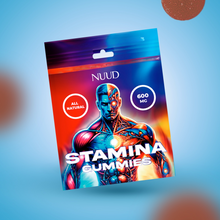
NUUD is a botanical supplement built around desire in general. Its formula does not include fenugreek. It does nothing for testosterone, estrogen or any hormone level. It does not fix anything, and it has no role in managing any medical condition. The formula is anchored by the NUUD Mushroom Complex™, with Muira Puama, Boiled Rehmannia Root, Tribulus Terrestris, and Piper Nigrum for absorption. Onset is roughly half an hour to an hour. If you take blood-pressure medication or have a heart, kidney or lung condition, the label says no, and your doctor decides the rest. If your doctor has read that label and has no objection, that is what our men's libido gummies and women's libido gummies are for. If you prefer a capsule, there are capsules for men and capsules for women.
Nothing is wrong with you
If you bought a fenugreek product and felt nothing, you are in good company. The one trial that gave men three doses and asked about libido found no subjective effects. The pooled testosterone change is small and uncertain. A flat result from a capsule says very little about you and quite a lot about how thin the evidence behind the label was.
If you felt a lift, notice what else changed: sleep, stress, attention on your sex life. The trials cannot separate those from the extract. Neither experience means something is broken.
If you just want to feel normal again, start with the plain things, and bring your questions and the bottle to your doctor. The wanting is often still there, waiting for the rest of the picture to settle.
Frequently asked questions
Does fenugreek increase sex drive?
Possibly a little, and the evidence is small. Placebo-controlled trials in 60 men over 6 weeks and 80 women over two menstrual cycles reported improvements in libido or desire, but neither abstract prints a desire score, and neither says who paid. A 2024 trial of 95 men on three doses, funded by a commercial laboratory, observed no subjective effects. Across the 18 abstracts we read, none gives a desire effect size, so nobody can honestly tell you how big the change is. Even the testosterone evidence is rated very low certainty.
Does fenugreek raise testosterone?
Slightly, on average, and the certainty is very low. Yang and colleagues (2026) pooled 6 placebo-controlled studies and found total testosterone at SMD 0.25 (95% CI 0.02 to 0.48), a small effect. Free testosterone, from 5 studies, came out at SMD 0.08 (95% CI -0.48 to 0.63), an interval that crosses zero. None of the 13 studies in that review was rated low risk of bias, and the authors wrote that the evidence does not support commercial testosterone claims.
Is fenugreek good for women's libido?
One small trial says it may help, and that is thin evidence. Rao and colleagues (2015) gave 80 women with low sexual drive 600 milligrams a day of an extract or a placebo for two menstrual cycles and reported a significant rise in desire, with no score in the abstract and no funder named. A menopause trial of 115 women found a better sexual domain score on a quality-of-life questionnaire. A study of 29 women on a four-herb blend had no placebo group.
What are the side effects of fenugreek?
Mostly mild gut upset. A 2026 scoping review of 60 articles found mild gastrointestinal discomfort was the most common problem, with reports of low blood sugar, possible low potassium, allergy, medicine interactions and a maple syrup smell in urine or sweat. No deaths were attributed to it. A toxicology review says it is not recommended in pregnancy and flags peanut or chickpea allergy and chronic asthma. If you take diabetes medication, ask your doctor first, since fenugreek lowered blood glucose in trials.
Does NUUD contain fenugreek?
No. NUUD's formula does not include fenugreek. NUUD is a botanical supplement built around desire in general. It does not fix anything, it does nothing for testosterone or any hormone level, and it has no role in managing any medical condition or any medication side effect. Its label says to avoid use if you are on blood pressure medication, have cardiovascular, renal, or pulmonary conditions, or if you are sensitive to any of the ingredients. If any of that applies to you, ask your doctor first.
References
- Steels E, Rao A, Vitetta L (2011). Physiological aspects of male libido enhanced by standardized Trigonella foenum-graecum extract and mineral formulation. Phytotherapy Research. PMID 21312304
- Rao A, Steels E, Inder WJ, Abraham S, Vitetta L (2016). Testofen, a specialised Trigonella foenum-graecum seed extract reduces age-related symptoms of androgen decrease, increases testosterone levels and improves sexual function in healthy aging males in a double-blind randomised clinical study. The Aging Male. PMID 26791805
- Shirai M, Miyoshi Y, Ogasa T, Miyoshi M, Ishikawa K, Hiramatsu I, Uesaka Y, Nozaki T, Koyama T, Tsujimura A (2021). Oral Testofen, L-Citrulline, Resveratrol, and Caffeine Supplement Drink Improves Sexual Function in Men with Phosphodiesterase 5 Inhibitors: Randomized, Double-Blind, Placebo-Controlled Crossover Pilot Study. The World Journal of Men's Health. PMID 33151048
- Maheshwari A, Verma N, Swaroop A, Bagchi M, Preuss HG, Tiwari K, Bagchi D (2017). Efficacy of Furosap(TM), a novel Trigonella foenum-graecum seed extract, in Enhancing Testosterone Level and Improving Sperm Profile in Male Volunteers. International Journal of Medical Sciences. PMID 28138310
- Park HJ, Lee KS, Lee EK, Park NC (2018). Efficacy and Safety of a Mixed Extract of Trigonella foenum-graecum Seed and Lespedeza cuneata in the Treatment of Testosterone Deficiency Syndrome: A Randomized, Double-Blind, Placebo-Controlled Clinical Trial. The World Journal of Men's Health. PMID 29623697
- Wankhede S, Mohan V, Thakurdesai P (2016). Beneficial effects of fenugreek glycoside supplementation in male subjects during resistance training: A randomized controlled pilot study. Journal of Sport and Health Science. PMID 30356905
- Lee-Ødegård S, Gundersen TE, Drevon CA (2024). Effect of a plant extract of fenugreek (Trigonella foenum-graecum) on testosterone in blood plasma and saliva in a double blind randomized controlled intervention study. PLoS One. PMID 39288153
- Mansoori A, Hosseini S, Zilaee M, Hormoznejad R, Fathi M (2020). Effect of fenugreek extract supplement on testosterone levels in male: A meta-analysis of clinical trials. Phytotherapy Research. PMID 32048383
- Smith SJ, Lopresti AL, Teo SYM, Fairchild TJ (2021). Examining the Effects of Herbs on Testosterone Concentrations in Men: A Systematic Review. Advances in Nutrition. PMID 33150931
- Isenmann E, Alisauskas P, Flenker U, Schalla J, Diel P (2023). The Anabolic Effect of Fenugreek: A Systematic Review with Meta-analysis. International Journal of Sports Medicine. PMID 37253363
- Yang P, Niu Z, Guo J, Huang T, Chang D, Huang X (2026). Effects of oral fenugreek-derived preparations on testosterone-related outcomes in adult men: a systematic review and meta-analysis of randomized placebo-controlled trials. Frontiers in Nutrition. PMID 42688439
- Rao A, Steels E, Beccaria G, Inder WJ, Vitetta L (2015). Influence of a Specialized Trigonella foenum-graecum Seed Extract (Libifem), on Testosterone, Estradiol and Sexual Function in Healthy Menstruating Women, a Randomised Placebo Controlled Study. Phytotherapy Research. PMID 25914334
- Steels E, Steele ML, Harold M, Coulson S (2017). Efficacy of a Proprietary Trigonella foenum-graecum L. De-Husked Seed Extract in Reducing Menopausal Symptoms in Otherwise Healthy Women: A Double-Blind, Randomized, Placebo-Controlled Study. Phytotherapy Research. PMID 28707431
- Khanna A, John F, Das S, Thomas J, Rao J, Maliakel B, Im K (2020). Efficacy of a novel extract of fenugreek seeds in alleviating vasomotor symptoms and depression in perimenopausal women: A randomized, double-blinded, placebo-controlled study. Journal of Food Biochemistry. PMID 33025616
- Palacios S, Soler E, Ramírez M, Lilue M, Khorsandi D, Losa F (2019). Effect of a multi-ingredient based food supplement on sexual function in women with low sexual desire. BMC Women's Health. PMID 31039769
- Amiri Ardekani E, Parvizi MM, Zare R, Mosaffa Jahromi M, Rampp T, Pasalar M (2026). Exploring the Adverse Effects of Fenugreek in Humans: A Scoping Review. Iranian Journal of Medical Sciences. PMID 41625343
- Kim J, Noh W, Kim A, Choi Y, Kim YS (2023). The Effect of Fenugreek in Type 2 Diabetes and Prediabetes: A Systematic Review and Meta-Analysis of Randomized Controlled Trials. International Journal of Molecular Sciences. PMID 37762302
- Ouzir M, El Bairi K, Amzazi S (2016). Toxicological properties of fenugreek (Trigonella foenum graecum). Food and Chemical Toxicology. PMID 27498339
This article is for general education and is not medical advice. Low testosterone, menopause and diabetes are medical matters that only a licensed clinician can diagnose and manage. NUUD is a botanical supplement and has no role in diagnosing, treating, curing, or preventing low testosterone, menopause symptoms, the side effects of any medication, or any other disease, and these statements have not been evaluated by the Food and Drug Administration. Talk with your doctor before starting any new supplement, and do not stop or change your medication without your doctor.
