

Shilajit Benefits for Men: What the Studies Actually Show
Share
Shilajit benefits for men rest on two small human studies. In healthy volunteers aged 45 to 55, purified shilajit at 250 milligrams twice a day for 90 days raised total and free testosterone against placebo, and the published abstract prints no sample size and no hormone values (Pandit and colleagues, 2016). In 28 men with low sperm counts who finished 90 days of processed shilajit, total sperm count changed by +61.4% and testosterone by +23.5%, and that study had no placebo group (Biswas and colleagues, 2010). No human study in this set measured sex drive or erections.
- Pandit and colleagues (2016) gave healthy volunteers aged 45 to 55 purified shilajit at 250 milligrams twice a day for 90 days. Total testosterone, free testosterone and DHEAS rose against placebo (P under 0.05), and the gonadotropic hormones LH and FSH were well maintained. The abstract prints no sample size and no hormone values.
- Biswas and colleagues (2010) enrolled 35 men with low sperm counts, and 28 finished 90 days of processed shilajit. Total sperm count moved +61.4% and testosterone +23.5%. It was one group with no placebo, measured before and after.
- Morgado and colleagues (2024) reviewed 52 studies of 27 products sold to raise testosterone. Most of them fail. Purified shilajit is rated possibly effective for men with age-related low testosterone, and the review prints no effect size for it.
- Keller and colleagues (2019) ran 8 weeks in 63 active young men, 21 to a group. In the stronger half, split after the fact, strength fell 8.9% on 500 milligrams a day against 16.0% on placebo after a fatiguing test. The 250 milligram dose did no better than placebo.
- Aldakheel and colleagues (2022) found lead, arsenic and mercury above the standard permissible limit in two commercial shilajit samples. Hussain and Saeed (2024) count around 65 heavy metals in shilajit and report that most recorded levels sat under the permitted limits, with a few studies above them.
Figures from Pandit et al. 2016 (PMID 26395129), Biswas et al. 2010 (PMID 20078516) and Saper et al. 2008 (PMID 18728265). One placebo-controlled study, one single-group study and one lab survey of products.
What shilajit is
Shilajit is a pale-brown to blackish-brown exudation of variable consistency that seeps from layers of rock in many mountain ranges, especially the Himalayas and the Hindukush ranges of the Indian subcontinent. Agarwal and colleagues (2007) describe it as a mixture of organic humic substances plus plant and microbial metabolites from the rock around its habitat, and record thousands of years of use as a rejuvenator and adaptogen in traditional systems of medicine.
What is inside it is less settled. Kamgar and colleagues (2025) put more than 80% of its weight down to humic substances and almost 20% to calcium, potassium and magnesium, alongside amino acids (glycine mainly), proteins, fatty acids, caffeic acid, gallic acid and heavy metals including chromium, selenium and cobalt. That review states that no comprehensive chemical analysis has ever identified everything present, and the origin is disputed between dead plant residues or animal excrements and a mineral secreted slowly from rocks. Compositions also differ by region.
Wilson and colleagues (2011) read the classical texts, the pharmacopoeias and the published lab work, and concluded that the bioactivity of shilajit lacks substantial evidence.
Shilajit and testosterone
Pandit and colleagues (2016) ran the only randomized, double-blind, placebo-controlled study in this set, in healthy volunteers aged 45 to 55 who took purified shilajit at 250 milligrams twice a day for 90 consecutive days. Total testosterone, free testosterone and DHEAS were all significantly increased against placebo (P under 0.05), and LH and FSH were well maintained. The best design gets the thinnest report. The abstract prints no sample size, no hormone values, no confidence interval and no adverse-event count, and it does not say whether sex drive, erections or energy were measured at all. It ran at a single site in Kolkata, India.
Biswas and colleagues (2010) worked with men who already had a measured problem. Of 60 infertile men assessed, 35 with total sperm counts below 20 million per mL were enrolled, and 28 finished 90 days of processed shilajit capsules at 100 milligrams twice daily after major meals. In those 28, spermia rose 37.6%, total sperm count rose 61.4%, normal sperm count rose 18.9%, and motility moved from 12.4% to 17.4% across time intervals (P under 0.001). Serum testosterone rose 23.5% (P under 0.001) and FSH rose 9.4% (P under 0.05). Hepatic and renal profiles were unaltered. There was one group, and every figure is a before-and-after change.
One study, 28 men, no placebo group
Change from the start after 90 days of processed shilajit in men with low sperm counts. With no comparison group, the study cannot say how much of this the shilajit caused.
Source: Biswas et al. 2010 (PMID 20078516). 35 enrolled, 28 completed.
Morgado and colleagues (2024) put the whole product category through a systematic review: 52 studies of 27 products sold to raise testosterone, in athletes, men with age-related low testosterone, infertile men and healthy men. Most of those products fail to increase total testosterone, and the review prints no pooled effect sizes. Purified shilajit extract lands in the small group the authors rate "possibly effective" for men with age-related low testosterone. They also note that lax industry regulation lets sales of these products thrive with no verification of their claimed benefits.
One more human reading belongs here. Yadav and colleagues (2026) gave 25 healthy men a shilajit resin at 500 milligrams a day for 28 days in an open-label, single-arm pilot and listed total testosterone among the outcomes they tracked. The abstract prints no figure for it.
The animal numbers come with caveats. Rizun and colleagues (2026) reported total and free testosterone roughly 2.5-fold and 3.5-fold higher than control in animals given two selected shilajit samples. That came from an exploratory follow-up on the two samples already chosen for having the highest free testosterone values. The same study found mild to moderate degenerative and necrotic changes in liver and kidney tissue, and the authors say their findings do not exclude tissue effects and do not establish reversibility. One author is the founder and CEO of a shilajit manufacturer.
For the wider category, whether testosterone boosters work lays out what the trials of these products find, including the many that find nothing. And natural testosterone support before TRT covers what men raise with their doctor before agreeing to prescription testosterone.
Shilajit for energy, strength and recovery
Keller and colleagues (2019) assigned 63 recreationally-active men, 21 to each group, to 250 milligrams of shilajit a day, 500 milligrams a day, or placebo for 8 weeks. Strength was read as maximal voluntary isometric contraction after a fatiguing test. Among the men already in the upper 50th percentile, the adjusted mean percent decline was 8.9% on the high dose against 17.0% on the low dose (P = 0.022) and 16.0% on placebo (P = 0.044). Two things hold that back. The finding sits in a subgroup split at the median after the fact, and the low dose showed nothing against placebo (P = 0.774). Whole-group results and confidence intervals are not printed.
Neltner and colleagues (2024) gave 35 recreationally trained men 8 weeks of shilajit at 500 or 1000 milligrams a day against placebo. Serum pro-c1alpha1, a marker of type 1 collagen synthesis, rose from 42.5 ng/mL to 82.3 ng/mL at 500 milligrams and from 42.7 ng/mL to 113.1 ng/mL at 1000 milligrams, with no change on placebo. It is a blood marker. No joint or skin outcome appears in the abstract.
Yadav and colleagues (2026) ran that 28-day open-label pilot in 25 healthy men aged 21 to 55 on a shilajit resin at 500 milligrams a day. Leg press rose 12.94%, muscle endurance 12.30%, grip strength of the dominant hand 5.73% and VO2 max 1.36%. Fatigue Severity Scale scores fell 32.40%, C-reactive protein fell 25.35%, lean body mass rose 1.5% and body fat percentage fell 2.34%. Creatine kinase fell 41.70%, which the authors call a non-significant trend (P = 0.059). With no placebo group, every one of those is a before-and-after change.
Two further human readings carry less weight. Das and colleagues (2016) gave overweight and class I obese adults 250 milligrams of a purified shilajit extract twice a day; it was well tolerated, with no change in blood glucose or lipids, and a cluster of 17 extracellular-matrix-related probe sets rose in muscle after 8 weeks. Each person was their own baseline and no participant count is printed. Martinez and colleagues (2025) ran a 12-week trial in 166 sedentary adults in which shilajit appears only at 6 and 12 milligrams a day inside a chromium and fruit-extract blend, so nothing there can be credited to shilajit, and the work was funder-supported.
If training is the real variable you are chasing, creatine and sex drive covers a sports supplement and what it does to desire.
Does shilajit raise sex drive?
No human study in this set measured sex drive or erections. That covers the placebo-controlled testosterone trial, the sperm study, and the smaller muscle, collagen and bone work. The claim shilajit is most often sold to men on has no human measurement here.
The libido language comes from animals. Mishra and colleagues (2018) gave shilajit by mouth for one spermatogenic cycle, 35 days, to male mice made infertile by cadmium. Reproductive organ weights, testicular daily sperm production and serum testosterone rose, testis tissue showed restored sperm production, and the abstract lists libido, fertility and the number of litters per female among what improved. It calls shilajit a Vajikarak, an aphrodisiac used by traditional healers of the Indian subcontinent for male infertility. Those mouse doses are printed per kilogram of body weight and cannot be carried over to a person. No percentages, P values or animal counts appear.
Park and colleagues (2006) gave rats shilajit by mouth over 6 weeks. Male rats had significantly more sperm in the testes and epididymides than controls, and ovulation was induced in seven of nine treated females against three of nine controls. Stohs (2014), reviewing the field, writes that animal and human studies indicate shilajit enhances sperm production while relatively few well-controlled human studies exist, and asks for more.
If wanting sex has dropped off, low libido in men works through the usual causes.
Is shilajit safe? Heavy metals and purity
Start with the plain problem: nobody can tell you what is in the jar on your counter. Aldakheel and colleagues (2022) ran elemental analysis on the two kinds of shilajit most sold worldwide, one made in India and one made in Pakistan. Both carried aluminium, strontium, manganese, barium, zinc, nickel, boron, chromium, lead and arsenic in amounts above the standard permitted limit. Mercury showed only in the Indian sample, along with titanium. That is two commercial samples, and the abstract prints no concentrations.
Hussain and Saeed (2024) reviewed the metal question across the literature. Shilajit possesses around 65 heavy metals, including lead, arsenic, cadmium and mercury. Recommended levels in herbal drugs are 10.00 parts per million for arsenic and lead and 1 part per million for mercury. Reported levels in shilajit fell under those numbers, except in a few studies that reported levels above them. Even so, the authors write that taking shilajit without knowing its metal levels is unsafe and could pose serious health problems.
The wider Ayurvedic market is documented better. Saper and colleagues (2008) bought and analyzed 193 Ayurvedic medicines ordered online. Lead, mercury or arsenic turned up in 20.7% of them (95% CI 15.2% to 27.1%), with US-made products at 21.7% and Indian-made products at 19.5%. Among the metal-containing products, 75% claimed Good Manufacturing Practices, so that claim did not predict a cleaner bottle. These are Ayurvedic medicines in general, and the abstract does not say how many were shilajit.
Animal work adds a little. Rizun and colleagues (2026) reported no deaths over a 14-day observation period, plus mild to moderate degenerative changes in liver and kidney tissue, and the authors say this does not rule out tissue effects. Stohs (2014) reads the safety record as well documented. The human trials that talked about tolerability were clean: Das and colleagues (2016) and Das and colleagues (2019) called supplementation well tolerated at 8 weeks and 14 weeks, and Biswas and colleagues (2010) found liver and kidney blood tests unaltered at 90 days. Every human study used a purified or processed extract, so shilajit side effects in this evidence describe those extracts and say nothing about raw tar.
| Study | Who | Dose and length | Finding | Caveat |
|---|---|---|---|---|
| Pandit 2016 | Healthy volunteers aged 45 to 55 | 250 milligrams twice a day, 90 days | Total and free testosterone up against placebo | No sample size or values printed |
| Biswas 2010 | 28 men with low sperm counts who finished | 100 milligrams twice a day, 90 days | Sperm count +61.4%, testosterone +23.5% | No placebo group |
| Keller 2019 | 63 active young men | 250 or 500 milligrams a day, 8 weeks | Less strength loss at 500 milligrams | Subgroup finding |
| Neltner 2024 | 35 trained young men | 500 or 1000 milligrams a day, 8 weeks | A collagen blood marker rose | A marker. No joint or skin outcome |
| Yadav 2026 | 25 healthy men | 250 milligrams twice a day, 28 days | Strength and fatigue scores improved | Open-label, single-arm |
| Das 2016 | Overweight adults | 250 milligrams twice a day, 8 weeks | Muscle gene readings rose | No participant count |
| Pingali and Nutalapati 2022 | 60 postmenopausal women | 250 or 500 milligrams a day, 48 weeks | Less bone loss | Women |
| Sharma 2003 | Healthy volunteers | Two grams a day, 45 days | Cholesterol and triglycerides fell | No placebo, no counts |
Shilajit benefits for women
Pingali and Nutalapati (2022) randomized 60 postmenopausal women aged 45 to 65 with low bone density to placebo, 250 milligrams of a standardized aqueous shilajit extract daily, or 500 milligrams daily, for 48 weeks. Bone density at the lumbar spine and femoral neck fell in the placebo group across the year. It fell less in both supplemented groups, and the larger dose did more, with percentage changes from baseline significant at 24 and 48 weeks (P under 0.001). No absolute density values or per-group counts are printed. Das and colleagues (2019) gave healthy women 250 milligrams twice a day for 14 weeks and found improved blood flow in the skin against placebo, with no participant count printed. Neither study measured a sexual outcome.
Before you buy
Four checks separate a bottle worth buying from one that sits in your drawer. None of them are on the ingredient list, and the third is the one your doctor will want to talk about.
- Ask the seller for a batch test for lead, arsenic and mercury, with numbers you can read. In the survey of 193 Ayurvedic medicines bought online, 75% of the products that contained metals claimed Good Manufacturing Practices, so a manufacturing claim did not predict a clean product.
- Know that the human studies used purified or processed extracts prepared for those trials. A raw tar from a marketplace listing is a different product, and nothing here tells you what is in it.
- If tiredness and low desire are the reason you are looking, a blood test for testosterone comes first. Our page on low libido with normal labs explains what it means when your numbers come back fine and you still feel flat. Our page on whether TRT fixes low libido covers what happens to desire once testosterone is addressed.
- Expect nothing proven on sex drive. No study in this set measured desire or erection problems, so a label promising that is selling you a mouse study.
The everyday levers, and where a botanical fits
This section is not for everyone. If you have a heart, kidney or lung condition, or you take blood-pressure medication, NUUD's own label names exactly that: avoid use if you are on blood pressure medication, have cardiovascular, renal, or pulmonary conditions, or if you are sensitive to any of the ingredients. For some readers that sentence settles it. A few ordinary things move desire in most people, and the free ones do more work than the internet admits.
- Sleep, in amount and in quality. Sleep, libido and testosterone covers how the two track each other.
- Lifting something heavy a few times a week, with real rest days between sessions.
- Less alcohol. Alcohol and libido covers what it does to wanting.
- Your mood, named out loud and taken as seriously as your labs.
- A botanical, if you want one, as the smallest lever on this list.
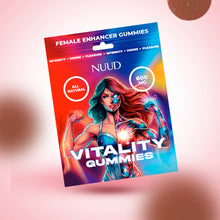
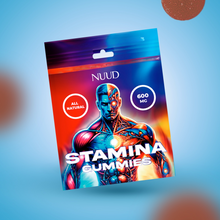
NUUD contains no shilajit. NUUD is a botanical supplement built around desire, and we make no testosterone claim for it. It has no role in managing any medical condition. The formula is anchored by the NUUD Mushroom Complex™, with Muira Puama, Boiled Rehmannia Root, Tribulus Terrestris, and Piper Nigrum for absorption, on a timeline of roughly 30 to 60 minutes. If you take blood-pressure medication or have a heart, kidney or lung condition, the label says no, and your doctor decides the rest. If your labs are fine and wanting it is the part that went quiet, that is what our men's libido gummies are for. There is a women's version.
Where this leaves shilajit
Two lazy answers dominate this topic. The video that calls shilajit a testosterone fix, and the reply under it that calls it tar. Neither one read the trials. The trials give you this: one placebo-controlled testosterone study in healthy volunteers aged 45 to 55 that printed no hormone values, one sperm study with 28 finishers and no placebo group, small strength and recovery studies in young men with the interesting result sitting inside a subgroup, and a bone study plus a skin study in women. Nothing measured sex drive. And the metals question is real for anything unpurified. A batch test from whoever sells it, and a testosterone blood test from your doctor, settle more than any bottle will.
Keep reading
- Do testosterone boosters work?
- Natural testosterone support before TRT
- Low libido in men
- Creatine and sex drive
- Libido supplement ingredients: the evidence
- Tribulus terrestris and libido
Frequently asked questions
What does shilajit do for men?
Two small studies carry most of what is claimed for shilajit in men. Pandit and colleagues (2016) gave healthy volunteers aged 45 to 55 250 milligrams twice a day for 90 days and found total testosterone, free testosterone and DHEAS significantly higher than placebo. Biswas and colleagues (2010) reported sperm count up 61.4% and testosterone up 23.5% in the 28 men with low sperm counts who finished, with no placebo group. Strength and fatigue results come from small trials in young men. Nothing measured sex drive.
Does shilajit increase testosterone?
Yes, in one placebo-controlled study. Pandit and colleagues (2016) reported total and free testosterone significantly increased versus placebo in volunteers aged 45 to 55 taking 250 milligrams twice a day for 90 days. The abstract prints no hormone values, only significance and direction. Biswas and colleagues (2010) found testosterone up 23.5% in 28 men, in a study with no placebo group. Morgado and colleagues (2024), in a systematic review of 52 studies, rate purified shilajit extract possibly effective for men with age-related low testosterone. No effect size is pooled.
Does shilajit help with sex drive or erections?
No human study in this set measured sex drive, desire or erection problems. That covers the testosterone trial, the sperm trial, the strength and fatigue trials, the collagen marker trial, the bone trial and the skin trial. The one place libido appears as a measured outcome is Mishra and colleagues (2018), in male mice made infertile by cadmium, at doses given per kilogram of body weight. That is not a human amount, and the study says nothing about men. Nobody has measured desire in a person taking shilajit.
Is shilajit safe to take every day?
The human studies that reported safety ran 28 days to 14 weeks and found no serious problems. Yadav and colleagues (2026) saw no serious adverse events and lab values within normal limits at 28 days. Das and colleagues (2019) reported no adverse effect at 14 weeks. Metals are the open question: Aldakheel and colleagues (2022) found two commercial samples above the permitted limit, while Hussain and Saeed (2024) found most reported levels under the limits for herbal drugs. Ask a seller for a batch test.
Does NUUD contain shilajit?
No. NUUD contains no shilajit. NUUD is a botanical supplement built around desire, and we make no testosterone claim for it. The formula is anchored by the NUUD Mushroom Complex, with Muira Puama, Boiled Rehmannia Root, Tribulus Terrestris, and Piper Nigrum for absorption, on a timeline of roughly 30 to 60 minutes. The label says to avoid use if you are on blood pressure medication, have cardiovascular, renal, or pulmonary conditions, or if you are sensitive to any of the ingredients. Ask your doctor before starting it.
References
- Pandit S, Biswas S, Jana U, De RK, Mukhopadhyay SC, Biswas TK. Clinical evaluation of purified Shilajit on testosterone levels in healthy volunteers. Andrologia. 2016;48(5):570-5. https://pubmed.ncbi.nlm.nih.gov/26395129/
- Morgado A, Tsampoukas G, Sokolakis I, Schoentgen N, Urkmez A, Sarikaya S. Do "testosterone boosters" really increase serum total testosterone? A systematic review. International journal of impotence research. 2024;36(4):348-364. https://pubmed.ncbi.nlm.nih.gov/37697053/
- Pingali U, Nutalapati C. Shilajit extract reduces oxidative stress, inflammation, and bone loss to dose-dependently preserve bone mineral density in postmenopausal women with osteopenia: A randomized, double-blind, placebo-controlled trial. Phytomedicine : international journal of phytotherapy and phytopharmacology. 2022;105:154334. https://pubmed.ncbi.nlm.nih.gov/35933897/
- Neltner TJ, Sahoo PK, Smith RW, et al. Effects of 8 Weeks of Shilajit Supplementation on Serum Pro-c1α1, a Biomarker of Type 1 Collagen Synthesis: A Randomized Control Trial. Journal of dietary supplements. 2024;21(1):1-12. https://pubmed.ncbi.nlm.nih.gov/36546868/
- Das A, Datta S, Rhea B, et al. The Human Skeletal Muscle Transcriptome in Response to Oral Shilajit Supplementation. Journal of medicinal food. 2016;19(7):701-9. https://pubmed.ncbi.nlm.nih.gov/27414521/
- Biswas TK, Pandit S, Mondal S, et al. Clinical evaluation of spermatogenic activity of processed Shilajit in oligospermia. Andrologia. 2010;42(1):48-56. https://pubmed.ncbi.nlm.nih.gov/20078516/
- Das A, S El Masry M, Gnyawali SC, et al. Skin Transcriptome of Middle-Aged Women Supplemented With Natural Herbo-mineral Shilajit Shows Induction of Microvascular and Extracellular Matrix Mechanisms. Journal of the American College of Nutrition. 2019;38(6):526-536. https://pubmed.ncbi.nlm.nih.gov/31161927/
- Keller JL, Housh TJ, Hill EC, Smith CM, Schmidt RJ, Johnson GO. The effects of Shilajit supplementation on fatigue-induced decreases in muscular strength and serum hydroxyproline levels. Journal of the International Society of Sports Nutrition. 2019;16(1):3. https://pubmed.ncbi.nlm.nih.gov/30728074/
- Yadav D, Mishra S, Shah KM, Reddy ST, Gupta R, Pandey P. Safety and Efficacy of TruBlk™ Shilajit Resin Supplementation on Physical Performance and Blood Biomarkers in Healthy Adults: A 28-Day Open-Label Pilot Study. Cureus. 2026;18(1):e102372. https://pubmed.ncbi.nlm.nih.gov/41613504/
- Rizun N, Stanković V, Bradić J, et al. Biogeochemical Evaluation of Shilajit: Testosterone-Modulating Effects, In Vivo Toxicity and Lipid Profile Analysis. Pharmaceuticals (Basel, Switzerland). 2026;19(9):. https://pubmed.ncbi.nlm.nih.gov/42797531/
- Stohs SJ. Safety and efficacy of shilajit (mumie, moomiyo). Phytotherapy research : PTR. 2014;28(4):475-9. https://pubmed.ncbi.nlm.nih.gov/23733436/
- Martinez V, McAngus K, Dickerson BL, et al. Effects of 12 Weeks of Chromium, Phyllanthus emblica Fruit Extract, and Shilajit Supplementation on Markers of Cardiometabolic Health, Fitness, and Weight Loss in Men and Women with Risk Factors to Metabolic Syndrome Initiating an Exercise and Diet Intervention: A Randomized Double-Blind, Placebo-Controlled Trial. Nutrients. 2025;17(12):. https://pubmed.ncbi.nlm.nih.gov/40573153/
- Agarwal SP, Khanna R, Karmarkar R, Anwer MK, Khar RK. Shilajit: a review. Phytotherapy research : PTR. 2007;21(5):401-5. https://pubmed.ncbi.nlm.nih.gov/17295385/
- Kamgar E, Kaykhaii M, Zembrzuska J. A Comprehensive Review on Shilajit: What We Know about Its Chemical Composition. Critical reviews in analytical chemistry. 2025;55(3):461-473. https://pubmed.ncbi.nlm.nih.gov/38133965/
- Mishra RK, Jain A, Singh SK. Profertility effects of Shilajit on cadmium-induced infertility in male mice. Andrologia. 2018;50(8):e13064. https://pubmed.ncbi.nlm.nih.gov/29947420/
- Rajpoot A, Yadav K, Yadav A, Mishra RK. Shilajit mitigates chemotherapeutic drug-induced testicular toxicity: Study on testicular germ cell dynamics, steroidogenesis modulation, and Nrf-2/Keap-1 signaling. Journal of Ayurveda and integrative medicine. 2024;15(4):100930. https://pubmed.ncbi.nlm.nih.gov/39121783/
- Aldakheel RK, Gondal MA, Alsayed HN, Almessiere MA, Nasr MM, Shemsi AM. Rapid Determination and Quantification of Nutritional and Poisonous Metals in Vastly Consumed Ayurvedic Herbal Medicine (Rejuvenator Shilajit) by Humans Using Three Advanced Analytical Techniques. Biological trace element research. 2022;200(9):4199-4216. https://pubmed.ncbi.nlm.nih.gov/34800280/
- Hussain A, Saeed A. Hazardous or Advantageous: Uncovering the Roles of Heavy Metals and Humic Substances in Shilajit (Phyto-mineral) with Emphasis on Heavy Metals Toxicity and Their Detoxification Mechanisms. Biological trace element research. 2024;202(12):5794-5814. https://pubmed.ncbi.nlm.nih.gov/38393486/
- Park JS, Kim GY, Han K. The spermatogenic and ovogenic effects of chronically administered Shilajit to rats. Journal of ethnopharmacology. 2006;107(3):349-53. https://pubmed.ncbi.nlm.nih.gov/16698205/
- Sharma P, Jha J, Shrinivas V, Dwivedi LK, Suresh P, Sinha M. Shilajit: evalution of its effects on blood chemistry of normal human subjects. Ancient science of life. 2003;23(2):114-9. https://pubmed.ncbi.nlm.nih.gov/22557121/
- Saper RB, Phillips RS, Sehgal A, et al. Lead, mercury, and arsenic in US- and Indian-manufactured Ayurvedic medicines sold via the Internet. JAMA. 2008;300(8):915-23. https://pubmed.ncbi.nlm.nih.gov/18728265/
- Wilson E, Rajamanickam GV, Dubey GP, et al. Review on shilajit used in traditional Indian medicine. Journal of ethnopharmacology. 2011;136(1):1-9. https://pubmed.ncbi.nlm.nih.gov/21530631/
This article is for general education and is not medical advice. Low testosterone and fertility problems are medical conditions that only a licensed clinician can diagnose and manage. NUUD is a botanical supplement and has no role in diagnosing, treating, curing, or preventing any disease, and these statements have not been evaluated by the Food and Drug Administration. Talk with your doctor before starting any new supplement.
