


Does Creatine Affect Sex Drive? What the Testosterone Studies Actually Show
Share
If you are here about creatine and sex drive, the short answer is that no published trial has measured the two together. As of September 2026 we could not find a published trial that measured creatine against sexual desire. The internet chains the idea in one line: creatine raises DHT, and DHT drives desire. Two links in that chain are weak. The first is a three-week study of twenty rugby players that measured a hormone ratio. The second is a twelve-week trial where nothing moved. What creatine does well is in the gym, where the evidence is long and careful. The DHT number is real. The desire number is missing.
- As of September 2026 we could not find a published trial that measured creatine against sexual desire. The hormone story and the desire story are two different questions, and no published trial has joined them, which is the whole point of this page.
- Morgado and colleagues (2024) reviewed 52 studies across two decades covering 27 proposed testosterone boosters, and most failed to increase total testosterone. Creatine had four studies in that review and was not among the few that moved the number. Everything below sits inside that frame.
- In the only study that found a DHT rise, van der Merwe and colleagues (2009) loaded 20 college rugby players over three weeks. DHT rose 56% after 7 days of loading, and serum testosterone did not change at day 7 or day 21.
- Lak and colleagues (2025) ran a 12-week randomized trial with 45 resistance-trained men, 38 of whom finished. There was no difference between groups in total testosterone, free testosterone, DHT, the DHT to testosterone ratio, or hair growth. That trial measured the exact hormones the internet points at.
- Corona and colleagues (2014) pooled 41 studies of testosterone supplementation. Testosterone improved sexual function in men with clinically low testosterone, and after correcting for publication bias the effect on libido kept significance only in trials partly or fully supported by drug companies.
Figures from van der Merwe et al. 2009 (PMID 19741313), Lak et al. 2025 (PMID 40265319) and Morgado et al. 2024 (PMID 37697053).
Is it the creatine, or is it me?
You have read the forum thread. Creatine, then DHT, then a switch flipping on. The trial record says something quieter. Two studies addressed the hormone side of that story directly. One found a DHT rise in twenty men over three weeks and no change in testosterone. The other ran for twelve weeks and found no difference in any hormone or hair measure. Neither one asked about desire, and no published trial has measured the two together.
So if your drive is nowhere to be found, the useful question is whether the evidence for a creatine to desire link exists at all. It does not, in a form we can point to. Meanwhile the gym side of creatine is well documented, which is why the good evidence travels so easily into the bedroom. This page is a spoke of our answer on do testosterone boosters work. If you are working through a low drive, low libido in men walks through what the evidence does and does not support.
The one study behind the DHT story
Here is the study that started the rumour. van der Merwe and colleagues (2009) ran a double-blind, placebo-controlled crossover trial with 20 college-aged rugby players in South Africa, in-season, after a 6-week washout. The players got a loading dose first: 25 grams of creatine a day with 25 grams of glucose for 7 days, then 5 grams a day with 25 grams of glucose for 14 days. The placebo group took 50 grams of glucose, then 30 grams.
Serum testosterone did not change at day 7 or day 21. DHT is where it moved. It rose 56% after the 7 days of loading and stayed 40% above baseline after the 14 days of maintenance, with P below 0.001. The DHT to testosterone ratio rose 36% at day 7 and stayed 22% above baseline, P below 0.01. The authors wrote that creatine may, in part, act through an increased rate of conversion of testosterone to DHT.
The shape of this study matters. Twenty men. Three weeks. One season. No desire measure and no longer follow-up. The change sits in the conversion step, a hormone detail, and the study never asked what, if anything, it did to how the players felt. It is a signal that a DHT nudge can show up fast under a loading protocol, and nothing more.
Three weeks, twenty men, one hormone moved
Two series from the one study that found a DHT rise, over days 0, 7 and 21. Orange is DHT change from baseline, blue is testosterone change. The testosterone line stays at zero the whole way.
Source: van der Merwe J et al., Clin J Sport Med 2009 (PMID 19741313). Double-blind crossover, 20 college rugby players; testosterone did not change at either time point.
The twelve-week trial that did not repeat it
The next test came a decade and a half later. Lak and colleagues (2025) ran a randomized controlled trial with 45 resistance-trained men aged 18 to 40. They took creatine monohydrate at 5 grams a day or a placebo, 5 grams of maltodextrin, for 12 weeks, with their usual diet and training kept in place. Blood was drawn at baseline and week 12 for total testosterone, free testosterone and DHT, and hair was measured by trichogram and a follicle-imaging system. Thirty-eight men finished. The sample was chosen for one reason: these were trained lifters, the population most likely to take the supplement.
The result was quiet: no group-by-time interaction for any hormone or hair outcome, every p above 0.05. Total testosterone rose in both groups over the 12 weeks, 124 nanograms per decilitre in the creatine group and 216 in the placebo group, each with a wide spread. The creatine group's rise was the smaller of the two. Free testosterone fell slightly in both, independent of supplementation. There was no difference in DHT, in the DHT to testosterone ratio, or in hair growth.
The authors called it "strong evidence against the claim that creatine contributes to hair loss." If a loading dose moved DHT in three weeks, twelve weeks of 5 grams a day did not move any of it. That rise in both groups is the kind of thing you see from training load, time of year, or just the passage of months, and the study design cannot sort those out. For where the supplement evidence stands before a bigger step, see natural testosterone support before TRT.
Does creatine increase testosterone at all?
Start with the big review. Morgado and colleagues (2024) pulled together two decades of data on testosterone boosters: 52 studies across 27 proposed boosters, with total testosterone versus placebo as the outcome in four groups, male athletes, men with late-onset low testosterone, infertile men and healthy men. Most of the 52 failed to increase total testosterone. The exceptions named in the review included HMB (beta-hydroxy beta-methylbutyrate) and betaine for male athletes, and a few herbal and branded extracts called possibly effective in specific groups. Creatine had four studies in that review and was not among the exceptions.
The expert panel looked at it from the other direction. Antonio and colleagues (2021) surveyed more than 500 peer-reviewed publications on creatine in a review for the Journal of the International Society of Sports Nutrition. They addressed twelve common questions, including whether creatine is an anabolic steroid, whether it causes kidney damage, and whether it causes hair loss, and the evidence did not support those claims. They also found creatine well tolerated at 3 to 5 grams a day, or 0.1 grams per kilogram of body mass.
As for what it does do, an umbrella review by Warrier and colleagues (2024) of 27 papers on performance-enhancing drugs in healthy athletes found that creatine during resistance training can safely increase total and lean body mass, strength, and performance in high-intensity, short-duration, repetitive tasks, and that it is safe in controlled doses. Strength, body mass, performance: those are the outcomes the review stack supports. Desire is simply not in that stack. If you want the desire-side evidence that does exist, exercise and libido is where it lives.
Why a testosterone nudge would not equal desire anyway
Even if creatine nudged testosterone, the next question is whether that nudge would reach desire. The best summary evidence comes from Corona and colleagues (2014), a meta-analysis of 41 studies of testosterone supplementation and sexual function in men, 29 of them against placebo and 12 as an add-on to prescription drugs for erection problems. Testosterone improved sexual function in men with clinically low testosterone.
The authors were careful with the rest. The role of testosterone supplementation is uncertain in men who are not clearly hypogonadal, and most of the pooled studies mixed men with normal and low testosterone, which blurs the line between the two. In plain terms, the effect that survived the audit was the one with a financial sponsor in the room. Once the authors corrected for publication bias, the effect on libido kept significance only in trials partly or fully supported by drug companies, with a 95% CI of 0.12 to 0.52.
So the chain the internet relies on, creatine to DHT to desire, has a soft middle link even before you get to the end. If your numbers are fine and you still feel flat, that review is the closer look. Testosterone replacement works for a documented low, and even there the libido effect thinned out once the company-funded trials were set aside. This is an argument for reading the middle link of the chain, and nothing more. For where the replacement evidence stands, see does TRT fix low libido. For what normal labs plus low drive actually means, see normal labs, low libido.
The claim chain, link by link
Creatine is one of the most studied supplements in sport. The evidence behind the gym claims is strong, and the bedroom story that grew up around it is built on far less. This page walks the claim one link at a time, with the studies behind each link and their caveats. DHT is the hormone testosterone converts into.
Four links, two of them missing
52 studies of 27 proposed boosters across two decades. Creatine was not among the few that raised total testosterone.
2009: DHT up 56% in 20 men over 3 weeks. 2025: no difference in 38 men over 12 weeks.
41 trials of testosterone itself, pooled by Corona and colleagues (2014): 29 versus placebo, 12 as an add-on to an erection drug. It moved desire when testosterone was clinically low. After bias correction, the libido effect held only in company-funded trials (95% CI 0.12 to 0.52).
As of September 2026, no published trial measured creatine against sexual desire.
Built from PMID 37697053, 19741313, 40265319 and 24697970.
| Study | Design | People | Length | What moved |
|---|---|---|---|---|
| van der Merwe 2009 | Double-blind, placebo-controlled crossover | 20 rugby players | 3 weeks | DHT up 56%, then 40% above baseline (P below 0.001); testosterone unchanged |
| Lak 2025 | Randomized, placebo-controlled | 45 trained men, 38 finished | 12 weeks | Nothing between groups: testosterone, free testosterone, DHT, hair (p above 0.05) |
| Morgado 2024 | Systematic review | 52 studies, 27 boosters | Two decades | Most boosters, creatine included, did not raise testosterone |
| Warrier 2024 | Umbrella review | 27 papers | Not applicable | Lean mass, strength and short high-intensity performance up |
| Corona 2014 | Meta-analysis | 41 trials of testosterone itself | Not applicable | Sexual function up only in men with low testosterone; after bias correction, the libido effect held only in company-funded trials (95% CI 0.12 to 0.52) |
What creatine does for women
Most of the creatine literature was written in men, and the desire question was never asked in either sex. The most complete summary for women is a 2021 review by Smith-Ryan and colleagues, which looks at creatine across the whole lifespan.
Women carry 70% to 80% lower stores of creatine in the body than men. The review finds that supplementation improves strength and exercise performance in pre-menopausal women. Post-menopausal women may gain muscle size and function at higher doses, 0.3 grams per kilogram per day, and bone benefits with resistance training. There is early evidence of effects on mood and cognition, but it is early.
Nothing in the review touches desire, so the honest answer for women is the same as for men: creatine has a measured track record in the gym and no measured track record in desire. If you are a woman trying to work out what is going on with a flat drive, low libido in women goes through the usual suspects first.
So what is flattening your drive, if it is not the tub?
If the tub is off the table, the more likely causes are the ordinary ones that come with a heavy training week. Sleep debt is the big one. A schedule that runs late, or a week of broken sleep, hits testosterone and desire together, and sleep, libido and testosterone covers the loop. Under-eating does the same, quietly. Many people in a hard block or a cut notice their drive go before anything else does, and weight loss did not fix my libido is a good name for that experience.
Then there is the fixation on numbers. When you check your training data, your lifts and your supplement stack every day, your body starts to feel like a project with a dashboard, and wanting anything takes a back seat.
None of that is your fault, and none of it means something is broken. It is the cost of a hard week, and it usually eases when the week gets lighter. The tub was never the main suspect.
If you have been hopping supplements to chase this, why the last supplement did not work explains the usual pattern. If you keep coming back to the lab values, zinc and vitamin D for libido covers what the minerals actually do.
Before you credit or blame the tub
Before you pin your flat weeks on the tub, run through this list. It is short, it takes ten minutes, and most of it you can do today.
- Keep a timeline. Write down what else changed in the same weeks you noticed the drop: sleep, training load, a diet change, a stressful month. Half the time the answer is on that list.
- Look at sleep and training load first. They move desire more than any supplement, and they are free.
- Separate desire from the mechanics. If you still want it but something physical is getting in the way, that is a different question, and erection problems are worth a proper check with your doctor.
- A testosterone test is worth having only when there are signs to explain, and read the result with a clinician.
- Hold the kidney line. The panel review by Antonio and colleagues (2021) answered twelve common questions about creatine, including whether it causes kidney damage, and found the evidence does not support those claims. It is well tolerated at 3 to 5 grams a day. NUUD's own label rules out use with kidney conditions, so if you have one, you have two separate reasons to talk to your doctor.
- If you still want to add a supplement, hold the label in the conversation and let your doctor read it before you start.
The everyday levers, and where a botanical fits
Start with who this section is not for. NUUD's own label warns: avoid use if you are on blood pressure medication, have cardiovascular, renal, or pulmonary conditions, or if you are sensitive to any of the ingredients. If any of that applies to you, the label is the answer, and the conversation belongs with your doctor. Bring the label with you.
A few ordinary things move desire more than any supplement, and they come with the training life for free.
- Sleep, in quantity and quality. It is the first thing a heavy training week breaks, and usually the first to come back when the week lightens.
- A lighter training week when things have gone flat.
- Eating enough, with real food, since the protein in the shaker only covers part of a hard block.
- Time with a partner where nothing is expected, or time alone if that is the honest version for you right now. Pressure is a fast way to lose it.
- A botanical, if you want one, as the smallest lever on the list. What the evidence says about libido supplement ingredients sorts out which of the usual names have any evidence at all.
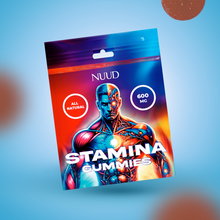
NUUD is a botanical supplement built around desire in general. It does nothing to testosterone, to DHT, to muscle or to training, and it has no role in any medical condition. The formula is anchored by the NUUD Mushroom Complex™, with Muira Puama, Boiled Rehmannia Root, Tribulus Terrestris, and Piper Nigrum for absorption, on a timeline of roughly 30 to 60 minutes. If you take blood-pressure medication or have a heart, kidney or lung condition, the label says no. If that label is clear for you, that is what our men's libido gummies are for. There is a women's version.
Nothing is wrong with you
You came here because the tub felt like a suspect, and a lot of forum threads say it made things worse. The shrug is an honest reaction, because the question was never answered, and this page is where you can check it against the actual trials.
Here is what the trials actually say. In the gym, creatine does what the umbrella review says it does: more lean mass, more strength, better short high-intensity work. In the blood, one small three-week study moved a hormone ratio in twenty men, and the bigger twelve-week trial could not repeat it. In the bedroom, nobody has measured it. As of September 2026 we could not find a published trial that measured creatine against sexual desire. That is the whole story, and it is a small one.
If your drive is flat, the levers that actually move it are ordinary: sleep, food, a lighter week, time where nothing is expected. None of that is glamorous, and all of it is available this week. If your real question is that you want to want it again, start with the boring list.
Keep reading
- Do testosterone boosters work?
- Natural testosterone support before TRT
- Does TRT fix low libido?
- Does exercise boost libido?
- Low libido in men
- Why is my libido so low?
Frequently asked questions
Does creatine increase sex drive?
No trial has measured it. The chain runs creatine to testosterone, testosterone to DHT, DHT to desire, and the last link has never been tested, while the testosterone-to-desire link only holds in men whose testosterone is clinically low. One three-week study of twenty rugby players moved a hormone ratio, and a twelve-week trial could not repeat it. As of September 2026 we could not find a published trial that measured creatine against sexual desire. So the honest answer is that nobody knows, and the confident internet answer is not supported.
Does creatine increase testosterone?
Mostly no. A 2024 systematic review by Morgado and colleagues followed two decades of data across 52 studies of 27 proposed boosters, and most failed to increase total testosterone. Creatine was not among the exceptions. The 2025 trial by Lak and colleagues, 45 resistance-trained men on 5 grams a day for 12 weeks, found no difference between the creatine and placebo groups in total or free testosterone. The rise both groups showed over the 12 weeks happened independent of the supplement.
Does creatine raise DHT?
One small study said yes, and the bigger one did not. van der Merwe and colleagues (2009) gave 20 college-aged rugby players 25 grams a day for 7 days, and DHT rose 56%, staying 40% above baseline after 14 days of 5 grams a day. Lak and colleagues (2025) ran a randomized trial with 45 trained men for 12 weeks and found no difference in DHT between the groups. So the weight of the evidence does not support a reliable rise.
Does creatine lower sex drive?
No trial shows that either. The one study that touched the hormone chain found a DHT rise in twenty men over three weeks, and the randomized 12-week trial found nothing between groups. Nothing in those trials points to a drop in desire, because desire was never measured. If your drive dropped in the weeks you started the tub, the more likely list is sleep, training load and food. Look at those first, and if the flatness lasts, talk to your doctor.
Can I take creatine with a botanical libido supplement?
There are no interaction studies for this combination, so the question belongs in a conversation with your clinician, especially if you take blood pressure medication or have a heart, kidney or lung condition. NUUD's label says to avoid use in those cases. And to be plain about what the supplement does: nothing to testosterone, DHT, muscle or training. It is a botanical built around desire in general, and that is the only claim it makes.
References
- Morgado A, Tsampoukas G, Sokolakis I, Schoentgen N, Urkmez A, Sarikaya S. Do "testosterone boosters" really increase serum total testosterone? A systematic review. International journal of impotence research. 2024;36(4):348-364. https://pubmed.ncbi.nlm.nih.gov/37697053/
- van der Merwe J, Brooks NE, Myburgh KH. Three weeks of creatine monohydrate supplementation affects dihydrotestosterone to testosterone ratio in college-aged rugby players. Clinical journal of sport medicine : official journal of the Canadian Academy of Sport Medicine. 2009;19(5):399-404. https://pubmed.ncbi.nlm.nih.gov/19741313/
- Lak M, Forbes SC, Ashtary-Larky D, et al. Does creatine cause hair loss? A 12-week randomized controlled trial. Journal of the International Society of Sports Nutrition. 2025;22(sup1):2495229. https://pubmed.ncbi.nlm.nih.gov/40265319/
- Antonio J, Candow DG, Forbes SC, et al. Common questions and misconceptions about creatine supplementation: what does the scientific evidence really show?. Journal of the International Society of Sports Nutrition. 2021;18(1):13. https://pubmed.ncbi.nlm.nih.gov/33557850/
- Corona G, Isidori AM, Buvat J, et al. Testosterone supplementation and sexual function: a meta-analysis study. The journal of sexual medicine. 2014;11(6):1577-92. https://pubmed.ncbi.nlm.nih.gov/24697970/
- Warrier AA, Azua EN, Kasson LB, et al. Performance-Enhancing Drugs in Healthy Athletes: An Umbrella Review of Systematic Reviews and Meta-analyses. Sports health. 2024;16(5):695-705. https://pubmed.ncbi.nlm.nih.gov/37688400/
- Smith-Ryan AE, Cabre HE, Eckerson JM, Candow DG. Creatine Supplementation in Women's Health: A Lifespan Perspective. Nutrients. 2021;13(3). https://pubmed.ncbi.nlm.nih.gov/33800439/
This article is for general education and is not medical advice. Low testosterone is a medical condition that only a licensed clinician can diagnose and manage. NUUD is a botanical supplement and has no role in diagnosing, treating, curing, or preventing low testosterone or any other disease, and it does not change hormone levels; these statements have not been evaluated by the Food and Drug Administration. Talk with your doctor before starting any new supplement.
