

Does DHEA Increase Sex Drive? What the Trials Actually Show
Share
Ask about DHEA and sex drive and the honest answer splits into two questions. Does the over-the-counter supplement raise desire? In the 2014 meta-analysis of 23 randomized trials in 1,188 postmenopausal women, no: the pooled effect on libido or sexual function was a standardized mean difference of 0.35 (95% CI -0.02 to 0.73), not significant, rated low confidence. The Cochrane review of 28 trials in 1,273 menopausal women found no improvement in quality of life. Elderly men in 25 trials and women with adrenal insufficiency in 10 trials tell the same story. So the supplement most often sold for desire has been tested more than most, and the pooled effect does not clear zero.
DHEA is a hormone precursor sold as a supplement in the US and prescription-only in much of the world; talk to your doctor before taking any hormone precursor, and never take it to replace a prescribed treatment.
- The question splits two ways: does the over-the-counter supplement raise desire, and does a low DHEA-S blood test mean it will. The 2014 meta-analysis of 23 randomized trials in 1,188 postmenopausal women found no significant effect on libido or sexual function (SMD 0.35, 95% CI -0.02 to 0.73); the Cochrane review of 28 trials in 1,273 women found no improvement in quality of life.
- The 2014 pool covered 23 randomized trials with moderate to high risk of bias and 1,188 women: SMD 0.35, 95% CI -0.02 to 0.73, P = .06, I-squared 62%, rated low confidence.
- Cochrane (28 trials, 1,273 women): no improvement in quality of life; the oral-subgroup sexual-function effect (SMD 0.11, 95% CI -0.13 to 0.35) did not reach significance; androgenic side effects, mainly acne, were 3.77 times more likely on DHEA versus placebo.
- In 25 trials in 1,353 elderly men, DHEA had no effect on sexual function; in 10 trials in women with adrenal insufficiency, the quality-of-life gain (effect size 0.21, 95% CI 0.08 to 0.33) was judged small and perhaps trivial.
- The 2017 review's improvements came from mixed populations with no effect sizes reported; the 2022 observational link between a woman's DHEA-S level and her desire is correlational and did not clear significance for desire.
Figures from Elraiyah et al. 2014 (PMID 25279571) and Scheffers et al. 2015 (PMID 25879093).
What DHEA is and why people take it for desire
DHEA is a hormone precursor. Your body makes it, and it feeds the pipeline that leads to other hormones, including testosterone and estrogen. That is the whole of its reputation: it is marketed as the hormone that feeds the sex-hormone pipeline, so if you are running low, the logic goes, topping up should restore desire. The catch is that "topping up" assumes your levels are the bottleneck, and the trials below show what happens when you actually give people the precursor.
There is also a two-product trap that blurs every comparison. Oral over-the-counter DHEA, the supplement, and prescription vaginal DHEA (prasterone) are different products for different problems. This article covers the supplement and never treats the vaginal form as evidence for it. When a study uses the prescription vaginal form, we say so, because the two have no business sharing a label.
We hold the hype category to one standard, and DHEA is part of that category. If a supplement is sold on the promise of restored desire, the question is what the randomized trials found, and for DHEA that record is unusually long. Libido supplements the research does not back walks through the category, and why ashwagandha did not work shows what the same standard does to another favorite.
The 23-trial meta-analysis, read plainly
Elraiyah and colleagues (2014) ran a systematic review and meta-analysis of systemic DHEA in postmenopausal women with normal adrenal function. They pooled 23 randomized trials with moderate to high risk of bias, covering 1,188 women, using random-effects pooling. The headline result: DHEA use was not associated with significant improvement in libido or sexual function. The pooled standardized mean difference was 0.35, with a 95% confidence interval from -0.02 to 0.73, P = .06, and I-squared 62%. That interval straddles zero, which is the technical way of saying the data do not decide.
The same pool looked at safety and body composition and found no significant effect on serious adverse events, serum lipids, serum glucose, weight, body mass index, or bone mineral density. The authors rated the evidence low confidence, mostly due to imprecision, risk of bias, and inconsistency. Three caveats sit on top of that number: the trials carried moderate to high risk of bias, the heterogeneity was substantial at I-squared 62%, and the rating was low confidence. None of those caveats shrink the effect; they widen the uncertainty around it.
23 randomized trials, 1,188 women: DHEA versus placebo on sexual function
The pooled standardized mean difference from Elraiyah and colleagues (2014). The line at 0 is no difference. The whisker crosses it, which is why the result is not significant.
Source: Elraiyah T et al., J Clin Endocrinol Metab 2014 (PMID 25279571). Low-confidence evidence, I squared 62%.
Read plainly, this is a large, careful null. The direction of the point estimate leans toward DHEA, but the interval reaches both sides of zero, and the authors themselves downgraded the certainty. A supplement sold on the promise of restored desire, faced with its own best pool, gets a not significant. For context on how the hype category fares under the same bar, see do testosterone boosters work.
What Cochrane found, including the side effects
Scheffers and colleagues (2015) ran the Cochrane review: 28 trials in 1,273 menopausal women, 16 pooled, quality moderate to low, all trials at least 7 days of treatment. Against placebo, there was no improvement in quality of life: SMD 0.16, 95% CI -0.03 to 0.34, P = 0.10, from 8 studies in 287 women, I-squared 0%. That is a clean null on the outcome people most care about day to day.
On sexual function overall, the pool showed an improvement: SMD 0.31, 95% CI 0.07 to 0.55, P = 0.01, from 5 studies in 261 women. That is the only significant sexual-function number in the review, and it comes from a small pool. The subgroup split is thinner still. The oral subgroup, the supplement, showed SMD 0.11, 95% CI -0.13 to 0.35, P = 0.36, from 5 studies in 340 women. The prescription vaginal form, a different product from the supplement, showed SMD 0.42, 95% CI 0.03 to 0.81, from 1 study in 218 women. The difference between them was not significant (P = 0.18), and the review flags the subgroup comparisons as very low quality with wide confidence intervals. One study cannot carry a claim.
The side effects are the other half of the picture, and they are real. Androgenic side effects, mainly acne, increased on DHEA versus placebo: odds ratio 3.77, 95% CI 1.36 to 10.4, P = 0.01, from 5 studies in 376 women, I-squared 10%. That is roughly four times the odds of acne, with an interval wide enough to be ten times. The read: the only significant sexual-function figure rests on a small pool, the subgroup comparison is too thin to lean on, and the side effect profile is not cosmetic trivia. Menopause-specific context sits at low libido in menopause, and the hormone-therapy question at HRT and libido.
DHEA for men
Corona and colleagues (2013) meta-analyzed double-blind, placebo-controlled randomized trials of oral DHEA in elderly men. From 220 articles retrieved, 25 qualified, covering 1,353 elderly men with a mean follow-up of 36 weeks. The one signal: DHEA was associated with a reduction in fat mass, SMD -0.35, 95% CI -0.65 to -0.05, P = .02. But the association disappeared in a multivariate model adjusted for DHEA-related metabolite increases, including total testosterone and estradiol. That is the caveat that matters: the fat-mass effect depends on DHEA conversion to androgens or estrogens, and it vanishes once you control for those.
Everything else was null. No effect versus placebo on lipid and glycemic metabolism, bone health, sexual function, or quality of life. Read plainly, the only thing DHEA moved in men depended on the body converting it into other hormones, and the moment you account for that conversion, the effect is gone. It says nothing about desire. If the question is whether a man can fix a flat drive with a precursor, this is the answer the trials give. The adjacent questions live at does TRT fix low libido and before you consider TRT.
"My DHEA-S is low": what a low level does and does not tell you
This is the second question, the one the blood test seems to answer. Maseroli and colleagues (2022) meta-analyzed cohort, cross-sectional, and prospective studies linking endogenous androgens to female sexual function, running four meta-analyses: total testosterone, free testosterone, free androgen index, and DHEAS. Total testosterone, from 34 studies in 3,268 women with a mean age of 36.5 years, showed a significant association with sexual desire measured by validated instruments: SMD 0.59, 95% CI 0.29 to 0.88, P < 0.0001, a moderate effect, with a significant association with overall sexual function (SMD 0.44, 95% CI 0.21 to 0.67, P < 0.0001, 12 studies). Free testosterone and the free androgen index showed significant, moderate associations with desire. DHEAS showed no significant influence on desire, with a positive association with overall sexual function. These are observational studies, so the link is correlational, and the review reports significant publication bias for total testosterone.
The clinical-side evidence points the same way. Alkatib and colleagues (2009) pooled 10 randomized, placebo-controlled trials in women with primary or secondary adrenal insufficiency, measuring quality of life and depression, anxiety, and sexual function. Random-effects pooling found a small improvement in health-related quality of life with DHEA versus placebo (effect size 0.21, 95% CI 0.08 to 0.33, I-squared 32%) and a small beneficial effect on depression, while effects on anxiety and sexual well-being were small and not statistically significant. The authors judged the gains small and perhaps trivial, and the evidence insufficient to support routine use.
A 2017 systematic review by Peixoto and colleagues identified 183 references, 38 eligible, and found DHEA improved aspects including sexual interest, sexual frequency, and overall sexual-function scores, better in people who reported a sexual problem, especially perimenopausal and postmenopausal women, and the effect did not reach all the populations studied. No effect sizes, sample sizes, or confidence intervals were reported, so the populations were mixed and the strength is unquantified. Put together: a low DHEA-S level is not a prescription, and a woman's own DHEA-S is not the number that tracks desire. If your numbers are fine and you still feel flat, the level is not the explanation. Perimenopause context lives at perimenopause and libido.
One supplement, six studies, one pattern
DHEA is the supplement this category most often points you at, and it has been tested more than almost anything else on a shelf. Six sources cover it: two big meta-analyses of randomized trials in women, a Cochrane review, a men's meta-analysis, an adrenal-insufficiency review, and an observational look at DHEA-S levels. The pattern across all six is the same. The pooled effect on desire does not clear zero, the significant numbers that do appear come from small pools or different products, and the link between your own level and your wanting is correlational.
What each source can and cannot tell you
23 randomized trials, 1,188 postmenopausal women. Pooled SMD 0.35, 95% CI -0.02 to 0.73, not significant. Low confidence.
28 trials, 1,273 menopausal women. No improvement in quality of life. Androgenic side effects, mainly acne, 3.77 times more likely. Oral-subgroup sexual-function effect, SMD 0.11, 95% CI -0.13 to 0.35, did not reach significance.
25 placebo-controlled trials, 1,353 elderly men. No effect on sexual function or quality of life. The only signal, fat mass, disappeared after adjustment.
10 trials, women with adrenal insufficiency. A small quality-of-life gain, effect size 0.21, 95% CI 0.08 to 0.33, judged small and perhaps trivial. Sexual well-being not significant.
38 eligible studies. Improvements including sexual interest. Mixed populations, no effect sizes or confidence intervals. Did not reach all the populations studied.
Observational meta-analysis. A woman's DHEA-S level showed no significant influence on desire. Total testosterone did. Correlational.
Built from PMID 25279571, 25879093, 23824417, 19773400, 28118059 and 35227621.
| Form and population | Best evidence | Result | What it tells you |
|---|---|---|---|
| Oral DHEA, postmenopausal women | 2014 meta-analysis, 23 trials, 1,188 women | SMD 0.35, 95% CI -0.02 to 0.73, P = .06 | Not significant, low confidence |
| Oral DHEA, menopausal women, Cochrane | 2015, 5 studies, 261 women | SMD 0.31, 95% CI 0.07 to 0.55, P = 0.01 | Significant, from a small pool |
| Prescription vaginal form (a different product) | 2015 Cochrane, 1 study, 218 women | SMD 0.42, 95% CI 0.03 to 0.81 | One study of a different product; it says nothing about the supplement |
| Oral versus prescription vaginal | 2015 Cochrane, 340 versus 218 women | P = 0.18 | No significant difference; very low quality |
| Oral DHEA, elderly men | 2013 meta-analysis, 25 trials, 1,353 men | No effect on sexual function | The fat-mass signal disappeared after adjustment |
| Women with adrenal insufficiency | 2009 meta-analysis, 10 trials | Sexual well-being small and not significant | The quality-of-life gain, effect size 0.21, 95% CI 0.08 to 0.33, judged perhaps trivial |
What to bring to your doctor
The decision to take DHEA belongs with your doctor, because DHEA is a hormone precursor and the over-the-counter oral form and the prescription vaginal form are different products for different problems. Bring this list.
- Which form you mean. Over-the-counter oral DHEA is a supplement. Prescription vaginal DHEA is a different product for a different problem, and the trials do not let you swap them.
- The timeline and dose of whatever you have taken, so your doctor can see what was actually tried and for how long.
- The 23-trial result: across 1,188 postmenopausal women the pooled effect was SMD 0.35, 95% CI -0.02 to 0.73, which does not clear zero, and the evidence is rated low confidence.
- The Cochrane side-effect figure: androgenic effects, mainly acne, were 3.77 times more likely than placebo (95% CI 1.36 to 10.4).
- If you have had a DHEA-S test, that the 2022 link between that level and desire is correlational, coming from observational studies, and that no significant influence on desire came out of it.
- The botanical question, bottle in hand. NUUD contains no DHEA and no hormone. Your doctor decides whether there is any place for it in your plan.
"I've tried everything"
You have been through DHEA and the overhyped botanicals, and nothing moved. That frustration is fair, because the honest count of what has a real signal is short. In the Cochrane review, the only significant sexual-function number came from a small pool of five studies in 261 women, and the subgroup that showed a signal was the prescription vaginal form, a different product from the supplement. The 2017 review reported improvements including sexual interest, but its eligible studies mixed every population using DHEA for any reason, reported no effect sizes and no confidence intervals, and the effect did not reach all the populations studied. So the confident internet answer has less behind it than it looks like.
Then there are the levers that were never in a trial, because they are not a pill. Sleep, in quantity and quality. The load you carry, work and home and worry. The relationship itself, where feeling like roommates quietly kills wanting. None of those show up in a meta-analysis, and all of them move desire in most people. If you are the reader who says "my numbers are fine and I still feel flat," that is exactly the situation these levers address, because a normal lab result says nothing about sleep, stress, or connection. Numbers fine, still flat covers that directly, and zinc, vitamin D and libido covers the two supplements that do have some data behind them.
The everyday levers, and where a botanical fits
Start with who this section is not for. If you are weighing DHEA, that decision belongs with your doctor, because it is a hormone precursor and the trials leave the oral supplement without a significant effect on desire. NUUD is not a DHEA replacement. It contains no DHEA and no hormone, and it does nothing for hormone levels, menopause, or any medical condition. If your doctor has put you on a DHEA plan, follow that plan first.
A few ordinary things move desire in most people, and the free ones do more work than the internet admits.
- Sleep, in quantity and quality, since broken sleep flattens wanting in both sexes. Sleep, libido and testosterone covers that.
- Movement you can sustain, something you will keep doing. Exercise and libido covers the wider picture.
- If a level is low, your doctor's plan is the first lever. A test result changes the conversation, and only a clinician can order it and read it.
- Time with a partner, with nothing expected at the end, so wanting has room to come back on its own schedule.
- A botanical supplement, if you want one, as the smallest lever on the list.
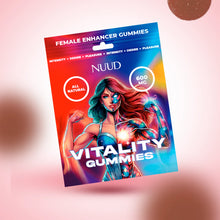
NUUD is a botanical supplement built around desire in general; it contains no DHEA and no hormone, it does nothing for hormone levels, menopause, or any medical condition, and we make no trial claim for it that we would not accept from DHEA. The formula is anchored by the NUUD Mushroom Complex™, with Muira Puama, Boiled Rehmannia Root, Tribulus Terrestris, and Piper Nigrum for absorption, with onset in roughly 30 to 60 minutes. If your doctor has no objection, that is what our women's libido gummies are for. There is a men's version.
Nothing is wrong with you
The marketing sells DHEA as restoring desire, a hormone you supposedly lose and then top up. What the trials show is quieter. Across 23 randomized trials in 1,188 postmenopausal women, the pooled effect on libido and sexual function was SMD 0.35, 95% CI -0.02 to 0.73, which does not clear zero, and the evidence is rated low confidence. In the Cochrane review of 28 trials in 1,273 menopausal women, there was no improvement in quality of life, and the oral-subgroup sexual-function effect, SMD 0.11, 95% CI -0.13 to 0.35, did not reach significance. In plain words: the supplement sold most often for desire has been tested more than most, and the pooled effect does not clear zero.
That matters, because it means the flatness you feel is not a broken gland waiting for a refill. Wanting falls with menopause, with age, with stress, with a hard year, and with a relationship that has gone quiet. Those forces flatten desire in healthy people with normal labs, and none of them get fixed by topping up a hormone precursor. If you just want to want it again, to feel normal again, start with what the evidence supports, and let your doctor decide the rest.
Keep reading
- Do testosterone boosters work?
- Libido supplements: what the research does not back
- Why ashwagandha did not work for libido
- Low libido in menopause
- Low libido in men
- Why is my libido so low?
Frequently asked questions
Does DHEA increase sex drive in women?
No, based on the largest pools. Across 23 randomized trials in 1,188 postmenopausal women, the pooled effect on libido and sexual function was SMD 0.35, 95% CI -0.02 to 0.73, which does not clear zero, and the evidence is rated low confidence. In the Cochrane review of 28 trials in 1,273 menopausal women, there was no improvement in quality of life, and the oral-subgroup sexual-function effect, SMD 0.11, 95% CI -0.13 to 0.35, did not reach significance either.
Does DHEA increase sex drive in men?
No. Across 25 placebo-controlled trials in 1,353 elderly men, DHEA showed no effect on sexual function or quality of life. The only signal was a reduction in fat mass, and that association disappeared in a model adjusted for DHEA conversion to other hormones, including total testosterone and estradiol. So the men's data point the same way as the women's.
How long does DHEA take to work for libido?
No trial supports waiting it out on the oral form. Every trial in the Cochrane review ran for at least 7 days of treatment, and none showed a significant benefit for the oral supplement in postmenopausal women. The pooled 23-trial result did not clear zero either. If you are taking DHEA, that decision belongs with your doctor, and so does any change to it.
What are the side effects of taking DHEA for sex drive?
Androgenic side effects, mainly acne, were 3.77 times more likely than placebo (95% CI 1.36 to 10.4), across 5 studies in 376 women. The 23-trial meta-analysis found no significant effect on serious adverse events, serum lipids, serum glucose, weight, body mass index, or bone mineral density. Acne is the one effect the data consistently flag.
Is a botanical supplement different from DHEA?
Yes. DHEA is a hormone precursor, and the decision to take it belongs with your doctor. NUUD is a botanical built around desire. It contains no DHEA and no hormone, it does nothing for hormone levels, menopause, or any medical condition, and we make no trial claim for it. Talk to your doctor before starting any new supplement.
References
- Elraiyah T, Sonbol MB, Wang Z, Khairalseed T, Asi N, Undavalli C, et al. Clinical review: The benefits and harms of systemic dehydroepiandrosterone (DHEA) in postmenopausal women with normal adrenal function: a systematic review and meta-analysis. The Journal of clinical endocrinology and metabolism. 2014;99(10):3536-42. https://pubmed.ncbi.nlm.nih.gov/25279571/
- Scheffers CS, Armstrong S, Cantineau AE, Farquhar C, Jordan V. Dehydroepiandrosterone for women in the peri- or postmenopausal phase. The Cochrane database of systematic reviews. 2015;1(1):CD011066. https://pubmed.ncbi.nlm.nih.gov/25879093/
- Corona G, Rastrelli G, Giagulli VA, Sila A, Sforza A, Forti G, et al. Dehydroepiandrosterone supplementation in elderly men: a meta-analysis study of placebo-controlled trials. The Journal of clinical endocrinology and metabolism. 2013;98(9):3615-26. https://pubmed.ncbi.nlm.nih.gov/23824417/
- Alkatib AA, Cosma M, Elamin MB, Erickson D, Swiglo BA, Erwin PJ, et al. A systematic review and a meta-analysis of randomized placebo-controlled trials of DHEA treatment effects on quality of life in women with adrenal insufficiency. The Journal of clinical endocrinology and metabolism. 2009;94(10):3676-81. https://pubmed.ncbi.nlm.nih.gov/19773400/
- Peixoto C, Carrilho CG, Barros JA, Ribeiro TT, Silva LM, Nardi AE, et al. The effects of dehydroepiandrosterone on sexual function: a systematic review. Climacteric : the journal of the International Menopause Society. 2017;20(2):129-137. https://pubmed.ncbi.nlm.nih.gov/28118059/
- Maseroli E, Vignozzi L. Are Endogenous Androgens Linked to Female Sexual Function? A Systemic Review and Meta-Analysis. The journal of sexual medicine. 2022;19(4):553-568. https://pubmed.ncbi.nlm.nih.gov/35227621/
This article is for general education and is not medical advice. Desire changes with age, menopause and life, and only a licensed clinician can order a test, read it, and decide on any hormone therapy. DHEA is a hormone precursor and any decision to take it belongs with your doctor. NUUD is a botanical supplement and has no role in diagnosing, treating, curing, or preventing any hormonal condition, menopause, or any other disease, and these statements have not been evaluated by the Food and Drug Administration. Talk with your doctor before starting any new supplement.
